Kirjojen hintavertailu. Mukana 11 627 670 kirjaa ja 12 kauppaa.

Kirjahaku

Etsi kirjoja tekijän nimen, kirjan nimen tai ISBN:n perusteella.

1000 tulosta hakusanalla Simon D Cook

The Technological-Industrial Complex and Education

The Technological-Industrial Complex and Education

Sydney Marie Simone Curtis; Victoria Desimoni; Max Crumley-Effinger; Florin D. Salajan; tavis d. jules

Springer International Publishing AG
2024
sidottu
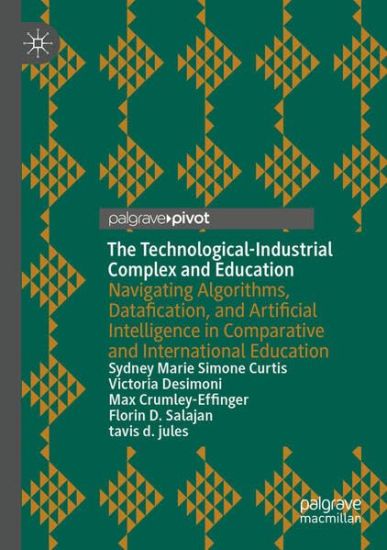
This Pivot book looks at the ways in which disruptive technologies, datafication, and Artificial Intelligence (AI) are shaping Comparative and International (CIE) Education and leading to its platformization. CIE entails the study of foreign educational systems in comparative perspective to discern what can be learned from approaches in various educational contexts and how these approaches might be applicable to other educational systems. The advent of advanced technologies, particularly AI, has been a game changer for research, teaching, and learning methods. It is within this context and at the intersection of deglobalization (and the retreat towards regionalization) and the rise of the fourth industrial revolution—that blends the biological, physical, and cyber-physical together—that this project seeks to describe the benefits and consequences of datafication and AI for the field of CIE.
The Technological-Industrial Complex and Education

The Technological-Industrial Complex and Education

Sydney Marie Simone Curtis; Victoria Desimoni; Max Crumley-Effinger; Florin D. Salajan; tavis d. jules

Springer International Publishing AG
2025
nidottu
This Pivot book looks at the ways in which disruptive technologies, datafication, and Artificial Intelligence (AI) are shaping Comparative and International (CIE) Education and leading to its platformization. CIE entails the study of foreign educational systems in comparative perspective to discern what can be learned from approaches in various educational contexts and how these approaches might be applicable to other educational systems. The advent of advanced technologies, particularly AI, has been a game changer for research, teaching, and learning methods. It is within this context and at the intersection of deglobalization (and the retreat towards regionalization) and the rise of the fourth industrial revolution--that blends the biological, physical, and cyber-physical together--that this project seeks to describe the benefits and consequences of datafication and AI for the field of CIE.
Die neue HOAI 2013 mit Synopse 2009 und 2013

Die neue HOAI 2013 mit Synopse 2009 und 2013

Frank Weber; Klaus D. Siemon

Springer Vieweg
2013
nidottu
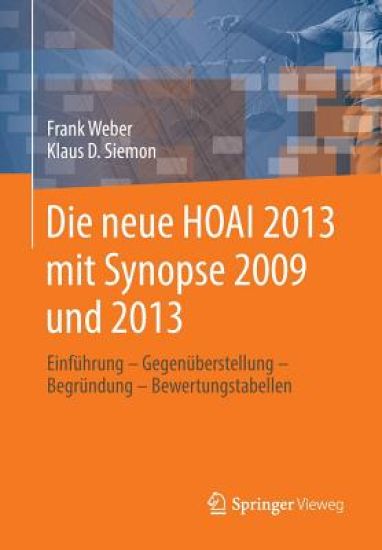
Neben dem aktuellen Verordnungstext und der amtlichen Begründung zur HOAI 2013 enthält dieses Buch eine anschauliche Synopse der HOAI 2009 und der HOAI 2013. Diese Form der tabellarischen Gegenüberstellung von altem und neuem Verordnungstext erleichtert die Arbeit mit der neuen HOAI und verschafft dem Anwender sofort einen guten Überblick über die wesentlichen Neuerungen und Veränderungen. Die Bewertung der Teilleistungen der Leistungsbilder Gebäude und Innenräume, Ingenieurbauwerke, Verkehrsanlagen , Tragwerk und Technische Ausrüstung nach den im Buch enthaltenen "Siemon-Tabellen" unterstützen die Vertragsgestaltung, Abrechnung und Rechnungsprüfung. In einer kurzen Einführung werden Sinn und Zweck der wesentlichen Neuregelungen, deren Herleitung und die Auswirkungen auf die Vertragspraxis kurz und prägnant dargestellt.?
A New Ecology

A New Ecology

Sven Erik Jørgensen; Brian D. Fath; Simone Bastianoni; Joao C. Marques; Felix Muller; S. Nors Nielsen; Bernard D. Patten; Enzo Tiezzi; Robert E. Ulanowicz

Elsevier Science Ltd
2007
sidottu
A New Ecology presents an ecosystem theory based on the following ecosystem properties: physical openness, ontic openness, directionality, connectivity, a complex dynamic for growth and development, and a complex dynamic response to disturbances. Each of these properties is developed in detail to show that these basic and characteristic properties can be applied to explain a wide spectrum of ecological obsevations and convections. It is also shown that the properties have application for environmental management and for assessment of ecosystem health.
A New Ecology

A New Ecology

Soeren Nors Nielsen; Brian D. Fath; Simone Bastianoni; Joao C. Marques; Felix Muller; Bernard D. Patten; Robert E. Ulanowicz; Enzo Tiezzi

Elsevier Science Ltd
2019
nidottu
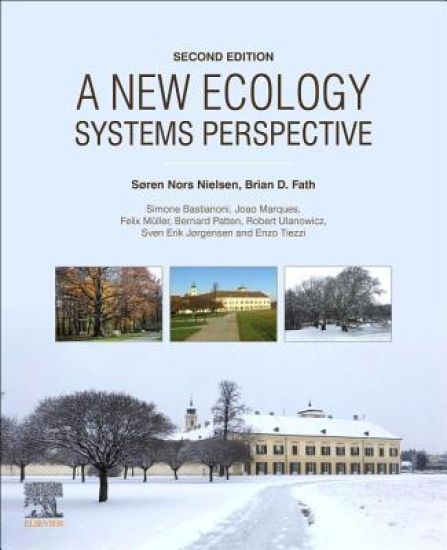
A New Ecology: Systems Perspective, Second Edition, gives an overview of the commonalities of all ecosystems from a variety of properties, including physical openness, ontic openness, directionality, connectivity, a complex dynamic for growth and development, and a complex dynamic response to disturbances. Each chapter details basic and characteristic properties that help the reader understand how they can be applied to explain a wide spectrum of current ecological research and environmental management applications.
Ethnologue: Languages of Africa and Europe

Ethnologue: Languages of Africa and Europe

Gary F. Simons; David M. Eberhard; Charles D. Fennig

Sil International, Global Publishing
2025
sidottu
Published in 2025, Twenty-Eighth Edition Ethnologue(R) is the comprehensive reference work that catalogs all known living languages. Ethnologue(R) has been an active research project for more than 70 years. Thousands of linguists and other researchers all over the world rely on and have contributed to Ethnologue(R). It is widely regarded to be the most comprehensive listing of information of its kind. Ethnologue(R) is published in three volumes. Each volume is self-contained and can be used independently. This volume catalogs the languages of Africa and Europe. It includes: 2,540 language descriptions organized by continent and country 22,905 primary names, alternate names, and dialect names 108 country overviews with graphical language vitality profiles 106 color maps showing location and distribution of languages
Flourishing Within Limits to Growth

Flourishing Within Limits to Growth

Sven Erik Jørgensen; Brian D. Fath; Søren Nors Nielsen; Federico M. Pulselli; Daniel A. Fiscus; Simone Bastianoni

Routledge
2015
sidottu
Decades of research and discussion have shown that the human population growth and our increased consumption of natural resources cannot continue – there are limits to growth. This volume demonstrates how we might modify and revise our economic systems using nature as a model. The book describes how nature uses three growth forms: biomass, information, and networks, resulting in improved overall ecosystem functioning and co-development. As biomass growth is limited by available resources, nature uses the two other growth forms to achieve higher resource use efficiency. Through a universal application of the three ‘R’s: reduce, reuse, and recycle, nature thus shows us a way forward towards better solutions. However, our current approach, dominated by short-term economic thinking, inhibits full utilization of the three ‘R’s and other successful approaches from nature. Building on ecological principles, the authors present a global model and futures scenario analyses which show that implementation of the proposed changes will lead to a win-win situation. In other words, we can learn from nature how to develop a society that can flourish within the limits to growth with better conditions for prosperity and well-being.
Flourishing Within Limits to Growth

Flourishing Within Limits to Growth

Sven Erik Jørgensen; Brian D. Fath; Søren Nors Nielsen; Federico M. Pulselli; Daniel A. Fiscus; Simone Bastianoni

Routledge
2015
nidottu
Decades of research and discussion have shown that the human population growth and our increased consumption of natural resources cannot continue – there are limits to growth. This volume demonstrates how we might modify and revise our economic systems using nature as a model. The book describes how nature uses three growth forms: biomass, information, and networks, resulting in improved overall ecosystem functioning and co-development. As biomass growth is limited by available resources, nature uses the two other growth forms to achieve higher resource use efficiency. Through a universal application of the three ‘R’s: reduce, reuse, and recycle, nature thus shows us a way forward towards better solutions. However, our current approach, dominated by short-term economic thinking, inhibits full utilization of the three ‘R’s and other successful approaches from nature. Building on ecological principles, the authors present a global model and futures scenario analyses which show that implementation of the proposed changes will lead to a win-win situation. In other words, we can learn from nature how to develop a society that can flourish within the limits to growth with better conditions for prosperity and well-being.
Advances and Technical Standards in Neurosurgery

Advances and Technical Standards in Neurosurgery

L. Symon; J. Brihaye; B. Guidetti; F. Loew; J. D. Miller; E. Pásztor; B. Pertuiset; M. G. Ya?argil

Springer Verlag GmbH
2011
nidottu
As an addition to the European postgraduate training system for young neurosurgeons we began to publish in 1974 this series devoted to Advances and Technical Standards in Neurosurgery which was later sponsored by the European Association of Neurosurgical Societies. The fact that the English language is well on the way to becoming the international medium at European scientific conferences is a great asset in terms of mutual understanding. Therefore we have decided to publish all contributions in English, regardless of the native language of the authors. All contributions are submitted to the entire editorial board before publication of any volume. Our series is not intended to compete with the publications of original scientific papers in other neurosurgical journals. Our intention is, rather, to present fields of neurosurgery and related areas in which important recent advances have been made. The contributions are written by specialists in the given fields and constitute the first part of each volume. In the second part of each volume, we publish detailed descriptions of standard operative procedures, furnished by experienced clinicians; in these articles the authors describe the techniques they employ and explain the advantages, difficulties and risks involved in the various procedures. This part is intended primarily to assist young neurosurgeons in their post­ graduate training. However, we are convinced that it will also be useful to experienced, fully trained neurosurgeons.
Advances and Technical Standards in Neurosurgery

Advances and Technical Standards in Neurosurgery

L. Symon; L. Calliauw; F. Cohadon; J. Lobo Antunes; F. Loew; H. Nornes; E. Pásztor; J. D. Pickard; A. J. Strong; M. G. Ya?argil

Springer Verlag GmbH
2014
nidottu
As an addition to the European postgraduate training system for young neurosurgeons we began to publish in 1974 this series of Advances and Technical Standards in Neurosurgery which was later sponsored by the European Association of Neurosurgical Societies. This series was first discussed in 1972 at a combined meeting of the Italian and German Neurosurgical Societies in Taormina, the founding fathers of the series being Jean Brihaye, Bernard Pertuiset, Fritz Loew and Hugo Krayenbiihl. Thus were established the principles of European co­ operation which have been born from the European spirit, flourished in the European Association, and have throughout been associated with this serIes. The fact that the English language is well on the way to becoming the international medium at European scientific conferences is a great asset in terms of mutual understanding. Therefore we have decided to publish all contributions in English, regardless of the native language of the authors. All contributions are submitted to the entire editorial board before publication of any volume. Our series is not intended to compete with the publications of original scientific papers in other neurosurgical journals. Our intention is, rather, to present fields of neurosurgery and related areas in which important recent advances have been made. The contributions are written by spe­ cialists in the given fields and constitute the first part of each volume.
Advances and Technical Standards in Neurosurgery

Advances and Technical Standards in Neurosurgery

L. Symon; J. Brihaye; B. Guidetti; F. Loew; J. D. Miller; E. Pásztor; B. Pertuiset; M. G. Ya?argil

Springer Verlag GmbH
2012
nidottu
As an addition to the European postgraduate training system for young neurosurgeons we began to publish in 1974 this series devoted to Advances and Technical Standards in Neurosurgery which was later sponsored by the European Association of Neurosurgical Societies. The fact that the English language is well on the way to becoming the international medium at European scientific conferences is a great asset in terms of mutual understanding. Therefore we have decided to publish all contributions in English, regardless of the native language of the authors. All contributions are submitted to the entire editorial board before publication of any volume. Our series is not intended to compete with the publications of original scientific papers in other neurosurgical journals. Our intention is, rather, to present fields of neurosurgery and related areas in which important recent advances have been made. The contributions are written by specialists in the given fields and constitute the first part of each volume. In the second part of each volume, we publish detailed descriptions of standard operative procedures, furnished by experienced clinicians; in these articles the authors describe the techniques they employ and explain the advantages, difficulties and risks involved in the various procedures. This part is intended primarily to assist young neurosurgeons in their post­ graduate training. However, we are convinced that it will also be useful to experienced, fully trained neurosurgeons.
Advances and Technical Standards in Neurosurgery

Advances and Technical Standards in Neurosurgery

L. Symon; J. Brihaye; B. Guidetti; F. Loew; J. D. Miller; E. Pásztor; B. Pertuiset; M. G. Ya?argil

Springer Verlag GmbH
2011
nidottu
As an addition to the European postgraduate training system for young neurosurgeons we began to publish in 1974 this series of Advances and Technical Standards in Neurosurgery which was later sponsored by the European Association of Neurosurgical Societies. This series was fust discussed in 1972 at a combined meeting of the Italian and German Neurosurgical Societies in Taormina, the founding fathers of the series being Jean Brihaye, Bernard Pertuiset, Fritz Loew and Hugo KrayenbUhl. Thus were established the principles of European co­ operation which have been born from the European spirit, flourished in the European Association, and have throughout been associated with this series. The fact that the English language is well on the way to becoming the international medium at European scientific conferences is a great asset in terms of mutual understanding. Therefore we have decided to publish all contributions in English, regardless of the native language of the authors. All contributions are submitted to the entire editorial board before publi­ cation of any volume. Our series is not intended to compete with the publications of original scientific papers in other neurosurgical journals. Our intention is, rather, to present fields of neurosurgery and related areas in which important recent advances have been made. The contributions are written by specialists in the given fields and constitute the fust part of each volume.
Advances and Technical Standards in Neurosurgery

Advances and Technical Standards in Neurosurgery

L. Symon; L. Calliauw; F. Cohadon; J. Lobo Antunes; F. Loew; H. Nornes; E. Pásztor; J. D. Pickard; A. J. Strong; M. G. Ya?argil

Springer Verlag GmbH
2011
nidottu
As an addition to the European postgraduate training system for young neurosurgeons we began to publish in 1974 this series of Advances and Technical Standards in Neurosurgery which was later sponsored by the European Association of Neurosurgical Societies. This series was first discussed in 1972 at a combined meeting of the Italian and German Neurosurgical Societies in Taormina, the founding fathers of the series being Jean Brihaye, Bernard Pertuiset, Fritz Loew and Hugo Krayenbiihl. Thus were established the principles of European co­ operation which have been born from the European spirit, flourished in the European Association, and have throughout been associated with this series. The fact that the English language is well on the way to becoming the international medium at European scientific conferences is a great asset in terms of mutual understanding. Therefore we have decided to publish all contributions in English, regardless of the native language of the authors. All contributions are submitted to the entire editorial board before publication of any volume. Our series is not intended to compete with the publications of original scientific papers in other neurosurgical journals. Our intention is, rather, to present fields of neurosurgery and related areas in which important recent advances have been made. The contributions are written by spe­ cialists in the given fields and constitute the first part of each volume.
Advances and Technical Standards in Neurosurgery

Advances and Technical Standards in Neurosurgery

L. Symon; J. Brihaye; B. Guidetti; F. Loew; J. D. Miller; E. Pásztor; B. Pertuiset; M. G. Ya?argil

Springer Verlag GmbH
2011
nidottu
As an addition to the European postgraduate training system for young neurosurgeons we began to publish in 1974 this series devoted to Advances and Technical Standards in Neurosurgery which was later sponsored by the European Association of Neurosurgical Societies. The fact that the English language is well on the way to becoming the international medium at European scientific conferences is a great asset in terms of mutual understanding. Therefore we have decided to publish all contributions in English, regardless of the native language of the authors. All contributions are submitted to the entire editorial board before publication of any volume. Our series is not intended to compete with the publications of original scientific papers in other neurosurgical journals. Our intention is, rather, to present fields of neurosurgery and related areas in which important recent advances have been made. The contributions are written by specialists in the given fields and constitute the first part of each volume. In the second part of each volume, we publish detailed descriptions of standard operative procedures, furnished by experienced clinicians; in these articles the authors describe the techniques they employ and explain the advantages, difficulties and risks involved in the various procedures. This part is intended primarily to assist young neurosurgeons in their post­ graduate training. However, we are convinced that it will also be useful to experienced, fully trained neurosurgeons.
Advances and Technical Standards in Neurosurgery

Advances and Technical Standards in Neurosurgery

L. Symon; J. Brihaye; F. Cohadon; B. Guidetti; F. Loew; J. D. Miller; H. Nornes; E. Pásztor; M. G. Ya?argil; B. Pertuiset

Springer Verlag GmbH
2011
nidottu
As an addition to the European postgraduate training system for young neurosurgeons we began to publish in 1974 this series devoted to Advances and Technical Standards in Neurosurgery which was later sponsored by the European Association of Neurosurgical Societies. The fact that the English language is well on the way to becoming the international medium at European scientific conferences is a great asset in terms of mutual understanding. Therefore we have decided to publish all contributions in English, regardless of the native language of the authors. All contributions are submitted to the entire editorial board before publication of any volume. Our series is not intended to compete with the publications of original scientific papers in other neurosurgical journals. Our intention is, rather, to present fields of neurosurgery and related areas in which important recent advances have been made. The contributions are written by specialists in the given fields and constitute the first part of each volume. In the second part of each volume, we publish detailed descriptions Of standard operative procedures, furnished by experienced clinicians; in these articles the authors describe the techniques they employ and explain the advantages, difficulties and risks involved in the various procedures. This part is intended primarily to assist young neurosurgeons in their post­ graduate training. However, we are convinced that it will also be useful to experienced, fully trained neurosurgeons.
Advances and Technical Standards in Neurosurgery

Advances and Technical Standards in Neurosurgery

L. Symon; J. Brihaye; F. Cohadon; B. Guidetti; F. Loew; J. D. Miller; H. Nornes; E. Pásztor; B. Pertuiset; M. G. Ya?argil

Springer Verlag GmbH
2012
nidottu
As an addition to the European postgraduate training system for young neurosurgeons we began to publish in 1974 this series devoted to Advances and Technical Standards in Neurosurgery which was later sponsored by the European Association of Neurosurgical Societies. The fact that the English language is well on the way to becoming the international medium at European scientific conferences is a great asset in terms of mutual understanding. Therefore we have decided to publish all contributions in English, regardless of the native language of the authors. All contributions are submitted to the entire editorial board before publication of any volume. Our series is not intended to compete with the publications of original scientific papers in other neurosurgical journals. Our intention is, rather, to present fields of neurosurgery and related areas in which important recent advances have been made. The contributions are written by specialists in the given fields and constitute the first part of each volume. In the second part of each volume, we publish detailed descriptions of standard operative procedures, furnished by experienced clinicians; in these articles the authors describe the techniques they employ and explain the advantages, difficulties and risks involved in the various procedures. This part is intended primarily to assist young neurosurgeons in their post­ graduate training. However, we are convinced that it will also be useful to experienced, fully trained neurosurgeons.
Advances and Technical Standards in Neurosurgery

Advances and Technical Standards in Neurosurgery

L. Symon; J. Brihaye; B. Guidetti; F. Loew; J. D. Miller; H. Nornes; E. Pásztor; B. Pertuiset; M. G. Ya?argil

Springer Verlag GmbH
2011
nidottu
As an addition to the European postgraduate training system for young neurosurgeons we began to publish in 1974 this series devoted to Advances and Technical Standards in Neurosurgery which was later sponsored by the European Association of Neurosurgical Societies. The fact that the English language is well on the way to becoming the international medium at European scientific conferences is a great asset in terms of mutual understanding. Therefore we have decided to publish all contributions in English, regardless of the native language of the authors. All contributions are submitted to the entire editorial board before publication of any volume. Our series is not intended to compete with the publications of original scientific papers in other neurosurgical journals. Our intention is, rather, to present fields of neurosurgery and related areas in which important recent advances have been made. The contributions are written by specialists in the given fields and constitute the first part of each volume. In the second part of each volume, we publish detailed descriptions of standard operative procedures, furnished by experienced clinicians; in these articles the authors describe the techniques they employ and explain the advantages, difficulties and risks involved in the various procedures. This part is intended primarily to assist young neurosurgeons in their post­ graduate training. However, we are convinced that it will also be useful to experienced, fully trained neurosurgeons.
Advances and Technical Standards in Neurosurgery

Advances and Technical Standards in Neurosurgery

L. Symon; J. Brihaye; B. Guidetti; F. Loew; J. D. Miller; H. Nornes; E. Pásztor; B. Pertuiset; M. G. Ya?argil

Springer Verlag GmbH
2011
nidottu
As an addition to the European postgraduate training system for young neurosurgeons we began to publish in 1974 this series devoted to Advances and Technical Standards in Neurosurgery which was later sponsored by the European Association of Neurosurgical Societies. The fact that the English language is well on the way to becoming the international medium at European scientific conferences is a great asset in terms of mutual understanding. Therefore we have decided to publish all contributions in English, regardless of the native language of the authors. All contributions are submitted to the entire editorial board before publication of any volume. is not intended to compete with the publications of original Our series scientific papers in other neurosurgical journals. Our intention is, rather, to present fields of neurosurgery and related areas in which important recent advances have been made. The contributions are written by specialists in the given fields and constitute the first part of each volume. In the second part of each volume, we publish detailed descriptions of standard operative procedures, furnished by experienced clinicians; in these articles the authors describe the techniques they employ and explain the advantages, difficulties and risks involved in the various procedures. This part is intended primarily to assist young neurosurgeons in their post­ graduate training. However, we are convinced that it will also be useful to experienced, fully trained neurosurgeons.
Advances and Technical Standards in Neurosurgery

Advances and Technical Standards in Neurosurgery

L. Symon; J. Brihaye; B. Guidetti; F. Loew; J. D. Miller; H. Nornes; E. Pásztor; B. Pertuiset; M. G. Ya?argil

Springer Verlag GmbH
2011
nidottu
As an addition to the European postgraduate training system for young neurosurgeons we began to publish in 1974 this series devoted to Advances and Technical Standards in Neurosurgery which was later sponsored by the European Association of Neurosurgical Societies. The fact that the English language is well on the way to becoming the international medium at European scientific conferences is a great asset in terms of mutual understanding. Therefore we have decided to publish all contributions in English, regardless of the native language of the authors. All contributions are submitted to the entire editorial board before publication of any volume. Our series is not intended to compete with the publications of original scientific papers in other neurosurgical journals. Our intention is, rather, to present fields of neurosurgery and related areas in which important recent advances have been made. The contributions are written by specialists in the given fields and constitute the first part of each volume. In the second part of each volume, we publish detailed descriptions of standard operative proce.dures, furnished by experienced clinicians; in these articles the authors describe the techniques they employ and explain the advantages, difficulties and risks involved in the various procedures. This part is intended primarily to assist young neurosurgeons-in their post- graduate training. However, we are convinced that it will also be useful to experienced, fully trained neurosurgeons.