Kirjojen hintavertailu. Mukana 11 244 527 kirjaa ja 12 kauppaa.

Kirjahaku

Etsi kirjoja tekijän nimen, kirjan nimen tai ISBN:n perusteella.

1000 tulosta hakusanalla Society Promoting Christian Knowledge

Society, Interaction and the Product

Society, Interaction and the Product

Philippe Cunha Ferrari

Our Knowledge Publishing
2023
pokkari
The "product" in the title of this study could be replaced by "commodity", but it was kept for its double meaning: the meaning of fetishised commodity, according to Marx, which causes alienation and inscribes the senseless human search for the value of the product in capitalist society; and the meaning of product as the factor(s) that generate(s) the result expressed here in a social model that is an alternative to capitalism. The product as an effect, interactive communication as the intermental psychology of the members of society who are society itself, according to Tarde, the softening of the blas attitude in Simmel's terms and Fran ois Jullien's notion of wisdom are the means to overcome socio-psychoanalytic resentment in social construction models in Brazil or around the world. According to Kehl, a more humane society is possible, as Marx imagines, in the knowledge that creation is no longer the same as it was yesterday, but is a combination and blend that is equally or more capable of creating another model of society.

Society and Environment

Society and Environment

Jefferson Alex Maciel Cavalcante

Our Knowledge Publishing
2024
pokkari
We need to be aware that nature teaches us and that everything we need is available, and we just need to be wise enough to find balanced ways to meet our needs without depleting the sources, because they are sufficient to meet the needs not only of the human species, but also of all living beings. This requires a radical change in the way we view natural elements. As crew members of the same ship, we have to live with the most diverse positions on how to use our energy sources, as well as how to view the gifts they provide us with. To treat the environment more rationally is to recognize that all the planet's inhabitants depend on energy for their survival, so that without this source or with it out of balance, it means a ship unable to navigate and its crew unable to maintain the balance necessary for their survival. Therefore, the need for rational use of existing natural resources is currently the greatest challenge of the century.
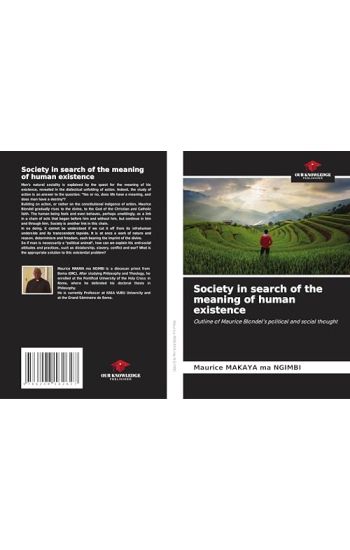
Society in search of the meaning of human existence

Society in search of the meaning of human existence

Maurice Makaya Ma Ngimbi

Our Knowledge Publishing
2024
pokkari
Man's natural sociality is explained by the quest for the meaning of his existence, revealed in the dialectical unfolding of action. Indeed, the study of action is an answer to the question: "Yes or no, does life have a meaning, and does man have a destiny"?Building on action, or rather on the constitutional indigence of action, Maurice Blondel gradually rises to the divine, to the God of the Christian and Catholic faith. The human being feels and even behaves, perhaps unwittingly, as a link in a chain of acts that began before him and without him, but continue in him and through him. Society is another link in this chain.In so doing, it cannot be understood if we cut it off from its infrahuman underside and its transcendent topside. It is at once a work of nature and reason, determinism and freedom, each bearing the imprint of the divine.So if man is necessarily a "political animal", how can we explain his anti-social attitudes and practices, such as dictatorship, slavery, conflict and war? What is the appropriate solution to this existential problem?
Society, Criticism and Freedom

Society, Criticism and Freedom

Artur Lopes Filho

Our Knowledge Publishing
2024
pokkari
The aim of this work is to address the obstacles involved in the development of critical and autonomous thinking (free from any and all conditioning) in the midst of organised society and its entire operational structure. To this end, we sought to use as a reference the philosophers Friedrich Nietzsche and Theodor W. Adorno, who share a great deal of similarity in their respective reflections when dealing with the subject. In this way, we seek to focus on the complicated relationship between criticism, society and freedom and, from this point, we try to develop, over the course of four essays, an in-depth reflection on issues relating to social formation, cultural formation and political development from the perspective of both authors, sometimes in dialogue with what we are experiencing in contemporary times.
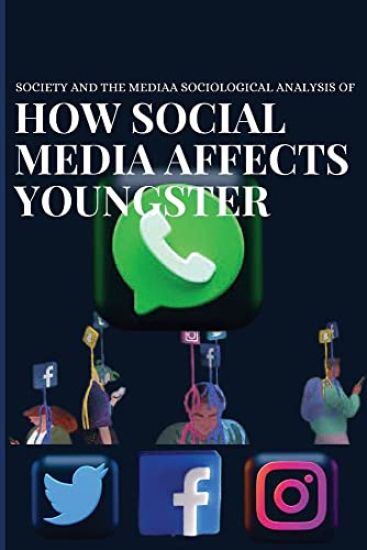
Society and the media a sociological analysis of how social media affects youngster
Media technology shapes the advance modern society. Media has so much powerful impact on society that it has become extensions of our senses and our self‟s. The content and the message do not matter instead the technology and medium matters. It is the medium or technology that changes pace or pattern of human affairs. The medium is the message because it is the medium that shapes and controls the scale or pace and form of human association and action (McLuhan, 1964).
Society for the Prevention of Cruelty to Animals

Society for the Prevention of Cruelty to Animals

J. R. Pick; Jachym Topol

Karolinum,Nakladatelstvi Univerzity Karlovy,Czech Republic
2018
sidottu
Compassion, levity, and laughter can be found in the darkest of places--and even in the smallest of creatures. Set in 1943 Nazi-occupied Czechoslovakia, J. R. Pick's novella Society for the Prevention of Cruelty to Animals tells the story of Tony, a thirteen-year-old boy who is deported from Prague to the infamous Terezi-n ghetto for Jews--the horrific, overcrowded concentration camp where one in four prisoners died of starvation or disease, and a way station on the way to Auschwitz. But it is not the atrocities Tony experiences that make his tale remarkable. It is his ability to find comedy in the incomprehensible. Tony suffers from tuberculosis, and, lying in his hospital bed one day, he decides to set up an animal welfare organization. Even though no animals are permitted in the camp, he is determined to find just one creature he can care for and protect--and his determination is contagious. A group of older boys including Tony's best friend, Ernie, aid him in his quest. Soon they're joined by Tony's mother--and her coterie of boyfriends. Eventually, they find Tony his pet: a mouse, which he names and carefully guards in a box hidden beneath his bed. But in the fall of 1944, the transports to Auschwitz begin. As moving as it is irreverent, Pick's novella draws on the two years he spent imprisoned in Terezi-n in his late teens. With cutting black humor, he shines a light on both the absurdities and injustices of the Nazi-run Jewish ghetto, using his literary artistry to portray in stunning shorthand an experience of the Holocaust that pure histories could never convey.
Society & Change in the Contemporary Gulf
This selection of essays addresses the general aspects of social change in the Gulf on the one hand and the specific contours of transformation in different milieus of the region on the other. The volume goes beyond the paradigms of security and rentier state to capture state-society linkages, women's role in knowledge economy and social reforms, the directions of democratisation, changing dynamics of cities like Dubai, the interplay of sacred and secular in the Gulf. It shows the multi-layered manner in which Arab societies of the Gulf have responded to the phenomenon of globalisation. The interconnectedness of political and economic dynamics and social change is brought forth in the volume by locating specific spaces, issues and moments of such transformation. Scholars from diverse disciplinary vantage points provide the reader with a multi-dimensional perspective of the societies in the Gulf.
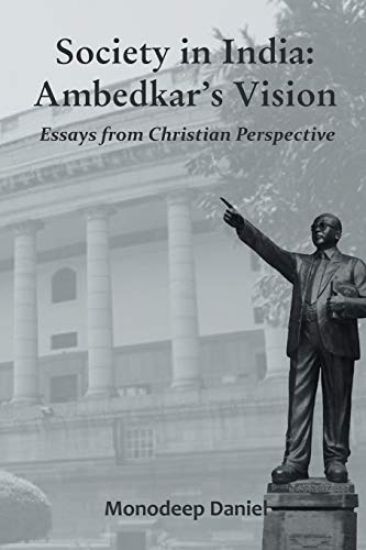
Society in India

Society in India

Monodeep Daniel

Indian Society for Promoting Christian Knowledge
2019
pokkari
Dr. BR Ambedkar (1891-1956) was a reformer, a statesman, an economist and an erudite thinker. However, his relevence goes beyond the boundries of politics, economy and societ. In this study which is relevence from Christian perspective. This is an example to show how an Indian Christian perceives Dr. Ambedkar's vision of thinking the Indian society. It is clear in these papers that in Ambedkar's line of thinking the Indian society must emerge as increasingly pluralistic, egalitarian and liberal social order. Rev' d Solomon George who has been actively involved in politics from subaltern section writes in the Forword of this book what politics means for Dalit Christians. From Dr. Ambedkar's perspective this can best be done in a democratic society. The lingering pursuit, however, is to explore to what extent we in post-colonial India have succeeded to shape our society on these principles.
Society Girl

Society Girl

Saba Imtiaz; Tooba Masood

ROLI BOOKS PVT LTD
2024
nidottu
On an October morning in 1970, phones began ringing all over Karachi. The charismatic young poet and former civil servant Mustafa Zaidi had been found dead in his bedroom.
Society and Economy: Models of Social Man
This book confronts a major institution of recent decades - neo-liberalism and its exaggerated pro-market views. It examines two of its Game Theory models: The Prisoner's Dilemma and The Tragedy of the Commons. Both are shown to be basically unstable; they may change into several quite distinct games at any phase. Market economics has a base in Game Theory much in the same way as mathematics in formal logic.
Society, Behaviour, and Climate Change Mitigation
The Intergovernmental Panel on Climate change (IPCC) was jointly established by the World Meteorological Organization (WMO) and the United Nations Envir- ment Programme (UNEP) to assess the scientific, technical and socio-economic information relevant for the understanding of the risk of human-induced climate change. Since its inception the IPCC has produced a series of comprehensive - sessment Reports, Special Reports and Technical Papers on the state of the und- standing of causes of climate change, its potential impacts, and options for response strategies. In 1998, Working Group III (WG III) of the ongoing Third Assessment was charged by the IPCC Plenary to assess the scientific, technical, environmental, economic and social aspects of the mitigation of climate change and a series of cross-cutting issues such as equity, development and sustainability. Its mandate was changed from a predominantly disciplinary assessment of the economic and social dimensions of climate change in the Second Assessment Report to an interdisciplinary assessment of the options to control the emissions of greenhouse gases and/or enhance their sinks. One key issue of the IPCC Third Assessment Report (TAR) on mitigation of climate change, which has undergone an extensive review by scientists and governments, is the role of present and future behaviour of individuals, households, private and p- lic companies, public authorities and other stakeholders.
Society and Its Environment

Society and Its Environment

Egbert Tellegen; Maarten Wolsink

Gordon Breach Science Publishers,The Netherlands
1998
sidottu
First Published in 1998.People cannot live without changing nature. They do so by breathing, feeding and defecating, by dressing and heating and by creating barriers against wind and water, cold and heat. These forms of human-induced change of nature have been present since the dawn of mankind. People are constantly confronted by a malignant nature against which they have to defend themselves and whose resources they have to use in order to survive. However, the relationship between man and nature has dramatically changed during the past centuries. More than the word 'nature', the term 'environment' has become strongly associated with damage and decay caused by human beings. Hence, in practice 'environment' is mostly associated with problems. In this book the term 'environment' does not describe different 'environments' and the way they are changed by human activities in general, but focuses on those human-induced of it. What are the causes of these changes, when and where are these changes considered as environmental problems and how do people react to these changes are the main questions of this book. One of the possible reactions to environmental problems is the efforts to solve them. The ways in which individual citizens, private enterprises, public authorities, environmental organizations and others try to solve environmental problems is a main topic of this book.
Society and Its Environment

Society and Its Environment

Egbert Tellegen; Maarten Wolsink

Routledge
1998
nidottu
First published in 1998. The concept of environment refers to the physical surrounds of human societies. However, the word environment is nearly always used in the context of problematic environmental problems and conditions. This book looks at the different ways in which social scientists study environmental change and environmental problems. It is the completely revised, expended and international edition of Tellegen and Wolsink's renowned Dutch textbook. It will be recommended reading for students and teachers of Environmental Studies and Sociology courses, as well as environmental managers and policy-makers and anyone seeking an understanding of how special attitudes shape our surroundings.
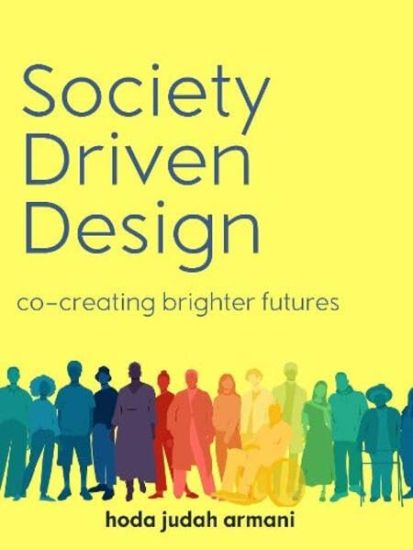
Society Driven Design

Society Driven Design

Judah Armani

BIS Publishers B.V.
2024
nidottu
Are you interested in making a positive social impact? In his book Society Driven Design, Judah Armani explains the role of design in community development and the designer's role in social change. Based on Armani's decades-long experience in social innovation, the book offers a framework for cultivating the conditions for social change. Armani is a designer and educator who draws from almost twenty years of co-creating with people who are homeless, incarcerated, or on probation. He believes that everyone has the potential to make better choices, and he sees the design process as a powerful tool for empowerment. His book is a reflection of his journey, and with it, he aims to empower a broader community to make better choices through design. Are you a service designer, social entrepreneur, innovation lead at a charity, or policymaker interested in making a positive social impact? Society Driven Design teaches you how design can foster social change and community development.
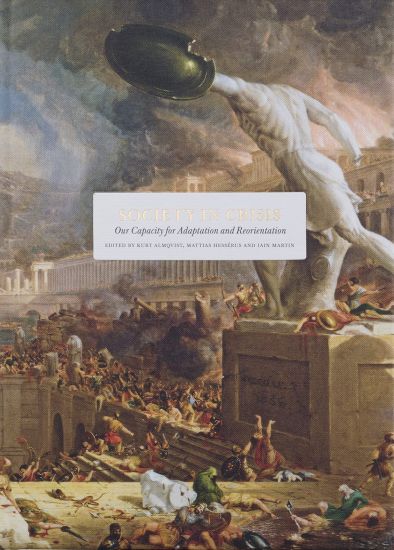
Society in Crisis

Society in Crisis

Stolpe Publishing
2021
sidottu
In this anthology, 25 leading scholars from across the globe describe and analyse how different societies have handled crisis. In ancient Greek, a crisis refers not necessarily to a catastrophic situation but to an opportunity for great change. Edited by Scottish commentator Iain Martin and Swedish historian Mattias Hessérus, Society in Crisis takes this classical understanding of the term to heart as it acknowledges the many ways in which humans have made the decision to reorient their societies as a result of crisis Essayists include: Clive Aslet, Philip Bobbitt, Peter Burke, Gillian Clark, Jonathan Fenby, Peter Frankopan, Jessica Frazier, Lawrence Freedman, Matthew Goodwin, Andrew Graham-Dixon, Johan Hakelius, Vanessa Harding, Tom Holland, Mark Honigsbaum, Alexander Lee, Tim Marshall, Lincoln Paine, Iskander Rehman, Donald Sassoon, David Seedhouse, Graham Stewart, Hew Strachan, Helen Thompson, Richard Whatmore and Adrian Wooldridge.
Society, Towns and Masculinity : Aspects on Early Modern Society in the Baltic Area
Södertörn Academic Studies 3 This anthology has been written by participants in the research project "State, Towns and Integration of Society: The Swedish Baltic Empire and the Baltic Area in Early Modern Times". Sven Lilja writes on Macro Theories and Baltic History c 1500-1800 Robert Sandberg on The Towns, the Urban System and the State in the Early Modern System Kekke Stadin on The Prince, the Hero and the Swedish Empire, and, finally, Lars Geschwind on Swedish Universities in the Seventeenth Century.