The demographic history of twentieth-century Russia has been marked by a series of tragedies. Calamitous wars, revolutions, civil strife, and political murders have resulted in unparalleled mortality rates, depressed fertility rates, and sadly unprecedented demographic patterns of all types. This volume explores the most recent problems afflicting the Russian population in the post?Cold War era.The demise of the Soviet Union has brought new hardships?the collapse of the health-care system, internal strife, and economic disruptions?to the people and has deeply affected demographic processes throughout Russia. The contributors explore key trends, from increasing mortality rates and decreasing birth rates to refugee flows into Russia and the ?brain drain? out of Russia. Problems of aging, increased infant mortality, and urban and rural population change are discussed in detail for each major region.Rarely has there been a better opportunity to examine the spatial, economic, psychological, and political factors contributing to demographic stress in a current setting. These demographic processes are not only unique as a domestic social phenomenon but are also immensely significant in their global impact, influencing international migration and foreign aid.

The New York Times has called adherence the world’s "other drug problem." Physicians prescribe medications, but patients do not always use them. While it would be easy for physicians to blame patients for treatment failures, physicians can do more to motivate patients to use their medications as recommended. Practical Ways to Improve Patient Adherence, Second Edition, is an excellent resource for physicians and allied health professionals whose patients exhibit poor adherence. Daniel J. Lewis, MD (Department of Dermatology, University of Pennsylvania Health System), and experienced adherence researcher, Steven R. Feldman, MD, PhD (Departments of Dermatology and Social Sciences & Health Policy, Wake Forest University School of Medicine), examine the problem of poor adherence and offer concrete techniques to encourage patients to use their medications and improve treatment outcomes. This book offers novel, potent ways to get patients to use their medications and improve treatment outcomes – tools healthcare providers can use day in and day out. A medical education is not complete without a thorough understanding of the hurdles that contribute to poor adherence and what health professionals can and should do about it."20 years of patient adherence research presented in a simple, fun, and easy-to-read style … a once-in-a-lifetime treat!" Warren H. Chan, MD, MS, Dermatologist"East to digest and remarkably practical for physicians. … Recommend it to all my friends in medicine!" Diego R. Dasilva, MD, Dermatologist Named the winner of the 2022 “Best Overall” Dermie Award by the Dermasphere podcast.Published in association with the Journal of Dermatological Treatment.
Since 1992, marijuana use among 8th graders has tripled, among 10th graders it has nearly doubled, and its use among high school seniors has increased by 50 percent. The use of other illicit drugs is also heavily on the rise. Yet, there exists very little research and literature on the etiology and prevention of drug abuse among those most at risk--disadvantaged, inner-city, minority youth. The Etiology and Prevention of Drug Abuse Among Minority Youth is an important first step in remedying this gap in the literature and for getting at the heart of the psychosocial factors that promote and sustain drug use among minority youth.The book’s chapters evolved from a program of research funded by the National Institute on Drug Abuse and Cornell University Medical College’s Institute for Prevention Research concerning drug abuse prevention with multi-ethnic youth. So that you might learn effective strategies for intervening with at-risk adolescents and teenagers, The Etiology and Prevention of Drug Abuse Among Minority Youth discusses:correlates and predictors of alcohol and drug use community-based skills interventions how youths offset feelings of distress or self-derogation by bonding with deviant peers the advantages of community-oriented outreach programs the role of cultural factors as they shape vulnerability to adolescent alcohol and drug use the role of ethnic identity as a moderator of psychosocial risk for alcohol and marijuana use the needs of youth at high risk for future use preventing gateway drug use drug use among youth living in homeless shelters the conditions of public housing and how they affect the etiology of drug abuseAn essential tool for policymakers, social workers, clinicians, researchers, psychiatrists, and other professionals in chemical dependency and narcotics rehabilitation, The Etiology and Prevention of Drug Abuse Among Minority Youth provides you with vital insight on the causes of drug use among minority adolescents, the strengths and limitations of different intervention approaches, and incentive to find appropriate ways for working with at-risk, minority teenagers.
The Most Practical Book on Negotiating Ever Written Negotiating is an art. It's complicated. To become an exceptional negotiator traditionally requires years of experience in negotiations. But that doesn't mean that most people can't quickly and easily learn proven negotiating skill and techniques if someone shows them what to do. This book does exactly that. Never Lose Again reveals a simple but remarkably effective set of fifty questions that anyone can immediately use to become far better negotiators. The fifty questions apply to all types of negotiation situations, from conflicts like buying a home or car to business transactions of all kinds. Each question has been designed to put you in the best position possible, helping you to avoid tricks, break deadlocks, discover conflict and dispute resolutions, and find hidden deals in all types of negotiations.No other book on the market distills the key negotiation principles into such a simply, effective, and instantly usable form. By learning to use these questions, you can start thinking like expert negotiators and make better deals for yourself, your family, and your business.
The Eighth Edition of Zumdahl and DeCoste's best-selling INTRODUCTORY CHEMISTRY: A FOUNDATION combines enhanced problem-solving structure with substantial pedagogy to enable students to become strong independent problem solvers in the introductory course and beyond. Capturing student interest through early coverage of chemical reactions, accessible explanations and visualizations, and an emphasis on everyday applications, the authors explain chemical concepts by starting with the basics, using symbols or diagrams, and conclude by encouraging students to test their own understanding of the solution. This step-by-step approach has already helped hundreds of thousands of students master chemical concepts and develop problem-solving skills. The book is known for its focus on conceptual learning and for the way it motivates students by connecting chemical principles to real-life experiences in chapter-opening discussions and "Chemistry in Focus" boxes.
Develop the qualitative, conceptual foundation you need to think like a chemist with CHEMICAL PRINCIPLES, 8e. Designed for students with solid mathematical preparation, this best-seller emphasizes models, everyday applications of chemistry, and a thoughtful, step-by-step problem-solving approach.
Succeed in your course with INTRODUCTORY CHEMISTRY: A FOUNDATION! This best-selling text combines enhanced problem-solving structure with substantial pedagogy to help you become a successful problem solver. Early coverage of chemical reactions, accessible explanations and visualizations, and an emphasis on everyday applications facilitates understanding. The authors’ step-by-step approach has already helped hundreds of thousands of student's master chemical concepts and develop strong problem-solving skills. Interactive study aids in OWLv2, such as ChemWork Problems and Adaptive Learning Activities, help students master concepts.
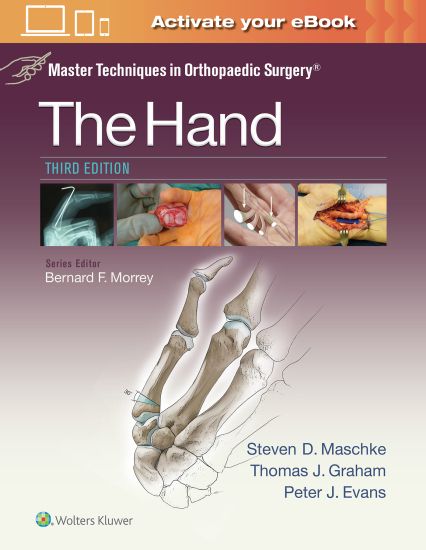
Master the orthopaedic techniques preferred by today’s expert surgeons! The 3rd Edition of this highly regarded title remains your go-to resource for the most advanced and effective surgical techniques for treating traumatic, congenital, inflammatory, neoplastic, and degenerative conditions of the hand. More than 1,000 high-quality photographs and drawings guide you step by step through each procedure, and personal pearls from master surgeons provide operative tips that foster optimal outcomes. 13 new chapters bring you completely up to date with what’s new in the field.Key FeaturesNew chapters cover topics such as techniques for treating intercalary nerve deficitsFull-color, sequential, surgeon’s-eye view intraoperative photographs combine with radiographs and detailed drawings by noted medical illustrators to provide a highly visual guide to hand surgery.The world’s foremost surgeons describe their preferred techniques in step-by-step detail, explain the indications and contraindications, identify pitfalls and potential complications, and offer pearls and tips for improving results.Comprehensive coverage includes all surgical exposures, techniques, and infections; fractures and dislocations; tendon pathologies and tendon surgery; surgery for nerve disorders and nerve deficits; surgery for arthritis; selected pathologies such as Dupuytren's disease, neoplasm, amputation, vascular; and pediatric hand surgery.Now with the print edition, enjoy the bundled interactive eBook edition, which can be downloaded to your tablet and smartphone or accessed online and includes features like:Over an hour of interactive videos showing procedures and post-operative resultsComplete content with enhanced navigationPowerful search tools and smart navigation cross-links that pull results from content in the book, your notes, and even the webCross-linked pages, references, and more for easy navigationHighlighting tool for easier reference of key content throughout the textAbility to take and share notes with friends and colleaguesQuick reference tabbing to save your favorite content for future use
This book provides readers with the fundamental, analytical, and quantitative knowledge of machining process planning and optimization based on advanced and practical understanding of machinery, mechanics, accuracy, dynamics, monitoring techniques, and control strategies that they need to understanding machining and machine tools. It is written for first-year graduate students in mechanical engineering, and is also appropriate for use as a reference book by practicing engineers. It covers topics such as single and multiple point cutting processes; grinding processes; machine tool components, accuracy, and metrology; shear stress in cutting, cutting temperature and thermal analysis, and machine tool chatter. The second section of the book is devoted to “Non-Traditional Machining,” where readers can find chapters on electrical discharge machining, electrochemical machining, laser and electron beam machining, and biomedical machining. Examples of realistic problems that engineers are likely to face in the field are included, along with solutions and explanations that foster a didactic learning experience.
THIS VERSION IS FIRST PRINT AND MAY CONTAIN TYPOS: This is a unique roadside book of the 110 mile loop along Trans-Canada 17 from Goulais Bay to Thessalon and back via Route 638. It is organized in a manner so you can visit outcrops by either following the book or by GPS coordinates within. It explores the Precambrian outcrops common along the transect from the Archean granites, through the Huronian Supergroup, to the post Mid-continental Rift bedrock. There are 35 total outcrops visited. All but three are easily assessable from the roadside. Other road segments include Route 556, Old Soo Road, Gordon Lake Road, Center Line Road, Watson Road, and Government Road. This was a unique time in Earth's history. The Huronian rocks date back almost 2.5 billion years and record many firsts on Earth. The first free oxygen in the atmosphere, the first ice ages, the first time plate tectonics dominates, and the first wide distribution of carbonate rocks. Technical terms are kept to a minimum. Please enjoy and explore your world
Grounded in current theory and treatment research, this highly practical book presents a comprehensive framework for assessing and treating health anxiety, including full-blown and milder (subclinical) forms of hypochondriasis. The current state of knowledge about these prevalent and costly problems is reviewed, and assessment methods and empirically supported treatments described. Clear, step-by-step recommendations are provided for engaging patients or clients, implementing carefully planned cognitive and behavioral interventions, and troubleshooting potential pitfalls. Important advances in pharmacotherapy for persons with health anxiety disorders are also discussed. Enhancing the utility of this clinician- and student-friendly resource are numerous case examples and sample dialogues, quick-reference tables and figures, and over 20 reproducible handouts and assessment forms.