
Kirjahaku
Etsi kirjoja tekijän nimen, kirjan nimen tai ISBN:n perusteella.
1000 tulosta hakusanalla Steven R. Watkins
Seven Essential Money Skills: Building a Healthy Relationship with Your Money
R. Nelson Letshwene
Createspace Independent Publishing Platform
2015
nidottu
The Seven Essential Money Skills are the core skills that anyone who handles money should have to build a functional relationship with money. The journey starts with creative thought and creative increase to create multiple streams of income. You learn functional saving techniques for investing purposes, which leads to focus on building value through your money and other resources. Protection techniques and control mechanisms allows you to keep all or most of what you create. This leads you to willingly sharing your abundance with those you love.People who retire without money, more often than not, did not build a healthy and functional relationship with their money while they could. By applying these skills in your life, you ensure a healthy financial future.Learn these skills, install them into your character, activate them and live by them to build a healthy relationship with your money.Money follows the character of its owner. To change money's direction, you need to change the character of the owner.

The Seven Weapons: To Subdue Life
Sonny R. Pasam; Satyanarayana Lakshmi Venkata Pasam
Createspace Independent Publishing Platform
2016
nidottu
This book gives you The Seven Weapons to win the War of Life. In this chaotic life, we are lost. This book gives you the wisdom to pave the way for the journey of your life. This is not just another book. This is an instructive manual for a successful life.
For teachers in higher education who haven’t been able to catch up with developments in teaching and learning, James Davis and Bridget Arend offer an introduction that focuses on seven coherent and proven evidence-based strategies. The underlying rationale is to provide a framework to match teaching goals to distinct ways of learning, based on well-established theories of learning. The authors present approaches that readers can readily and safely experiment with to achieve desired learning outcomes, and build confidence in changing their methods of teaching.Research on learning clearly demonstrates that learning is not one thing, but many. The learning associated with developing a skill is different from the learning associated with understanding and remembering information, which in turn is different from thinking critically and creatively, solving problems, making decisions, or change paradigms in the light of evidence. Differing outcomes involve different ways of learning and teaching strategies.The authors provide the reader with a conceptual approach for selecting appropriate teaching strategies for different types of content, and for achieving specific learning objectives. They demonstrate through examples how a focused and purposeful selection of activities improves student performance, and in the process makes for a more effective and satisfying teaching experience.The core of the book presents a chapter on each of the seven ways of learning. Each chapter offers a full description of the process, illustrates its application with examples from different academic fields and types of institutions, clearly describes the teacher’s facilitation role, and covers assessment and online use.The seven ways of learning are: Behavioral Learning; Cognitive Learning; Learning through Inquiry; Learning with Mental Models; Learning through Groups and Teams; Learning through Virtual Realities; and Experiential Learning.Along the way, the authors provide the reader with a basis for evaluating other approaches to teaching and other learning methodologies so that she or he can confidently go beyond the “seven ways” to adapt or adopt further strategies. This is the ideal companion for teachers who are beginning to explore new ways of teaching, and want to do some serious independent thinking about learning. The book can also be used to prepare graduate students for teaching, and will be welcomed by centers for teaching and learning to help continuing faculty re-examine a particular aspect of their teaching.
For teachers in higher education who haven’t been able to catch up with developments in teaching and learning, James Davis and Bridget Arend offer an introduction that focuses on seven coherent and proven evidence-based strategies. The underlying rationale is to provide a framework to match teaching goals to distinct ways of learning, based on well-established theories of learning. The authors present approaches that readers can readily and safely experiment with to achieve desired learning outcomes, and build confidence in changing their methods of teaching.Research on learning clearly demonstrates that learning is not one thing, but many. The learning associated with developing a skill is different from the learning associated with understanding and remembering information, which in turn is different from thinking critically and creatively, solving problems, making decisions, or change paradigms in the light of evidence. Differing outcomes involve different ways of learning and teaching strategies.The authors provide the reader with a conceptual approach for selecting appropriate teaching strategies for different types of content, and for achieving specific learning objectives. They demonstrate through examples how a focused and purposeful selection of activities improves student performance, and in the process makes for a more effective and satisfying teaching experience.The core of the book presents a chapter on each of the seven ways of learning. Each chapter offers a full description of the process, illustrates its application with examples from different academic fields and types of institutions, clearly describes the teacher’s facilitation role, and covers assessment and online use.The seven ways of learning are: Behavioral Learning; Cognitive Learning; Learning through Inquiry; Learning with Mental Models; Learning through Groups and Teams; Learning through Virtual Realities; and Experiential Learning.Along the way, the authors provide the reader with a basis for evaluating other approaches to teaching and other learning methodologies so that she or he can confidently go beyond the “seven ways” to adapt or adopt further strategies. This is the ideal companion for teachers who are beginning to explore new ways of teaching, and want to do some serious independent thinking about learning. The book can also be used to prepare graduate students for teaching, and will be welcomed by centers for teaching and learning to help continuing faculty re-examine a particular aspect of their teaching.
The Seven Keys to Communicating in Brazil
Orlando R. Kelm; David A. Victor
Georgetown University Press
2016
sidottu
The key to professional success in Brazil is understanding Brazilians. But how do you understand an unfamiliar culture? Seasoned cross-cultural trainers Orlando R. Kelm and David A. Victor use Victor's groundbreaking approach of evaluating a culture's language, environment, social organization, context, authority, nonverbal communication, and time conception to provide a framework for understanding Brazilians and show effective strategies to overcome these communication barriers. The method, referred to as the LESCANT approach makes you the expert evaluator of the culture and helps you easily navigate hurdles that can challenge business relationships. Each chapter of The Seven Keys to Communicating in Brazil employs memorable anecdotes, business cases on each topic from business professionals, and photographs to address key topics. The authors demonstrate how to evaluate the cultural differences between Brazil and North America and include examples of common communication mistakes. Engaging and accessible, the book helps North Americans master the nuances of the Brazilian language and achieve a real experience of the Brasil dos brasileiros.
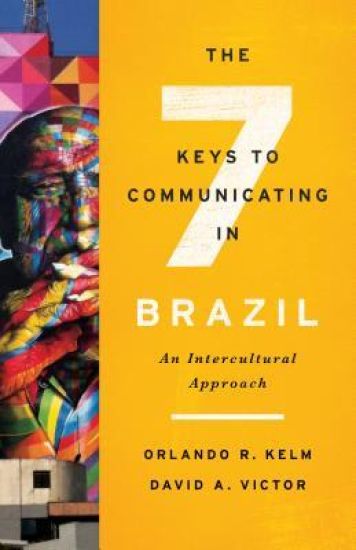
The Seven Keys to Communicating in Brazil
Orlando R. Kelm; David A. Victor
Georgetown University Press
2016
pokkari
The key to professional success in Brazil is understanding Brazilians. But how do you understand an unfamiliar culture? Seasoned cross-cultural trainers Orlando R. Kelm and David A. Victor use Victor's groundbreaking approach of evaluating a culture's language, environment, social organization, context, authority, nonverbal communication, and time conception to provide a framework for understanding Brazilians and show effective strategies to overcome these communication barriers. The method, referred to as the LESCANT approach makes you the expert evaluator of the culture and helps you easily navigate hurdles that can challenge business relationships. Each chapter of The Seven Keys to Communicating in Brazil employs memorable anecdotes, business cases on each topic from business professionals, and photographs to address key topics. The authors demonstrate how to evaluate the cultural differences between Brazil and North America and include examples of common communication mistakes. Engaging and accessible, the book helps North Americans master the nuances of the Brazilian language and achieve a real experience of the Brasil dos brasileiros.
The Seven Keys to Communicating in Mexico
Orlando R. Kelm; Olivia Hernandez-Pozas; David A. Victor
Georgetown University Press
2020
sidottu
How do you build successful professional connections with colleagues from Mexico? While most books focus simply on how to avoid common communication mistakes, this book leads its readers to an understanding of how to succeed and thrive within the three cultures, Mexico, the US, and Canada. Kelm, Hernandez-Pozas and Victor present a set of practical guidelines for communicating professionally with Mexicans, both in Mexico and abroad, providing many photographs as examples. The Seven Keys to Communicating in Mexico follows the model of presenting key cultural concepts used in the earlier books by Kelm and Victor on Brazil and (with Haru Yamada) on Japan. Olivia Hernandez-Pozas, Orlando Kelm, and David Victor, well-respected research professors and seasoned cross-cultural trainers for businesspeople, guide readers through Mexican culture using Victor's LESCANT Model (an acronym representing seven key cross-cultural communication areas: Language, Environment, Social Organization, Contexting, Authority, Nonverbal Behavior, and Time). Each chapter addresses one of these topics and demonstrates how to evaluate the differences among Mexican, US, and Canadian cultures. In the final chapter the authors bring all of these cultural interactions together with a sample case study about business interactions between Mexicans and North Americans. The case study includes additional observations from North American and Mexican business professionals who offer related suggestions and recommendations.
The Seven Keys to Communicating in Mexico
Orlando R. Kelm; Olivia Hernandez-Pozas; David A. Victor
Georgetown University Press
2020
pokkari
How do you build successful professional connections with colleagues from Mexico? While most books focus simply on how to avoid common communication mistakes, this book leads its readers to an understanding of how to succeed and thrive within the three cultures, Mexico, the US, and Canada. Kelm, Hernandez-Pozas and Victor present a set of practical guidelines for communicating professionally with Mexicans, both in Mexico and abroad, providing many photographs as examples. The Seven Keys to Communicating in Mexico follows the model of presenting key cultural concepts used in the earlier books by Kelm and Victor on Brazil and (with Haru Yamada) on Japan. Olivia Hernandez-Pozas, Orlando Kelm, and David Victor, well-respected research professors and seasoned cross-cultural trainers for businesspeople, guide readers through Mexican culture using Victor's LESCANT Model (an acronym representing seven key cross-cultural communication areas: Language, Environment, Social Organization, Contexting, Authority, Nonverbal Behavior, and Time). Each chapter addresses one of these topics and demonstrates how to evaluate the differences among Mexican, US, and Canadian cultures. In the final chapter the authors bring all of these cultural interactions together with a sample case study about business interactions between Mexicans and North Americans. The case study includes additional observations from North American and Mexican business professionals who offer related suggestions and recommendations.


The Seven Ecumenical Councils of the Undivided Church
Henry R Percival
Wipf Stock Publishers
2021
sidottu
The Seven Ecumenical Councils of the Undivided Church
Henry R Percival
Wipf Stock Publishers
2021
pokkari


In the 1970s, Hollywood icon Steve McQueen was the number one draw at the box-office with hits such as "The Magnificent Seven", "The Great Escape", "The Thomas Crown Affair" and "Bullitt", to name just a few. Notorious for his race-car driving and being a ladies' man, he resolutely did things his way. This un-produced screenplay, widely circulated in Hollywood, recounts Steve's early days before becoming a star: how he was forged into the King of Cool. From his first love, to globe-trotting adventures, to serving in the marines-and a real-life, daring rescue of fellow soldiers-this tale has it all. As Steve himself said, "I was like an old man by the time I was seventeen." A powerful screenplay-the author worked with Steve's son, Chad McQueen *Revised Edition*
The Seven Ecumenical Councils Of The Undivided Church
Henry R Percival; Henry Wace
Benediction Classics
2011
sidottu
""The Seven Ecumenical Councils Of The Undivided Church: Their Canons And Dogmatic Decrees Together With The Canons Of All The Local synods Which Have Received Ecumenical Acceptance. Edited With Notes Gathered From The Writings Of The Greatest Scholars"" is Volume XIV of the series ""Nicene And Post-Nicene Fathers Of The Christian Church"" edited by Philip Schaff and Henry Wace. This edition is complete and unabridged.

The Seven Ecumenical Councils Of The Undivided Church
Henry R Percival; Henry Wace
Benediction Classics
2011
pokkari

If you have ever read about the seven churches of Asia Minor, or the seven churches in Revelation, and wondered what they are all about, this book will help you get a deeper insight into the character of these churches. You will get a look at their geographical locations, their historical backgrounds, and their experiences that shaped the way Christ addressed them. Christ introduced himself to these seven churches in seven different ways because their works were different, and he wrote them according to their works. The church of Ephesus--the first of the seven, left its first love, and the last of the seven, the church of Laodicea focused on material wealth without recognizing that Christ was on the outside knocking, seeking the opportunity to come in. The Seven Churches of Asia Minor, (The Churches in Revelation) will take you through each church one by one; it will help you to identify actions for which they were chastened or encouraged. Five out of these seven churches were admonished, warned, and given specific steps to take for their restoration. They could take these steps of face the consequences that were meted out by Christ himself. This book will certainly be an eye-opener for any church or individual who are curious to know more about the seven churches in the book of Revelation.

Seven Stars Anthology 1973-1998: Realities Library
R. Soos
Createspace Independent Publishing Platform
2018
nidottu
Cover art by Nancy Brizendine Seven Stars was one of literally a thousand literary magazines published in the Nixon Era and beyond. The magazine formally ended in 1998 after 260 issues & this small anthology will highlight a few living moments of the history in the small press movement. The magazines are literally falling apart from age now and this new selective release will give audiences a chance to visualize the many poetic movements that were active in those years. 200 different poets were selected from the over 3000 who appeared between the covers of Seven Stars. A short history of the press and the movement is included.