Kirjojen hintavertailu. Mukana 11 244 527 kirjaa ja 12 kauppaa.

Kirjahaku

Etsi kirjoja tekijän nimen, kirjan nimen tai ISBN:n perusteella.

1000 tulosta hakusanalla Thomas C Wallace

Customer Data and Privacy: The Insights You Need from Harvard Business Review

Customer Data and Privacy: The Insights You Need from Harvard Business Review

Harvard Business Review; Timothy Morey; Andrew Burt; Christine Moorman; Thomas C. Redman

Harvard Business Review Press
2020
sidottu
Collect data and build trust.With the rise of data science and machine learning, companies are awash in customer data and powerful new ways to gain insight from that data. But in the absence of regulation and clear guidelines from most federal or state governments, it's difficult for companies to understand what qualifies as reasonable use and then determine how to act in the best interest of their customers. How do they build, not erode, trust?Customer Data and Privacy: The Insights You Need from Harvard Business Review brings you today's most essential thinking on customer data and privacy to help you understand the tangled interdependencies and complexities of this evolving issue. The lessons in this book will help you develop strategies that allow your company to be a good steward, collecting, using, and storing customer data responsibly.Business is changing. Will you adapt or be left behind? Get up to speed and deepen your understanding of the topics that are shaping your company's future with the Insights You Need from Harvard Business Review series. Featuring HBR's smartest thinking on fast-moving issues&#8212blockchain, cybersecurity, AI, and more&#8212each book provides the foundational introduction and practical case studies your organization needs to compete today and collects the best research, interviews, and analysis to get it ready for tomorrow.You can't afford to ignore how these issues will transform the landscape of business and society. The Insights You Need series will help you grasp these critical ideas&#8212and prepare you and your company for the future.

Improving Defense Acquisition

Improving Defense Acquisition

Jonathan P Wong; Obaid Younossi; Christine Kistler Lacoste; Philip S Anton; Alan J Vick; Guy Weichenberg; Thomas C Whitmore

RAND Corporation
2022
pokkari
In this report, researchers describe overarching trends that affect defense acquisition, outline challenges in the defense acquisition process, and suggest improvements that might help address those challenges. The study is informed by open-source documents and insights from publicly available RAND Corporation defense acquisition research, especially reports published since 1986, when a similar review of RAND research was published.
Road Ecology

Road Ecology

Richard T.T. Forman; Daniel Sperling; John A. Bissonette; Anthony P. Clevenger; Carol D. Cutshall; Virginia H. Dale; Lenore Fahrig; Robert L. France; Charles R. Goldman; Kevin Heanue; Julia Jones; Frederick Swanson; Thomas Turrentine; Thomas C. Winter

Island Press
2002
nidottu
A central goal of transportation is the delivery of safe and efficient services with minimal environmental impact. In practice, though, human mobility has flourished while nature has suffered. Awarness of the environmental impacts of roads is increasing, yet information remains scarce for those interested in studying, understanding, or minimizing the ecological effects of roads and vehicles. Road Ecology addresses that shortcoming by elevating previously localized and fragmented knowledge into a broad and inclusive framework for understanding and developing solutions. The book brings together fourteen leading ecologists and transportation experts to articulate state-of-the-science road ecology principles and presents specific examples that demonstrate the application of those principles.
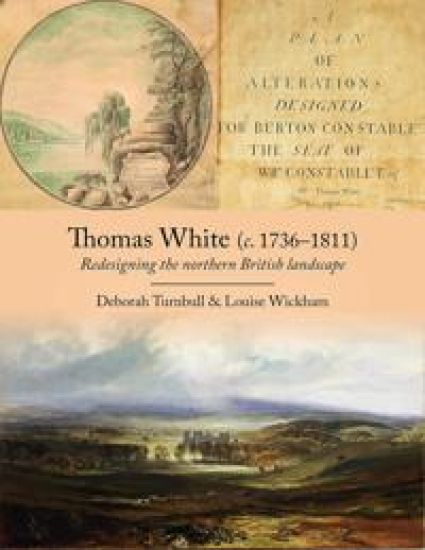
Thomas White (c. 1736-1811)

Thomas White (c. 1736-1811)

Deborah Turnbull; Louise Wickham

Oxbow Books
2021
nidottu
This volume aims to restore the reputation of Thomas White, who in his time was as well respected as his fellow landscape designers Lancelot 'Capability' Brown and Humphry Repton. By the end of his career, he had produced designs for at least 32 sites across northern England and over 60 in Scotland. These include nationally important designed landscapes in Yorkshire such as Harewood House, Sledmere Hall, Burton Constable Hall, Newby Hall, Mulgrave Castle as well as Raby Castle in Durham, Belle Isle in Cumbria and Brocklesby Hall in Lincolnshire. He has a vital role in the story of how northern English designed landscapes evolved in the 18th century.The book focuses on White's known commissions in England and sheds further light on the work of other designers such as Brown and Repton, who worked on many of the same sites. White set up as an independent designer in 1765, having worked for Brown from 1759, and his style developed over the next thirty years. Never merely a 'follower of Brown', as he is often erroneously described, his designs for plantations in particular were much admired and influenced the later, more informal styles of the picturesque movement.The improvement plans he produced for his clients demonstrate his surveying and artistic skills. These plans were working documents but at the same time works of art in their own right. Over 60 of his beautifully-executed coloured plans survive, which is a testament to the value his clients placed on them. This book makes available for the first time over 90% of the known plans and surveys by White for England. Also included are plans by White's contemporaries, together with later maps, estate surveys and contemporary illustrations to understand which parts of improvement plans were implemented.
Thomas Ballingall (c.1670-1752): Tenant Farmer of Kettle Parish and Proprietor of Gallowhill and Drummaird, Kennoway Parish: By His Sixth Great Grands
The future tenant farmer and proprietor was born in about 1670 in Kettle Parish, Fife and was first found in 1713 when he married Grisel (Grace) Swan. Thomas Ballingall is descended from a long line of tenant farmers of the parish of Kettle. His father, Alexander Ballingall (1629-1699) was a sometime tenant farmer in Clatto, whose gravestone still stands in the Kettle Parish Churchyard today. According to the Reverend James Ballingall (1846-1926), a great-great-grandson of Thomas Ballingall "It appears that this Alexander Ballingall was connected to the Ballingalls who were the owners of Riggs from 1490, the year that William Ballingall of Ballbriggie enfeoffed the second son in the ownership, down to the last owner, Thomas Ballingall (1603-1669), but the link is far from certain. And it appears likely that William Ballingall of Ballbriggie, born about 1440, was a younger son of the Ballingalls of that IIK issue in kind]." Thomas and Grisel (Grace) shortly after their marriage relocated to Cults Parish and settled at Cults farm. Their first two children were born there, however; by 1720 they had relocated back to Kettle Parish and were at Clatto farm. In that same year Thomas and his eldest son, George (1714-1793), took possession of Gallowhill and Drummaird known as Gourlays Hill both lands in Kennoway Parish. Thomas Ballingall was now a proprietor but continued to farm the lands of Clatto where he had four more children. He was also a tenant farmer of Wester Ballingall which was later known as Balmalcolm. Ballingall lived through the beginnings of the 18th-century 'Age of Enlightenment' and the outpouring of intellectual and scientific accomplishments that Scotland was experiencing. It is more than likely that Ballingall benefitted from these improvements in agriculture at the time. After the death of his first wife, he married Agnes Trail and they had six children, all of whom did not survive long. In his later years, Thomas dearly loved his family and this is apparent in his Bonds of Provisions that survive presently. This then is the narrative of the life and times of Thomas Ballingall.
The Life and Times of Thomas Stukeley (c.1525-78)
This book was published in 2003. Thomas Stukeley was one of the most colourful characters of the Elizabethan age, whose exploits brought him fame and notoriety throughout Europe. Described variously as picturesque, quixotic, cloudy minded, remarkable, and (by Evelyn Waugh) as a "preposterous and richly comic figure", Stukeley remains a flamboyant and fascinating character in the imagination of succeeding generations. Yet whilst these portrayals may be accurate, they do not in themselves do full justice to a multifaceted man whose remarkable career included stints as mercenary, pirate, forger, colonial adventurer, political advisor, diplomat and traitor, and who rubbed shoulders with princes, kings and popes. In this new biography, Professor Tazon makes extensive use of previously neglected documents from British, Spanish and Italian archives to produce a much more rounded and complete portrait of Stukeley and the events in which he participated. He brings Stukeley forth as a real figure, urging the reader to view in parallel English, Spanish, Irish and wider European history.
The Life and Times of Thomas Stukeley (c.1525-78)
Thomas Stukeley was one of the most colourful characters of the Elizabethan age, whose exploits brought him fame and notoriety throughout Europe. Described variously as picturesque, quixotic, cloudy minded, remarkable, and (by Evelyn Waugh) as a "preposterous and richly comic figure", Stukeley remains a flamboyant and fascinating character in the imagination of succeeding generations. Yet whilst these portrayals may be accurate, they do not in themselves do full justice to a multifaceted man whose remarkable career included stints as mercenary, pirate, forger, colonial adventurer, political advisor, diplomat and traitor, and who rubbed shoulders with princes, kings and popes. In this new biography, Professor Tazon makes extensive use of previously neglected documents from British, Spanish and Italian archives to produce a much more rounded and complete portrait of Stukeley and the events in which he participated. He brings Stukeley forth as a real figure, urging the reader to view in parallel English, Spanish, Irish and wider European history.
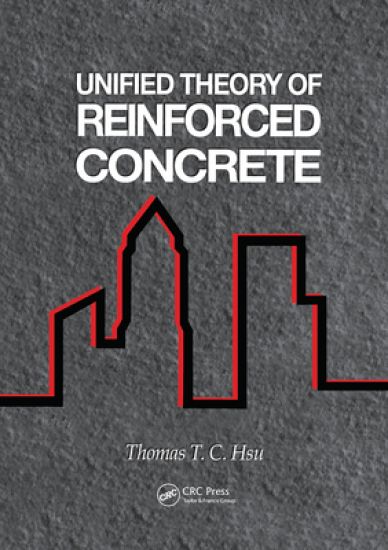
Unified Theory of Reinforced Concrete

Unified Theory of Reinforced Concrete

Thomas T.C. Hsu

Routledge
2019
nidottu
Reinforced concrete structures are subjected to a complex variety of stresses and strains. The four basic actions are bending, axial load, shear, and torsion. Presently, there is no single comprehensive theory for reinforced concrete structural behavior that addresses all of these basic actions and their interactions. Furthermore, there is little consistency among countries around the world in their building codes, especially in the specifications for shear and torsion. Unified Theory of Reinforced Concrete addresses this serious problem by integrating available information with new research data, developing one unified theory of reinforced concrete behavior that embraces and accounts for all four basic actions and their combinations. The theory is presented in a systematic manner, elucidating its five component models from a pedagogical and historical perspective while emphasizing the fundamental principles of equilibrium, compatibility, and the constitutive laws of materials. The significance of relationships between models and their intrinsic consistencies are emphasized. This theory can serve as the foundation on which to build a universal design code that can be adopted internationally. In addition to frames, the book explains the fundamental concept of the design of wall-type and shell-type structures. Unified Theory of Reinforced Concrete will be an important reference for all engineers involved in the design of concrete structures. The book can also serve well as a text for a graduate course in structural engineering.
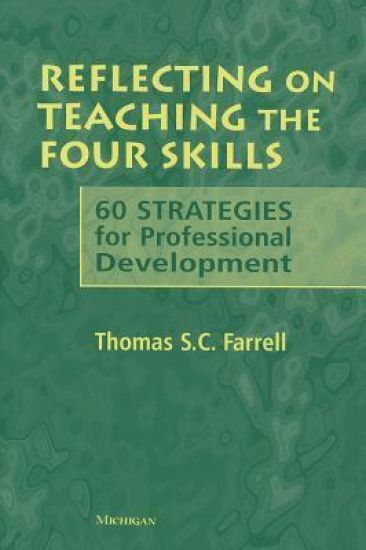
Reflecting on Teaching the Four Skills

Reflecting on Teaching the Four Skills

Thomas S.C. Farrell

The University of Michigan Press
2012
nidottu
Reflecting on Teaching the Four Skills: 60 Strategies for Professional Development offers novice teachers strate­gies for the teaching of reading, writing, listening, and speaking, and for assessing those skills. The final chapter offers strategies for pursuing professional development. The strategies presented in each chapter are not necessarily the most impor­tant or the only strategies; they are examples written to help in-service or new teachers discover new techniques for addressing common challenges. Each strategy--a simple and concise statement for teachers to reflect on, fol­lowed by a discussion of the relevant theory or principle(s)—is followed by three sections:Application: A concise description of one way the strat­egy can be used and applied by language teachers. Precaution: One caveat intended to help teachers troubleshoot for, and possibly avoid, common problems before they occur.Scenario: One scenario of a teacher using the strategy, followed by reflective questions. The scenarios are based on actual experi­ences of language teachers from around the world. Each chapter closes with a set of broad-based reflection questions that can be used as the basis of classroom discussion or writing/research or for self-reflection.
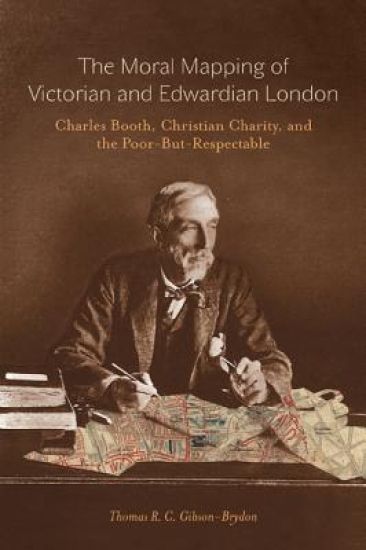
The Moral Mapping of Victorian and Edwardian London

The Moral Mapping of Victorian and Edwardian London

Thomas R.C. Gibson-Brydon

McGill-Queen's University Press
2016
sidottu
Charles Booth's seventeen-volume series, The Life and Labour of the People in London (1886-1903), is a staple of late Victorian social history and a monumental work of scholarship. Despite these facts, historians have paid little attention to its section on religious influences. Thomas Gibson-Brydon's The Moral Mapping of Victorian and Edwardian London seeks to remedy this neglect. Combing through the interviews Booth and his researchers conducted with 1,800 churchmen and women, Gibson-Brydon not only brings to life a cast of characters - from "Jesusist" vicars to Peckham Rye preachers to women drinkers - but also uncovers a city-wide audit of charitable giving and philanthropic practices. Discussing the philosophy of Booth, the genesis of his Religious Influences Series, and the agents and recipients of London charity, this study is a frank testimony on British moral segregation at the turn of the century. In critiquing the idea of working-class solidarity and community-building traditionally portrayed by many leading social and labour historians, Gibson-Brydon displays a meaner, bleaker reality in London's teeming neighbourhoods. Demonstrating the wealth of untapped information that can be gleaned from Booth's archives, The Moral Mapping of Victorian and Edwardian London raises new questions about working-class communities, cultures, urbanization, and religion at the height of the British Empire.
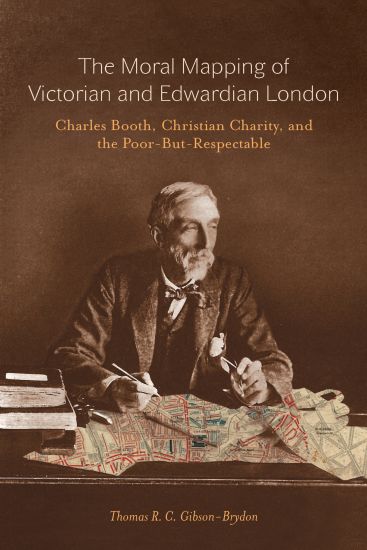
The Moral Mapping of Victorian and Edwardian London

The Moral Mapping of Victorian and Edwardian London

Thomas R.C. Gibson-Brydon

McGill-Queen's University Press
2016
nidottu
Charles Booth's seventeen-volume series, The Life and Labour of the People in London (1886-1903), is a staple of late Victorian social history and a monumental work of scholarship. Despite these facts, historians have paid little attention to its section on religious influences. Thomas Gibson-Brydon's The Moral Mapping of Victorian and Edwardian London seeks to remedy this neglect. Combing through the interviews Booth and his researchers conducted with 1,800 churchmen and women, Gibson-Brydon not only brings to life a cast of characters - from "Jesusist" vicars to Peckham Rye preachers to women drinkers - but also uncovers a city-wide audit of charitable giving and philanthropic practices. Discussing the philosophy of Booth, the genesis of his Religious Influences Series, and the agents and recipients of London charity, this study is a frank testimony on British moral segregation at the turn of the century. In critiquing the idea of working-class solidarity and community-building traditionally portrayed by many leading social and labour historians, Gibson-Brydon displays a meaner, bleaker reality in London's teeming neighbourhoods. Demonstrating the wealth of untapped information that can be gleaned from Booth's archives, The Moral Mapping of Victorian and Edwardian London raises new questions about working-class communities, cultures, urbanization, and religion at the height of the British Empire.