Kirjojen hintavertailu. Mukana 11 244 527 kirjaa ja 12 kauppaa.

Kirjahaku

Etsi kirjoja tekijän nimen, kirjan nimen tai ISBN:n perusteella.

1000 tulosta hakusanalla United Library

United Nations Reform

United Nations Reform

Spencer Zifcak

Routledge
2013
nidottu
This book examines recent attempts at reform within the United Nations in the wake of the institutional crisis provoked by the invasion of Iraq. It contends that efforts at reform have foundered owing to fundamental and bitter political disagreements between the nations of the global North and South. Following profound discord in the Security Council in the lead up to the US-led invasion of Iraq in 2003, this book considers the ambitious programme of reform instigated by then serving UN Secretary-General Kofi Annan. The author of this highly topical work, Spencer Zifcak, subjects six of Annan’s principal proposals for reform to scrutiny: the reform of the Security Council, the General Assembly, and the Human Rights Council, and suggested alterations to international law with respect to the use of force in international affairs, the ‘responsibility to protect’, and UN strategies to counter global terrorism. On the basis of these detailed case-studies, the book demonstrates why so few proposals for reform were eventually adopted. It argues that the principal reason for this failure was that nations of the North and South could not agree as to the merits of the reforms proposed, exposing the sharply differing visions held by member states for a future and improved United Nations. Founded upon extensive interviews with diplomats at the United Nations, the book provides a rare ‘insider’ account of UN politics and practice. It will be of vital interest to students, scholars and practitioners of International Relations, International Law, and International Institutions.
United States - Africa Security Relations
United States-Africa relations have experienced four major cycles. The first cycle was during the Cold War(1960-1990). During this period, the U.S. developed a one-sided relationship with various African states in which the latter served as "foot soldiers" for the U.S. in its competition with the Soviet Union for global domination. Among other things, the various client African states provided the U.S. with access to airfields, deep water ports and sites for the establishment of various intelligence gathering facilities. In addition, the U.S. used various groups like UNITA led by Jonas Savimbi in Angola to undermine and fight pro-Soviet regimes on the continent.The second cycle of the relationship covered the period 1991-1998. During this time, the U.S. scaled down its security activities in Africa. The major reason was that with the end of the Cold War Africa(with few exceptions like Egypt) was no longer a major front for the promotion of U.S. Security interests.The third cycle commenced in 1998 and ended in 2001. This period was characterized by the U.S.’ search for an approach to frame its security relations with Africa. In this vein, the U.S. undertook various military-security initiatives .The fourth cycle began after the 9/11 terrorist attacks against the American homeland. Since then, the U.S. has expanded the scope of its security relations with Africa, as reflected in the establishment of various initiatives and programs. At the core is the prosecution of the American "war on terror."Against this backdrop, this book examines some of the major dimensions of the U.S.’ security relations with Africa, including American security interests on the continent, the "war on terror," AFRICOM, and military cooperation. Using the book’s integrative theoretical framework, each of the chapters in the volume examines the various factors that shape the issue of focus.
United States and Chile

United States and Chile

David R. Mares; Francisco Rojas Aravena

Routledge
2001
sidottu
The United States and Chile is the ideal introduction to U.S.- Chilean relations. From our strained Cold War relations and the Allende assassination to current democratic and economic development, senior scholars Mares and Aravena deftly trace the path of the relationship from early partners, through tense Cold War stand-offs, to the slowly warming relations of the present. The authors include information on General Augusto Pinochet's human rights violations, his current prosecution for them, and the United State's complicity in bringing him to power. Chile is only just now recovering from decades of political instability and government abuses, and this volume provides a thorough look back, and an informed vision of the future.
United States and Chile

United States and Chile

David R. Mares; Francisco Rojas Aravena

Routledge
2001
nidottu
The United States and Chile is the ideal introduction to U.S.- Chilean relations. From our strained Cold War relations and the Allende assassination to current democratic and economic development, senior scholars Mares and Aravena deftly trace the path of the relationship from early partners, through tense Cold War stand-offs, to the slowly warming relations of the present. The authors include information on General Augusto Pinochet's human rights violations, his current prosecution for them, and the United State's complicity in bringing him to power. Chile is only just now recovering from decades of political instability and government abuses, and this volume provides a thorough look back, and an informed vision of the future.
United States and Venezuela

United States and Venezuela

Carlos A. Romero; Janet Kelly

Routledge
2001
sidottu
Oil makes up one-third of Venezuela's entire GDP, and the United States is far and away Venezuela's largest trading partner. Relations between Venezuela and the United States, traditionally close for most of the last two centuries, began to fray in the last decade as the end of the Cold War altered the international environment. The United States and Venezuela attempts to place the events of the past ten years in historical perspective and to explain the reasons why the changes occurred. It also examines the impact of new actors on the international scene: drug traffickers, common citizens, human rights and environmental activists and the media.
United States and Venezuela

United States and Venezuela

Carlos A. Romero; Janet Kelly

Routledge
2001
nidottu
Oil makes up one-third of Venezuela's entire GDP, and the United States is far and away Venezuela's largest trading partner. Relations between Venezuela and the United States, traditionally close for most of the last two centuries, began to fray in the last decade as the end of the Cold War altered the international environment. The United States and Venezuela attempts to place the events of the past ten years in historical perspective and to explain the reasons why the changes occurred. It also examines the impact of new actors on the international scene: drug traffickers, common citizens, human rights and environmental activists and the media.
United States Coloring Book

United States Coloring Book

W. Adam

Dover Publications Inc.
2003
nidottu
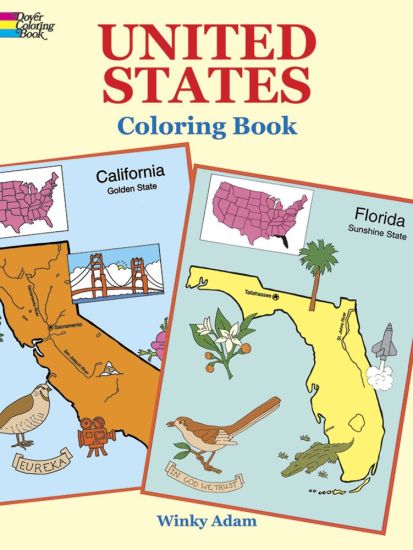
Entertaining book brims with information about each of the 50 states. Captions beneath each illustration identify state's nickname, motto, flower, bird, tree, capital, main rivers, mountains, and other facts. An excellent educational resource for use at home or in school.
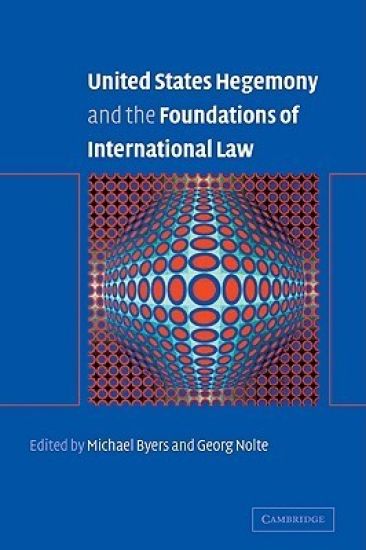
United States Hegemony and the Foundations of International Law
Successive hegemonic powers have shaped the foundations of international law. This book examines whether the predominance of the United States is leading to foundational change in the international legal system. A range of leading scholars in international law and international relations consider six foundational areas that could be undergoing change, including international community, sovereign equality, the law governing the use of force, and compliance. The authors demonstrate that the effects of US predominance on the foundations of international law are real, but also intensely complex. This complexity is due, in part, to a multitude of actors exercising influential roles. And it is also due to the continued vitality and remaining functionality of the international legal system itself. This system limits the influence of individual states, while stretching and bending in response to the changing geopolitics of our time.
United States Tax Reform in the 21st Century
Tax reform debates in the United States have focused on the question of whether the existing corporate and individual income tax system should be replaced with some form of a national consumption tax. This book contains essays written by internationally recognized tax experts who describe the current state in economic thinking on the issue of whether fundamental tax reform is preferable to continued incremental reform of the existing income tax. The papers were originally commissioned by the James A. Baker III Institute for Public Policy at Rice University, Houston. The collection covers a range of tax policy issues related to consumption tax reforms, including their economic effects, distributional consequences, effects on administrative and compliance costs, transitional issues and the political aspects of fundamental tax reform, and international comparisons. The book will serve as a comprehensive guide to the ongoing tax reform debate to tax policy makers and the general electorate.
United Nations Sanctions and the Rule of Law

United Nations Sanctions and the Rule of Law

Jeremy Matam Farrall

Cambridge University Press
2009
pokkari
The United Nations Security Council has increasingly resorted to sanctions as part of its efforts to prevent and resolve conflict. In this 2007 book, Farrall traces the evolution of the Security Council's sanctions powers and charts the contours of the UN sanctions system. He also evaluates the extent to which the Security Council's increasing commitment to strengthening the rule of law extends to its sanctions practice. The book identifies shortcomings in respect of key rule of law principles and advances pragmatic policy-reform proposals designed to ensure that UN sanctions promote, strengthen and reinforce the rule of law. In its appendices United Nations Sanctions and the Rule of Law contains summaries of all 25 UN sanctions regimes established to date by the Security Council. It forms an invaluable source of reference for diplomats, policymakers, scholars and advocates.
United States Practice in International Law: Volume 1, 1999–2001
Sean D. Murphy's wide-ranging and in-depth 2002 survey of U.S. practice in international law in the period 1999–2001 draws upon the statements and actions of the executive, legislative and judicial branches of the U.S. government to examine its involvement across a range of areas. These areas include diplomatic and consular relations, jurisdiction and immunities, state responsibility and liability, international organizations, international economic law, human rights, and international criminal law. At the time of its first publication this summary of the most salient issues was a central resource on U.S. practice in international law. The volume contains extracts from hard-to-find documents, generous citations to relevant sources, tables of cases and treaties, and a detailed index. Revealing international law in the making, this essential tool for researchers and practitioners was the first in a series of books capturing the international law practice of a global player.
United States Taxes and Tax Policy

United States Taxes and Tax Policy

David G. Davies

Cambridge University Press
1986
pokkari
United States Taxes and Tax Policy supplements and complements the theoretical material on taxes found in public finance texts using a combination of institutional, theoretical and empirical information. By adding flesh to theoretical bones, this textbook provides insight into the behaviour of individuals in both the private and public sectors. Specifically, the economic effects of taxes and tax policy are stressed and, as a result, students will gain an appreciation and understanding of how tax policy actually affects the economy. For example, where many texts typically stop with a rather pristine treatment of the income and substitution effects of a tax, this book goes further by examining econometric studies of the supply of labour, and the relationship of this work to taxes, the Laffer curve, and the role and magnitude of the underground economy. Using this approach, Professor Davies brings life to what can be a dull subject.
United States Practice in International Law: Volume 2, 2002–2004
Sean D. Murphy's in-depth survey of U.S. practice in international law in the period 2002–2004 draws upon the statements and actions of the executive, legislative and judicial branches of the U.S. government to examine its involvement across a range of areas. These areas include diplomatic and consular relations, jurisdiction and immunities, state responsibility and liability, international organizations, international economic law, human rights, and international criminal law. This summary of the most salient issues during 2002–2004 (ranging from the treatment of detainees during the Afghan conflict in the spring of 2002 to the invasion and occupation of Iraq in 2003-2004) was originally published in 2006, and is a central source of information about U.S. practice in international law. Revealing international law in the making, this essential tool for researchers and practitioners is the second in a series of books capturing the international law practice of a global player.
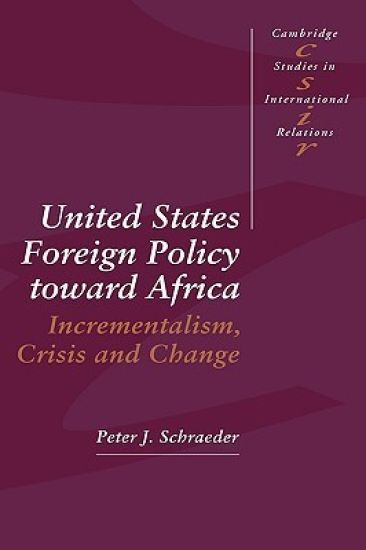
United States Foreign Policy toward Africa

United States Foreign Policy toward Africa

Peter J. Schraeder

Cambridge University Press
1994
sidottu
In this book Peter Schraeder offers the first comprehensive theoretical analysis of US foreign policy toward Africa in the postwar era. He argues that though we often assume that US policymakers 'speak with one voice', Washington's foreign policy is, however, derived from numerous centres of power which each have the ability to pull policy in different directions. The book describes the evolution of policy at three levels: Presidents and their close advisors; the bureaucracies of the executive branch; and Congress and African affairs interest groups. Most importantly, the evidence presented demonstrates that the nature of events in Africa has itself affected the operation of the US policymaking process, and the substance of US policy. Drawing on over 100 interviews, and detailed case studies in Zaire, Ethiopia-Somalia and South Africa, this book provides a unique analysis of the historical evolution of US foreign policy towards Africa from the 1940s to the 1990s.
United States Foreign Policy toward Africa

United States Foreign Policy toward Africa

Peter J. Schraeder

Cambridge University Press
1994
pokkari
In this book Peter Schraeder offers the first comprehensive theoretical analysis of US foreign policy toward Africa in the postwar era. He argues that though we often assume that US policymakers ‘speak with one voice’, Washington’s foreign policy is, however, derived from numerous centres of power which each have the ability to pull policy in different directions. The book describes the evolution of policy at three levels: Presidents and their close advisors; the bureaucracies of the executive branch; and Congress and African affairs interest groups. Most importantly, the evidence presented demonstrates that the nature of events in Africa has itself affected the operation of the US policymaking process, and the substance of US policy. Drawing on over 100 interviews, and detailed case studies in Zaire, Ethiopia-Somalia and South Africa, this book provides a unique analysis of the historical evolution of US foreign policy towards Africa from the 1940s to the 1990s.
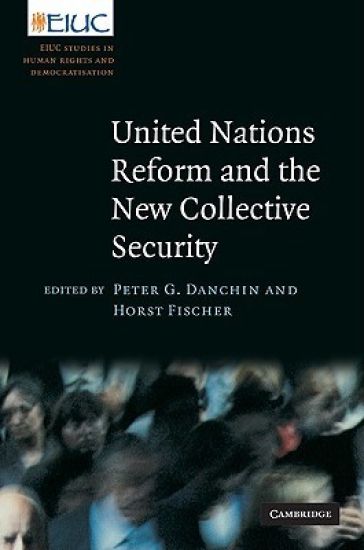
United Nations Reform and the New Collective Security
In 2004, the Report of the Secretary-General's High-Level Panel on Threats, Challenges and Change emphasised the linkages between economic development, security and human rights, and the imperative in the twenty-first century of collective action and cooperation between States. In a world deeply divided by differences of power, wealth, culture and ideology, central questions today in international law and organisation are whether reaffirmation of the concept of collective security and a workable consensus on the means of its realisation are possible. In addressing these questions, this book considers the three key documents in the recent UN reform process: the High-Level Panel report, the Secretary-General's In Larger Freedom report and the 2005 World Summit Outcome document. The chapters examine the responsibilities, commitments, strategies and institutions necessary for collective security to function both in practice and as a normative ideal in international law and relations between state and non-state actors alike.
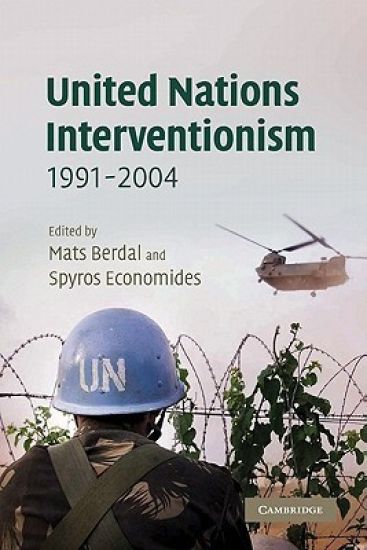
United Nations Interventionism, 1991–2004

United Nations Interventionism, 1991–2004

Spyros Economides

Cambridge University Press
2007
pokkari
After years of paralysis, the 1990s saw an explosion in the number of United Nations field operations around the world. In terms of scope and level of ambition, these interventions went beyond the tried and tested principles of classical UN peacekeeping. Indeed, in some cases - such as Cambodia, Kosovo and East Timor - the UN presence assumed the form of quasi-protectorates designed to steer war-torn and deeply divided societies towards lasting peace. This book examines the UN's performance and assesses the wider impact of 'new interventionism' on international order and the study of international relations. Featuring eight case studies of major UN interventions and an introductory chapter outlining the most important theoretical and political features of the international system which have led to the increased interventionary practices of the UN, this book will appeal to students and researchers in international relations and international organizations.
United States Practice in International Law: Volume 1, 1999–2001
Sean D. Murphy's wide-ranging and in-depth 2002 survey of U.S. practice in international law in the period 1999–2001 draws upon the statements and actions of the executive, legislative and judicial branches of the U.S. government to examine its involvement across a range of areas. These areas include diplomatic and consular relations, jurisdiction and immunities, state responsibility and liability, international organizations, international economic law, human rights, and international criminal law. At the time of its first publication this summary of the most salient issues was a central resource on U.S. practice in international law. The volume contains extracts from hard-to-find documents, generous citations to relevant sources, tables of cases and treaties, and a detailed index. Revealing international law in the making, this essential tool for researchers and practitioners was the first in a series of books capturing the international law practice of a global player.
United States Practice in International Law: Volume 2, 2002–2004
Sean D. Murphy's in-depth survey of U.S. practice in international law in the period 2002–2004 draws upon the statements and actions of the executive, legislative and judicial branches of the U.S. government to examine its involvement across a range of areas. These areas include diplomatic and consular relations, jurisdiction and immunities, state responsibility and liability, international organizations, international economic law, human rights, and international criminal law. This summary of the most salient issues during 2002–2004 (ranging from the treatment of detainees during the Afghan conflict in the spring of 2002 to the invasion and occupation of Iraq in 2003-2004) was originally published in 2006, and is a central source of information about U.S. practice in international law. Revealing international law in the making, this essential tool for researchers and practitioners is the second in a series of books capturing the international law practice of a global player.