The Fair Maid of Perth (or St. Valentine's Day) is a novel by Sir Walter Scott. Inspired by the strange, but historically true, story of the Battle of the North Inch, 1] it is set in Perth (then called 'Saint Johnstone') and other parts of Scotland around 1400. The book had been intended to include two other stories in the same volume, "My Aunt Margaret's Mirror" and "Death of the Laird's Jock", which was to have been titled St. Valentine's Eve The fair maid of the title is Catharine Glover, daughter of a glovemaker in Perth, who kisses Henry Gow/Smith, the armourer, while he is sleeping, on Valentine's Day. But Catharine has caught the eye of the Duke of Rothesay, and when Gow interrupts an attempted abduction, the armourer is drawn simultaneously into royal intrigue and highland feud.
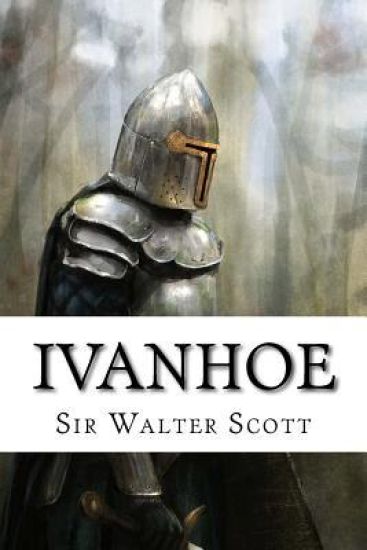
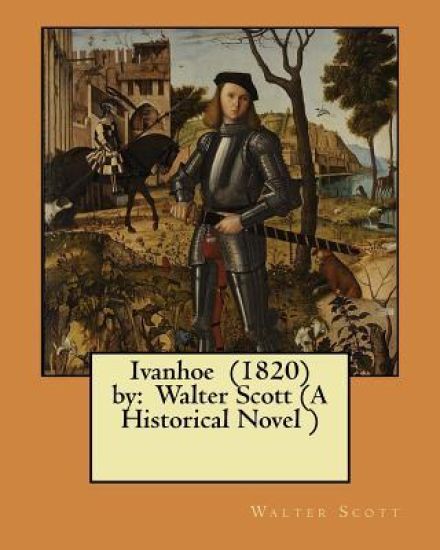
Ivanhoe is a novel by Sir Walter Scott. It was written in 1819 and set in 12th century England, an example of historical fiction. Ivanhoe is sometimes given credit for helping to increase popular interest in the middle ages in 19th century Europe and America. Ivanhoe is a historical novel by Sir Walter Scott, first published in 1820 in three volumes and subtitled A Romance. Ivanhoe, set in 12th century England, has been credited for increasing interest in romance and medievalism; John Henry Newman claimed Scott "had first turned men's minds in the direction of the Middle Ages", while Carlyle and Ruskin made similar assertions of Scott's overwhelming influence over the revival, based primarily on the publication of this novel
Sir Walter Ralegh was the favourite of Queen Elizabeth, who showered him estates, jewels, monopolies, and political appointments earning him the reputation of "the most hated man in England." A man of many talents, he helped convince Elizabeth she should be empress of a great empire, on the condition that he be the one to shape her realm from the first. In Walter Ralegh, eminent historian Alan Gallay tells the fascinating story of how Ralegh helped create the largest empire the world has ever seen.A courtier, buccaneer, soldier, explorer, and statesman -- as well as a poet, historian, naval strategist, and scientist -- Ralegh is best known in the US for trying, and failing, to found Roanoke, the first English colony in America. But that event does not even begin to suggest the world-historical import of his adventures. Inspired by the mystical religious philosophy of hermeticism, Ralegh (popularly, and mistakenly, spelt "Raleigh") believed that England could build an empire without the conquest of native peoples, an empire in which English settlers and American Indians would live together, or, alternatively, where natives became allies and England would not interfere with their way of life. Playing a lead role in England's simultaneous attempt to colonise North America, South America, and Ireland, Ralegh shaped the English Empire at its birth, motivated by the wild idealism that the answer to English fears of national decline resided in the Americas, where natives blessed by God would reveal the mysteries of the universe.In the end, colonialism left a legacy of brutal exploitation far different from Ralegh's idealisations. Examining Ralegh's life, Gallay reveals that Elizabethans had complex and often contrary views on colonisation, seeing it as a means of achieving transcendence or, just as often, of achieving wealth and glory through war and subjugation. From Ralegh's introduction of the potato to Ireland to his creation of the most famous medicine of seventeenth-century England, from his failed colonial experiment on Roanoke island to his search for El Dorado, Gallay chronicles Ralegh's legendary life and offers a new origin story for the English Empire.
Ivanhoe is a historical novel by Sir Walter Scott, first published in 1820 in three volumes and subtitled A Romance. At the time it was written it represented a shift by Scott away from fairly realistic novels set in Scotland in the comparatively recent past, to a somewhat fanciful depiction of mediaeval England. It has proved to be one of the best known and most influential of Scott's novels. Ivanhoe is set in 12th century England, with colourful descriptions of tournaments, outlaws, witch trials and divisions between Jews and Christians. It has been credited for increasing interest in romance and medievalism; John Henry Newman claimed Scott "had first turned men's minds in the direction of the Middle Ages", while Carlyle and Ruskin made similar assertions of Scott's overwhelming influence over the revival, based primarily on the publication of this novel.It has also had an important influence on popular perceptions of Robin Hood, Richard the Lionheart and King John. Ivanhoe is the story of one of the remaining Saxon noble families at a time when the nobility in England was overwhelmingly Norman. It follows the Saxon protagonist, Sir Wilfred of Ivanhoe, who is out of favour with his father for his allegiance to the Norman king Richard the Lionheart. The story is set in 1194, after the failure of the Third Crusade, when many of the Crusaders were still returning to their homes in Europe. King Richard, who had been captured by Leopold of Austria on his return journey to England, was believed to still be in captivity. The legendary Robin Hood, initially under the name of Locksley, is also a character in the story, as are his "merry men". The character that Scott gave to Robin Hood in Ivanhoe helped shape the modern notion of this figure as a cheery noble outlaw. Other major characters include Ivanhoe's intractable father, Cedric, one of the few remaining Saxon lords; various Knights Templar, most notable of whom is Brian de Bois-Guilbert, Ivanhoe's main rival; a number of clergymen; the loyal serfs: Gurth the swineherd and the jester Wamba, whose observations punctuate much of the action; and the Jewish moneylender, Isaac of York, who is equally passionate about his people and his beautiful daughter, Rebecca. The book was written and published during a period of increasing struggle for the emancipation of the Jews in England, and there are frequent references to injustices against them........ Sir Walter Scott, 1st Baronet, FRSE (15 August 1771 - 21 September 1832) was a Scottish historical novelist, playwright and poet with many contemporary readers in Europe, Australia, and North America. Scott's novels and poetry are still read, and many of his works remain classics of both English-language literature and of Scottish literature. Famous titles include Ivanhoe, Rob Roy, Old Mortality, The Lady of the Lake, Waverley, The Heart of Midlothian and The Bride of Lammermoor. Although primarily remembered for his extensive literary works and his political engagement, Scott was an advocate, judge and legal administrator by profession, and throughout his career combined his writing and editing work with his daily occupation as Clerk of Session and Sheriff-Depute of Selkirkshire....
Sir Walter Scott, 1st Baronet, FRSE (15 August 1771 - 21 September 1832) was a Scottish historical novelist, playwright and poet with many contemporary readers in Europe, Australia, and North America. Scott's novels and poetry are still read, and many of his works remain classics of both English-language literature and of Scottish literature. Famous titles include Ivanhoe, Rob Roy, Old Mortality, The Lady of the Lake, Waverley, The Heart of Midlothian and The Bride of Lammermoor. Although primarily remembered for his extensive literary works and his political engagement, Scott was an advocate, judge and legal administrator by profession, and throughout his career combined his writing and editing work with his daily occupation as Clerk of Session and Sheriff-Depute of Selkirkshire. A prominent member of the Tory establishment in Edinburgh, Scott was an active member of the Highland Society and served a long term as President of the Royal Society of Edinburgh (1820-32)......... James VI and I (19 June 1566 - 27 March 1625) was King of Scotland as James VI from 24 July 1567 and King of England and Ireland as James I from the union of the Scottish and English crowns on 24 March 1603 until his death. The kingdoms of Scotland and England were individual sovereign states, with their own parliaments, judiciary, and laws, though both were ruled by James in personal union. James was the son of Mary, Queen of Scots, and a great-great-grandson of Henry VII, King of England and Lord of Ireland, positioning him to eventually accede to all three thrones. James succeeded to the Scottish throne at the age of thirteen months, after his mother Mary was compelled to abdicate in his favour. Four different regents governed during his minority, which ended officially in 1578, though he did not gain full control of his government until 1583. In 1603, he succeeded the last Tudor monarch of England and Ireland, Elizabeth I, who died without issue. a] He continued to reign in all three kingdoms for 22 years, a period known as the Jacobean era after him, until his death in 1625 at the age of 58. After the Union of the Crowns, he based himself in England (the largest of the three realms) from 1603, only returning to Scotland once in 1617, and styled himself "King of Great Britain and Ireland". b] He was a major advocate of a single parliament for England and Scotland. In his reign, the Plantation of Ulster and British colonization of the Americas began. At 57 years and 246 days, James's reign in Scotland was longer than those of any of his predecessors. He achieved most of his aims in Scotland but faced great difficulties in England, including the Gunpowder Plot in 1605 and repeated conflicts with the English Parliament. Under James, the "Golden Age" of Elizabethan literature and drama continued, with writers such as William Shakespeare, John Donne, Ben Jonson, and Sir Francis Bacon contributing to a flourishing literary culture. 1] James himself was a talented scholar, the author of works such as Daemonologie (1597), The True Law of Free Monarchies (1598), and Basilikon Doron (1599). He sponsored the translation of the Bible that would later be named after him: the Authorised King James Version. c] Sir Anthony Weldon claimed that James had been termed "the wisest fool in Christendom", an epithet associated with his character ever since. Since the latter half of the 20th century, historians have tended to revise James's reputation and treat him as a serious and thoughtful monarch.
Sir Walter Scott, 1st Baronet, FRSE (15 August 1771 - 21 September 1832) was a Scottish historical novelist, playwright and poet with many contemporary readers in Europe, Australia, and North America. Scott's novels and poetry are still read, and many of his works remain classics of both English-language literature and of Scottish literature. Famous titles include Ivanhoe, Rob Roy, Old Mortality, The Lady of the Lake, Waverley, The Heart of Midlothian and The Bride of Lammermoor. Although primarily remembered for his extensive literary works and his political engagement, Scott was an advocate, judge and legal administrator by profession, and throughout his career combined his writing and editing work with his daily occupation as Clerk of Session and Sheriff-Depute of Selkirkshire. A prominent member of the Tory establishment in Edinburgh, Scott was an active member of the Highland Society and served a long term as President of the Royal Society of Edinburgh (1820-32). In 1796, Scott's friend James Ballantyne 16] founded a printing press in Kelso, in the Scottish Borders. Through Ballantyne, Scott was able to publish his first works, including "Glenfinlas" and "The Eve of St. John", and his poetry then began to bring him to public attention. In 1805, The Lay of the Last Minstrel captured wide public imagination, and his career as a writer was established in spectacular fashion. He published many other poems over the next ten years, including the popular The Lady of the Lake, printed in 1810 and set in the Trossachs. Portions of the German translation of this work were set to music by Franz Schubert. One of these songs, "Ellens dritter Gesang", is popularly labelled as "Schubert's Ave Maria". Beethoven's opus 108 "Twenty-Five Scottish Songs" includes 3 folk songs whose words are by Walter Scott. Marmion, published in 1808, produced lines that have become proverbial. Canto VI. Stanza 17 reads: Yet Clare's sharp questions must I shun Must separate Constance from the nun Oh what a tangled web we weave When first we practise to deceive A Palmer too No wonder why I felt rebuked beneath his eye. In 1809 Scott persuaded James Ballantyne and his brother to move to Edinburgh and to establish their printing press there. He became a partner in their business. As a political conservative, Scott helped to found the Tory Quarterly Review, a review journal to which he made several anonymous contributions. Scott was also a contributor to the Edinburgh Review, which espoused Whig views. Scott was ordained as an elder in the Presbyterian Church of Duddington and sat in the General Assembly for a time as representative elder of the burgh of Selkirk. When the lease of Ashestiel expired in 1811 Scott bought Cartley Hole Farm, on the south bank of the River Tweed nearer Melrose. The farm had the nickname of "Clarty Hole", and when Scott built a family cottage there in 1812 he named it "Abbotsford". He continued to expand the estate, and built Abbotsford House in a series of extensions. In 1813 Scott was offered the position of Poet Laureate. He declined, due to concerns that "such an appointment would be a poisoned chalice", as the Laureateship had fallen into disrepute, due to the decline in quality of work suffered by previous title holders, ", as a succession of poetasters had churned out conventional and obsequious odes on royal occasions." He sought advice from the Duke of Buccleuch, who counseled him to retain his literary independence, and the position went to Scott's friend, Robert Southey.
Ivanhoe is the story of one of the remaining Saxon noble families at a time when the English nobility was overwhelmingly Norman. It follows the Saxon protagonist, Wilfrid of Ivanhoe, who is out of favour with his father owing to his courting the Lady Rowena and for his allegiance to the Norman king Richard I of England. The story is set in 1194, after the end of the Third Crusade, when many of the Crusaders were still returning to Europe. King Richard, having been captured by the Duke of Saxony, on his way back, was still supposed to be in the arms of his captors. The legendary Robin Hood, initially under the name of Locksley, is also a character in the story, as are his 'merry men, ' including Friar Tuck and, less so, Alan-a-Dale. (Little John is merely mentioned.) The character that Scott gave to Robin Hood in Ivanhoe helped shape the modern notion of this figure as a cheery noble outlaw
"... lev cette cole, il adora le succ s, et apprit l'enlever violemment plut t qu' le m riter. Souvent il joignit le charlatanisme la gloire. Ce qui tait saillie l g re et caprice fac tieux chez nos braves enfants du Midi, devint un grave calcul chez le fils des Saxons. Ces vives et p tulantes boutades qui tinc lent dans la causerie, qui donnent tant de relief la guerre et l'amour, et qui, dans la m l e sanglante, apparaissent comme les lueurs des glaives qui se heurtent, ont besoin, pour tre aim es ou pardonn es, d'une l g ret presque enfantine et d'une gr ce insouciante. Raleigh prit au s rieux l'humeur gasconne; il en fit le po me pique de sa vie. Dans les grandes entreprises, dans les sombres conjurations, dans les longues travers es et les colonisations p rilleuses, il fut Mascarille ou Scapin. Bariolant de traits sublimes ce charlatanisme gigantesque, nul homme (quoi qu'en ait dit la Revue d' dimbourg) n'a mieux menti, n'a plus souvent, n'a plus t m rairement menti. La France offrait alors une mauvaise discipline et un fatal exemple. Trois grandes qualit s lui restaient, l'audace, le courage et l'adresse. Mais, du reste, jamais esprits infernaux ne se sont d cha n s avec plus de folie, et n'ont m l plus de sang plus de d bauche..."
Travels with a Donkey in the Cevennes (1879) is one of Robert Louis Stevenson's earliest published works and is considered a pioneering classic of outdoor literature.Background: Stevenson was in his late 20s and still dependent on his parents for support. His journey was designed to provide material for publication while allowing him to distance himself from a love affair with an American woman of which his friends and families did not approve and who had returned to her husband in California. Travels recounts Stevenson's 12-day, 200 kilometres (120 mi) solo hiking journey through the sparsely populated and impoverished areas of the C vennes mountains in south-central France in 1878. The terrain, with its barren rocky heather-filled hillsides, he often compared to parts of Scotland. The other principal character is Modestine, a stubborn, manipulative donkey he could never quite master. It is one of the earliest accounts to present hiking and camping outdoors as a recreational activity. It also tells of commissioning one of the first sleeping bags, large and heavy enough to require a donkey to carry. Stevenson is several times mistaken for a peddler, the usual occupation of someone traveling in his fashion. Some locals are horrified that he would sleep outdoors and suggest it is dangerous to do so because of wolves or robbers. Stevenson provides the reader with the philosophy behind his undertaking: 2] For my part, I travel not to go anywhere, but to go. I travel for travel's sake. The great affair is to move; to feel the needs and hitches of our life more clearly; to come down off this feather-bed of civilization, and find the globe granite underfoot and strewn with cutting flints. Alas, as we get up in life, and are more preoccupied with our affairs, even a holiday is a thing that must be worked for. To hold a pack upon a pack-saddle against a gale out of the freezing north is no high industry, but it is one that serves to occupy and compose the mind. And when the present is so exacting who can annoy himself about the future? The C vennes was the site of a Protestant rebellion around 1702, severely suppressed by Catholic Louis XIV. The Protestant insurgents were known as the Camisards. Stevenson was Protestant by upbringing, and a non-believer by philosophy. Stevenson was well-versed in the history and evokes scenes from the rebellion as he passes through the area of the rebellion during the final days of his trek. He notes that the Catholics and the Protestants, at the time of his travels, live peaceably alongside one another, though each community is faithful to its own traditions and its version of the region's history. All disapprove equally of a young Catholic man who married a Protestant girl and changed his faith, agreeing that "It's a bad idea for a man to change." As for a Catholic priest who left the priesthood and married, the sentiment common to all was that it is wrong to change one's commitments. The book appeared the following year, 1879, and is dedicated to his friend Sidney Colvin, an art historian and critic who had befriended him when he was unpublished and seeking to develop a career as a writer. Walter Crane (15 August 1845 - 14 March 1915) was an English artist and book illustrator. Robert Louis Balfour Stevenson (13 November 1850 - 3 December 1894) was a Scottish novelist, poet, essayist, and travel writer. His most famous works are Treasure Island, Kidnapped, Strange Case of Dr Jekyll and Mr Hyde, and A Child's Garden of Verses.
Ivanhoe is a historical novel by Sir Walter Scott, first published in 1820 in three volumes and subtitled A Romance. At the time it was written it represented a shift by Scott away from fairly realistic novels set in Scotland in the comparatively recent past, to a somewhat fanciful depiction of mediaeval England. It has proved to be one of the best known and most influential of Scott's novels. Ivanhoe is set in 12th-century England, with colourful descriptions of a tournament, outlaws, a witch trial and divisions between Jews and Christians. It has been credited for increasing interest in romance and medievalism; John Henry Newman claimed Scott "had first turned men's minds in the direction of the Middle Ages", while Carlyle and Ruskin made similar assertions of Scott's overwhelming influence over the revival, based primarily on the publication of this novel. It has also had an important influence on popular perceptions of Robin Hood, Richard the Lionheart and King John. There have been several adaptations for stage, film and television.
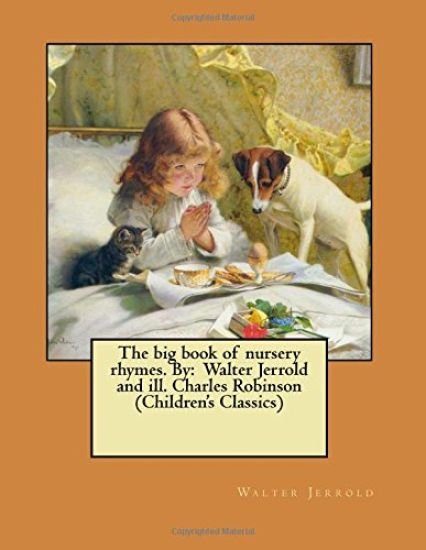
INTRODUCTION THE very title "Nursery Rhymes", which has come to be associated with a A great body of familiar verse, is in itself sufficient evidence ot how that verse has been passed down from generation to generation. Some pieces date, perhaps, from hundreds of years ago, and had been repeated thousands of times betore they were printed. There are not wanting learned tolk who tell us that there was once, in Britain, a King Cole, and that the only relic of his reign which we have is the verse in which he is shown calling for his pipe, his bowl, and his fiddlers three. Such wise people forget that pipes were not smoked here before the days of Queen Elizabeth, and that fiddles were not known before the sixteenth century. It is certain, however, that some ot these rhymes were familiar in those great days; Shakespeare seems to reter to one
The Virginians: A Tale of the Last Century (1857-59) is a historical novel by William Makepeace Thackeray which forms a sequel to his Henry Esmond and is also loosely linked to Pendennis. PLOT: It tells the story of Henry Esmond's twin grandsons, George and Henry Warrington. Henry's romantic entanglements with an older woman lead up to his taking a commission in the British army and fighting under the command of General Wolfe at the capture of Quebec. On the outbreak of the American War of Independence he takes the revolutionary side. George, who is also a British officer, thereupon resigns his commission rather than take up arms against his brother.... William Makepeace Thackeray (18 July 1811 - 24 December 1863) was an English novelist of the 19th century. He is known for his satirical works, particularly Vanity Fair, a panoramic portrait of English society. BIOGRAPHY: Thackeray, an only child, was born in Calcutta, British India, where his father, Richmond Thackeray (1 September 1781 - 13 September 1815), was secretary to the Board of Revenue in the British East India Company. His mother, Anne Becher (1792-1864), was the second daughter of Harriet Becher and John Harman Becher, who was also a secretary (writer) for the East India Company. Richmond died in 1815, which caused Anne to send her son to England in 1816, while she remained in British India. The ship on which he travelled made a short stopover at St. Helena, where the imprisoned Napoleon was pointed out to him. Once in England he was educated at schools in Southampton and Chiswick, and then at Charterhouse School, where he became a close friend of John Leech. Thackeray disliked Charterhouse, and parodied it in his fiction as "Slaughterhouse". Nevertheless, Thackeray was honoured in the Charterhouse Chapel with a monument after his death. Illness in his last year there, during which he reportedly grew to his full height of six foot three, postponed his matriculation at Trinity College, Cambridge, until February 1829. citation needed]Never too keen on academic studies, Thackeray left Cambridge in 1830, but some of his earliest published writing appeared in two university periodicals, The Snob and The Gownsman. Thackeray then travelled for some time on the continent, visiting Paris and Weimar, where he met Goethe. He returned to England and began to study law at the Middle Temple, but soon gave that up. On reaching the age of 21 he came into his inheritance from his father, but he squandered much of it on gambling and on funding two unsuccessful newspapers, The National Standard and The Constitutional, for which he had hoped to write. He also lost a good part of his fortune in the collapse of two Indian banks. Forced to consider a profession to support himself, he turned first to art, which he studied in Paris, but did not pursue it, except in later years as the illustrator of some of his own novels and other writings. Thackeray's years of semi-idleness ended after he married, on 20 August 1836, Isabella Gethin Shawe (1816-1893), second daughter of Isabella Creagh Shawe and Matthew Shawe, a colonel who had died after distinguished service, primarily in India. The Thackerays had three children, all girls: Anne Isabella (1837-1919), Jane (who died at eight months old) and Harriet Marian (1840-1875), who married Sir Leslie Stephen, editor, biographer and philosopher. Walter Copeland Jerrold (1865-1929) was an English writer, biographer and newspaper editor. Ernest Percival Rhys ( 17 July 1859 - 25 May 1946) was a Welsh-English writer, best known for his role as founding editor of the Everyman's Library series of affordable classics. He wrote essays, stories, poetry, novels and plays.