Kirjahaku
Etsi kirjoja tekijän nimen, kirjan nimen tai ISBN:n perusteella.
1000 tulosta hakusanalla Wendell E Fox
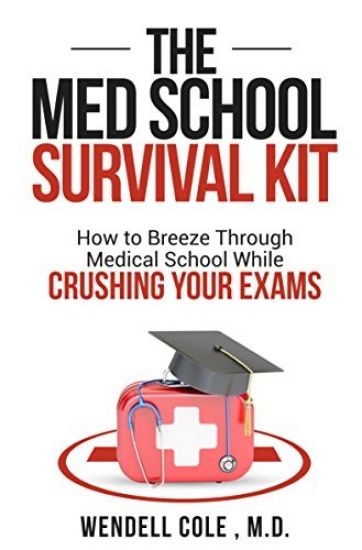
The Med School Survival Kit: How to Breeze Through Med School While Crushing Your Exams
Wendell Cole
Med School Survival Kit
2018
nidottu
Forget the old saying that you can't excel in medical school and have a social life at the same time. You can It's time to study smarter, save countless hours, crush your exams, have a life, and match into the residency program of your choice. This book is the blueprint on how to get everything you want out of med school. IN THIS STEP BY STEP GUIDE ON HOW TO BREEZE THROUGH MEDICAL SCHOOL YOU WILL LEARN: - Tips and tricks on how to navigate through all 4 years of medical school. - How to get a 250 on your STEP 1 exam by studying efficiently and approaching questions the right way. - How to use storytelling as a tactic to learn anything. - Travel hacks to get you deeply discounted flights as a med student. - Tips on balancing school and personal life. - Tips on writing your personal statement. - How to get involved in research. - Productivity, time management, and study hacks to make you 4x more effective. - The right resources to use on all of your subject exams. - Plus much much more
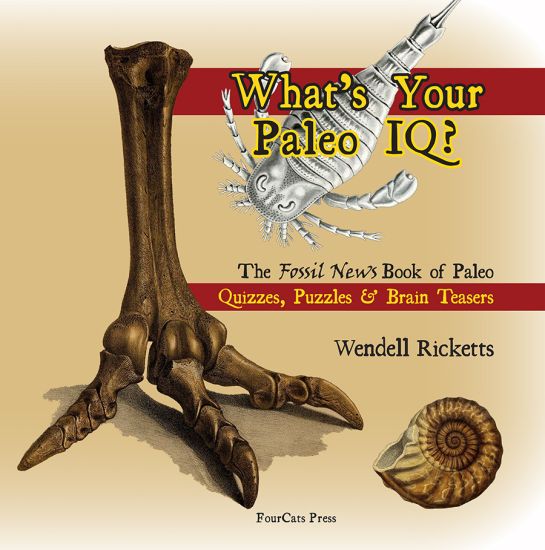
You're smart, but are you fossil smart?What's Your Paleo IQ? is a collection of puzzles, brain teasers, and quizzes for the amateur and avocational paleontologist who's a bit beyond being a beginner. Fully illustrated and colorful, What's Your Paleo IQ? invites readers not only to play, but to learn. Twenty-five different quizzes and puzzles challenge your knowledge of paleontology, paleo-trivia, and the history of life on earth as told by fossils (Which fossil was named for Edward Scissorhands? Who was known as "Darwin's bulldog"? Did the first cockroaches come before or after the first reptiles?). You can even play a round of "Paleo Jeopardy" Test your knowledge or challenge others. Expand your vocabulary and enhance your fossil IQ - and have fun doing it
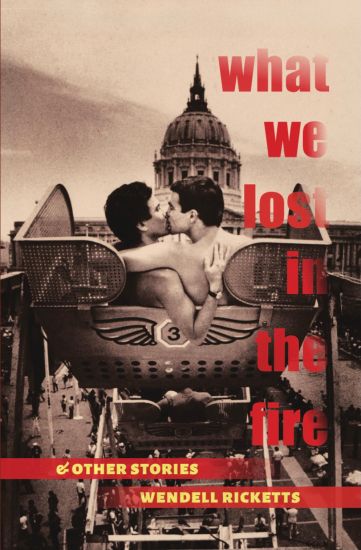
Even as they blur distinctions between fiction and memoir, the daring, challenging stories in What We Lost in the Fire stretch and expand notions of queer lives-and of queer fiction writing. The eclectic geographies of these stories-Hawai'i, Rome, a Texas prison, southwestern Ohio, New York, Florida, and still other, hybrid landscapes-are reflected in the rich, idiomatic voices of Ricketts' characters. San Francisco, in particular, is as much a living presence in many of these stories as it is a setting, and the novella-length title story captures the nearly indescribable zeitgeist of queer life in "the City" during the plague years at the end of the last millennium-and of the weight of memory for the survivors who live on in the present. Throughout these fictions runs a dark, occasionally lacerating humor, a well-honed sense of both existential absurdity and the harrowingly high stakes of everyday love and trouble. Ricketts' characters are messy. They have faults. They're nobody's role models. This memorable, richly varied collection of tales of ennui, bitterness, and violence; of rambunctious satires and carefully-drawn realism; of love stories (and a few hate stories); of studies in working-class revenge and working-class solidarity honors the distance traveled and the scars earned along the way. These are not "feel good" stories; they're "feel human." stories. Queer literary fiction has a new champion. Ricketts finds territories where other writers only find interstices, and what results is a collection of stories that uncovers powerful meanings in the most mundane spaces and times. - Keith Banner, author of the short-story collections The Smallest People Alive and Next to Nothing; the novel The Life I Lead; and the anthology, This is True Love: Essays and Stories Sexuality-as a topic that runs along the spine of many of the stories-is elevated deftly to a more sophisticated arena, away from familiar queer territory and toward poignancy. What impressive storytelling - Rigoberto Gonzalez, recipient of the Bill Whitehead Award for Lifetime Achievement and of the PEN/Voelcker Award for Poetry and author of What Drowns the Flowers in Your Mouth: A Memoir of Brotherhood; The Book of Ruin; and Butterfly Boy: Memories of a Chicano Mariposa

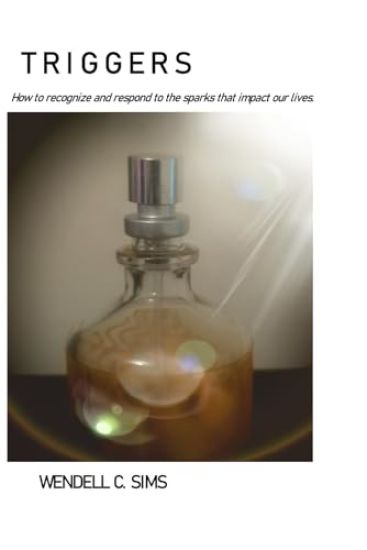
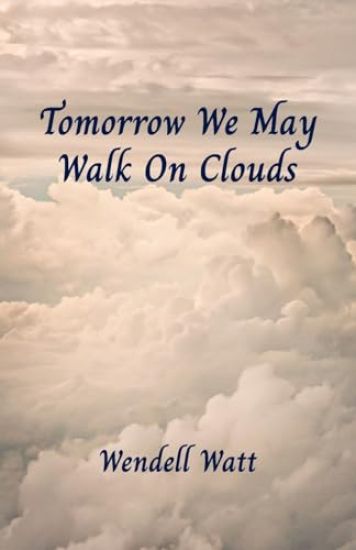
Wendell Watt lives in Sydney. Apart from family, her two loves have been science and writing. She chose science for a secure livelihood but now writing takes top place. Her work has been published in newspapers, journals and anthologies and has won various prizes, and a poetry chapbook Oranges Grow on Trees was published by Ginninderra Press. Her poems take inspiration from the natural world, and reflect on a range of life experiences and the humorous absurdities that crop up along the way.

In The Weight of a Mustard Seed, Wendell Steavenson tells the story of General Kamel Sachet, a decorated hero of the long Iran-Iraq war and a favourite of Saddam Hussein's. As Steavenson reveals the emotional and psychological scars the Sachet family suffer as a result of decades spent living with war and repression, she reaches towards the heart of a previously unspoken story of Iraq: a once prosperous nation, reduced by Hussein's megalomania and paranoia to bankruptcy, corruption and impotence. The result is an intimate, startling and gripping account of the slow destruction of Sachet, his family and his country.
Unnecessary Roughness: Growing Up Afraid, Overcoming Bullies and Achieving Success
Wendell P. Haywood
Independently Published
2019
nidottu
"Can one survive the heat and sickness of the projects? This "project boy" did make it out alive and succeeded despite the roughness or maybe because of the roughness. Those experiences helped to shape who I am today." In his debut work, retired businessman Wendell P. Haywood, father of five boys, tells his personal story about growing up poor in the D.C. projects. "Whatever is the cause for your abrasive life, if this skinny, shy, nerdy, and ill-prepared kid could rise above an unwanted destiny in the projects, then you too, can realize similar heights." Brilliantly written and heartbreaking, Haywood walks down memory lane as he recalls growing up in 15th Place-one of the roughest projects in Washington D.C. He speaks vividly about his impoverished upbringing, constant bullying, and his strained relationship with his father.

This is a story told to me by the Father to tell children they are a gift, to inspire them, to encourage them, to give them hope and to let them know that he loves them. This book is intended to let each child know that they are the gift the father has placed here to help one another. If you know what you are sent here to do, look for opportunities to serve. If you do not know ask the father to show you. Remember you are the gift, and It is crucial that you serve.
What allowed the British to create and hold its empire? In 1914 the British had the largest empire in the world. The sun literally never set on its holdings. The Empire rested on three strong pillars - British economic might, a powerful fleet and its multi race armies. The wealth provided by British industry provided the sinews of British power. The fleet protected the arteries along which British products reached the world and the UK projected its power. But its wealth and strong navy would not allow England to guard the North-West Frontier of India, or march to Peking or Ethiopia or fight foes as varied as the Sikhs, Māori and Zulus. In The British Empire's Regulars - 1880-1914 the army and men that won and held the empire are covered in detail. In most books these men are as anonymous as pawns on a chessboard. The book gives a definitive account of the many different ethnic groups that served. Sikhs, Scots, Gurkhas, Ibos and more are all here. The work explains what contribution each made to The Empire's polyglot armies. Drawing on sociology, governmental records and history, the book will appeal to readers who are interested in the British Empire, its military forces, and to students and scholars of military sociology and history.
Shortlisted for the Thomas Cook Book Award 2003Longlisted for the Guardian First Book Award 2002Fed up with working for Time magazine in London, Steavenson moved to Georgia on a whim. Stories I Stole relates her time there in twenty vodka-fuelled episodes drawn from all over the country - tales of love, friendship and power cuts, of duelling (Georgian style), of horse races in the mountains, wars and refugees, broken hearts, fixed elections, drinking sessions and a room containing a thousand roses.'A young Kapuscinski with a literary future ahead of her...an immensely talented writer' Neal Ascherson, Observer'A joyous, perceptive and haunting debut which fizzes - and sears - like rough new wine' Rory MacLean, Sunday Times'Lyrical, poetic and sassy by turns; when she retells Georgian people's stories, you hear real voices' Vanora Bennett, The Times'I couldn't possibly over praise the beautiful writing' Sunday Tribune'A sparkling, poetical hymn to the most romantic and dangerous land in the world.' Simon Sebag-Montefiore, author of Prince of Princes: The Life of Potemkin'Lively, atmospheric, honest, perceptive; a terrific account of Georgia's post-Soviet mess from a fresh and intelligent new writer' Anna Reid, author of Borderland

This is the account of one family's struggle to survive the iniquities of Saddam Hussein's savage dictatorship. A proud man, father and soldier struggles to protect himself, and his family, from tyranny.LONGLISTED FOR DOLMAN TRAVEL BOOK OF THE YEAR AWARD 2010In The Weight of a Mustard Seed, Wendell Steavenson tells the true story of General Kamel Sachet, a decorated hero of the long Iran-Iraq war and a favourite of Saddam Hussein's. As Steavenson reveals the emotional and psychological scars the Sachet family suffer as a result of decades spent living with war and repression, she reaches towards the heart of a previously unspoken story of Iraq: a once prosperous nation, reduced by Hussein's megalomania and paranoia to bankruptcy, corruption and impotence. The result is an intimate, startling and gripping account of the slow destruction of Sachet, his family and his country. Reminiscent in part of Stasiland and The Bookseller of Kabul, it is a career-defining book for Wendell Steavenson.
Michael Oakeshott as a Philosopher of the "Creative"
Wendell John Coats
Imprint Academic
2019
sidottu
This book is a collection of eight (mostly) recent essays on the work of the 20th-century English philosophic essayist, Michael Oakeshott. Six of them advance the view in different ways that Oakeshott's multifarious lifework may be understood as variations on a singular insight — that the structure of experiential reality is 'creative' or 'poetic’, with the form and content (the how and what) of thought and activity occurring simultaneously and conditioning one another reciprocally; and that this experiential structure has specifiable cultural, political and legal ramifications. In advancing and illustrating this viewpoint, comparisons and contrasts are drawn with medieval nominalism, philosophic idealism, Cartesianism, modernity, post-modernism, Chinese Daoism and with the views of thinkers such as Sir Henry Maine, Charles McIlwain, M.B. Foster, Leo Strauss, A.C. Graham, Friedrich Hayek, Efraim Podoksik, John Liddington, and others. Included also is an essay on the educational views of Oakeshott and A.N. Whitehead, and another on Oakeshott, Max Weber and Carl Schmitt and the relationship between politics and armed force. A very brief concluding postscript asserts the continued relevance (as a corrective) of Oakeshott’s views on the creative structure of human experience in an age of ‘artificial intelligence’ (AI).
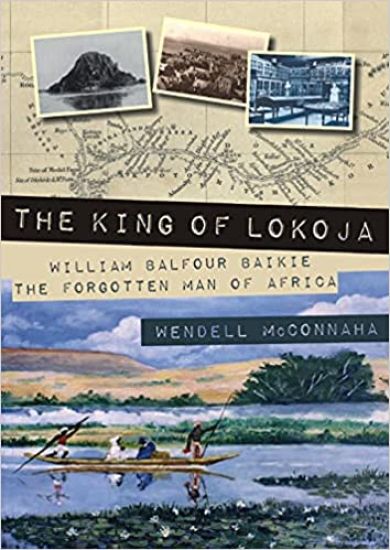
William Balfour Baikie was a surgeon, naturalist, linguist, writer, explorer and government consul who played a key role in opening Africa to the Europeans. As an explorer he mapped and charted large sections of the Niger River system as well as the overland routes from Lagos and Lokoja to the major trading centres of Kano, Timbuctu and Sokoto. As a naturalist, major beneficiaries of his work included Kew Gardens and the British Museum for the rare and undiscovered plant and animal species and yet today he remains largely unknown. On 10th December, 1864 Baikie was on his way back to London and was living in his temporary quarters in Sierra Leone. There he worked to regain his health and to complete the various reports and publications expected by the Colonial and Foreign Offices. He had been away from England for seven years and living conditions in West Africa had caused his health to suffer. While his wife and children waited for his return 600 miles away in Lokoja, the city in Nige-ria he had founded, his father waited for his return to Kirkwall, Orkney. Baikie would never return to his wife, nor ever see his father again. In two days, he would be dead and buried at Sierra Leone before his fortieth birthday. In his short life Baikie became such a hero among the Nigerian people 150 years ago that white visitors to the region today are still greeted warmly as 'Baikie'. After studying at University of Edinburgh he was assigned to the Royal Hospital Haslar where he worked with the noted explorers Sir John Richardson and Sir Edward Perry. Baikie's reputation as a naturalist, and the sphere of influence provided by Richardson and Perry, allowed him to enter the elite British scientific community where he also worked alongside the most famous naturalist of the time, Charles Darwin. During his time at Haslar, Baikie made two voyages exploring the Niger and Benue Rivers to establish trading centres for the Liverpool merchant Macgregor Laird. The first was a resounding success. He conducted the first clinical trial using quinine as a preventative for malaria. For the first time in history, his initial exploration of these rivers was conducted without the loss of a single life to fever. Returning to London to a hero's welcome, he was nominated for one of the Royal Geographic Society's prestigious awards. His second voyage was a pure disaster. His ship was wrecked; members of the expedition died and he was stranded for over a year in the vast remote territory known as the Sokoto Caliphate. Following his rescue, he elected to remain alone in Africa for what would be his final years in order to complete his personal mission. Although he was born 4,000 miles away in Orkney, Baikie was designated the King of Lokoja by the ruler of the Sokoto Caliphate. This book defines the man and his accomplishments and reveals how he is so fondly remembered by the Nigerians and yet apparently so totally forgotten by the rest of the world.
For one hundred years Scottish medical explorers were at the forefront of exploration within the British Empire, as exemplified by these five individuals. This dominant role was facilitated by the convergence of four events: the unification of Scotland and England, the Scottish Enlightenment, Scotland’s unique method of preparing doctors, and the need for a new type of explorer. These events provided the men of Scotland with a trajectory that was quite different from their English counterparts. Throughout the century of exploration, Britain concentrated on expanding its already extensive global empire, and leading this movement were the men of Scotland. Over half of the British explorers from this era were Scottish and often doctors who had received their training at Scottish universities. Those graduating from the University of Edinburgh outnumbered those from other Scottish universities by a ratio of almost 9 to 1. Why were there so many Scottish doctors exploring a dangerous and unknown world and why were these medical explorers uniquely more qualified to lead this effort? A key factor was that the British Imperial Century required a new type of explorer. Prior exploration had focused on finding new lands, establishing trade routes, and creating colonies. Although trade and profit were still significant considerations, new focuses like economic botany and voyages exclusively for the sake of science took precedence. Losing Sight of the Shore shines a light on this most productive and adventurous era while providing detail and context about the people and the times in which they lived. Although Losing Sight of the Shore profiles five medical explorers in detail, this is not a biography but a history which aims to understand and explain the ideology and philosophy of a group of Scottish-trained physicians and surgeons; and how their interaction within the political, cultural, intellectual, and social context of the time helped define the British Imperial Century.
A riveting novel reflecting current times in Eastern Europe--a time of opening up and of storytelling so vital to understanding cultural differences.
Caribbean Perspectives on Criminology and Criminal Justice: Volume 2
Wendell C. Wallace
Westphalia Press
2020
nidottu
In this volume and the one that precedes it, Dr Wendell C. Wallace has not only succeeded in bringing together a fascinating collection of papers that illustrate the uniqueness (as well as sharedness) of Caribbean Criminology, he has succeeded in putting Caribbean Criminology very firmly back on the intellectual map. This book deserves to be read by academics and students of Criminology and related disciplines from across the globe. -Professor Kevin Haines, The University of Trinidad and Tobago This volume makes an efficacious contribution to Caribbean research on crime and violence. It provides criminological insights on a range of topics such as paradigms of justice, perspectives on policing and incarceration, the geopolitical context for extradition, and violence reduction strategies. This rich and profound installment will be useful to an international community of researchers, practitioners and policymakers. It also makes a strong case for the role and impact of post-Colonial scholarship. -Dr. Vaughn Crichlow, Associate Dean and Associate Professor, College of Social Work and Criminal Justice, Florida Atlantic University A path-breaking and comprehensive work, Caribbean Perspectives on Criminology and Criminal Justice (Volume 2) comes at a time when societies in the Caribbean region are grappling with a plethora of issues within their criminal justice systems and with crime in all its iterations and when the structure of the justice system on which all of these societies are premised is being challenged to adjust to changes in societal mores. Volume 2 of this edited book adds to the growing body of scientific, empirical, and theoretical literature on criminology and criminal justice in the Caribbean. In a similar vein to Volume 1, this book is a direct response to the call for a Caribbean Criminology, as espoused by Ken Pryce (1976), and is aimed at whittling away the "epistemological coloniality" or the dominance and transfer of knowledge from the Global North to the Global South, more specifically, the Caribbean. This edited book also aims at reducing the "coloniality of knowledge" (Smith, 2012) and thus enhances epistemological diversity in the postcolonial Anglophone Caribbean. Bringing together a broad range of experts, this edited book sheds light on key criminological and criminal justice topics in the Caribbean. This not only brings to the fore socio-legal and criminological issues plaguing the Caribbean, but also proffers suggestions and recommendations aimed at alleviating these concerns. This book is therefore an essential reading for those engaged with Caribbean-or decolonial-Caribbean criminology and criminal justice.