Kirjojen hintavertailu. Mukana 11 699 587 kirjaa ja 12 kauppaa.

Kirjahaku

Etsi kirjoja tekijän nimen, kirjan nimen tai ISBN:n perusteella.

1000 tulosta hakusanalla White F

Snow White's Forest Friends (Disney Princess)

Snow White's Forest Friends (Disney Princess)

Nicholas Tana

Random House Disney
2024
nidottu
Discover how Princess Snow White from Disney Snow White and the Seven Dwarfs met her animal friends in this Step 2 Step into Reading levelled reader Perfect for beginning readers ages 4 to 6. One sunny spring morning, Princess Snow White wakes up to find a bunny stuck in the bottom of her wishing well. With some quick thinking and the help of the other animals in the forest, can Snow White rescue the bunny? Young readers and Disney Princess fans will love this sweet story about helping others and new friends. Step 2 readers use basic vocabulary and short sentences to tell simple stories. For children who recognize familiar words and can sound out new words with help.
Abolishing White Masculinity from Mark Twain to Hiphop
Abolishing White Masculinity from Mark Twain to Hiphop examines white American male literature for its social commentary on the construction of whiteness in the United States. Whiteness has always been a contested racial identity in the U.S., one in a state of construction and reconstruction throughout critical cultural and historical moments. This text examines how white American male writers have grappled with understanding themselves and their audiences as white beings. Abolishing White Masculinity from Mark Twain to Hiphop specifically brings a critical whiteness approach to American literary criticism and strengthens the growing interdisciplinary field of critical whiteness studies in the humanities. Critical whiteness studies shifts the attention from solely examining people and perspectives of color in race discourse to addressing whiteness as an essential component of race ideology. The primary contribution of this perspective is in how whites construct and see whiteness, for the larger purpose of exploring the possibilities of how they may come to no longer construct and see themselves through whiteness. Understanding this is at the heart of contemporary discussions of post-raciality. Abolishing White Masculinity from Mark Twain to Hiphop uses the following texts as canonical case studies: Puddn’head Wilson and Those Extraordinary Twins by Mark Twain, The Great Gatsby and The Beautiful and the Damned by F. Scott Fitzgerald, and Angry Black White Boy and The End of the Jews by Adam Mansbach. Each underscores the dialectic of formation, deformation, and reformation of whiteness at specific socio-historical moments based upon anxieties about race possessed by whites and highlighted by white fictionists. The selected writers ultimately serve dually as co-constructors of whiteness and social critics of their times through their literature.
Dear White Christians: For Those Still Longing for Racial Reconciliation

Dear White Christians: For Those Still Longing for Racial Reconciliation

Jennifer Harvey

William B. Eerdmans Publishing Company
2020
nidottu
"If reconciliation is the takeaway point for the civil rights story we usually tell, then the takeaway point for the more complex, more truthful civil rights story contained in Dear White Christians is reparations." -- from the preface to the second editionWith the troubling and painful events of the last several years--from the killing of numerous unarmed Black men and women at the hands of police to the rallying of white supremacists in Charlottesville--it is clearer than ever that the reconciliation paradigm, long favored by white Christians, has failed to heal the deep racial wounds in the church and American society. In this provocative book, originally published in 2014, Jennifer Harvey argues for a radical shift away from the well-meaning but feeble longing for reconciliation toward a robustly biblical call for reparations. Now in its second edition--with a new preface addressing the explosive changes in American culture and politics since 2014, as well as an appendix that explores what a reparations paradigm can actually look like--Dear White Christians calls justice-committed Christians to do the gospel-inspired work of opposing racist social structures around them. Harvey's message is historically and scripturally rooted, making it ideal for facilitating the difficult but important discussions about race that are so desperately needed in churches and faith-centered classrooms across the country.
A White Bird Flying

A White Bird Flying

Bess Streeter Aldrich

University of Nebraska Press
1988
pokkari
Abbie Deal, the matriarch of a pioneer Nebraska family, has died at the beginning of A White Bird Flying, leaving her china and heavy furniture to others and to her granddaughter Laura the secret of her dream of finer things. Grandma Deal's literary aspirations had been thwarted by the hard circumstances of her life, but Laura vows that nothing, no one, will deter her from a successful writing career. Childhood passes, and the more she repeats her vow the more life intervenes.
Beyond White Picket Fences: Evolution of an American Town

Beyond White Picket Fences: Evolution of an American Town

Catherine Simpson Bueker

RUSSELL SAGE FOUNDATION
2025
nidottu
Wellesley, Massachusetts has long been considered the archetypal New England WASP community. However, as new groups moved in over the 20th and 21st centuries, Wellesley has undergone slow but consistent change, transforming into a more demographically diverse and multilayered town. In Beyond White Picket Fences, sociologist Catherine Simpson Bueker explores how Wellesley has been shaped--and continues to be shaped--by its diversity. ​ Drawing on interviews, archival data, and participant observations, Bueker examines how Italian, Jewish, and Chinese newcomers influenced and were influenced by the established Wellesley community. She examines the ways in which immigrant and ethnic groups assimilate, retain their cultural backgrounds, and respond to discrimination, sometimes simultaneously, and, in doing so, alter the mainstream. Some new residents responded to Wellesley by assimilating to it. They developed relationships with long-term resident neighbors, volunteered in their children's schools, and ran for elected positions. In adapting themselves to their new community, however, they also influenced it by virtue of their distinct cultural backgrounds. Other new residents worked to preserve their cultures by establishing ethnic-specific organizations, lobbying to have new holidays incorporated into the calendar, and hewing to their own ethnic culinary traditions. Their efforts also influenced the established community. When newcomers attempted to retain their culture by requesting ethnic-specific food items be stocked at the local grocery store, opening ethic restaurants, or renting space for a new organization, for example, they impacted the established community. New individuals and groups also responded to experiences of hostility and discrimination. Italian residents fought against attempts at school redistricting targeting them in the 1930s, Jewish residents pushed back against housing discrimination in the 1950s and 1960s, and Chinese residents responded to anti-Asian incidents in the wake of the COVID-19 pandemic in 2020. These groups had to engage with the larger community to rectify these injustices. Some of the changes in Wellesley have come about with little recognition or response, others have been met with resistance and anger. Whether the changes are subtle or obvious and whether new groups are embraced or resisted, the whole town is altered in an ongoing process as new groups continue to move to and settle in Wellesley. Beyond White Picket Fences is a timely and compelling examination of the ways newcomers become part of and shape American communities.
Black & White Photography For 35mm

Black & White Photography For 35mm

Richard Mizdal

Amherst Media
2000
nidottu
Combining detailed explanations of all aspects of black-and-white 35mm photography with exercises that clearly illustrate each concept step-by-step, results in a comprehensive how-to guide to the camera and darkroom. This manual covers the basics of taking a shot by explaining the camera functions, how the camera meters light, and the proper use of filters. It teaches beginning through advanced techniques for shooting, developing, and printing and offers advice on selecting the right lens, the proper depth of field, and correct exposure. Included are darkroom tips on setup and maintenance and details of the latest technology and equipment.
A White Picket Fence

A White Picket Fence

Laura Branchflower

Laura Pearson
2017
pokkari
Lina and Phil Hunter have shared an uncanny psychic connection since they were teenagers and he saved her life, so when Lina's mother cautions her to be on guard against a new love interest she sees in her astrological chart, it confirms what Lina already suspects, her mother is crazy. Sure her marriage has been under extra stress lately, dealing with a rebellious teenager, but Lina's never even looked at another man, well besides her daughter's psychiatrist, Dr. Drayton, but that's more in awe.When a betrayal shakes the foundation of her marriage, Lina begins confiding in the child psychiatrist, blurring the lines between whether she or her daughter is the patient. As a mutual attraction grows, Lina begins to question whether the boy she fell in love with twenty-five years earlier still exists.
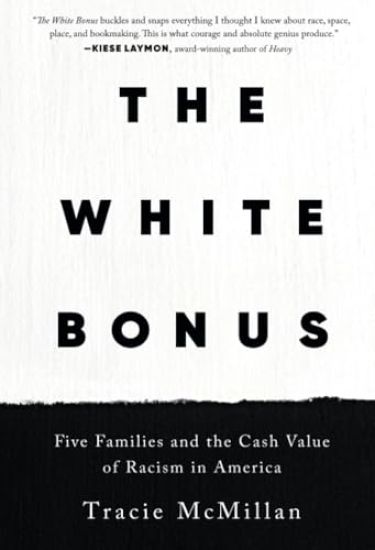
The White Bonus: Five Families and the Cash Value of Racism in America
A genre-bending work of journalism and memoir by award-winning writer Tracie McMillan tallies the cash benefit--and cost--of racism in America.In The White Bonus, McMillan asks a provocative question about racism in America: When people of color are denied so much, what are white people given? And how much is it worth--not in amorphous privilege, but in dollars and cents? McMillan begins with three generations of her family, tracking their modest wealth to its roots: American policy that helped whites first. Simultaneously, she details the complexities of their advantage, exploring her mother's death in a nursing home, at 44, on Medicaid; her family's implosion; and a small inheritance from a banker grandfather. In the process, McMillan puts a cash value to whiteness in her life and assesses its worth. McMillan then expands her investigation to four other white subjects of different generations across the U.S. Alternating between these subjects and her family, McMillan shows how, and to what degree, racial privilege begets material advantage across class, time, and place. For readers of Robin DiAngelo's White Fragility and Heather McGhee's The Sum of Us, McMillan brings groundbreaking insight on the white working class. And for readers of Tara Westover's Educated and Kiese Laymon's Heavy, McMillan reckons intimately with the connection between the abuse we endure at home and the abuse America allows in public.
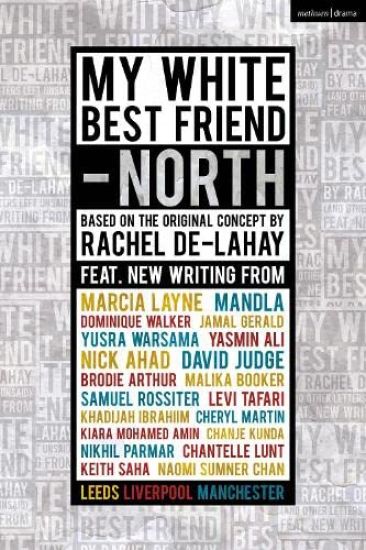
My White Best Friend

My White Best Friend

BLOOMSBURY PUBLISHING PLC
2023
nidottu
What's the one thing that you need to say but have never dared? And who needs to hear it?Based on the original concept by playwright Rachel De-Lahay, this follow-up volume to My White Best Friend (And Other Letters Left Unsaid) collects a series of personal letters, monologues and writings by 20 Black and ethnically diverse writers from across the North of England. Sometimes funny, sometimes poignant, sometimes political and full of fire, these letters explore the personal and political of the things we don’t dare say – even to those closest to us.Originally commissioned by Everyman & Playhouse theatres, Eclipse and the Royal Exchange in 2021, in response to The Bunker Theatre's critically acclaimed 2019 festival, this volume contains a foreword by Rachel De-Lahay, creator of the project and editor of the first volume, as well as writings from some of the most exciting voices in the North of England: Levi Tafari, Brodie Arthur, Kiara Mohamed Amin, Yasmin Ali, Chantelle Lunt, Dominique Walker, Keith Saha, Samuel Rossiter, Cheryl Martin, Nikhil Parmar, mandla rae, David Judge, Yusra Warsama, Nick Ahad, Malika Booker, Jamal Gerald, Khadijah Ibrahiim, Chanje Kunda, Marcia Layne and Naomi Sumner Chan.
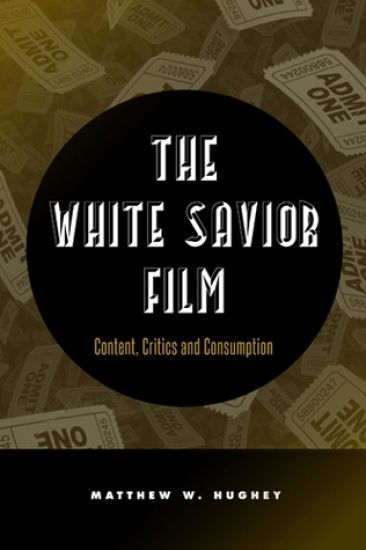
The White Savior Film

The White Savior Film

Matthew Hughey

Temple University Press,U.S.
2014
sidottu
The cinematic trope of the white savior film-think of Sandra Bullock in The Blind Side, Kevin Costner in Dances with Wolves, or Tom Cruise in The Last Samurai--features messianic characters in unfamiliar or hostile settings discovering something about themselves and their culture in the process of saving members of other races from terrible fates. In The White Savior Film, Matthew Hughey provides a cogent, multipronged analysis of this subgenre of films to investigate the underpinnings of the Hollywood-constructed images of idealized (and often idealistic) white Americans. Hughey considers the production, distribution, and consumption of white savior films to show how the dominant messages of sacrifice, suffering, and redemption are perceived by both critics and audiences. Examining the content of fifty films, nearly 3,000 reviews, and interviews with viewer focus groups, he accounts for the popularity of this subgenre and its portrayal of "racial progress." The White Savior Film shows how we as a society create and understand these films and how they reflect the political and cultural contexts of their time.
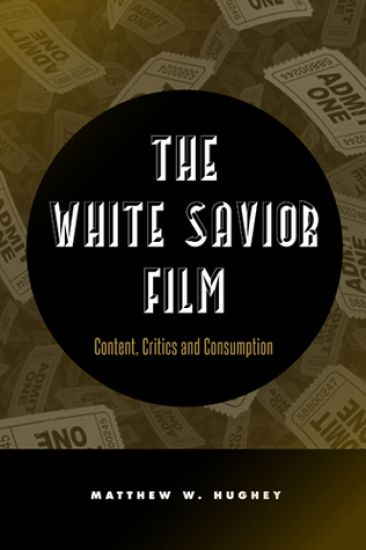
The White Savior Film

The White Savior Film

Matthew Hughey

Temple University Press,U.S.
2014
pokkari
The cinematic trope of the white savior film-think of Sandra Bullock in The Blind Side, Kevin Costner in Dances with Wolves, or Tom Cruise in The Last Samurai--features messianic characters in unfamiliar or hostile settings discovering something about themselves and their culture in the process of saving members of other races from terrible fates. In The White Savior Film, Matthew Hughey provides a cogent, multipronged analysis of this subgenre of films to investigate the underpinnings of the Hollywood-constructed images of idealized (and often idealistic) white Americans. Hughey considers the production, distribution, and consumption of white savior films to show how the dominant messages of sacrifice, suffering, and redemption are perceived by both critics and audiences. Examining the content of fifty films, nearly 3,000 reviews, and interviews with viewer focus groups, he accounts for the popularity of this subgenre and its portrayal of "racial progress." The White Savior Film shows how we as a society create and understand these films and how they reflect the political and cultural contexts of their time.
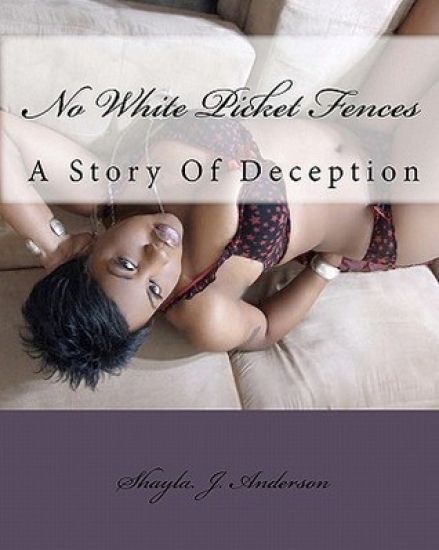
No White Picket Fences

No White Picket Fences

Shayla J. Anderson

Createspace Independent Publishing Platform
2009
nidottu
Bianca Reynolds was torn between love and love that was lost. A helpless romatic, she believed that love would prevail through it all. Never once did she think that her life would be anything but perfect. She would have a husband, kids and a house with a white picket fence.That was a dream and she fought so hard to make this dream a reality. With lover there is pain and the true measure of love is what is left of your heart once the pain is gone.Bianca knew that her lifestyle would put her in places in which she may become uncomfortable but she fought hard to overcome the obstacles that stood before her.