Kirjojen hintavertailu. Mukana 11 342 296 kirjaa ja 12 kauppaa.

Kirjahaku

Etsi kirjoja tekijän nimen, kirjan nimen tai ISBN:n perusteella.

1000 tulosta hakusanalla William Butler

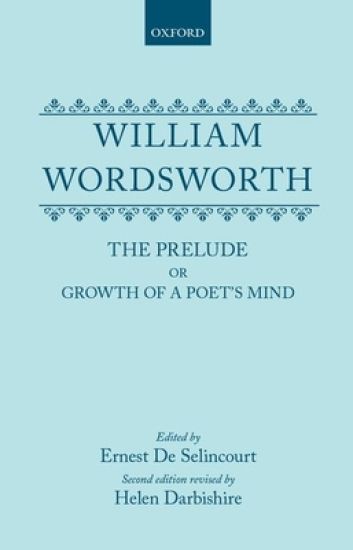
William Wordsworth

William Wordsworth

William Wordsworth

Oxford University Press
1959
sidottu
A scholarly edition of a work by William Wordsworth. The edition presents an authoritative text, together with an introduction, commentary notes, and scholarly apparatus.
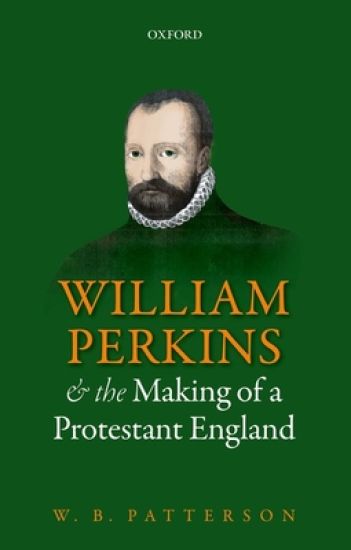
William Perkins and the Making of a Protestant England

William Perkins and the Making of a Protestant England

W. B. Patterson

Oxford University Press
2018
nidottu
William Perkins and the Making of Protestant England presents a new interpretation of the theology and historical significance of William Perkins (1558-1602), a prominent Cambridge scholar and teacher during the reign of Queen Elizabeth I. Though often described as a Puritan, Perkins was in fact a prominent and effective apologist for the established church whose contributions to English religious thought had an immense influence on an English Protestant culture that endured well into modern times. The English Reformation is shown to be a part of the European-wide Reformation, and Perkins himself a leading Reformed theologian. In A Reformed Catholike (1597), Perkins distinguished the theology upheld in the English Church from that of the Roman Catholic Church, while at the same time showing the considerable extent to which the two churches shared common concerns. His books dealt extensively with the nature of salvation and the need to follow a moral way of life. Perkins wrote pioneering works on conscience and 'practical divinity'. In The Arte of Prophecying (1607), he provided preachers with a guidebook to the study of the Bible and their oral presentation of its teachings. He dealt boldly and in down-to-earth terms with the need to achieve social justice in an era of severe economic distress. Perkins is shown to have been instrumental to the making of a Protestant England, and to have contributed significantly to the development of the religious culture not only of Britain but also of a broad range of countries on the Continent.
William Blake: Selected Poems

William Blake: Selected Poems

William Blake

Oxford University Press
2019
nidottu
'To see a World in a Grain of Sand 'And a Heaven in a Wild Flower Hold Infinity in the palm of your hand And Eternity in an hour' William Blake wrote some of the most moving and memorable verse in the English language. Deeply committed to visionary and imaginative experience, yet also fiercely engaged with the turbulent politics of his era, he is now recognised as a major contributor to the Romantic Movement. This edition presents Blake's poems in their literary categories and genres to which they belong: his much-loved lyrics, ballads, comic and satirical verse, descriptive and discursive poems, verse epistles, and, finally, his remarkable 'prophetic' poems, including the whole of his two diffuse epics, Milton and Jerusalem. Blake's poetry is intellectually challenging as well as formally inventive, and this edition has a substantial critical introduction which places his ideas in the contemporary context of the Enlightenment and the artistic reaction against its key assumptions.
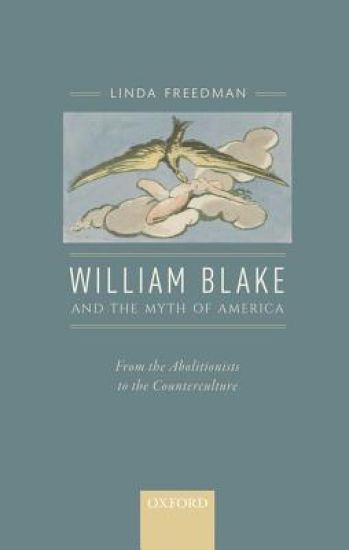
William Blake and the Myth of America

William Blake and the Myth of America

Linda Freedman

Oxford University Press
2018
sidottu
This volume tells the story of William Blake's literary reception in America and suggests that ideas about Blake's poetry and personality helped shape mythopoeic visions of America from the Abolitionists to the counterculture. It links high and low culture and covers poetry, music, theology, and the novel. American writers have turned to Blake to rediscover the symbolic meaning of their country in times of cataclysmic change, terror, and hope. Blake entered American society when slavery was rife and civil war threatened the fragile experiment of democracy. He found his moment in the mid twentieth-century counterculture as left-wing Americans took refuge in the arts at a time of increasingly reactionary conservatism, vicious racism, pervasive sexism, dangerous nuclear competition, and an increasingly unpopular war in Vietnam, the fires of Orc raging against the systems of Urizen. Blake's America, as a symbol of cyclical hope and despair, influenced many Americans who saw themselves as continuing the task of prophecy and vision. Blakean forms of bardic song, aphorism, prophecy, and lament became particularly relevant to a literary tradition which centralised the relationship between aspiration and experience. His interrogations of power and privilege, freedom and form resonated with Americans who repeatedly wrestled with the deep ironies of new world symbolism and sought to renew a Whitmanesque ideal of democracy through affection and openness towards alterity.
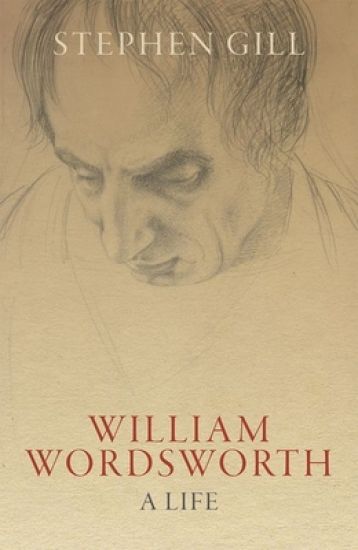
William Wordsworth

William Wordsworth

Stephen Gill

Oxford University Press
2020
sidottu
In this second edition of William Wordsworth: A Life, Stephen Gill draws on knowledge of the poet's creative practices and his reputation and influence in his life-time and beyond. Refusing to treat the poet's later years as of little interest, this biography presents a narrative of the whole of Wordsworth's long life--1770 to 1850--tracing the development from the adventurous youth who alone of the great Romantic poets saw life in revolutionary France to the old man who became Queen Victoria's Poet Laureate. The various phases of Wordsworth's life are explored with a not uncritical sympathy; the narrative brings out the courage he and his wife and family were called upon to show as they crafted the life they wanted to lead. While the emphasis is on Wordsworth the writer, the personal relationships that nourished his creativity are fully treated, as are the historical circumstances that affected the production of his poetry. Wordsworth, it is widely believed, valued poetic spontaneity. He did, but he also took pains over every detail of the process of publication. The foundation of this second edition of the biography remains, as it was of the first, a conviction that Wordsworth's poetry, which has given pleasure and comfort to generations of readers in the past, will continue to do so in the years to come.
William Faulkner and the Faces of Modernity

William Faulkner and the Faces of Modernity

Jay Watson

Oxford University Press
2019
sidottu
Winner of the 2020 C. Hugh Holman Award William Faulkner has enjoyed a secure reputation as American modernism's foremost fiction writer, and as a landmark figure in international literary modernism, for well over half a century. Less secure, however, has been any scholarly consensus about what those modernist credentials actually entail. Over recent decades, there have been lively debates in modernist studies over the who, what, where, when, and how of the surprisingly elusive phenomena of modernism and modernity. This book broadens and deepens an understanding of Faulkner's oeuvre by following some of the guiding questions and insights of new modernism studies scholarship into understudied aspects of Faulkner's literary modernism and his cultural modernity. William Faulkner and the Faces of Modernity explores Faulkner's rural Mississippians as modernizing subjects in their own right rather than mere objects of modernization; traces the new speed gradients, media formations, and intensifications of sensory and affective experience that the twentieth century brought to the cities and countryside of the US South; maps the fault lines in whiteness as a racial modernity under construction and contestation during the Jim Crow period; resituates Faulkner's fictional Yoknapatawpha County within the transnational counter-modernities of the Black Atlantic; and follows the author's imaginative engagement with modern biopolitics through his late work A Fable, a novel Faulkner hoped to make his 'magnum o.' By returning to the utterly uncontroversial fact of Faulkner's modernism with a critical sensibility sharpened by new modernism studies, William Faulkner and the Faces of Modernity aims to spark further reappraisal of a distinguished and quite dazzling body of fiction. Perhaps even make it new.
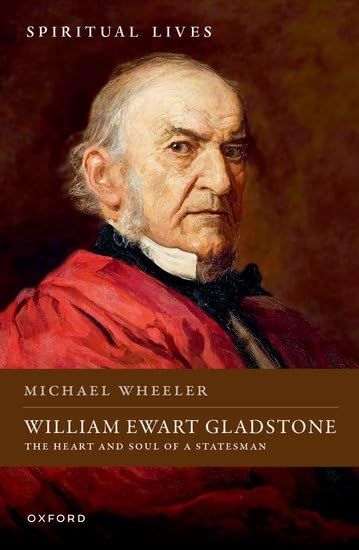
William Ewart Gladstone

William Ewart Gladstone

Michael Wheeler

Oxford University Press
2025
sidottu
The leading statesman of nineteenth-century Britain, a figure who bestrode the political world like a Colossus, is 'Gladstone' to modern biographers. In order to signal the difference between Wheeler's approach and those of earlier biographers, the subject of this book is known as William, his baptismal name. His autobiographical fragments of 1892 included a disclaimer: 'I do not indeed intend in these notes to give a history of the inner life, which I think has with me been extraordinarily dubious, vacillating, and (above all) complex'. William Gladstone: The Heart and Soul of a Statesman is about the spiritual dimension of his complex inner life. In tracing the movements of his heart and soul, the book works from the inner to the outer aspects of a rich and varied life, from William's daily disciplines of prayer and reflection to his earnest attempts to follow the precepts of Christianity through action in the public realm and in private philanthropy, and in the writing of numerous reviews, articles, and books. He remained an independent intellectual, eschewing party labels within the Church of England and working out his own stance in relation to specific Liberal party policies in politics. He was as much a man of letters as he was a politician. Later in his political career, 'the people's William' appealed to public opinion through a series of national moral campaigns. His fiercest battles, however, were spiritual, as he castigated himself for falling short of the ideals set out in Jesus' sermon on the mount, particularly with regard to sexual desire as he sought to rescue women from a life of prostitution and became infatuated with a former courtesan. His longest crusade was against the enemy within.
William Worcester, The Boke of Noblesse and the English Texts from its Codicil
The fifteenth-century chronicler, topographer, and antiquary, William Worcester, composed his political treatise, The Boke of Noblesse, first around 1451, and subsequently revised it twice, around 1475, when he intended to present it to Edward IV, along with a 'Codicil' of documents about past wars, to encourage and advise the king in his plans to invade France after England's disastrous defeats under Henry VI. William's autograph of this revision survives. The treatise was later presented by William's son to Richard III, with a new preface, also included in this edition. The treatise draws on diverse sources: older English and French history; classical or pseudo-classical works, including a section translated from Cicero; recent French authors, including Christine de Pizan; and the history of the French wars under Henry V and Henry VI, including eyewitness reports by Worcester's former employer Sir John Fastolf (1380-1459). It offers a record of military history and political thought in the fifteenth century and changing literary tastes on the cusp of the Renaissance. In addition to the treatise, many manuscripts survive with William's annotations, revealing his many debts to other sources. With the copious surviving records of his life, they give a unique insight into this medieval author's research and working methods.
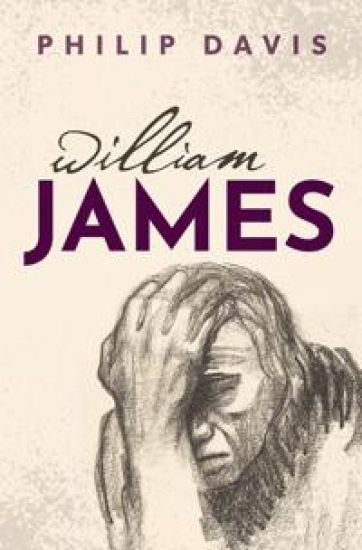
William James

William James

Philip Davis

Oxford University Press
2026
nidottu
Discusses the life and work of William James, a founder of the study of psychology. William James (1842-1910) was elder brother to the novelist Henry James and a founder of the study of psychology. But he was also a thinker who sought to work across conventional boundaries, and did not believe in separate disciplines or over-professionalized ways of thinking. James was above all interested in those moments when thoughts suddenly come into being, 'hot' and 'alive'. William James is for anyone who has experienced the personal need for such thinking and feels the excitement of ideas. It concerns the personal experience of reading James, involving extensive quotation from his work in relation to Philip Davis's own inner life and the lives of other readers of James- a thinker who is defiantly convinced of the fundamental validity of the inner life in the making of the Real. This book is about William James's life-writing, writing for the sake of existence, that puts together a mix of literature, psychology, philosophy, and biography in the search for purpose and human flourishing, in place of formal religion. It includes James's interest in his brother's novels and in Shakespearean drama, as well as Thomas Hardy's pessimistic challenge to James. Professor Davis is a reader of literature who feels that readers of novels and poems also need the help of psychology and philosophy, to get the thinking out, to make it into a working part of a life. His book is for readers, especially readers of literature, seeking to create, like William James, a literary way of thinking outside the realm of literature.
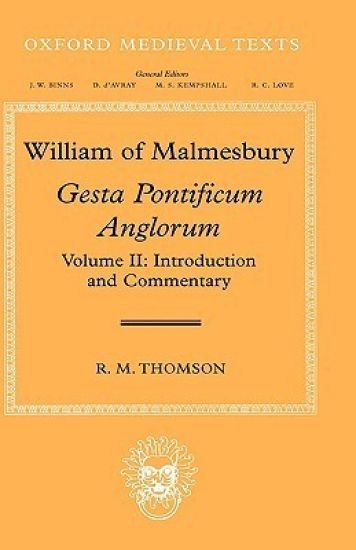
William of Malmesbury: Gesta Pontificum Anglorum, The History of the English Bishops
Gesta Pontificum Anglorum (History of the English Bishops) is one of the most important medieval texts written c. 1125 by one of England's key historians of the period, William, Monk of Malmesbury. It is a is a vivid narrative on the English Church, its bishoprics and monasteries, from c.600 to William's contemporary era. Conceived as a companion piece to his Gesta Regum Anglorum, this historical work was a unique enterprise, and the result is a substantial book, elegantly written, full of original information, and characterized by intelligent interpretation and judgement. This second volume by R. M. Thomson contains an introduction and detailed commentary to accompany the Latin text and translation of the work, appearing in Volume I. The introduction presents and analyzes the reasons behind the work - its structure, its main sources and programme of research, and its influence and significance. The commentary, linked to the Latin text, discusses problems and questions revealed by the work, and illustrations appear throughout.
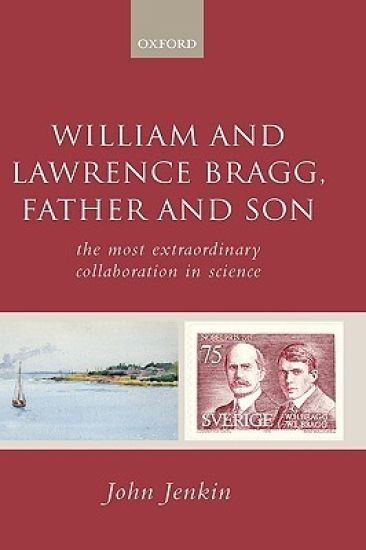
William and Lawrence Bragg, Father and Son

William and Lawrence Bragg, Father and Son

John Jenkin

Oxford University Press
2007
sidottu
In 1912 Lawrence Bragg explained the interaction of X-rays with crystals, and he and his father (William) thereby pioneered X-ray spectroscopy and X-ray crystallography. They then led the latter field internationally for 50 years, when most areas of science were transformed by the knowledge created: physics, chemistry, geology, materials science, electronics, and most recently biology and medical science. This book charts how this humble pair (William English, his son Australian) rose from obscurity to international prominence and then back to current, undeserved obscurity. Attention is also given to the crucial roles of both father and son during the dreadful years of the First World War, and to William's early and unshakeable belief in the dual wave and particle natures of radiation and his eventual vindication. Unlike earlier studies, the book highlights the intimate interactions between father and son that made their project possible, emphasizes personal, family, and wider human relationships, and offers new insights into teaching and research in a British colonial setting.
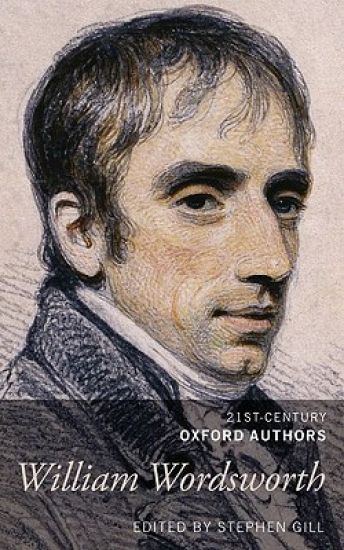
William Wordsworth

William Wordsworth

Oxford University Press
2010
sidottu
The wordsworth volume in the 21st-Century Oxford Authors series is the most comprehensive selection currently available of the poetry and prose of one of the finest poets in the English language. The familiar poems from Wordsworth's 'Great Decade' are all included, but they are complemented by a more than usually generous selection of the best poems from his later years. The extracts from the Guide to the Lakes will be a revelation to many readers, as will the political prose of the Convention of Cintra. All of the material is presented in chronological sequence, so that the reader can see how Wordsworth's changing concerns were expressed in prose as well as poetry. Work which Wordsworth published is separated from that which he did not reveal, which will enable the reader to trace through successive published volumes the development of Wordsworth's public poetic self, while also being able to follow the growth of the body of poetry which, for whatever reason, Wordsworth did not choose to make public when it was written - The Prelude being the greatest and most obvious example.
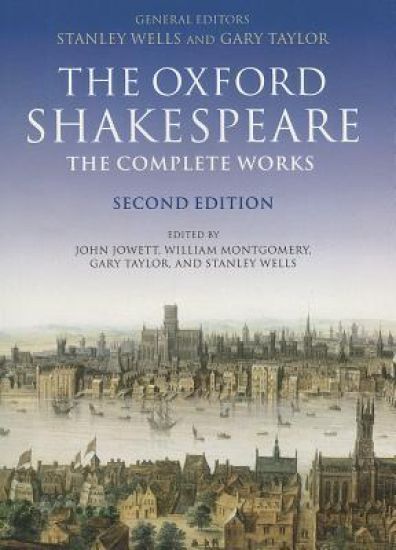
William Shakespeare: The Complete Works

William Shakespeare: The Complete Works

William Shakespeare

Oxford University Press
2005
sidottu
A compact edition of the complete works of William Shakespeare. It combines impeccable scholarship with beautifully written editorial material and a user-friendly layout of the text. Also included is a foreword, list of contents, general introduction, essay on language, contemporary allusions to Shakespeare, glossary, consolidated bibliography and index of first lines of Sonnets.
William Shakespeare: The Complete Works

William Shakespeare: The Complete Works

William Shakespeare

Oxford University Press
2005
nidottu
The second Oxford edition of Shakespeare's Complete Works reconsiders every detail of their text and presentation in the light of modern scholarship. The nature and authority of the early documents are re-examined, and the canon and chronological order of composition freshly established. Spelling and punctuation are modernized, and there is a brief introduction to each work, as well as an illuminating and informative General Introduction. Included here for the first time is the play The Reign of King Edward the Third as well as the full text of Sir Thomas More. This new edition also features an essay on Shakespeare's language by David Crystal, and a bibliography of foundational works.
William Empson, Volume II

William Empson, Volume II

John Haffenden

Oxford University Press
2006
sidottu
Following the acclaimed first volume, Among the Mandarins, this is the second and concluding volume of the authorized biography of William Empson, one of the foremost poets and literary critics of the twentieth century. Against the Christians begins during the Second World War and follows Empson's turbulent years of writing wartime propaganda for the BBC. As Chinese Editor, he organised broadcasts to China and propaganda programmes for the Home Service, during which time his friends and colleagues included the prickly George Orwell. The effectiveness of Empson's work for the BBC provoked the Nazi propagandist Hans Fritzsche to call him a 'curly-headed Jew' -- a charge which gave him enormous satisfaction. In 1947 he returned to China, where he was caught up in the Communist siege of the Peking and witnessed Mao Tse-tung's triumphant entry. 'I was there for the honeymoon between the universities and the communists; we were being kept up to the mark rather firmly.' He saw 'the dragooning of independent thought and the hysteria of the confession meetings'. In the late 1940s he also taught in the USA, where he relished the irony of his situation. 'My position here really seems to me very dramatic; there can be few other people in the world who are receiving pay simultaneously and without secrecy from the Chinese Communists, the British Socialists, and the capitalist Rockefeller machine.' From 1953 to 1971 he held the Chair of English Literature at Sheffield, where he engaged more vigorously than ever before in public controversy, being driven by a desire to correct the wrong-headed orthodoxies of modern literary criticism -- most notably 'neo-Christianity'. He acquired massive publicity for his views on the wickedness of Christianity when he published Milton's God in 1961: 'The poem is wonderful because it is an awful warning. The effort of reconsidering Milton's God, who makes the poem so good just because he is so sickeningly bad, is a basic one for the European mind.' Haffenden presents a full account of the work on Milton, along with analyses of Empson's many other writings on subjects including Marlowe, Donne, Marvell, and Coleridge, and The Structure of Complex Words (1951). In a full and candid study of the public and private Empson, John Haffenden enables the reader to understand one of the most gifted, eccentric, witty, and controversial figures of our age -- a giant of modern literature and criticism.
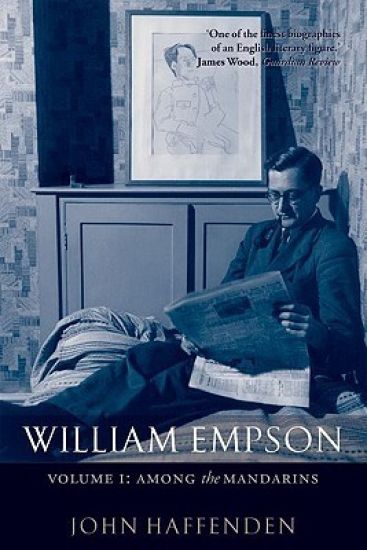
William Empson, Volume I

William Empson, Volume I

Haffenden

Oxford University Press
2009
nidottu
William Empson was the foremost English literary critic of the twentieth century. He was a man of huge energy and curiosity, and a genuine eccentric who remained imperturbable in the face of all the extraordinary circumstances in which he found himself. The discovery of contraceptives in his possession by a bedmaker at Cambridge University led to his being robbed of a promised Fellowship. Yet Seven Types of Ambiguity, drafted while he was still an undergraduate, promptly brought him world-wide fame. Empson invented modern literary criticism in English. He acted too as a cultural fifth-columnist, challenging received doctrine in life and literature. 'It is a very good thing for a poet . . . to be saying something which is considered very shocking at the time,' he maintained. 'To become morally independent of one's formative society . . . is the grandest theme of all literature, because it is the only means of moral progress.' His public life took him through many of the major political events of the modern world -- the rise of imperialism in Japan, the Sino-Japanese war in China, wartime propaganda for the BBC, and the Chinese civil war and Communist takeover of Peking in 1949. His friends and critical sparring partners included I. A. Richards, Kathleen Raine, J. B. S. Haldane, Humphrey Jennings, George Orwell, Robert Lowell, Dylan Thomas, Stephen Spender, Helen Gardner, and T. S. Eliot. 'It is of great importance now that writers should try to keep a certain world-mindedness,' he insisted. 'Without the literatures you cannot have a sense of history, and history is like the balancing-pole of the tightrope-walker . . . ; and nowadays we very much need the longer balancing-pole of not national but world history.' His passionate world-mindedness, and his humanism, combativeness, and wit, are fully in evidence in this, the first of two volumes exploring his remarkable life and work.
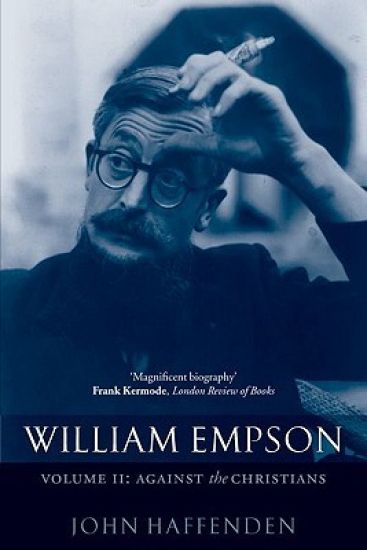
William Empson, Volume II

William Empson, Volume II

John Haffenden

Oxford University Press
2009
nidottu
Following the acclaimed first volume, Among the Mandarins , this is the second and concluding volume of the authorized biography of William Empson, one of the foremost poets and literary critics of the twentieth century. Against the Christians begins during the Second World War and follows Empson's turbulent years of writing wartime propaganda for the BBC. As Chinese Editor, he organised broadcasts to China and propaganda programmes for the Home Service, during which time his friends and colleagues included the prickly George Orwell. The effectiveness of Empson's work for the BBC provoked the Nazi propagandist Hans Fritzsche to call him a 'curly-headed Jew' -- a charge which gave him enormous satisfaction. In 1947 he returned to China, where he was caught up in the Communist siege of the Peking and witnessed Mao Tse-tung's triumphant entry. 'I was there for the honeymoon between the universities and the communists; we were being kept up to the mark rather firmly.' He saw 'the dragooning of independent thought and the hysteria of the confession meetings'. In the late 1940s he also taught in the USA, where he relished the irony of his situation. 'My position here really seems to me very dramatic; there can be few other people in the world who are receiving pay simultaneously and without secrecy from the Chinese Communists, the British Socialists, and the capitalist Rockefeller machine.' From 1953 to 1971 he held the Chair of English Literature at Sheffield, where he engaged more vigorously than ever before in public controversy, being driven by a desire to correct the wrong-headed orthodoxies of modern literary criticism -- most notably 'neo-Christianity'. He acquired massive publicity for his views on the wickedness of Christianity when he published Milton's God in 1961: 'The poem is wonderful because it is an awful warning. The effort of reconsidering Milton's God, who makes the poem so good just because he is so sickeningly bad, is a basic one for the European mind.' Haffenden presents a full account of the work on Milton, along with analyses of Empson's many other writings on subjects including Marlowe, Donne, Marvell, and Coleridge, and The Structure of Complex Words (1951). In a full and candid study of the public and private Empson, John Haffenden enables the reader to understand one of the most gifted, eccentric, witty, and controversial figures of our age -- a giant of modern literature and criticism.
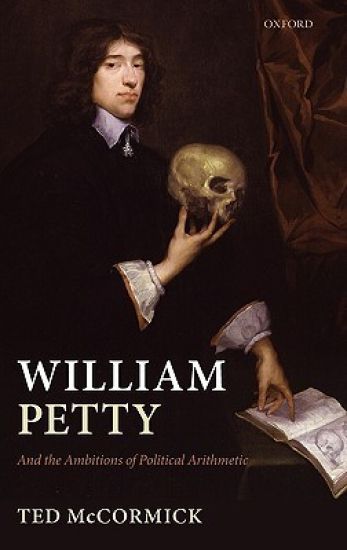
William Petty

William Petty

Ted McCormick

Oxford University Press
2009
sidottu
William Petty (1623-1687) was a key figure in the English colonization of Ireland, the institutionalization of experimental natural philosophy, and the creation of social science. Examining Petty's intellectual development and his invention of 'political arithmetic' against the backdrop of the European scientific revolution and the political upheavals of Interregnum and Restoration England and Ireland, this book provides the first comprehensive intellectual biography of Petty based on a thorough examination not only of printed sources but also of Petty's extensive archive and pattern of manuscript circulation. It is also the first fully contextualized study of what political arithmetic - widely seen as an ancestor of modern social and economic analysis - was originally intended to do. Ted McCormick traces Petty's education among French Jesuits and Dutch Cartesians, his early work with the 'Hartlib Circle' of Baconian natural philosophers, inventors, and reformers in England, his involvement in the Cromwellian conquest and settlement of Ireland, and his engagement with both science and the politics of religion in the Restoration. He argues that Petty's crowning achivement, political arithmetic, was less a new way of analysing economy or society than a new 'instrument of government' that applied elements of the new science - a mechanical worldview, a corpuscularian theory of matter, and a Baconian stress on empirical method and the transformative purposes of natural philosophy - to the creation of industrious and loyal populations. Finally, he examines the transformation Petty's program of social engineering, after his death, into an apparently apolitical form of statistical reasoning.
William Hazlitt

William Hazlitt

Duncan Wu

Oxford University Press
2008
sidottu
Romanticism is where the modern age begins, and Hazlitt was its most articulate spokesman. No one else had the ability to see it whole; no one else knew so many of its politicians, poets, and philosophers. By interpreting it for his contemporaries, he speaks to us of ourselves - of the culture and world we now inhabit. Perhaps the most important development of his time, the creation of a mass media, is one that now dominates our lives. Hazlitt's livelihoo was dependent on it. As the biography argues, he took political sketch-writing to a new level, invented sports commentary as we know it, and created the essay-form as practised by Clive James, Gore Vidal, and Michael Foot. Duncan Wu's profile of one of the greatest journalists in the language draws on over a decade of archival research in libraries across Britain and North America, to reveal for the first time such matters as why Godwin broke with Hazlitt; how Hazlitt came to know Sir John Soane and J. M. W. Turner; the true nature of Hazlitt's dealings with Thomas Medwin, and what the likes of Joseph Farington and Sir Thomas Lawrence thought of him. In addition, it sheds new light on Hazlitt's dealings with such figures as Francis Jeffrey, Robert Stodart, John M'Creery, Henry Crabb Robinson, Joseph Parkes, John Cam Hobhouse, and Stendhal. It benefits also from Wu's New Writings of William Hazlitt, many of which make their appearance here, illuminating hitherto obscure passages of Hazlitt's life.
William Hazlitt

William Hazlitt

Duncan Wu

Oxford University Press
2010
nidottu
Romanticism is where the modern age begins, and Hazlitt was its most articulate spokesman. No one else had the ability to see it whole; no one else knew so many of its politicians, poets, and philosophers. By interpreting it for his contemporaries, he speaks to us of ourselves - of the culture and world we now inhabit. Perhaps the most important development of his time, the creation of a mass media, is one that now dominates our lives. Hazlitt's livelihood was dependent on it. As the biography argues, he took political sketch-writing to a new level, invented sports commentary as we know it, and created the essay-form as practised by Clive James, Gore Vidal, and Michael Foot. Duncan Wu's profile of one of the greatest journalists in the language draws on over a decade of archival research in libraries across Britain and North America, to reveal for the first time such matters as why Godwin broke with Hazlitt; how Hazlitt came to know Sir John Soane and J. M. W. Turner; the true nature of Hazlitt's dealings with Thomas Medwin, and what the likes of Joseph Farington and Sir Thomas Lawrence thought of him. In addition, it sheds new light on Hazlitt's dealings with such figures as Francis Jeffrey, Robert Stodart, John M'Creery, Henry Crabb Robinson, Joseph Parkes, John Cam Hobhouse, and Stendhal. It benefits also from Wu's New Writings of William Hazlitt, many of which make their appearance here, illuminating hitherto obscure passages of Hazlitt's life.