
Kirjahaku
Etsi kirjoja tekijän nimen, kirjan nimen tai ISBN:n perusteella.
1000 tulosta hakusanalla William Duthie

Songs, Ballads And Stories By William Allingham (1877)
William Allingham
KESSINGER PUBLISHING, LLC
2008
sidottu

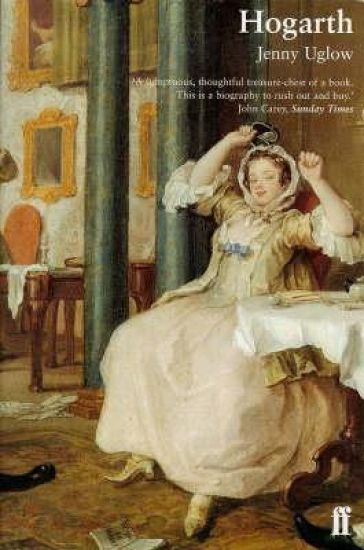
William Hogarth is a house-hold name across the country, his prints hang in our pubs and leap out from our history-books. He painted the great and good but also the common people. His art is comically exuberant, 'carried away by a passion for the ridiculous', as Hazlitt said.Jenny Uglow, acclaimed author of Elizabeth Gaskell, Nature's Engraver and In These Times, uncovers the man, but also the world he sprang from and the lives he pictured. He moved in the worlds of theatre, literature, journalism and politics, and found subjects for his work over the whole gamut of eighteenth century London, from street scenes to drawing rooms, and from churches to gambling halls and prisons. After striving years as an engraver and painter, Hogarth leapt into lasting fame with A Harlot's Progress and A Rake's Progress, but remained highly critical of the growing gulf between the luxurious lives of the ruling elite and the wretched poverty of the massess. William Hogarth was an artist of flamboyant, overflowing imagination, he was a satirist with an unerring eye; a painter of vibrant colour and tenderness; an ambitious professional who broke all the art-world taboos. Never content, he wanted to excel at everything - from engraving to history painting - and a note of risk runs through his life.Shortlisted for the Whitbread Prize, Hogarth: A Life and a World brings art history to life in the voices of Hogarth's own age. The result is an unforgettable portrait of a great artist and a proud, stubborn, comic, vulnerable man.

In this series, a contemporary poet selects and introduces a poet of the past. By their selection of verses and by the personal and critical reactions they express in their introductions, the selectors offer a passionate and accessible introduction to some of the greatest poets in history. William Wordsworth (1770-1850) was born in Cockermouth, Cumberland. In 1798 he published the Lyrical Ballads with Coleridge, settling shortly after in Dove Cottage, Grasmere, with his sister Dorothy. He died at Rydal Mount in 1850, shortly before the posthumous publication of that landmark of English Romanticism, The Prelude.

William Golding was born in 1911 and educated at his local grammar school and Brasenose College, Oxford. He published a volume of poems in 1934 and during the war served in the Royal Navy. Afterwards he returned to being a schoolmaster in Salisbury. Lord of the Flies, his first novel, was an immediate success, and was followed by a series of remarkable novels, including The Inheritors, Pincher Martin and The Spire. He won the Booker Prize for Rites of Passage in 1980, was awarded the Nobel Prize for Literature in 1983, and was knighted in 1988. He died in 1993.
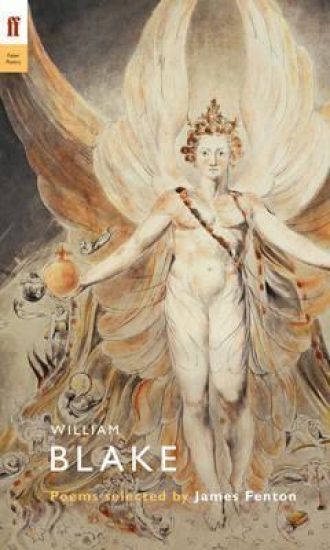
In this series, a contemporary poet selects and introduces a poet of the past. By their choice of poems and by the personal and critical reactions they express in their prefaces, the editors offer insights into their own work as well as providing an accessible and passionate introduction to some of the greatest poets of our literature.A painter, poet and engraver William Blake (1757-1827) was born in London. Poetical Sketches, his first volume of poetry, was published in 1783 and was followed by several of his best known works: Songs of Innocence (1789), The Book of Thel (1789), The Marriage of Heaven and Hell (1790-93), Songs of Experience (1794) and Jerusalem (1804-20).
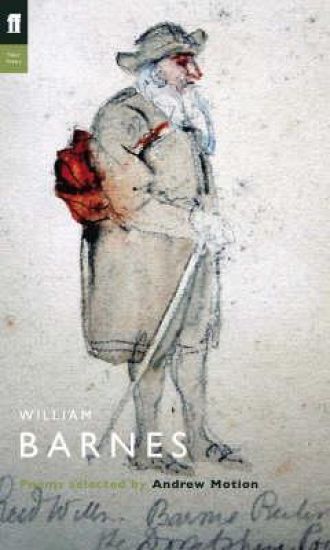
In this series, a contemporary poet selects and introduces a poet of the past. By their choice of poems and by the personal and critical reactions they express in their prefaces, the editors offer insights into their own work as well as providing an accessible and passionate introduction to the most important poets in our literature.William Barnes was born in 1801 near Sturminster Newton in Dorset, of a farming family. He learned Greek, Latin and music, taught himself wood engraving, and in 1823 became a schoolmaster in Mere. He was deply interested in grammar and language, and waged a lifelong campaign to rid English of classical and foreign influences. Among his best-known books of poetry are Poems of Rural Life in the Dorset Dialect (1844) and Homely Rhymes (1859. His work has often been praised for its evocations of Dorset life, landscape and customs; he also wrote political poems of great power and was a master elegist. Barnes died in 1886.

Winner of the Wolfson History Prize, and described by A.S.Byatt as 'one of the finest biographies ever published', this is Fiona MacCarthy's magisterial biography of William Morris, legendary designer and father of the Victorian Arts and Crafts movement. 'Thrilling, absorbing and majestic.' Independent'Wonderfully ambitious ... The definitive Morris biography.' Sunday Times 'Delicious and intelligent, full of shining detail and mysteries respected.' Daily Telegraph'Oh, the careful detail of this marvellous book! . . . A model of scholarly biography'. New StatesmanSince his death in 1896, William Morris has been celebrated as a giant of the Victorian era. But his genius was so multifaceted and so profound that its full extent has rarely been grasped. Many people may find it hard to believe that the greatest English designer of his time - possibly of all time - could also be internationally renowned as a founder of the socialist movement, and ranked as a poet with Tennyson and Browning.In her definitive biography - insightful, comprehensive, addictively readable - the award-winning Fiona MacCarthy gives us a richly detailed portrait of Morris's complex character for the first time, shedding light on his immense creative powers as artist and designer of furniture, fabrics, wallpaper, stained glass, tapestry, and books; his role as a poet, novelist and translator; on his psychology and his emotional life; his frenetic activities as polemicist and reformer; and his remarkable circle of friends, literary, artistic and political, including Dante Gabriel Rossetti and Edward Burne-Jones. It is a masterpiece of biographical art.
'William Sansom [1912-1976] was once described as London's closest equivalent to Franz Kafka. He wrote in hallucinatory detail, bringing every image into pin-sharp focus... Sansom writes of head-aching hatreds and hopeless ecstasies, of malevolent objects and wasted lives... Sansom's publisher described his work as "modern fables", but what makes them so ripe for rediscovery is their freshness and currency.' Christopher Fowler, Independent 'The worlds William Sansom surprises into life are populated with gentle stranglers and murderous lovers, with beasts that think like men and men who dream themselves into beasts. Their environs are often menacing and unfailingly strange...'Time This stunning collection, introduced by Elizabeth Bowen, offers a gleaming array of Sansom's finest fables, among them 'The Wall', 'A Contest of Ladies', 'Displaced Persons', 'Various Temptations', 'A Saving Grace', 'A Woman Seldom Found', and 'The Vertical Ladder.' ''The Vertical Ladder'... a short story about a man climbing a very high ladder and becoming more and more afraid... is a masterpiece, at once pure thought and pure action, [one] of the best short stories of the twentieth century.'B.R. Myers, Atlantic 'A Sansom story is a tour de force... Here is a writer whose faculties not only suit the short story but are suited by it - suited and, one may feel, enhanced... In the narration there must be an element of conjury, and of that William Sansom is an evident master.'Elizabeth Bowen (from her 'Introduction')