Kirjojen hintavertailu. Mukana 12 483 455 kirjaa ja 12 kauppaa.

Kirjahaku

Etsi kirjoja tekijän nimen, kirjan nimen tai ISBN:n perusteella.

1000 tulosta hakusanalla William Offutt

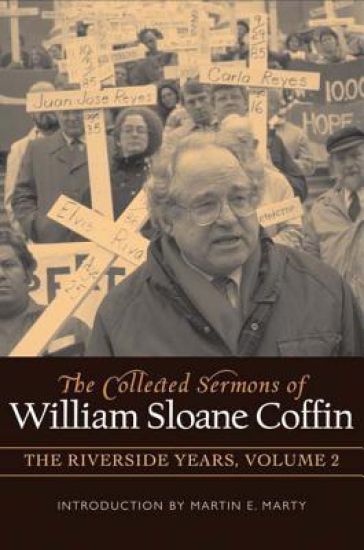
The Collected Sermons of William Sloane Coffin, Volume Two

The Collected Sermons of William Sloane Coffin, Volume Two

William Sloane Coffin

Westminster/John Knox Press,U.S.
2008
sidottu
Comprising the sermons preached by William Sloane Coffin while he was senior minister at the prestigious Riverside Church in New York City, The Collected Sermons of William Sloane Coffin: The Riverside Years captures the renowned preacher and social activist at work: ministering to American hostages in Iran, supporting AIDS awareness, and rallying his audiences to battle poverty and nuclear proliferation--all the while celebrating marriages, baptisms, and Mother's Days and mourning the loss of loved ones, including his own son. In each of these brilliant and painstakingly crafted sermons, Coffin combined his deep love of Scripture and passionate commitment to peace and justice with his unparalleled gift for the spoken word. While also revealing the personal and pastoral dimensions of his ministry, each sermon provides a powerful example of Coffin's well-accomplished mission: to challenge the conscience of a nation.
William Sheppard

William Sheppard

William E. Phipps

Westminster/John Knox Press,U.S.
2002
nidottu
This comprehensive biography of William Sheppard, the first African American Presbyterian missionary, presents the remarkable story of how an African American born in the South during the era of slavery emerged as one of the most distinguished Presbyterian leaders in American history. The book chronicles Sheppard's journey to the Congo, details his efforts to challenge human rights violations, and describes his impact on the areas of religion, human rights, education, and art.
Brazil through the Eyes of William James

Brazil through the Eyes of William James

William James

Harvard University, The David Rockefeller Center for Latin American Studies
2006
sidottu
In 1865, twenty-three-year-old William James began his studies at the Harvard Medical School. When he learned that one of his most esteemed professors, Louis Agassiz, then director of the recently established Museum of Comparative Zoology, was preparing a research expedition to Brazil, James offered his services as a voluntary collector. Over the course of a year, James kept a diary, wrote letters to his family, and sketched the plants, animals, and people he observed. During this journey, James spent time primarily in Rio de Janeiro, Belem, and Manaus, and along the rivers and tributaries of the Amazon Basin.This volume is a critical, bilingual (English–Portuguese) edition of William James’s diaries and letters and also includes reproductions of his drawings. This original material belongs to the Houghton Archives at Harvard University and is of great interest to both William James scholars and Brazilian studies experts.
William Blake on Self and Soul

William Blake on Self and Soul

Laura Quinney

Harvard University Press
2010
sidottu
It has been clear from the beginning that William Blake was both a political radical and a radical psychologist. In William Blake on Self and Soul, Laura Quinney uses her sensitive, surprising readings of the poet to reveal his innovative ideas about the experience of subjectivity. Blake’s central topic, Quinney shows us, is a contemporary one: the discomfiture of being a self or subject. The greater the insecurity of the “I” Blake believed, the more it tries to swell into a false but mighty “Selfhood.” And the larger the Selfhood bulks, the lonelier it grows. But why is that so? How is the illusion of “Selfhood” created? What damage does it do? How can one break its hold? These questions lead Blake to some of his most original thinking. Quinney contends that Blake’s hostility toward empiricism and Enlightenment philosophy is based on a penetrating psychological critique: Blake demonstrates that the demystifying science of empiricism deepens the self’s incoherence to itself. Though Blake formulates a therapy for the bewilderment of the self, as he goes on he perceives greater and greater obstacles to the remaking of subjectivity. By showing us this progression, Quinney shows us a Blake for our time.
The Heart of William James

The Heart of William James

William James

Harvard University Press
2012
nidottu
On the one hundredth anniversary of the death of William James, Robert Richardson, author of the magisterial William James: In the Maelstrom of American Modernism, assembles a wide-ranging selection of essays and writings that reveal the evolution of James’s thought over time, especially as it was continually being shaped by the converging influences of psychology, philosophy, and religion throughout his life.Proceeding chronologically, the volume begins with “What Is an Emotion,” James’s early, notable, and still controversial argument that many of our emotions follow from (rather than cause) physical or physiological reactions. The book concludes with “The Moral Equivalent of War,” one of the greatest anti-war pieces ever written, perhaps even more relevant now than when it was first published. In between, in essays on “The Dilemma of Determinism,” “The Hidden Self,” “Habit,” and “The Will”; in chapters from The Principles of Psychology and The Varieties of Religious Experience; and in such pieces as “On a Certain Blindness in Human Beings,” “What Makes a Life Significant,” and “Philosophical Conceptions and Practical Results,” we witness the evolution of James’s philosophical thinking, his pragmatism, and his radical empiricism. Throughout, Richardson’s deeply informed introductions place James’s work in its proper biographical, historical, and philosophical context.In essay after essay, James calls us to live a fuller, richer, better life, to seek out and use our best energies and sympathies. As every day is the day of creation and judgment, so every age was once the new age—and as this book makes abundantly clear, William James’s writings are still the gateway to many a new world.
William Ellery Channing

William Ellery Channing

Andrew Delbanco

Harvard University Press
1981
sidottu
This is a vivid portrayal of the man who led the movement toward liberal religion in America. Andrew Delbanco traces the development of Channing's thinking on the relation of man to God and nature, on the reality of evil, on the autonomy of the individual. He reveals Channing's hope and doubt concerning America's contribution to human progress. And he recounts Channing's emergence as a major voice in the antislavery movement--after a complex hesitation to embrace the cause. This is a study of the religious, literary, and political concerns of a man and his time. It will well serve all students of nineteenth-century American thought.
The Letters of William Lloyd Garrison

The Letters of William Lloyd Garrison

William Lloyd Garrison

Harvard University Press
1971
sidottu
William Lloyd Garrison (1805-1879), outstanding among the dedicated fighters for the abolition of slavery, was also an activist in other movements such as women's and civil rights and religious reform. Never tiring in battle, he was "irrepressible, uncompromising, and inflammatory." He antagonized many, including some of his fellow reformers. There were also many who loved and respected him. But he was never overlooked.His letters, a source of the first magnitude, begin in 1822, when Garrison was seventeen, and end in 1879, the year of his death. They offer an insight into the mind and life of an outstanding figure in American history, a reformer-revolutionary who sought radical changes in the institutions of his day--in the relationship of the races, the rights of women, the nature and role of religion and religious institutions, and the relations between the state and its citizens; and who, perhaps more than any other single individual, was ultimately responsible for the emancipation of the slaves.Garrison's letters are also, sui generis, important as the expression of a vigorous writer, whose letters reflect his strength of character and warm humanity, and who appears here not only as the journalist, the reformer, and the leader of men, but also as the loving husband and father, the devoted son and son-in-law, the staunch friend, and the formidable opponent.Included in this well illustrated first volume are Garrison's letters from the earliest known--one to his mother during his apprenticeship--through the 1831 founding of his famous newspaper, The Liberator; the founding in 1832 and 1833 of the New England and the American Anti-Slavery Societies; his first trip to England to meet with British abolitionists; his courtship and marriage; and his being dragged through the streets of Boston by a mob out to tar and feather the British abolitionist George Thompson.
The Letters of William Lloyd Garrison

The Letters of William Lloyd Garrison

William Lloyd Garrison

Harvard University Press
1971
sidottu
William Lloyd Garrison (1805-1879), outstanding among the dedicated fighters for the abolition of slavery, was also an activist in other movements such as women's and civil rights and religious reform. Never tiring in battle, he was "irrepressible, uncompromising, and inflammatory." He antagonized many, including some of his fellow reformers. There were also many who loved and respected him. But he was never overlooked.His letters, a source of the first magnitude, begin in 1822, when Garrison was seventeen, and end in 1879, the year of his death. They offer an insight into the mind and life of an outstanding figure in American history, a reformer-revolutionary who sought radical changes in the institutions of his day--in the relationship of the races, the rights of women, the nature and role of religion and religious institutions, and the relations between the state and its citizens; and who, perhaps more than any other single individual, was ultimately responsible for the emancipation of the slaves.Garrison's letters are also, sui generis, important as the expression of a vigorous writer, whose letters reflect his strength of character and warm humanity, and who appears here not only as the journalist, the reformer, and the leader of men, but also as the loving husband and father, the devoted son and son-in-law, the staunch friend, and the formidable opponent.During the five years covered in this volume Garrison's three sons were born and he entered the arena of social reform with full force. In 1836 he began his public criticism of the orthodox observance of the Sabbath. The year 1837 witnessed the severe attack from orthodox clergyman on The Liberator. In 1838 Garrison attended the Peace Convention in Boston. The simmering conflict within the antislavery movement over the issues of political action and the participation of women broke out in 1839, and at the annual meeting of the American Anti-Slavery Society in 1840, the anti-Garrisonian minority seceded and formed the American and Foreign Anti-Slavery Society. Meanwhile the World's Anti-Slavery Convention was called in London in June. Garrison attended, arriving several days after the opening. The female delegates from Massachusetts and Pennsylvania were excluded from the convention, and Garrison protested by sitting in the balcony with them and refusing to participate.
The Letters of William Lloyd Garrison

The Letters of William Lloyd Garrison

William Lloyd Garrison

Harvard University Press
1974
sidottu
As early as 1842 Garrison advanced the idea of disunion, arguing that the Constitution was "a covenant with death." Distressed by Calhoun's signing of the annexation treaty for Texas, he prophesied that civil war was inevitable. Though plagued by illness and death in his immediate family throughout the years covered in this volume, Garrison drove himself to win supporters for the radical abolitionist cause. In 1846 he traveled to Great Britain, denouncing the Free Church of Scotland for accepting funds from South Carolina. While in England he lectured often with Frederick Douglass; the two embarked the following year on a grueling lecture tour of the western United States, heretofore the exclusive domain of moderate abolitionists. In 1848, despite the objections of close friends, Garrison held the controversial Anti-Sabbath Convention in Boston. Throughout these years he continued to write extensively for the Liberator and involved himself in a variety of liberal causes; in 1849 he publicized and circulated in Massachusetts the earliest petition for women's suffrage.
The Letters of William Lloyd Garrison

The Letters of William Lloyd Garrison

William Lloyd Garrison

Harvard University Press
1976
sidottu
The fiery editor of the Liberator helped shape the destiny of a divided nation rapidly moving toward war. His letters ring with denunciations of the Compromise of 1850 and the barbarous Fugitive Slave Law, a federal bill that not only sent runaway slaves back to angry masters but threatened the liberty of all free blacks. Despite such provocation. Garrison was an advocate of nonresistance during this period though he continued to advocate the emancipation of slaves. Garrison's writings also reflect the interests of his times. He engaged in lively correspondence with fellow countrymen Harriet Beecher Stowe, Wendell Phillips, Susan B. Anthony, Theodore Parker, and Stephen S. Foster. In a long letter to Louis Kossuth, he challenges that Hungarian patriot's stand of opposing tyranny in Europe while ignoring slavery in America. Set against a background of wide-ranging travels throughout the western United States and of family affairs back home in Boston, Garrison's letters of this decade make a distinctive contribution to antebellum life and thought.
The Letters of William Lloyd Garrison

The Letters of William Lloyd Garrison

William Lloyd Garrison

Harvard University Press
1979
sidottu
By 1861, William Lloyd Garrison’s public image had progressed from that of impulsive fanatic to one of widely respected and influential abolitionist. As editor of The Liberator and president of the American Anti-Slavery Society, he was the acknowledged spokesman for radical antislavery opinion.Garrison was profoundly disturbed by the advent of war. In his correspondence, he kept military events at a distance, focusing on the morality of the conflict, an issue made the more poignant by his eldest son’s enlistment in the 55th Massachusetts Regiment in 1863—the same year that his wife suffered a paralytic stroke. Gradually he became convinced that the war would effect the abolition he had sought for so many years.Likewise his attitude toward Lincoln underwent significant changes; he moved from critic to supporter, defending the President’s re-election against the arguments of fellow abolitionists. His visit with Lincoln in the White House he described as “a very satisfactory one indeed,” for he was pleased with Lincoln’s “spirit, and the familiar and candid way in which he unbosomed himself.” With the war ended and his goal as abolitionist achieved, Garrison discontinued The Liberator and withdrew from the American Anti-Slavery Society. Fortunately, friends arranged for a national testimonial that provided financial security. By 1866–1867 he was enjoying an active retirement with honors at home and abroad, and a “plump and cunning” first grandchild. His letters show Garrison as a family man and curious observer as well as a reformer with a vision of a free and peaceful land.
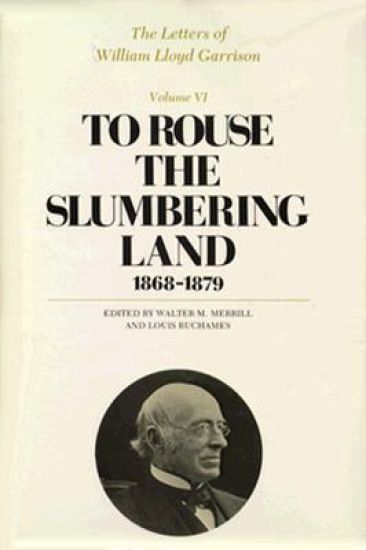
The Letters of William Lloyd Garrison

The Letters of William Lloyd Garrison

William Lloyd Garrison

Harvard University Press
1981
sidottu
This is the sixth and final volume collecting the letters of an outstanding figure in American history. During the years when these letters were written, Garrison was secure, both financially and in his reputation as distinguished abolitionist. Although officially retired, he remained vigorously concerned with issues crucial to him--the relationship of the races, woman suffrage, temperance, national and international affairs, and, above all, his family.He writes about the Alabama Claims and the proposed annexation of Santo Domingo, aligning himself with the Radical Republicans. His letters support President Grant, despite the charges of corruption that surrounded him, but his public views on Rutherford B. Hayes change from cautious optimism to condemnation. He is saddened by the return to power in the South of the white ruling class, and to the end of his life he is deeply involved with the plight of minority groups in the country.The center of Garrison's life was his family, and his correspondence reveals the ways his days passed in association with those nearest to him. There is evidence of friction in the family, but his relationships are warm and loving. His private letters tell of the death of his wife in 1875 and his failing health. He died in 1879, an old reformer still fighting for the rights of humanity.