

Kirjahaku
Etsi kirjoja tekijän nimen, kirjan nimen tai ISBN:n perusteella.
1000 tulosta hakusanalla William R Cook


Are you a good listener? How well do you really know the people around you? A capacity for empathic understanding is hard-wired in our brains, but its full expression involves particular listening skills that are seldom learned through ordinary experience. Through clear explanation, specific examples, and practical exercises, Dr. Miller offers a step-by-step process for developing your skillfulness in empathic listening. With a solid basis in sixty years of scientific research, these communication skills are not limited to professionals, and can be learned and applied in your everyday life. Instead of assuming that you know the meaning of what you think you heard, empathic listening lets you develop a more accurate understanding and prevent miscommunication. Empathic understanding can help to deepen personal relationships, alleviate conflict, communicate across differences, and promote positive change. The author also discusses skills for expressing yourself clearly, and for strengthening close relationships and friendships. Through empathic understanding you have access to life experience far beyond your own, and over time, listening well and deeply becomes a way of being, fostering a compassionate and patient acceptance of human frailties--those of others as well as your own. ""The quality of empathic listening that Carl Rogers brought to us decades ago, that unlocks treasures of intimacy, trust, peace and healing, is alive and well in Bill Miller's own unique voice, as he extends the meanings of this vital relational element for today's world. Readily integrated into our everyday lives and the larger cultures of human conflict, my hope is that we choose to live out the delicate yet strong principles of connection that Listening Well offers us."" --Gay Leah Barfield, Co-Founder and Former Director, Carl Rogers Institute for Peace, Center for Studies of the Person, La Jolla, California ""If there ever was a time for Listening Well, it is now. In its pages, we learn to use our ears to dissolve differences, open hearts, and build bridges. Nothing more needs saying."" --Scott D. Miller, Director, International Center for Clinical Excellence ""Listening Well is a super moon in the dark night sky: brilliant, absorbing, and illuminating. Bill Miller, co-developer of the revolutionary motivational interviewing, blends art and science in teaching the quintessential skills of listening and in fostering human connection."" --John C. Norcross, Professor of Psychology, University of Scranton ""Listening Well is a terrific, hands-on book for individuals or groups dedicated to caring relationships. Full of insight and practical exercises to improve listening skills, I highly recommend it to professionals and lay people alike."" --Debra Engquist, Retired Pastor ""Listening Well is about much more than listening. This short, easy-to-read book provides a brief course in human relationships. With many useful explanations, examples, and exercises, the author demonstrates the what, why, and how of empathy in human interaction. The book is eminently useful for those who want to or need to improve their listening and relationship skills at work or in personal settings."" --Howard Kirschenbaum, Former Chair, Counseling and Human Development, University of Rochester Dr. William R. Miller is Emeritus Distinguished Professor of Psychology and Psychiatry at the University of New Mexico, with over forty years of experience in teaching empathic understanding. His many books include Lovingkindness, Quantum Change, Motivational Interviewing, and Portals: Two Lives Intertwined by Adoption.

Are you a good listener? How well do you really know the people around you? A capacity for empathic understanding is hard-wired in our brains, but its full expression involves particular listening skills that are seldom learned through ordinary experience. Through clear explanation, specific examples, and practical exercises, Dr. Miller offers a step-by-step process for developing your skillfulness in empathic listening. With a solid basis in sixty years of scientific research, these communication skills are not limited to professionals, and can be learned and applied in your everyday life. Instead of assuming that you know the meaning of what you think you heard, empathic listening lets you develop a more accurate understanding and prevent miscommunication. Empathic understanding can help to deepen personal relationships, alleviate conflict, communicate across differences, and promote positive change. The author also discusses skills for expressing yourself clearly, and for strengthening close relationships and friendships. Through empathic understanding you have access to life experience far beyond your own, and over time, listening well and deeply becomes a way of being, fostering a compassionate and patient acceptance of human frailties--those of others as well as your own. ""The quality of empathic listening that Carl Rogers brought to us decades ago, that unlocks treasures of intimacy, trust, peace and healing, is alive and well in Bill Miller's own unique voice, as he extends the meanings of this vital relational element for today's world. Readily integrated into our everyday lives and the larger cultures of human conflict, my hope is that we choose to live out the delicate yet strong principles of connection that Listening Well offers us."" --Gay Leah Barfield, Co-Founder and Former Director, Carl Rogers Institute for Peace, Center for Studies of the Person, La Jolla, California ""If there ever was a time for Listening Well, it is now. In its pages, we learn to use our ears to dissolve differences, open hearts, and build bridges. Nothing more needs saying."" --Scott D. Miller, Director, International Center for Clinical Excellence ""Listening Well is a super moon in the dark night sky: brilliant, absorbing, and illuminating. Bill Miller, co-developer of the revolutionary motivational interviewing, blends art and science in teaching the quintessential skills of listening and in fostering human connection."" --John C. Norcross, Professor of Psychology, University of Scranton ""Listening Well is a terrific, hands-on book for individuals or groups dedicated to caring relationships. Full of insight and practical exercises to improve listening skills, I highly recommend it to professionals and lay people alike."" --Debra Engquist, Retired Pastor ""Listening Well is about much more than listening. This short, easy-to-read book provides a brief course in human relationships. With many useful explanations, examples, and exercises, the author demonstrates the what, why, and how of empathy in human interaction. The book is eminently useful for those who want to or need to improve their listening and relationship skills at work or in personal settings."" --Howard Kirschenbaum, Former Chair, Counseling and Human Development, University of Rochester Dr. William R. Miller is Emeritus Distinguished Professor of Psychology and Psychiatry at the University of New Mexico, with over forty years of experience in teaching empathic understanding. His many books include Lovingkindness, Quantum Change, Motivational Interviewing, and Portals: Two Lives Intertwined by Adoption.

""The preparation of my Father's biography has been undertaken as a sacred trust. Early in the spring of 1894 he was asked by an old friend for permission to issue a biography with his approval. This my Father declined to do, and, on that occasion, expressed the wish that I should assume the task when his life-work was ended. In reply to my objection that such an undertaking demanded a literary experience that I did not possess, he said: 'I don't care anything about that. What I want is that you should correct inaccuracies and misstatements that it would be difficult to straighten out during my life. You are the one to do this. All my friends will unite on you and give you their assistance. There are many who think they know me better than any one else, and would feel themselves best able to interpret my life. IF you do not do this work there will be many inaccurate and conflicting 'Lives.'"" --From the Introduction William R. Moody (1900-1985) was bishop of the Episcopal Diocese of Lexington from 1945 to 1970.


Photography: The Ultimate Beginner's Guide!
William R. James
Createspace Independent Publishing Platform
2016
nidottu
B/W EditionReady to Start Taking Photos Like a PRO? This book will teach you how to handle your DSLR. But mostly, it will be focused on how you can and must control the light in your photo using your camera. In photography, lighting is everything. Even if you master the functions of your camera, getting a high quality photo will be difficult if you don't even understand the importance of manipulating and taking advantage of the light sources around the scene you want to take. Although, if you have a "good eye" for aesthetics, you can. But the question is, do you have that "good eye"? It will be assumed that you do not have one. However, if you do and you just want to learn using your camera, this book can still be a useful guide for you. Anyway, enough chitchat, and get a move on the first chapter.

Dead of Night: Tales of the supernatural and the macabre
William R. Todd
Createspace Independent Publishing Platform
2016
nidottu
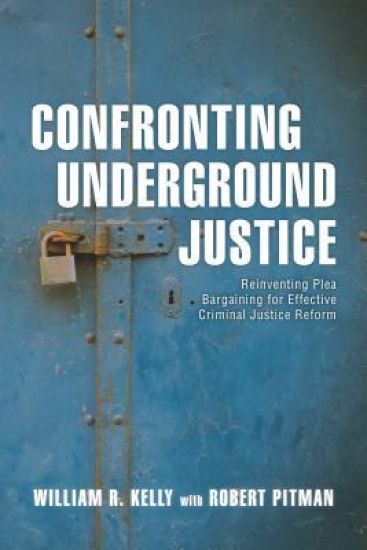
Plea negotiation is rife with due process concerns, including a heightened risk of coerced pleas, ignoring mens rea, serious questions about assistance of counsel, limited discovery and little litigation of the evidence, the conviction of innocent defendants and significant questions about fairness and equity. Plea negotiation is also the fast track to criminal conviction, tough punishment, and mass incarceration. From the perspective of public policy, plea negotiation perpetuates a harm based, retribution focused system of crime and punishment. Because of the failures of public health, the justice system has become a dumping ground for hundreds of thousands of mentally ill, substance addicted and abusing, and neurocognitively impaired offenders. And because of a tough on crime mentality and lack of information and options, the justice system routinely prosecutes and punishes these offenders. The evidence is quite clear that punishment does nothing to improve these circumstances and often exacerbates them. The result, as one would predict, is extraordinarily high rates of reoffending, propelling the revolving door of the justice system. Confronting Underground Justice takes a close look at plea negotiation, criminal prosecution, public defense, and pretrial justice systems and identifies a wide variety of problems and concerns with each. William R. Kelly and Robert Pitman provide key decision makers with the tools to make better, more informed decisions regarding pre-trial detention, prosecution and plea deals, criminal defense, and diversion to treatment. Critical to this effort is redefining roles, responsibilities and the culture of criminal justice by prosecutors, judges and defense counsel accepting responsibility for reducing recidivism and embracing problem solving as a primary decision making strategy. Kelly and Pitman combine decades of academic research and policy expertise, with real world experience in the court system, as a judge and prosecutor to develop innovative and comprehensive reform. Confronting Underground Justice provides a prescriptive roadmap for how to fundamentally reinvent plea negotiation, pre-trial decision making, criminal prosecution and public defense to effectively reduce recidivism and save money.
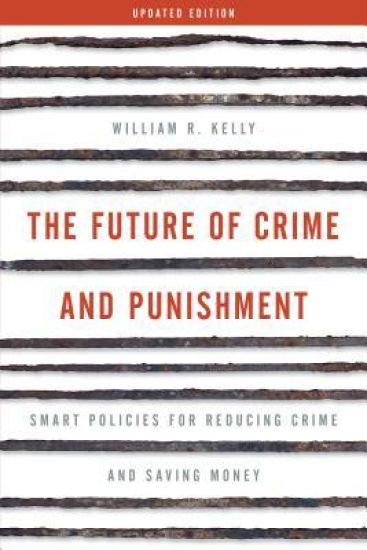
Today, we know that crime is often not just a matter of making bad decisions. Rather, there are a variety of factors that are implicated in much criminal offending, some fairly obvious like poverty, mental illness, and drug abuse and others less so, such as neurocognitive problems. Today, we have the tools for effective criminal behavioral change, but this cannot be an excuse for criminal offending. In The Future of Crime and Punishment, William R. Kelly identifies the need to educate the public on how these tools can be used to most effectively and cost efficiently reduce crime, recidivism, victimization and cost. Since the first publication of The Future of Crime and Punishment in 2015 there have been some significant changes in American criminal justice. While some efforts are moving in the right direction they are still nowhere close to meaningful criminal justice reform that focuses on large scale diversion and appropriate, expert treatment and rehabilitation of the majority of offenders. In this updated paperback edition, Kelly provides readers with updated crime, recidivism and the cost of crime statistics; notes the recent trends such as the modest reduction in incarceration; and discusses the impacts of the election of Trump, including his “law and order” stance as a candidate, his blurring of crime and immigration, the Justice Department’s renewed war on drugs and the opioid crisis by emphasizing a criminal justice response to a public health problem. The justice system of the future needs to be much more collaborative, utilizing the expertise of a variety of disciplines such as psychology, psychiatry, addiction, and neuroscience. The path forward is one characterized largely by change from traditional criminal prosecution and punishment to venues that balance accountability, compliance, and risk management with behavioral change interventions that address the primary underlying causes for recidivism. Moreover, it requires a radical shift in how we think about crime and punishment. Our thinking needs to reflect a perspective that crime is harmful, but that much criminal behavior is changeable.
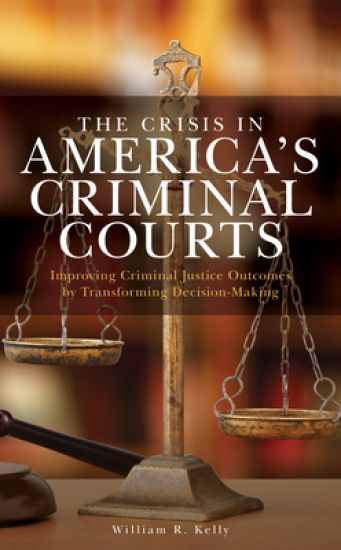
The Crisis in the American Criminal Courts highlights a variety of problems that judges, prosecutors, and public defenders face within a criminal justice system that is ineffective, unfair, and extraordinarily expensive. While many argue, and I agree, that crushing caseloads and court dockets certainly qualify as a crisis, I suggest there is a much greater crisis in the courts that results in profound downstream effects on criminal justice performance and outcomes. It sounds simple, but the greatest risk faced by the justice system is the lack of time, expertise, and resources for effective decision-making. In this book, I propose a variety of evidence-based reforms that, as a start, provide the key decision-makers with professional clinical experts to accurately assess and advise regarding mitigating the circumstances that bring individuals into the courts. We must rebalance. We need incarceration for those who are too dangerous or violent or who are habitual offenders. For most of the rest, we need to manage risk, but very importantly, it is time to get serious about behavioral change. We need to change the culture of the courthouse and reorient how we think about crime and punishment.
The Reinvention of Policing
William R. Kelly; Daniel P. Mears
BLOOMSBURY PUBLISHING PLC
2023
sidottu
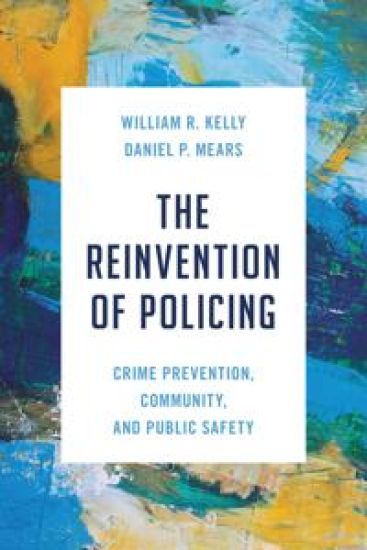
Contemporary policing is in crisis, a situation that has led to persistent calls to reform it. Unfortunately, many proposed solutions focus on piecemeal changes that ignore a fundamental problem—policing relies on a largely reactive approach that does not in any systematic or comprehensive way focus on crime prevention. Most of what the police do, such as responding to 911 calls for service and employing directed patrols or hot spots policing, fails to address the causes of crime. Compounding this problem is the absence of any institution or agency charged with prioritizing the prevention of crime and for ensuring that police efforts support this goal.Kelly and Mears argue that a better strategy exists, one that places responsibility on the police and other governmental and non-governmental agencies and organizations for truly preventing crime. Why, historically, did crime prevention not take hold and infuse policing? One reason is a design flaw—the vision of policing centered too much on surveillance and too little on efforts that target the diverse causes of crime. The end result? Contemporary policing lacks any institutionalized commitment or systematic approach to crime prevention. It is designed to fail.The Reinvention of Policing diagnoses this problem, along with many others, inAmerican policing. Then the authors turn to solutions. First, they call for a great many reforms to existing practices. Second, they call for a reinvention of the design and focus of policing and, concomitantly, the way that states, cities, and towns approach public safety. This change presents special challenges, but it is the only way to create an appreciable impact in reducing crime and improving justice.
The Reinvention of Policing
William R. Kelly; Daniel P. Mears
BLOOMSBURY PUBLISHING PLC
2023
nidottu
Contemporary policing is in crisis, a situation that has led to persistent calls to reform it. Unfortunately, many proposed solutions focus on piecemeal changes that ignore a fundamental problem—policing relies on a largely reactive approach that does not in any systematic or comprehensive way focus on crime prevention. Most of what the police do, such as responding to 911 calls for service and employing directed patrols or hot spots policing, fails to address the causes of crime. Compounding this problem is the absence of any institution or agency charged with prioritizing the prevention of crime and for ensuring that police efforts support this goal.Kelly and Mears argue that a better strategy exists, one that places responsibility on the police and other governmental and non-governmental agencies and organizations for truly preventing crime. Why, historically, did crime prevention not take hold and infuse policing? One reason is a design flaw—the vision of policing centered too much on surveillance and too little on efforts that target the diverse causes of crime. The end result? Contemporary policing lacks any institutionalized commitment or systematic approach to crime prevention. It is designed to fail.The Reinvention of Policing diagnoses this problem, along with many others, inAmerican policing. Then the authors turn to solutions. First, they call for a great many reforms to existing practices. Second, they call for a reinvention of the design and focus of policing and, concomitantly, the way that states, cities, and towns approach public safety. This change presents special challenges, but it is the only way to create an appreciable impact in reducing crime and improving justice.
The Crisis in America's Criminal Courts highlights a variety of problems that judges, prosecutors, and public defenders face within a criminal justice system that is ineffective, unfair, and extraordinarily expensive. While many argue, and I agree, that crushing caseloads and court dockets certainly qualify as a crisis, I suggest there is a much greater crisis in the courts that results in profound downstream effects on criminal justice performance and outcomes. It sounds simple, but the greatest risk faced by the justice system is the lack of time, expertise, and resources for effective decision-making. In this book, I propose a variety of evidence-based reforms that, as a start, provide the key decision-makers with professional clinical experts to accurately assess and advise regarding mitigating the circumstances that bring individuals into the courts. We must rebalance. We need incarceration for those who are too dangerous or violent or who are habitual offenders. For most of the rest, we need to manage risk, but very importantly, it is time to get serious about behavioral change. We need to change the culture of the courthouse and reorient how we think about crime and punishment.


But for the Grace of God: An Autobiography of an Aviator and Astronaut
William R. Pogue
Createspace Independent Publishing Platform
2016
nidottu

The Battle of Lake George: England's First Triumph in the French and Indian War
William R. Griffith
History Press Library Editions
2016
sidottu
In the early morning of September 8, 1755, a force of French Regulars, Canadians and Indians crouched unseen in a ravine south of Lake George. Under the command of French general Jean-Armand, Baron de Dieskau, the men ambushed the approaching British forces, sparking a bloody conflict for control of the lake and its access to New York s interior. Against all odds, British commander William Johnson rallied his men through the barrage of enemy fire to send the French retreating north to Ticonderoga. The stage was set for one of the most contested regions throughout the rest of the conflict. Historian William Griffith recounts the thrilling history behind the first major British battlefield victory of the French and Indian War."

Golf in Columbus at Wyandot Country Club: A Lost Donald Ross Classic
William R. Case
History Press Library Editions
2014
sidottu
The Donald Ross-designed golf course at the Elks and Wyandot Country Clubs was celebrated as one of Ohio's best from its ballyhooed beginnings in 1923 until its closing in 1952. During its too-short history, the course and the two clubs associated with it overcame many obstacles, including a lack of money and resources during the Great Depression and lack of materials and manpower during World War II. Home to the 1931 Ohio Amateur and the 1948 Columbus Invitational, its membership roll included three-time major champion Denny Shute. Author Bill Case covers the birdies, bogeys and pars in this long-overdue chronicle of a lost jewel from golf's golden age.

Naval Air Station Whidbey Island
William R. Stein; The Pby Naval Air Museum
Arcadia Publishing Library Editions
2017
sidottu

John F. Kennedy was profoundly moved by the tragedy of generational poverty after touring southernmost West Virginia during his presidential campaign. Six months after his election in 1961, President Kennedy established the President's Appalachian Regional Commission with the governors of all eight Appalachian Mountain states. On October 12, 1961, the Mercer County Commission joined forces with the president and the US Forest Service to donate a portion of the former Mercer County Poor Farm to develop the nation's first Forestry Sciences Laboratory. President Kennedy selected well-known forester Frank Longwood as director, and Longwood assembled a group of forest scientists who were dedicated to the task of restoring and marketing the Appalachian hardwood forest. With the same dedication that rocket scientists applied to fulfill Kennedy's dream of sending an American to the moon and back, timber scientists restored and marketed the great Appalachian hardwood forest. The US Forest Service left the site in 2016 but worked with the Mercer County Commission, the US General Services Administration, and the National Park Service's Historic Surplus Properties program to establish a site dedicated to history and public service.