
Kirjahaku
Etsi kirjoja tekijän nimen, kirjan nimen tai ISBN:n perusteella.
1000 tulosta hakusanalla "Eleanor"
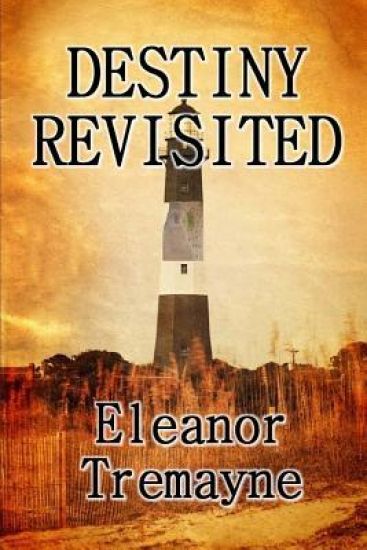
When Gabriella is handed the death box at her boyfriend's funeral, she has no idea how her life is going to change. Her life becomes more than a stage; it becomes the looking glass through which the past and future can be seen. Destiny Revisited begins in a Boston chapel in 2001, where Gabby flashbacks to the beginning of her journey--to Savannah, Georgia during the early sixties. Her memories take her to the university where she escapes a tragic love affair and finds herself living an extravagant, but ultimately mundane lifestyle in Kentucky. That is, until multimillionaire Sterling Powers, introduces a na ve Gabby to his special world of sexual intrigue.

Reflections is a heartwarming tale about a young boy with Down syndrome whose curiosity leads him to find his inner beauty. It's a children book made simple enough for those with Down syndrome to understand and enjoy. Accompanied by colorful, vivid pictures, this book is sure to put a smile on anyone's face. It expresses the specialness of these jewel-like children. It is a beautifully written piece of encouragement that can help them to progress in their life's journey. Reflections is written for the lovely hands to hold and realize how much greatness they show everyone in daily life.

Hospitalized with the dreaded atom bomb disease, leukemia, a child in Hiroshima races against time to fold one thousand paper cranes to verify the legend that by doing so a sick person will become healthy.
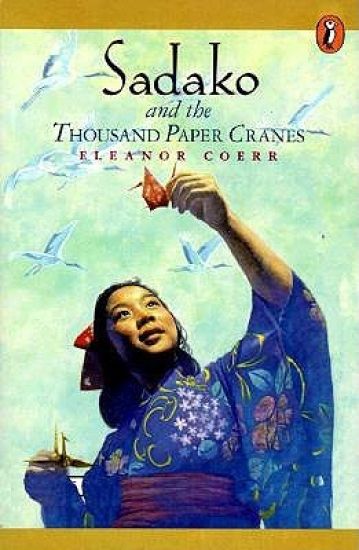
"An extraordinary book, one no reader will fail to find compelling and unforgettable." --Booklist, starred review Hiroshima-born Sadako is lively and athletic--the star of her school's running team . . . until the dizzy spells start. Soon gravely ill with leukemia, the "atom bomb disease," Sadako faces her future with spirit and bravery. Recalling a Japanese legend, Sadako sets to work folding paper cranes. For the legend holds that if a sick person folds one thousand cranes, the gods will grant her wish and make her healthy again. Based on a true story, Sadako and the Thousand Paper Cranes celebrates the extraordinary courage that made one young woman a heroine in Japan.

Staying with her grandparents after the atomic bomb has been dropped on Nagasaki, ten-year-old Mieko feels that happiness is gone forever and she will no longer be able to produce a beautiful drawing for the contest at school.
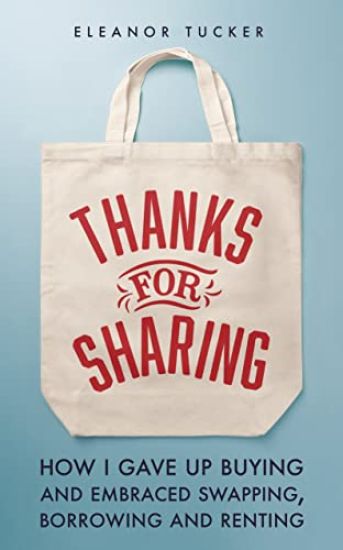
In this fascinating book, Eleanor Tucker sets out a bold vision of how sustainable sharing can save us money, and lead to a happier future. What is the Sharing Economy? How can it help us live more affordable, more sustainable, and ultimately more fulfilling lives? What would happen if for one year a family pledged to share as much as they possibly can? Instead ofowning more and more stuff, what it’s like to stop owning things and borrow, lend, rent and swap instead? These are big questions, but features writer Eleanor Tucker sets out to answer them in this thoroughly absorbing and entertaining guide to sustainable sharing, or as it is also known, 'collaborative consumption'. In this engrossing study, Eleanor straps us into on her year-long experiment along with her somewhat reluctant family. Over the course of the year, with the aid of various sharing apps, they will pledge to buy as few new things as possible, instead relying on the power of sharing, lending, renting and borrowing to supply their needs. Each chapter introduces a different type of sharing into her day to day life, from the little ‘things' (food, clothes) to the bigger ’things' (cars, furniture, the space around us), and shows how the growth of tech has revolutionized an age-old practice. The book contains best-for recommendations based around different types of sharing, to create an easily accessible shortcut into sharing. Written with warm and relatable humour as well as a deeply-researched knowledge of the history of sharing, this unmissable guide could truly change the way you consume.

'These stories have all had their origins in dreams... Terrifying enough to the dreamer... I hope that some readers will experience an agreeable shudder or two in the reading of them.' A malignant entity answers the call of an ancient curse on the coast of Brittany; a traveller's curiosity delivers him to an abominable Hallowe'en ritual; the curious new owner of a haunted mansion discovers something far worse than ghosts in the night. Randalls Round has long been revered by devotees of the weird tale. First published in 1929, its stories of ritualistic folk horror and M. R. James-inspired accounts of ancient forces terrorising humanity are thoroughly deserving of wider recognition. This collection includes a new introduction exploring Eleanor Scott's impact on weird and folk horror fiction, and two chilling stories by N. Dennett - speculated to be another of the author's pseudonyms

Miss Cullen finds herself in a dreadful predicament. Four years from retirement, she can no longer meet the educational standards expected nor control her pupils at Besley High School for girls. She knows that no other school will hire her now, but if she is sacked or doesn't work until she's 60, she will lose her pension. Her only hope is to hang on. But her poor exam results affect the standing of the whole school. Her colleagues embark on a campaign against her to save their own positions and she retaliates by involving the school inspector. Into this hostile environment comes Viola Kennedy, a young new teacher full of optimism and ideas, who instead gets caught up in the conspiracies and swirling resentments. A quietly devastating novel about the realities of life for single working women in the 1920s and the systems that failed them.

The Lindisfarne Gospels is an extraordinary book and one of the British Library's greatest treasures. It was hand-written and decorated over 1,300 years ago by a single supremely gifted scribe-artist. It inspires awe both as a pinnacle of book design and for the fascinating story of how it came down to us in almost pristine condition. Every aspect of its design displays meticulous care, keen responsiveness to a wide range of cultural contacts, and the workings of an immense and brilliant imagination. This brand-new, accessible volume explores the latest research and thinking on the Lindisfarne Gospels and is published as the manuscript goes on loan to the Laing Art Gallery in Newcastle for an exhibition exploring its meaning in today's world. This magnificent guide presents a detailed introduction and commentary alongside the highest quality, detailed illustrations which celebrate the intricate, interlaced geometrical precision of one of the finest early medieval craftsmen.
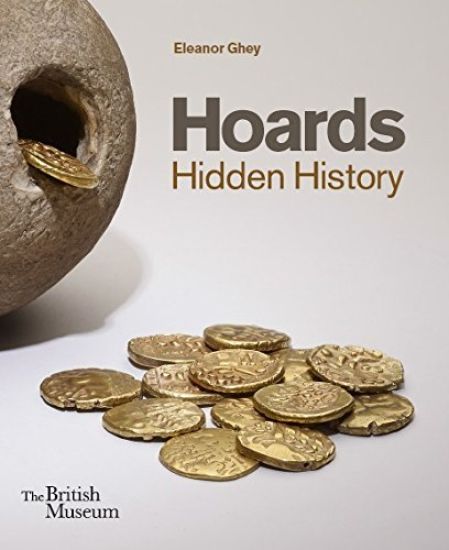
Every so often a remarkable discovery hits the headlines – often an account of treasure hunters striking lucky after years of searching the land, or perhaps a chance find made by a farmer after ploughing. With each new hoard comes a story, or a number of possible stories and unanswered questions. Who did it belong to? Why was it buried or lost and not recovered? This fascinating book investigates a broad selection of hoards that have come to light in recent times across the British Isles. Here are caches of prehistoric axes; pits filled with intricately wrought Iron Age torcs; pots of Roman coins; spectacular Anglo-Saxon military equipment; impressive Viking brooches; a jeweller’s stock from seventeenth-century England; a sealed glass jar of gold sovereigns from World War II. The author looks at the variety of objects found and at the practice of hoarding itself. She also considers who the hoarders were and what might have compelled them – economic upheaval, war, or more complex social and ritual customs.

In 2007 during an archaeological excavation in advance of a hotel development situated 150 metres from the Roman Baths in Bath, a Roman silver coin hoard was unearthed. This hoard was an exceptional find, not only because of its size – 17,500 coins in total – but also because of a number of unusual characteristics. Unlike other similar Roman hoards, the coins were discovered in a series of eight money bags – almost eight mini hoards in one – that are likely to have been deposited gradually over time. This small and beautifully illustrated book tells the story of this remarkable find, focussing on the discovery, scientific investigation, interpretation of the hoard, and the parallels and context in the Roman world.
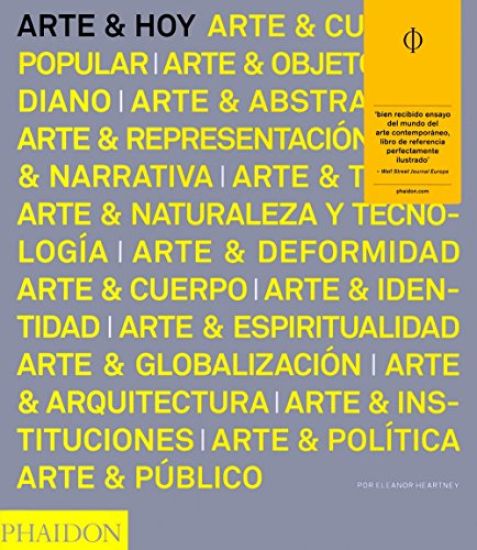
El estudio mas exhaustivo del arte contemporaneo de las ultimas tres decadas.La insolita organizacion tematica facilita la navegacion a traves del inmenso caudal del arte contemporaneo.Mas de cuatrocientos de los artistas contemporaneos de mayor relieve en todo el mundo, desde los futuros valores hasta los plenamente consagrados.Los textos fluidos, amenos y bien documentados convierten este volumen en una introduccion al arte contemporaneo perfecta para estudiantes, profesionales y aficionados al mundo del arte por igual.Escrito por una critica y estudiosa del arte de prestigio internacional.

A fresh, revealing and entertaining account of Oscar Wilde, the most influential writer of his age, and the women who inspired him.

A SUNDAY TIMES BEST BOOK OF THE YEAR Winner of the Rubery Book Award 2020 (Non Fiction) Edith Nesbit is considered the inventor of the children’s adventure story and her brilliant children’s books influenced bestselling authors including C.S. Lewis, P. L. Travers, J.K. Rowling, and Jacqueline Wilson, to name but a few. But who was the person behind the best loved classics The Railway Children and Five Children and It? Her once-happy childhood was eclipsed by the chronic illness and early death of her sister. In adulthood, she found herself at the centre of a love triangle between her husband and her close friend. She raised their children as her own. Yet despite these troubling circumstances Nesbit was playful, contradictory and creative. She hosted legendary parties at her idiosyncratic Well Hall home and was described by George Bernard Shaw – one of several lovers – as ‘audaciously unconventional’. She was also an outspoken Marxist and founding member of the Fabian Society. Through Nesbit’s letters and deep archival research, Eleanor Fitzsimons reveals her as a prolific activist and writer on socialism. Nesbit railed against inequity, social injustice and state-sponsored oppression and incorporated her avant-garde ideas into her writing, influencing a generation of children – an aspect of her legacy examined here for the first time. Eleanor Fitzsimons, acclaimed biographer and prize winning author of Wilde's Women, has written the most authoritative biography in more than three decades. Here, she brings to light the extraordinary life story of an icon, creating a portrait of a woman in whom pragmatism and idealism worked side-by-side to produce a singular mind and literary talent.
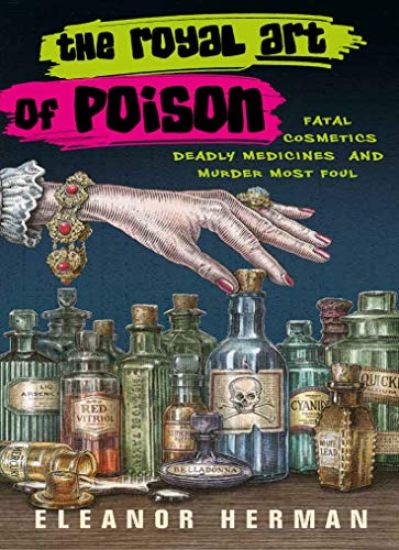
The story of poison is the story of power... For centuries, royal families have feared the gut-roiling, vomit-inducing agony of a little something added to their food or wine by an enemy. To avoid poison, they depended on tasters, unicorn horns and antidotes tested on condemned prisoners. Servants licked the royal family’s spoons, tried on their underpants and tested their chamber pots. Ironically, royals terrified of poison were unknowingly poisoning themselves daily with their cosmetics, medications and filthy living conditions. Women wore makeup made with lead. Men rubbed feces on their bald spots. Physicians prescribed mercury enemas, arsenic skin cream, drinks of lead filings and potions of human fat and skull, fresh from the executioner. Gazing at gorgeous portraits of centuries past, we don’t see what lies beneath the royal robes and the stench of unwashed bodies; the lice feasting on private parts; and worms nesting in the intestines. The Royal Art of Poison is a hugely entertaining work of popular history that traces the use of poison as a political - and cosmetic - tool in the royal courts of Western Europe from the Middle Ages to the Kremlin today.

An ancient shaman raises a conch shell to her lips in a painted cave. A scholar in a Shaolin monastery bends over a manuscript and invents a musical scale. A 21st-century pop star takes her seat at a candyfloss-pink piano. Music is interwoven into the fabric of our lives. We listen to it. Some of us play it. And from the earliest traces of human existence, we have attempted to capture it – through the instruments we decorate, the spaces we perform in, and in kaleidoscopic paintings, medieval illuminated manuscripts and haute couture. In this startlingly original and beautifully illustrated history of music, classically trained musician, art historian and BBC Next Generation Thinker Dr Eleanor Chan takes us on an unforgettable journey through sound and vision that will forever change the way we see music.
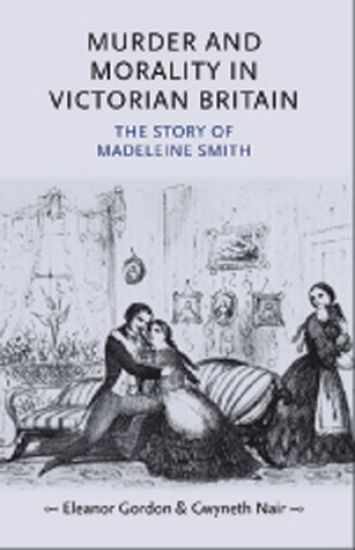
Murder and Morality in Victorian Britain
Eleanor Gordon; Gwyneth Nair
Manchester University Press
2009
sidottu
This book explores the life of Madeleine Smith, who in 1857 was tried for poisoning her secret lover. As well as charting the course of this illicit relationship and Madeleine’s subsequent trial, the authors draw on a wide range of sources to pursue themes such as the nature of gender relations and the extent of women’s social and commercial activities, and to bring vividly to life the world of the mid-Victorian middle class.The book contains new discoveries about Madeleine’s long and colourful life after the trial which confirm the view that it is only in fiction that the bad end unhappily.The book will be of interest to academic social historians, but the fascination of its subject matter and the way in which much rich material is used to evoke a vivid sense of time and place, will also promote a wider interest among a more general readership.

Murder and Morality in Victorian Britain
Eleanor Gordon; Gwyneth Nair
Manchester University Press
2009
nidottu
This book explores the life of Madeleine Smith, who in 1857 was tried for poisoning her secret lover. As well as charting the course of this illicit relationship and Madeleine’s subsequent trial, the authors draw on a wide range of sources to pursue themes such as the nature of gender relations and the extent of women’s social and commercial activities, and to bring vividly to life the world of the mid-Victorian middle class.The book contains new discoveries about Madeleine’s long and colourful life after the trial which confirm the view that it is only in fiction that the bad end unhappily.The book will be of interest to academic social historians, but the fascination of its subject matter and the way in which much rich material is used to evoke a vivid sense of time and place, will also promote a wider interest among a more general readership.