
Kirjahaku
Etsi kirjoja tekijän nimen, kirjan nimen tai ISBN:n perusteella.
1000 tulosta hakusanalla "Madison"

The Liturgical Renewal of the Church: Addresses of the Liturgical Conference Held in Grace Church, Madison, May 19-21, 1958
Theodore Otto Wedel; Massey Hamilton Shepherd Jr; Arthur Carl Piepkorn
Literary Licensing, LLC
2012
nidottu
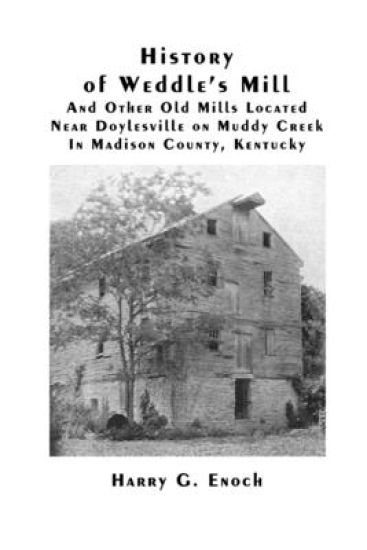
History of Weddle's Mill and Other Old Mills Located Near Doylesville on Muddy Creek in Madison County, Kentucky
Harry G. Enoch
Lulu.com
2015
nidottu
George Weddle operated a gristmill on Muddy Creek from the early to mid-1800s. The mill stood about two miles from the Kentucky River, near the road from Richmond to Jackson's Ferry. The establishment played a prominent role in the local community for nearly a century. The gristmill produced flour and cornmeal for nearby farmers, as well as for a distillery, and a stagecoach stop brought travelers by the tavern to sample the house whiskey. The mill was a county landmark until it was destroyed by a fire in 1971. Several concerns operated at the site at various times, including Douglas' Mill, Weddle's Mill, Walden's Distillery, Ogg's Mill and Griggs' Mill. Cassius Marcellus Clay, that most colorful member of Kentucky's most illustrious family, owned the mill for sixteen years. 54 pp.

When Money Grew on Trees: the True Tale of a Marjuana Moonshiner and the Outlaw Sheriff of Madison County, Arkansas
David Mac
AuthorHouse
2003
pokkari
A Pilgrim's Footprints: Or Passages In The Life Of Reverend John Hancock, Of East Madison, New Jersey (1855)
Ellwood Haines Stokes
KESSINGER PUBLISHING, LLC
2008
nidottu
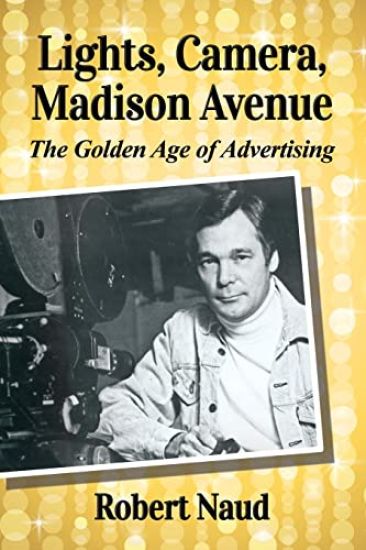
This inside look at the production of 20th century television commercials begins with a review of advertising's beginnings going through the 1960s and early 1970s. The author, a career "Mad man," recounts lightheartedly his experiences on commercial productions--both live and film--in theaters and studios in New York City, at LBJ's ranch, on the White House lawn, along Rome's Appian Way, in Lady Astor's dining room and on the Tryall Golf Course in Jamaica, among other places. The technical (and people) challenges involved in producing high-end commercials for major corporations are given in often funny detail.
America's Greatest First Ladies: The Lives and Legacies of Abigail Adams, Dolley Madison, Mary Lincoln, Eleanor Roosevelt, Jackie Kennedy and Hillary
Charles River
Createspace Independent Publishing Platform
2013
nidottu
*Includes pictures of the First Ladies and important people, places, and events in their lives. *Includes Bibliographies for further reading. American presidents have shaped the course of global affairs for generations, but as the saying goes, behind every great man there's a great woman. While the First Ladies often remain overshadowed by their husbands, some have carved unique niches in their time and left their own lasting legacy. Abigail Adams served as a political advisor that earned her the moniker "Mrs. President", while Dolley Madison helped establish the role of the First Lady in the early 1800s, Eleanor Roosevelt gave voice to policy issues in a way that made her a forerunner of First Ladies like Hillary Clinton, and Jackie Kennedy created glamorous trends that made her more popular than her husband. Eleanor Roosevelt and Hillary Clinton may have been the most politically active First Ladies in American history, but Abigail Adams was the first to act as political advisor for her husband and the first to be dubbed "Mrs. President". Indeed, Abigail was politically inclined to degree highly unusual among women of the 18th and 19th century, and she had originally impressed her future husband John because she was so well versed in poetry, philosophy and politics. After the Constitution was ratified, George Washington went about setting all the precedents for the role of the presidency, establishing traditions like the Cabinet. But the role of being the First Lady of the United States was defined by the wife of the 4th president. James Madison may have been the Father of the Constitution, but his wife Dolley all but defined the responsibilities and customs of being the president's wife. It's possible that the world would have remembered Mary Todd Lincoln (1818-1882) if only because she was the wife of one of America's greatest presidents and present for his shocking assassination, but Mary was one of the most unique women to ever be First Lady, and she was in the White House during the country's most trying time. If Dolley Madison was instrumental in molding the role of First Lady in the 19th century, credit can be given to Eleanor Roosevelt for revolutionizing the political nature of the role in the 20th and 21st centuries and making it possible for presidents like Bill Clinton to enlist their wives to handle political duties. In 1961, President John F. Kennedy made it seem like anything was possible, and Americans were eager to believe him. The next three years would be fondly and famously labeled "Camelot," suggesting an almost mythical quality about the young President and his family. The famous label came from John's fashionable and beautiful wife, Jackie, whose elegance and grace made her the most popular woman in the world. Her popularity threatened to eclipse even her husband's, who famously quipped on one presidential trip to France that he was "the man who accompanied Jacqueline Kennedy to Paris." During the presidential campaign in 1992, Democratic challenger Bill Clinton announced that by voting for him, Americans would get two presidents "for the price of one." The reference to his wife Hillary signified that she would be no ordinary First Lady, and indeed she was employed frequently by her husband in the White House to try to push legislation through Congress. Of course, describing Hillary Clinton as just a First Lady belittles all of her accomplishments. Today she is the most powerful woman in the world and one of the most recognizable. America's Greatest First Ladies looks at the lives and legacies of all 6 of these influential and important First Ladies, while also examining the relationships each had with their husband. With pictures of important people, places, and events, you will learn about America's Greatest First Ladies like you never have before.
America's Greatest 19th Century Presidents: The Lives of Thomas Jefferson, James Madison, Andrew Jackson, Abraham Lincoln, and Ulysses S. Grant
Charles River
Createspace Independent Publishing Platform
2013
nidottu
*Includes dozens of pictures of the presidents and important people, places, and events in their lives. The 19th century was the pivotal era in American history, determining how a new nation would overcome its most divisive issues and become a superpower in the 20th century. To get there, the nation needed the leadership of American legends of different stripes and ideologies to guide the United States toward its destiny. The first of the 19th century presidents was one of its most celebrated Founding Fathers. Thomas Jefferson was instrumental in all of the aforementioned debates, authoring the Declaration of Independence, laying out the ideological groundwork of the notion of states' rights, leading one of the first political parties, and overseeing the expansion of the United States during his presidency. Jefferson was followed by his protege, James Madison. A lifelong statesman, Madison was the youngest delegate at the Continental Congress from 1780-83, and at 36 he was one of the youngest men who headed to Philadelphia for the Constitutional Convention in 1787. Despite his age, he was the Convention's most influential thinker, and the man most responsible for the final draft of the U.S. Constitution. Along with Alexander Hamilton and John Jay, Madison was one of the most persuasive advocates for ratifying the Constitution, authoring some of the most famous Federalist Papers, and he drafted the Bill of Rights that was later added to the Constitution.During his own presidency, he oversaw the War of 1812. the president with the most controversial legacy might be "Old Hickory", Andrew Jackson. In his lifetime, Jackson came to represent what middle class Americans viewed as the quintessential American. Jackson had a modest upbringing, served as a teenager during the American Revolution, became a war hero during the War of 1812, and championed populism and the common American during his presidency. He also embodied courage and manliness, famously carrying a bullet from a duel in his body for decades until his death. On the other hand, critics continue to charge that Jackson's legacy is irreversibly stained by his stances on slavery and Native Americans. Abraham Lincoln (1809-1865) is one of the most famous Americans in history and one of the country's most revered presidents. Schoolchildren can recite the life story of Lincoln, the "Westerner" who educated himself and became a self made man, rising from lawyer to leader of the new Republican Party before becoming the 16th President of the United States. Lincoln successfully navigated the Union through the Civil War but didn't live to witness his crowning achievement, becoming the first president assassinated when he was shot at Ford's Theater by John Wilkes Booth on April 14, 1865. In the 19th century, one of the surest ways to rise to prominence in American society was to be a war hero, like Andrew Jackson and William Henry Harrison. But few would have predicted such a destiny for Hiram Ulysses Grant, who had been a career soldier with little experience in combat and a failed businessman when the Civil War broke out in 1861. Together, these men shaped and secured America's destiny and positioned it for its arrival on a global stage near the end of the 19th century. Along with pictures of the presidents and important people, places, and events in their lives, you will learn about Thomas Jefferson, James Madison, Andrew Jackson, Abraham Lincoln, and Ulysses S. Grant like you never have before.
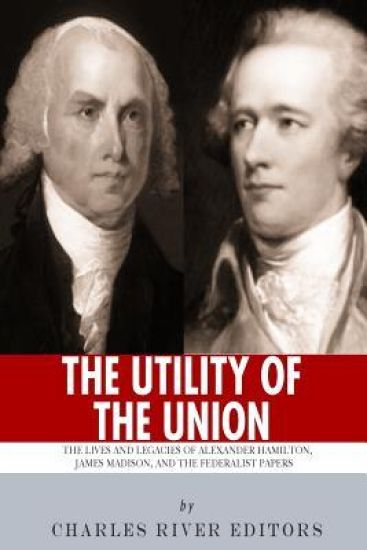
"The Utility of the Union": The Lives and Legacies of Alexander Hamilton, James Madison, and the Federalist Papers
Charles River
Createspace Independent Publishing Platform
2013
nidottu
*Includes pictures of Hamilton, Madison and important people, places, and events in their lives. *Includes some of the most famous Federalist Papers and quotes from them. *Explains the history behind the drafting of the Articles of Confederation, the Constitution, and the Federalist Papers. *Includes a list of the Federalist Papers, their topics, and who is believed to have authored each one. *Analyzes how the Supreme Court has used and interpreted the Federalist Papers. *Includes a Bibliography for further reading. "It has been frequently remarked that it seems to have been reserved to the people of this country, by their conduct and example, to decide the important question, whether societies of men are really capable or not of establishing good government from reflection and choice, or whether they are forever destined to depend for their political constitutions on accident and force. If there be any truth in the remark, the crisis at which we are arrived may with propriety be regarded as the era in which that decision is to be made." - Alexander Hamilton, Federalist No. 1 The Founding Fathers have been revered by Americans for over 200 years, celebrated for creating a new nation founded upon the loftiest ideals of democracy and meritocracy. But if the American Dream has come to represent the ability to climb the social ladder with skill and hard work, no Founding Father represented the new America more than Alexander Hamilton. Unfortunately, one of the best known aspects of Hamilton's (1755-1804) life is the manner in which he died, shot and killed in a famous duel with Aaron Burr in 1804. But Hamilton started as an orphaned child in the West Indies before becoming one of the most instrumental Founding Fathers of the United States in that time, not only in helping draft and gain support for the U.S. Constitution but in also leading the Federalist party and building the institutions of the young federal government as Washington's Secretary of Treasury. Today James Madison's legacy mostly pales in comparison to the likes of George Washington, Ben Franklin and his closest colleague, Thomas Jefferson, but Madison's list of important accomplishments is monumental. A lifelong statesman, Madison was the youngest delegate at the Continental Congress from 1780-83, and at 36 he was one of the youngest men who headed to Philadelphia for the Constitutional Convention in 1787. Despite his age, he was the Convention's most influential thinker, and the man most responsible for the final draft of the U.S. Constitution. The Federalist Papers were written by Madison, Hamilton and Jay as a series of newspaper editorials that appeared in the American colonies during 1787 and 1789 urging the ratification of the new Constitution. 85 of these essays consist of what is today considered The Federalist Papers, with 77 of them published in The Independent Journal and The New York Packet between October 1787 and August 1788. A compilation of these and eight others, called The Federalist (or The New Constitution), was published in two volumes in 1788 by J. and A. McLean. The Federalist Papers sought to rally support for the Constitution's approval when those three anonymously wrote them, and given how different Hamilton and Madison proved to be ideologically, they demonstrate how men of vastly different political ideologies came to accept the same Constitution. 225 years later, the Federalist Papers are still just as relevant and influential as ever. In addition to being cited dozens of times a year by the Supreme Court in interpreting the Constitution and rendering decisions, the writings also allow readers and scholars today to get into the mindset of the Founding Fathers, including the "Father of the Constitution" himself.

Concentrations of Polycyclic Aromatic Hydrocarbons (PAHs) in Urban Stormwater, Madison, Wisconsin, 2005?08
U. S. Department of the Interior
Createspace Independent Publishing Platform
2014
nidottu

Parking Lot Runoff Quality and Treatment Efficiency of a Stormwater-Filtration Device, Madison, Wisconsin, 2005?07
U. S. Department of the Interior
Createspace Independent Publishing Platform
2014
nidottu
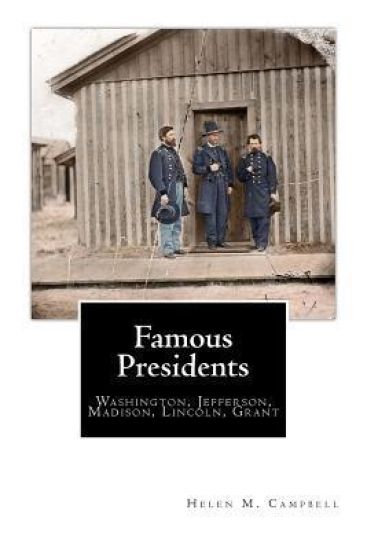
Famous Presidents: Washington, Jefferson, Madison, Lincoln, Grant
Helen M. Campbell
Createspace Independent Publishing Platform
2014
nidottu
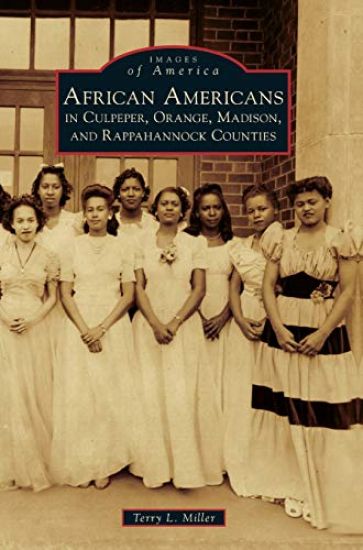
African Americans in Culpeper, Orange, Madison and Rappahannock Counties
Terry L. Miller; George Washington Carver Regional High S
Arcadia Publishing Library Editions
2019
sidottu
The fourth president of the United States, James Madison, and his wife, Dolley, stamped their influence throughout Culpeper, Orange, Madison, and Rappahannock Counties with their plantation, Montpelier, and the enslaved men and women who supported them. One of those enslaved men, Paul Jennings, whose sons later became Union soldiers during the Civil War, penned his memoir in 1865. The legacy of slavery undergirds the region, and its ravages are undeniably on the faces of minority residents. The Civil War also has a footprint throughout the region; one example is the Battle of Cedar Mountain where, more than 85 years later, the first regional high school for minority children was built. Celebrants include World War I veteran Newman Nighten Gibson, of the 370th Infantry; Nannie Helen Burroughs, who founded a school for African American girls in Washington, DC; and Edna Lewis, who became a master chef in New York in her 30s and later was honored by the US Postal Service on a forever stamp.
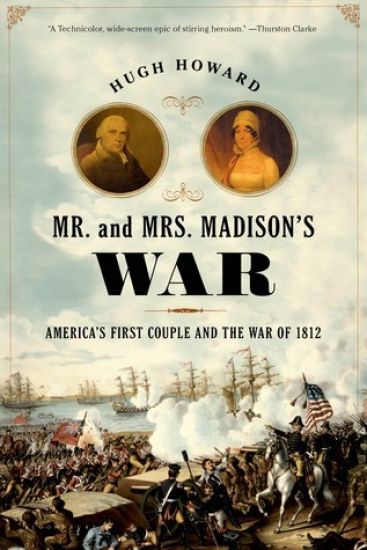
August 28, 1814. Dressed in black, James Madison mourns the nation's loss. Smoke rises from the ruin of the Capitol before him; a mile away stands the blackened shell of the White House. The British have laid waste to Washington City, and as Mr. Madison gazes at the terrible vista, he ponders the future-his country's defeat or victory-in a war he began over the unanimous objections of his political adversaries. As we approach its bicentennial, the War of 1812 remains the least understood of America's wars. To some it was a conflict that resolved nothing, but to others, it was our second war of independence, settling once and for all that America would never again submit to Britain. At its center was James Madison-our most meditative of presidents, yet the first one to declare war. And at his side was the extraordinary Dolley, who defined the role of first lady for all to follow, and who would prove perhaps her husband's most indispensable ally.In this powerful new work, drawing on countless primary sources, acclaimed historian Hugh Howard presents a gripping account of the conflict as James and Dolley Madison experienced it. "Mr. and Mrs. Madison's War" rediscovers a conflict fought on land and sea-from the shores of the Potomac to the Great Lakes-that proved to be a critical turning point in American history.Advance praise for "Mr. and Mrs. Madison's War" "Hugh Howard has turned the least known and understood war in American history into a Technicolor, wide-screen epic of thrilling naval battles, brutal backwoods skirmishes, villainous intrigue, and stirring heroism. Thanks to Howard's prodigious research, fine eye for the telling detail, and vivid prose, the War of 1812 seems as contemporary and compelling as yesterday's battlefield dispatches from the Middle East."-Thurston Clarke, "New York Times" bestselling author of "The Last Campaign"

Theodore Roosevelt/Spring Rice in WWI, Joshua Barney, Dolley Madison, Elizabeth Monroe, & USN "Airdales"
Daniel Scott Marrone
Halo Publishing International
2016
pokkari
First Ladies of the 19th Century: The Lives and Legacies of Abigail Adams, Dolley Madison, and Mary Lincoln
Charles River
Createspace Independent Publishing Platform
2017
nidottu
*Includes pictures of the First Ladies and important people, places, and events in their lives. *Includes bibliographies for further reading. Eleanor Roosevelt and Hillary Clinton may have been the most politically active First Ladies in American history, but Abigail Adams was the first to act as political advisor for her husband and the first to be dubbed "Mrs. President". Indeed, Abigail was politically inclined to degree highly unusual among women of the 18th and 19th century, and she had originally impressed her future husband John because she was so well versed in poetry, philosophy and politics. Abigail was also very progressive, championing women's rights and abolition long before they became widely held views even in traditionally liberal Massachusetts. After the Constitution was ratified, George Washington went about setting all the precedents for the role of the presidency, establishing traditions like the Cabinet. But the role of being the First Lady of the United States was defined by the wife of the 4th president. James Madison may have been the Father of the Constitution, but his wife Dolley all but defined the responsibilities and customs of being the president's wife. Dolley had served as an informal First Lady for the widowed Thomas Jefferson, but when her husband entered the White House in 1809, Dolley went about furnishing the White House to such an extent that much of the style and items she chose were still in place when Mary Todd Lincoln became the First Lady in 1861. Dolley also became a folk hero of sorts and the center of a colorful legend that had her saving Gilbert Stuart's priceless painting of George Washington just ahead of the British while her husband was denigrated for fleeing as Washington D.C. was burned. It's possible that the world would have remembered Mary Todd Lincoln (1818-1882) if only because she was the wife of one of America's greatest presidents and present for his shocking assassination, but Mary was one of the most unique women to ever be First Lady, and she was in the White House during the country's most trying time. But history hasn't exactly been kind. Mary was dealt a tough hand that might have made it impossible for her to ever be popular. The Civil War erupted a month after President Lincoln took office, and Mary was a native Southerner who had relatives fighting for the Confederacy. Making matters worse, Mary seemed out of touch with the times, organizing lavish balls at a time when the country was literally coming apart at the seams. As if the external pressure wasn't trying enough, young Willie Lincoln died in the White House in 1862, sending Mary into such fits of grief that she might have never fully recovered from even before her husband's assassination and the death of Tad in 1881. First Ladies of the 19th Century looks at the lives, legends, and legacies left by the three influential First Ladies. Along with pictures of important people, places, and events in their lives, you will learn about Abigail, Dolley and Mary like you never have before, in no time at all.
"The Utility of the Union": The Lives and Legacies of Alexander Hamilton, James Madison, and the Federalist Papers
Charles River
Createspace Independent Publishing Platform
2018
nidottu
*Includes pictures of Hamilton, Madison and important people, places, and events in their lives. *Includes some of the most famous Federalist Papers and quotes from them. *Explains the history behind the drafting of the Articles of Confederation, the Constitution, and the Federalist Papers. *Includes a list of the Federalist Papers, their topics, and who is believed to have authored each one. *Analyzes how the Supreme Court has used and interpreted the Federalist Papers. *Includes a Bibliography for further reading. "It has been frequently remarked that it seems to have been reserved to the people of this country, by their conduct and example, to decide the important question, whether societies of men are really capable or not of establishing good government from reflection and choice, or whether they are forever destined to depend for their political constitutions on accident and force. If there be any truth in the remark, the crisis at which we are arrived may with propriety be regarded as the era in which that decision is to be made." - Alexander Hamilton, Federalist No. 1 The Founding Fathers have been revered by Americans for over 200 years, celebrated for creating a new nation founded upon the loftiest ideals of democracy and meritocracy. But if the American Dream has come to represent the ability to climb the social ladder with skill and hard work, no Founding Father represented the new America more than Alexander Hamilton. Unfortunately, one of the best known aspects of Hamilton's (1755-1804) life is the manner in which he died, shot and killed in a famous duel with Aaron Burr in 1804. But Hamilton started as an orphaned child in the West Indies before becoming one of the most instrumental Founding Fathers of the United States in that time, not only in helping draft and gain support for the U.S. Constitution but in also leading the Federalist party and building the institutions of the young federal government as Washington's Secretary of Treasury. Today James Madison's legacy mostly pales in comparison to the likes of George Washington, Ben Franklin and his closest colleague, Thomas Jefferson, but Madison's list of important accomplishments is monumental. A lifelong statesman, Madison was the youngest delegate at the Continental Congress from 1780-83, and at 36 he was one of the youngest men who headed to Philadelphia for the Constitutional Convention in 1787. Despite his age, he was the Convention's most influential thinker, and the man most responsible for the final draft of the U.S. Constitution. The Federalist Papers were written by Madison, Hamilton and Jay as a series of newspaper editorials that appeared in the American colonies during 1787 and 1789 urging the ratification of the new Constitution. 85 of these essays consist of what is today considered The Federalist Papers, with 77 of them published in The Independent Journal and The New York Packet between October 1787 and August 1788. A compilation of these and eight others, called The Federalist (or The New Constitution), was published in two volumes in 1788 by J. and A. McLean. The Federalist Papers sought to rally support for the Constitution's approval when those three anonymously wrote them, and given how different Hamilton and Madison proved to be ideologically, they demonstrate how men of vastly different political ideologies came to accept the same Constitution. 225 years later, the Federalist Papers are still just as relevant and influential as ever. In addition to being cited dozens of times a year by the Supreme Court in interpreting the Constitution and rendering decisions, the writings also allow readers and scholars today to get into the mindset of the Founding Fathers, including the "Father of the Constitution" himself.
Mémoire Pour Pierre-Arnold Karthaus, Consignataire Du Navire Américain Le Madison
Sans Auteur
Hachette Livre - BNF
2014
pokkari
Memoire pour Pierre-Arnold Karthaus, consignataire du navire americain "le Madison,.".. vanter son nom comme chargeur, que comme consignataire du navire et du reste de sa cargaison, contre les armateurs et proprietaires des corsaires l'"Esperance,.".. et "l'Espoir,.".. qui ont pris ce navire le 23 aout 1809], et l'ont amene a Dieppe / Signe: P. A. Karthaus, 20 oct. 1809.]Date de l'edition originale: 1809Sujet de l'ouvrage: "Madison" -- Prise -- Validite (Factums FN)Guerre de course -- France -- 1800-1815 (Factums FN)Prise maritime -- Validite (Factums FN)" Factum. Karthaus, Pierre-Arnold. 1809?] Factum. "Esperance," L' (corsaire). 1809?] Factum. "Espoir," L' (corsaire). 1809?]"Ce livre est la reproduction fidele d'une oeuvre publiee avant 1920 et fait partie d'une collection de livres reimprimes a la demande editee par Hachette Livre, dans le cadre d'un partenariat avec la Bibliotheque nationale de France, offrant l'opportunite d'acceder a des ouvrages anciens et souvent rares issus des fonds patrimoniaux de la BnF.Les oeuvres faisant partie de cette collection ont ete numerisees par la BnF et sont presentes sur Gallica, sa bibliotheque numerique.En entreprenant de redonner vie a ces ouvrages au travers d'une collection de livres reimprimes a la demande, nous leur donnons la possibilite de rencontrer un public elargi et participons a la transmission de connaissances et de savoirs parfois difficilement accessibles.Nous avons cherche a concilier la reproduction fidele d'un livre ancien a partir de sa version numerisee avec le souci d'un confort de lecture optimal. Nous esperons que les ouvrages de cette nouvelle collection vous apporteront entiere satisfaction.Pour plus d'informations, rendez-vous sur www.hachettebnf.fr