Kirjojen hintavertailu. Mukana 11 384 273 kirjaa ja 12 kauppaa.

Kirjahaku

Etsi kirjoja tekijän nimen, kirjan nimen tai ISBN:n perusteella.

1000 tulosta hakusanalla "Polymers"

IR Hummel Defined Polymers

IR Hummel Defined Polymers

Dieter O. Hummel

Wiley
2006
muu
The collection contains 2,900 polymer spectra with extensive sample information. All spectra are high quality FT-IR spectra at a resolution of 2 cm-1 (data point distance 1 cm-1). Associated legends quote references, inform about the origin and the synthesis of the polymers as well as the sample preparation. Each compound is identified by its IUPAC or common names. Available database formats: Galactic; Bruker; Shimadzu; Nicolet; ACD; Perkin Elmer; Mattson; Lumex; SpecTacle
IR Hummel Defined Polymers Basic Collection
The collection contains 1,136 carefully selected polymer spectra with extensive sample information. All spectra are high quality FT–IR spectra at a resolution of 2 cm–1 (data point distance 1 cm–1). Associated legends quote references, inform about the origin and the synthesis of the polymers as well as the sample preparation. Each compound is identified by its IUPAC or common names. Available database formats: Galactic; Bruker; Shimadzu; Nicolet; ACD; Perkin Elmer; Mattson; Lumex; SpecTacle
Handbook of Biodegradable Polymers
A comprehensive overview of biodegradable polymers, covering everything from synthesis, characterization, and degradation mechanisms while also introducing useful applications, such as drug delivery systems and biomaterial-based regenerative therapies. An introductory section deals with such fundamentals as basic chemical reactions during degradation, the complexity of biological environments and experimental methods for monitoring degradation processes. The result is a reliable reference source for those wanting to learn more about this important class of polymer materials, as well as scientists in the field seeking a deeper insight.
Self-Healing Polymers

Self-Healing Polymers

Wiley-VCH Verlag GmbH
2013
sidottu
Self-healing is a well-known phenomenon in nature: a broken bone merges after some time and if skin is damaged, the wound will stop bleeding and heals again. This concept can be mimicked in order to create polymeric materials with the ability to regenerate after they have suffered degradation or wear. Already realized applications are used in aerospace engineering, and current research in this fascinating field shows how different self-healing mechanisms proven successful by nature can be adapted to produce even more versatile materials. The book combines the knowledge of an international panel of experts in the field and provides the reader with chemical and physical concepts for self-healing polymers, including aspects of biomimetic processes of healing in nature. It shows how to design self-healing polymers and explains the dynamics in these systems. Different self-healing concepts such as encapsulated systems and supramolecular systems are detailed. Chapters on analysis and friction detection in self-healing polymers and on applications round off the book.
Recycling of Polymers

Recycling of Polymers

Wiley-VCH Verlag GmbH
2016
sidottu
Recycling of Polymers This timely reference on the topic is the only book you need for a complete overview of recyclable polymers. Following an introduction to various polymer structures and their resulting properties, the main part of the book deals with different methods of recycling. It discusses in detail the recycling of such common polymers as polyethylene, polypropylene and PET, as well as rubbers, fibers, engineering polymers, polymer blends and composites. The whole is rounded off with a look at future technologies and the toxicological impact of recycled polymers. An indispensable reference source for those working in the field, whether in academia or industry, and whether newcomers or advanced readers.
Electrically Conductive Polymers and Polymer Composites
A comprehensive and up-to-date overview of the latest research trends in conductive polymers and polymer hybrids, summarizing recent achievements. The book begins by introducing conductive polymer materials and their classification, while subsequent chapters discuss the various syntheses, resulting properties and up-scaling as well as the important applications in biomedical and biotechnological fields, including biosensors and biodevices. The whole is rounded off by a look at future technological advances. The result is a well-structured, essential reference for beginners as well as experienced researchers.
Smart Inorganic Polymers

Smart Inorganic Polymers

Wiley-VCH Verlag GmbH
2019
sidottu
Provides complete and undiluted knowledge on making inorganic polymers functional. This comprehensive book reflects the state of the art in the field of inorganic polymers, based on research conducted by a number of internationally leading research groups working in this area. It covers the synthesis aspects of synthetic inorganic polymers and looks at multiple inorganic monomers as building blocks, which exhibit unprecedented electronic, redox, photo-emissive, magnetic, self-healing and catalytic properties. It also looks at the applications of inorganic polymers in areas such as optoelectronics, energy storage, industrial chemistry, and biology. Beginning with an overview of the use of smart inorganic polymers in daily life, Smart Inorganic Polymers: Synthesis, Properties and Emerging Applications in Materials and Life Sciences goes on to study the synthesis, properties, and applications of polymers incorporating different heteroelements such as boron, phosphorus, silicon, germanium, and tin. The book also examines inorganic polymers in flame-retardants, as functional materials, and in biology. An excellent addition to the polymer scientists' and synthetic chemists' toolboxSummarizes the state of the art on how to make and use functional inorganic polymers, from synthesis to applicationsEdited by the coordinator of a highly funded European community research program (COST action) that focuses specifically on the exploration of inorganic polymersFeatures contributions from top experts in the field Aimed at academics and industrial researchers in this field, Smart Inorganic Polymers: Synthesis, Properties and Emerging Applications in Materials and Life Sciences will also benefit scientists who want to get a better overview on the state-of-the-art of this rapidly advancing area.
Surface Modification of Polymers
A guide to modifying and functionalizing the surfaces of polymers Surface Modification of Polymers is an essential guide to the myriad methods that can be employed to modify and functionalize the surfaces of polymers. The functionalization of polymer surfaces is often required for applications in sensors, membranes, medicinal devices, and others. The contributors?noted experts on the topic?describe the polymer surface in detail and discuss the internal and external factors that influence surface properties. This comprehensive guide to the most important methods for the introduction of new functionalities is an authoritative resource for everyone working in the field. This book explores many applications, including the plasma polymerization technique, organic surface functionalization by initiated chemical vapor deposition, photoinduced functionalization on polymer surfaces, functionalization of polymers by hydrolysis, aminolysis, reduction, oxidation, surface modification of nanoparticles, and many more. Inside, readers will find information on various applications in the biomedical field, food science, and membrane science. This important book: -Offers a range of polymer functionalization methods for biomedical applications, water filtration membranes, and food science -Contains discussions of the key surface modification methods, including plasma and chemical techniques, as well as applications for nanotechnology, environmental filtration, food science, and biomedicine -Includes contributions from a team of international renowned experts Written for polymer chemists, materials scientists, plasma physicists, analytical chemists, surface physicists, and surface chemists, Surface Modification of Polymers offers a comprehensive and application-oriented review of the important functionalization methods with a special focus on biomedical applications, membrane science, and food science.
Bio-Based Epoxy Polymers, Blends, and Composites
State-of-the-art overview on bioepoxy polymers as well as their blends and composites -- covering all aspects from fundamentals to applications! Bioepoxy polymers is an emerging area and have attracted more and more attention due to their biodegradability and good thermo-mechanical performance. In recent years, research progress has been made in synthesis, processing, characterization, and applications of bioepoxy blends and composites. Bioepoxy polymers are very promising candidates to replace the traditional thermosetting nonbiodegradable polymers. Bio-Based Epoxy Polymers, Blends and Composites summaries recent research progress on bioepoxy polymers as well as their blends and composites. It covers aspects from synthesis, processing, various characterization techniques to broad spectrum of applications. It provides a correlation of physical properties with macro, micro and nanostructures of the materials. Moreover, research trends, future directions, and opportunities are also discussed. Attracts attention: Bioepoxy polymers are environmentally friendly and considered as a promising candidate to replace the traditional thermosetting nonbiodegradable polymers Highly application-oriented: Bioepoxy polymers can be used in a broad range of applications such as polymer foams, construction, aerospace, automobiles, self-healing systems One-stop reference: Covers all aspects of bioepoxy polymer, their blends and composites, such as synthesis, properties, processing, characterization and applications Broad audience: Attracts attention from both academia and industry
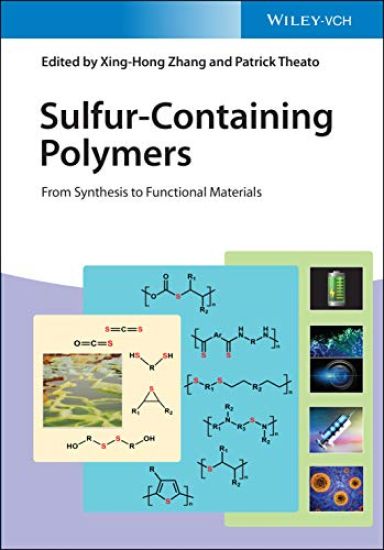
Sulfur-Containing Polymers

Sulfur-Containing Polymers

Wiley-VCH Verlag GmbH
2021
sidottu
A must-have resource to the booming field of sulfur-containing polymers Sulfur-Containing Polymers is a state-of-the-art text that offers a synthesis of the various sulfur-containing polymers from low-cost sulfur resources such as elemental sulfur, carbon disulfide (CS2), carbonyl sulfide (COS) and mercaptan. With contributions from noted experts on the topic, the book presents an in-depth understanding of the mechanisms related to the synthesis of sulfur-containing polymers. The book also includes a review of the various types of sulfur-containing polymers, such as: poly(thioester)s, poly(thioether)s and poly(thiocarbonate)s and poly(thiourethane)s with linear or hyperbranched (dendrimer) architectures. The expert authors provide the fundamentals on the structure-property relationship and applications of sulfur-containing polymers. Designed to be beneficial for both research and application-oriented chemists and engineers, the book contains the most recent research and developments of sulfur-containing polymers. This important book: Offers the first comprehensive handbook on the topicContains state-of-the-art research on synthesis of sulfur containing polymers from low-cost sulfur-containing compoundsExamines the synthesis, mechanism, structure properties, and applications of various types of sulful-containing polymersIncludes contributions from well-known experts Written for polymer chemists, materials scientists, chemists in industry, biochemists, and chemical engineers, Sulfur-Containing Polymers offers a groundbreaking text to the field with inforamtion on the most recent research.
Smart Stimuli-Responsive Polymers, Films, and Gels
Smart Stimuli-Responsive Poymers, Films, and Gels Discover the most important developments in synthesis, simulation, and applications of a fascinating compound class There exist a range of natural materials that respond to environmental changes by altering their physical or chemical properties, known as stimuli-responsive polymers, these substances are responsive to light, temperature, pressure, and more. The study of these so-called “smart” polymers is essential to a range of application fields, many of which have generated cutting-edge research in recent decades. A comprehensive introduction to the subject is therefore well-timed Smart Stimuli-Responsive Polymers, Films, and Gels provides an introduction to these polymers and their applications. It includes producing these polymers through synthetic approaches, simulating their responses to different stimuli, and applying these materials in different industries and research capacities. Written to serve the requirements of advanced students and senior researchers alike, this timely work will drive years of research in this vital field. In Smart Stimuli-Responsive Polymers, Films, and Gels readers will also find: Treatment of mechanoresponsive, photoresponsive, and ionizing-radiation responsive polymers Applications in emerging fields such as sensors, biomedicine, catalysis, and moreInterdisciplinary research into the properties and responses of these vital compounds Smart Stimuli-Responsive Polymers, Films, and Gels promises to become a seminal work for chemists, materials scientists, and industrial researchers seeking to incorporate these materials into a variety of industrial and research areas.
Bio-Derived Polymers for Wearable Self-PoweredSystems

Bio-Derived Polymers for Wearable Self-PoweredSystems

Shujia Xu; Wenzhuo Wu

Wiley-VCH Verlag GmbH
2024
sidottu
Comprehensive resource exploring the processing, electrical, and mechanical properties of bio-derived polymers and their wearable applications Bio-Derived Polymers for Wearable Self-Powered Systems explores the use of bio-derived polymers in wearable self-powered human-integrated sensors and covers core properties of bio-derived polymers in a broad sense, including their properties and methods of manufacture. Overall, the work provides a comprehensive and complete overview of these materials, which will be highly beneficial for the scientific community in developing eco-friendly self-powered systems in the near future. Written by two research specialists in the field, Bio-Derived Polymers for Wearable Self-Powered Systems covers sample topics such as: The main types of bio-derived polymers and their applications in wearable self-powered devicesElectrical and mechanical properties of bio-derived polymers, both of which are of prime concern when developing wearable or implantable biomedical devicesPhysiological sensing applications of triboelectric nanogenerators and piezoelectric nanogeneratorsNew strategies and methodologies for biomedical engineers to develop self-powered wearable health monitoring devices for real-time applicationsFor chemists, scientists, and engineers in fields intersecting with sensor development, Bio-Derived Polymers for Wearable Self-Powered Systems provides an essential overview of the advances in bio-derived polymer-based devices and fuels further research by imparting many interesting new research opportunities.
An Introduction to Redox Polymers for Energy-Storage Applications

An Introduction to Redox Polymers for Energy-Storage Applications

Ulrich S. Schubert; Andreas Winter; George R. Newkome

Wiley-VCH Verlag GmbH
2023
sidottu
An Introduction to Redox Polymers for Energy-Storage Applications Presents a well-founded introduction to the field or Redox Polymers, with didactical features like summary boxes and a Q&A sections An Introduction to Redox Polymers for Energy-Storage Applications discusses fundamental aspects related to polymer-based batteries, such as types of batteries, their historic development, design and synthesis criteria of the active material, and summarizes the various types of redox polymers and their applications. Each chapter contains learning objectives, summary boxes, and questions to allow for efficient exam preparation. In An Introduction to Redox Polymers for Energy-Storage Applications, readers will find detailed information on: Fundamental aspects of redox-active polymers, along with their historical classification, taking the key applications of the materials into accountEnergy-storage devices, containing polymers as the electrode active materials, and specific material requirements for the desired applicationsClassification of redox-active polymers, e.g., according to the nature of the actual redox-active moieties, their backbone structure, or topologyElectrical conductivity of conjugated polymers, covering their most prominent representatives (polyaniline, polypyrrole, polythiophene, and polyacetylene) An Introduction to Redox Polymers for Energy-Storage Applications also covers the synthesis and applications of these materials, making it an excellent book for graduates, PhD students, and professionals who are starting in this field.
Plasma Processes and Polymers

Plasma Processes and Polymers

Wiley-VCH Verlag GmbH
2005
sidottu
This volume compiles essential contributions to the most innovative fields of Plasma Processes and Polymers. High-quality contributions cover the fields of plasma deposition, plasma treatment of polymers and other organic compounds, plasma processes under partial vacuum and at atmospheric pressure, biomedical, textile, automotive, and optical applications as well as surface treatment of bulk materials, clusters, particles and powders. This unique collection of refereed papers is based on the best contributions presented at the 16th International Symposium on Plasma Chemistry in Taormina, Italy (ISPC-16, June 2003). A high class reference of relevance to a large audience in plasma community as well as in the area of its industrial applications.
Fundamentals of Ion-Irradiated Polymers

Fundamentals of Ion-Irradiated Polymers

Springer-Verlag Berlin and Heidelberg GmbH Co. K
2004
sidottu
Presented in two parts, this first comprehensive overview addresses all aspects of energetic ion irradiation of polymers. Earlier publications and review articles concentrated on selected topics only. And the need for such a work has grown with the dramatic increase of research and applications, such as in photoresists, waveguides, and medical dosimetry, during the last decade. The first part, Fundamentals of Ion-Irradiated Polymers, covers the physical, chemical and instrumental fundamentals; treats the specific irradiation mechanisms of low- and high-energy ions (including similarities and differences); and details the potential for future technological application. All the new findings are carefully analyzed and presented in a systematic way, while open questions are identified. The second volume, Transport Processes in Ion-Irradiated Polymers, deals with transport processes in both unirradiated and irradiated polymers. As both a review and a stimulus, this work seeks to contribute substantially to the literature and advancement of polymeric devices, from both the low- and high-energy regimes.
Inorganic and Organometallic Polymers

Inorganic and Organometallic Polymers

Vadapalli Chandrasekhar

Springer-Verlag Berlin and Heidelberg GmbH Co. K
2005
sidottu
This book has its origins in courses taught by the author to various und- graduate and graduate students at the Indian Institute of Technology, K- pur, India. The diversity of inorganic chemistry and its impact on polymer chemistry has been profound. This subject matter has grown considerably in the last decade and the need to present it in a coherent manner to young minds is a pedagogic challenge. The aim of this book is to present to the students an introduction to the developments in Inorganic and - ganometallic polymers. This book is divided into eight chapters. Chapter 1 provides a general overview on the challenges of Inorganic polymer synthesis. This is f- lowed by a survey of organic polymers and also includes some basic f- tures of polymers. Chapters 3-8 deal with prominent families of inorganic and organometallic polymers. Although the target group of this book is the undergraduate and graduate students of chemistry, chemical engineering and materials science it is also hoped that chemists and related scientists in industry would find this book useful. I am extremely thankful to my wife Sudha who not only encouraged me throughout but also drew all the Figures and Schemes of this book. I also thank my children Adithya and Aarathi for their constant concern on the progress of this book. I express my acknowledgment to the editorial team of Springer-Verlag for their cooperation.
Analytical Ultracentrifugation of Polymers and Nanoparticles

Analytical Ultracentrifugation of Polymers and Nanoparticles

Walter Maechtle; Lars Börger

Springer-Verlag Berlin and Heidelberg GmbH Co. K
2006
sidottu
Analytical ultracentrifugation (AUC) is a powerful method for the characterization of polymers, biopolymers, polyelectrolytes, nanoparticles, dispersions, and other colloidal systems. The method is able to determine the molar mass, the particle size, the particle density and interaction parameters like virial coefficients and association constants. Because AUC is also a fractionation method, the determination of the molar mass distribution, the particle size distribution, and the particle density distribution is possible. A special technique, the density gradient method, allows fractionating heterogeneous samples according to their chemical nature that means being able to detect chemical heterogeneity. The book is divided into chapters concerning instrumentation, sedimentation velocity runs, density gradient runs, application examples and future developments. In particular, the detailed application chapter demonstrates the versatility and power of AUC by means of many interesting and important industrial examples. Thus the book concentrates on practical aspects rather than details of centrifugation theory. Both authors have many years of experience in an industrial AUC research laboratory of a world leading chemical company.
The Physics of Polymers

The Physics of Polymers

Gert R. Strobl

Springer-Verlag Berlin and Heidelberg GmbH Co. K
2007
sidottu
Polymer physics is a key part of macromolecular science. This textbook presents the elements of this important branch of materials science in the style of a series of lecture. The main focus lays on the concepts, rather than on experimental techniques and theoretical methods. Written for graduate students of physics, materials science and chemical engineering, as well as for researchers in academia and industry entering this field, the book introduces and discusses the basic phenomena that lead to the peculiar physical properties of polymeric systems. After more than ten years since the first printing, the time had come for a revision and expansion of the book's contents. In addition to numerous minor modifications, this third edition includes some major changes: (i) A newly written chapter deals with conjugated polymers. The physical basis of the characteristic electro-optic response is explained, and the spectacular electrical conduction properties of conjugated polymers created by doping are discussed. (ii) Polyelectrolyte solutions with their special properties caused by Coulomb forces are newly treated in different chapters of the book dealing with ordering phenomena, viscous effects and the superswelling of gels. (iii) Since the basic understanding of melt crystallization has greatly changed during the last decade, the corresponding chapter was rewritten. It presents the new findings and interprets the discovered laws.