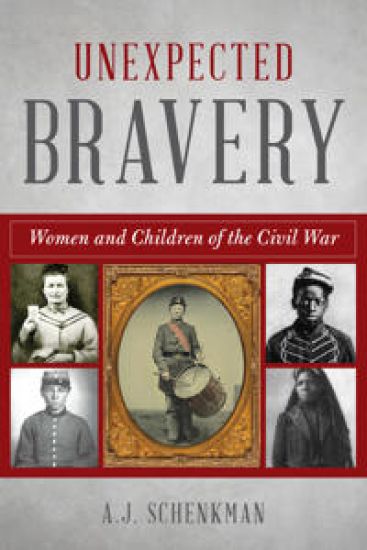
The American Civil War divided the United States from 1861-1865. During those years, over two million soldiers served in both the Union and Confederate Armies. What is little known is that not only the numerous children, some as young 12, enlisted on both sides, but also women who disguised themselves as men in an attempt to make a difference in the epic struggle to determine the future of the United States of America.
Spies! Loyalists! Tories! Conspiracy! Strange messages? Codes in invisible ink? The American Revolution was first and foremost a civil war that tore at the very fabric of families as well as society. Patriots were determined to separate from England; while Loyalists were just as determined to defeat what they saw as a rebellion. Many do not know that during several critical periods the war was almost fatally undermined by English sympathizers or in some cases opportunistic Patriots. Patriots and Spies in Revolutionary New York is a compilation of twelve stories regarding important moments in New York State's history during the American Revolution.
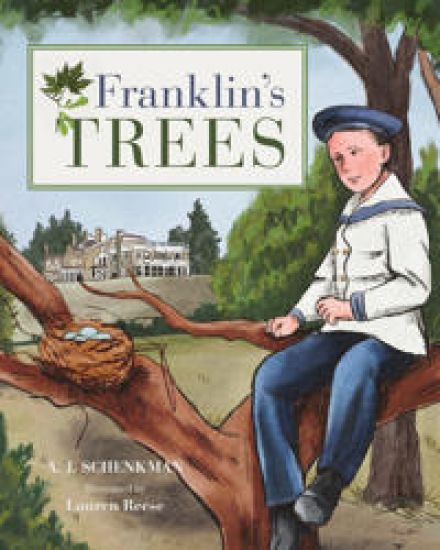
“All that is within me cries out to go back to my home on The Hudson River,” President Franklin Roosevelt once declared. For it was at his home in Hyde Park, New York that FDR could indulge in his favorite avocation—“tree farmer.” This book introduces children to FDR’s love of nature through a lifetime in which he oversaw the planting of over a million trees on his estate. It tells of a childhood hiking the trails through his forest, later widening those trails into roads after polio deprived him of the use of his legs and only able to get around by car. It describes the creation of the Civilian Conservation Corps during the Great Depression, which came to be known as “Roosevelt’s Tree Army.” It also tells the story of how FDR sent England’s Prime Minister Winston Churchill a Norway spruce one Christmas to cheer up the English people. Today, FDR’s love of trees is remembered at the Franklin D. Roosevelt Historic Site in Hyde Park, New York, where many of the trees he planted still rise on the grounds and surrounding forest.
Herman Harris, called Mo by his friends, is enticed to Boston during the summer vacation of his college freshman year.Thinking he is helping his old girlfriend, instead he becomes embroiled in a game of give back that pits him against two Boston gangsters.
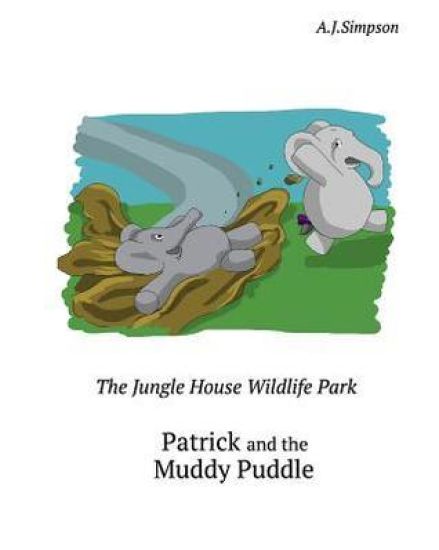
Patrick, Mimmi and Rav are three elephants living in the Jungle House Wildlife Park. Follow their adventures and see all the fun they have with their animal - and human - friends.In this episode, Patrick visits the other animals in the Park to find a bath big enough for an elephant A beautifully illustrated and enjoyable book for children.
Displayed in a bizarre setting, the body of a missing little girl is discovered. Law enforcement in Fairfax, County, Virginia, requests assistance from the Criminal Investigative Division of the FBI. A satellite facility under the direction of SAC Simon Dubuclet, assigns Special Agent Charley Faraday, an experienced behavioral analyst. Directed to work the case with Special Agent Sean Murphy, Charley sets aside previous professional grievances, finding a child killer supersedes her personal opinions. After predicting Robin Senters death will not be the last, Charley takes a clandestine trip to the University of Virginia, in Charlottesville. Convinced the murder links to a criminal organization in Europe, desperate, she turns to Special Agent Murphy for help outside the scope of the investigation.
Questions regarding the orthodoxy of Dale Moody and Ralph Elliott propelled the Southern Baptist Convention (SBC) toward a re-evaluation of its doctrinal statement, the Baptist Faith and Message (BFM). The SBC adopted this document in 1925 under the leadership of E. Y. Mullins when faced by the challenge of modernism. This dissertation argues that the 1962 Committee on Baptist Faith and Message produced a document that expressed subtle shifts in Baptist theology. This shift had the effect of assuring the conservative base while allowing enough latitude in interpretation for those serving in the academy to teach more ""progressive"" views. After a first, introductory chapter, chapters 2 and 3 trace the historical developments leading to the formation of the Committee. Biblical inspiration and interpretation were key concerns, but as chapter 3 demonstrates, other concerns drew the attention of the Committee. Chapters 4 and 5 deal with the ever-sensitive issue of the relationship between Baptist confessionalism, soul liberty, and soul competency. Each chapter examines how Baptist confessionalism functioned in relation to these concepts. Chapter 6 examines in detail the work of the Committee itself and looks at those persons or groups who influenced the outcome of the Committee's work. Of special note are the contributions made by Wayne Ward, Leo Garrett, the religion faculty of Mercer University, and the theology faculty of Southern Seminary. Chapter 7 examines four areas where the 1963 BFM altered the confessional expression of Baptist doctrines: (1) Scripture; (2) Man; (3) Salvation; (4) The Church. Chapter 8 is the conclusion. Four appendices contain early drafts of the Committee's work.