Kirjojen hintavertailu. Mukana 11 244 527 kirjaa ja 12 kauppaa.

Kirjahaku

Etsi kirjoja tekijän nimen, kirjan nimen tai ISBN:n perusteella.

1000 tulosta hakusanalla ART WIEDERHOLD

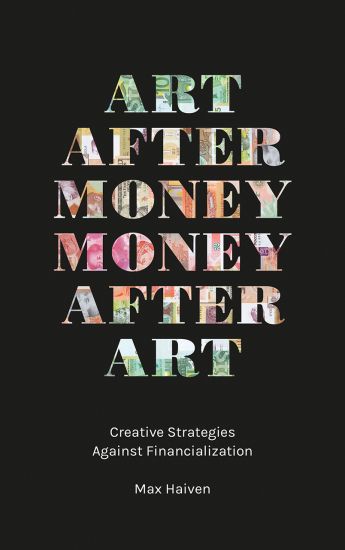
Art after Money, Money after Art

Art after Money, Money after Art

Max Haiven

Pluto Press
2018
pokkari
We imagine that art and money are old enemies, but this myth actually reproduces a violent system of global capitalism and prevents us from imagining and building alternatives. From the chaos unleashed by the 'imaginary' money in financial markets to the new forms of exploitation enabled by the 'creative economy' to the way art has become the plaything of the world's plutocrats, our era of financialization demands we question our romantic assumptions about art and money. By exploring the way contemporary artists engage with cash, debt and credit, Haiven identifies and assesses a range of creative strategies for mocking, sabotaging, exiting, decrypting and hacking capitalism today. Written for artists, activists and scholars, this book makes an urgent call to unleash the power of the radical imagination by any media necessary.
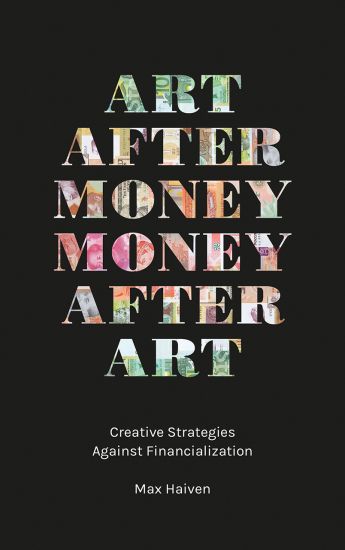
Art after Money, Money after Art

Art after Money, Money after Art

Max Haiven

Pluto Press
2018
sidottu
We imagine that art and money are old enemies, but this myth actually reproduces a violent system of global capitalism and prevents us from imagining and building alternatives. From the chaos unleashed by the 'imaginary' money in financial markets to the new forms of exploitation enabled by the 'creative economy' to the way art has become the plaything of the world's plutocrats, our era of financialization demands we question our romantic assumptions about art and money. By exploring the way contemporary artists engage with cash, debt and credit, Haiven identifies and assesses a range of creative strategies for mocking, sabotaging, exiting, decrypting and hacking capitalism today. Written for artists, activists and scholars, this book makes an urgent call to unleash the power of the radical imagination by any media necessary.
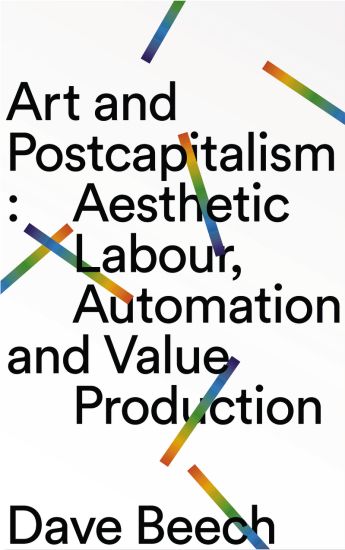
Art and Postcapitalism

Art and Postcapitalism

Dave Beech

Pluto Press
2019
pokkari
Artistic labour was exemplary for Utopian Socialist theories of 'attractive labour', and Marxist theories of 'nonalienated labour', but the rise of the anti-work movement and current theories of 'fully automated luxury communism' have seen art topple from its privileged place within the left's political imaginary as the artist has been reconceived as a prototype of the precarious 24/7 worker. Art and Postcapitalism argues that art remains essential for thinking about the intersection of labour, capitalism and postcapitalism not insofar as it merges work and pleasure but as an example of noncapitalist production. Reassessing the contemporary politics of work by revisiting debates about art, technology and in the nineteenth and twentieth century, Dave Beech challenges the aesthetics of labour in John Ruskin, William Morris and Oscar Wilde with a value theory of the supersession of capitalism that sheds light on the anti-work theory by Silvia Federici, Andre Gorz, Kathi Weeks and Maurizio Lazzarato, as well as the technological Cockayne of Srnicek and Williams and Paul Mason. Formulating a critique of contemporary postcapitalism, and developing a new understanding of art and labour within the political project of the supersession of value production, this book is essential for activists, scholars and anyone interested in the real and imagined escape routes from capitalism.
Art and Postcapitalism

Art and Postcapitalism

Dave Beech

Pluto Press
2019
sidottu
Artistic labour was exemplary for Utopian Socialist theories of 'attractive labour', and Marxist theories of 'nonalienated labour', but the rise of the anti-work movement and current theories of 'fully automated luxury communism' have seen art topple from its privileged place within the left's political imaginary as the artist has been reconceived as a prototype of the precarious 24/7 worker. Art and Postcapitalism argues that art remains essential for thinking about the intersection of labour, capitalism and postcapitalism not insofar as it merges work and pleasure but as an example of noncapitalist production. Reassessing the contemporary politics of work by revisiting debates about art, technology and in the nineteenth and twentieth century, Dave Beech challenges the aesthetics of labour in John Ruskin, William Morris and Oscar Wilde with a value theory of the supersession of capitalism that sheds light on the anti-work theory by Silvia Federici, Andre Gorz, Kathi Weeks and Maurizio Lazzarato, as well as the technological Cockayne of Srnicek and Williams and Paul Mason. Formulating a critique of contemporary postcapitalism, and developing a new understanding of art and labour within the political project of the supersession of value production, this book is essential for activists, scholars and anyone interested in the real and imagined escape routes from capitalism.
Art and Production

Art and Production

Boris Arvatov

Pluto Press
2017
sidottu
Boris Arvatov's Art and Production is a classic of the early Soviet avant-garde. Now nearing a century since its first publication, it is a crucial intervention for those seeking to understand the social dynamic of art and revolution during the period. Derived from the internal struggles of Soviet Constructivism, as it confronted the massive problems of cultural transformation after 'War Communism', Arvatov's writing is a major force in the split that occurred in the revolutionary horizons of Constructivism in the early 1920s. Critical of early Constructivism's social-aesthetic process of art's transformation of daily life - epitomised in studio-based painting, photography and object making - Arvatov polemicises for the devolution of artistic skills directly into the relations of production and the factory. Whilst acknowledging the problems of a pure factory-based Productivism, Arvatov remains overwhelmingly committed to a new role and function for art outside the conventional studio and traditional gallery. Addressing issues such as artistic labour and productive labour, the artist as technician, art and multidisciplinarity and a life for art beyond 'art' - finding new relevance amidst the extensive social turn of contemporary participatory art - Art and Production offers a timely and compelling manifesto.
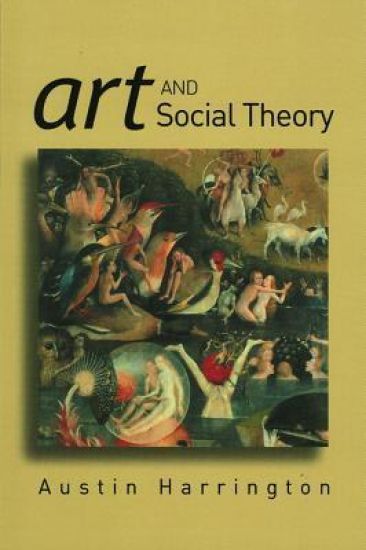
Art and Social Theory

Art and Social Theory

Austin Harrington

Polity Press
2004
sidottu
Art and Social Theory provides a comprehensive introduction to sociological studies of the arts. It examines the central debates of social theorists and sociologists about the place of the arts in society and the social significance of aesthetics. provides a comprehensive introduction to sociological study of art;examines the central debates of social theorists and sociologists about the place of the arts in society and the social significance of aesthetics;discusses the meaning of the arts in relation to changing cultural institutions and socio-economic structures;explores questions of aesthetic value and cultural politics, taste and social class, money and patronage, ideology and utopia, myth and popular culture, and the meaning of modernism and postmodernism;presents lucid accounts of leading social theorists of the arts from Weber, Simmel, Benjamin, Kracauer and the Frankfurt School to Foucault, Bourdieu, Habermas, Baudrillard, Lyotard, Luhmann and Jameson.
Art and Social Theory

Art and Social Theory

Austin Harrington

Polity Press
2004
nidottu
Art and Social Theory provides a comprehensive introduction to sociological studies of the arts. It examines the central debates of social theorists and sociologists about the place of the arts in society and the social significance of aesthetics. provides a comprehensive introduction to sociological study of art;examines the central debates of social theorists and sociologists about the place of the arts in society and the social significance of aesthetics;discusses the meaning of the arts in relation to changing cultural institutions and socio-economic structures;explores questions of aesthetic value and cultural politics, taste and social class, money and patronage, ideology and utopia, myth and popular culture, and the meaning of modernism and postmodernism;presents lucid accounts of leading social theorists of the arts from Weber, Simmel, Benjamin, Kracauer and the Frankfurt School to Foucault, Bourdieu, Habermas, Baudrillard, Lyotard, Luhmann and Jameson.
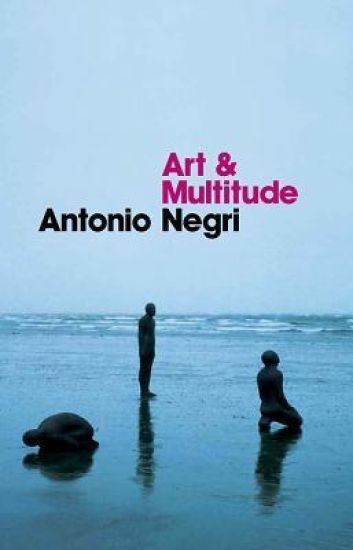
Art and Multitude

Art and Multitude

Antonio Negri

Polity Press
2011
sidottu
Nine letters on art, written to friends from exile in France in the 1980s. Starting from earlier materialist approaches to art, Negri relates artistic production to the structures of social production characteristic of each historical era. This enables him to define the nature of both material and artistic production in the era of post-modernity and post-Fordism - the era Negri characterizes as that of immaterial labour. Negri then seeks to define artistic beauty in this new era, and this he does in terms of concepts that have become fundamental to his thinking - singularity, multitude, abstraction, collective work, event, the biopolitical, the common. Art is living labour, and therefore invention of singularity, of singular figures and objects. But this expressive act only achieves beauty when the signs and language through which it expresses itself turn themselves into community, when they are contained within a common project. The beautiful is not the act of imagining, but an imagination that has become action. Art, in this sense, is multitude.
Art and Multitude

Art and Multitude

Antonio Negri

Polity Press
2011
nidottu
Nine letters on art, written to friends from exile in France in the 1980s. Starting from earlier materialist approaches to art, Negri relates artistic production to the structures of social production characteristic of each historical era. This enables him to define the nature of both material and artistic production in the era of post-modernity and post-Fordism - the era Negri characterizes as that of immaterial labour. Negri then seeks to define artistic beauty in this new era, and this he does in terms of concepts that have become fundamental to his thinking - singularity, multitude, abstraction, collective work, event, the biopolitical, the common. Art is living labour, and therefore invention of singularity, of singular figures and objects. But this expressive act only achieves beauty when the signs and language through which it expresses itself turn themselves into community, when they are contained within a common project. The beautiful is not the act of imagining, but an imagination that has become action. Art, in this sense, is multitude.
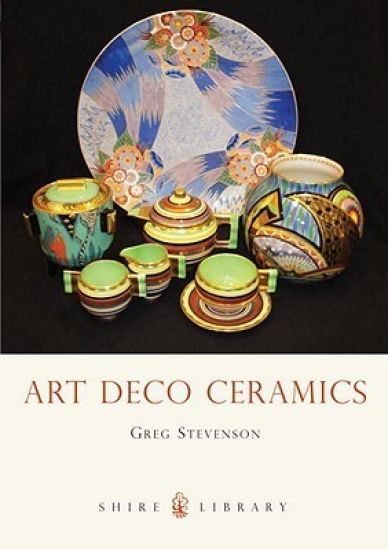
Art Deco Ceramics

Art Deco Ceramics

Stevenson Greg

Shire Publications
2006
nidottu
An explosion of new ceramic design in the late 1920s and early 1930s introduced vibrant colours and dramatic angular shapes to the breakfast tables of Britain and the world. Never before or since has there been such diversity in British ceramics, as hundreds of manufacturers produced exciting new designs that embodied their enthusiasm for the 'bright new' age and continental modernism. Displaying an angular tea-set or a dinner service enamelled in a brilliant geometric pattern became proof that the owner was participating in the 'modern way' of living. Bay windows from John O'Groats to Land's End proudly exhibited the brightly coloured designs and impractical but glamourous ceramics from manufacturers such as Shelley, Wilkinson's, Wade Heath and Myott. This book also includes: information on how to identify and date ceramics at a glance; all the major designers including Clarice Cliff, Susie Cooper and Charlotte Rhead; contectual information on how ceramics were displayed in the home.
Art Nouveau Tiles

Art Nouveau Tiles

Hans van Lemmen

Shire Publications
2008
nidottu
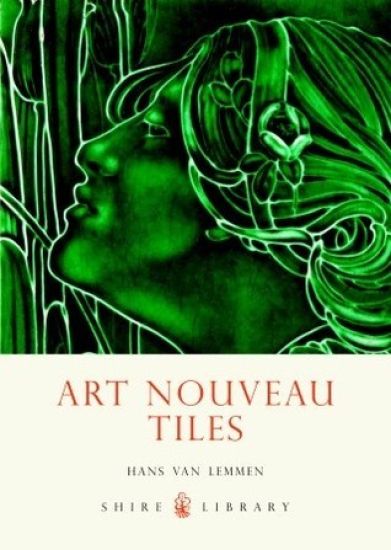
At the turn of the last century, Art Nouveau, characterised by its richly ornamental curvilinear design and use of sinuous line and vibrant colour, held sway as the dominant style in architecture and design - a style that defined the Edwardian period, with its departure from more formal Victorian styles. This book charts the impact of this sensuous new style on the tile industry in Britain, showing how tiles were made and decorated, and using photographs of tiles, individually and in situ, to examine the diverse range of floral, animal and human subject matter found on Art Nouveau tiles that make them now so appealing to collectors and design historians.
Art Deco Tiles

Art Deco Tiles

Hans van Lemmen

Shire Publications
2012
nidottu
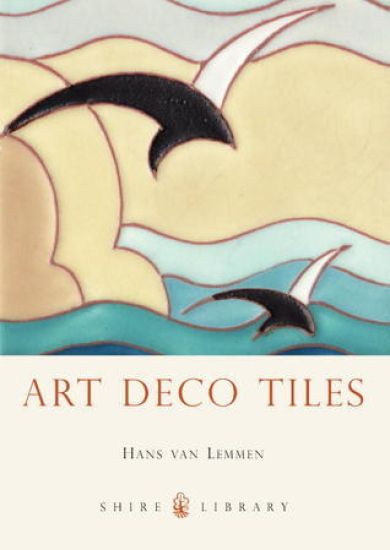
Art Deco was arguably the twentieth century's most popular and memorable design movement, and has come to define the inter-war period with its clean sleek lines, streamlined shapes, bold abstract forms and bright colours. Art Deco Tiles charts the impact of this daring new style on the production of tiles and architectural faience in Britain: it shows how they were made and decorated, examines the output of firms like Carter, Pilkington's and Doulton, and describes the innovations introduced by creative designers like Edward Bawden and Dora Batty. With photographs of the work individually and in situ in buildings and homes, the author examines the diverse range of animal, floral, human and abstract Art Deco designs.
Art Deco

Art Deco

Eric Knowles

Shire Publications
2014
nidottu
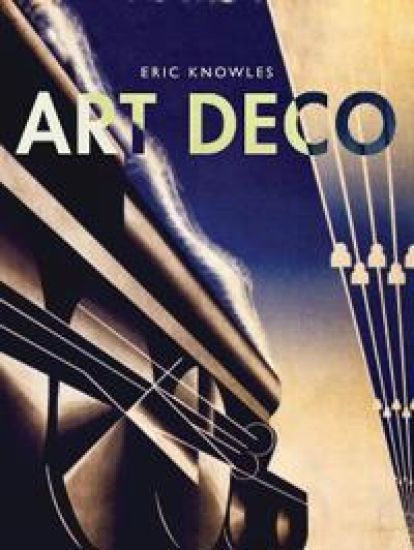
Although usually associated with the 1920s and ’30s, the Art Deco style had already begun to emerge in France prior to the First World War. However, it was during the interwar years that the style, reaching full maturity, would be embraced across the world as the ultimate expression of modernity, elegance and refined taste. Art Deco design is redolent of the Jazz Age, conjuring images of society cocktail parties, the Charleston and Hollywood in this great but doomed era of excess. But this was also an age that saw momentous technological advances in engineering and transportation, and Art Deco is a feature, too, of the streamlined profiles of high-speed trains, ocean liners, and aircraft. Here, TV antiques expert Eric Knowles provides a lavishly illustrated personal narrative and guide to this most alluring and enduring of styles.
Art, Performance and Ritual in Benin City

Art, Performance and Ritual in Benin City

Charles Gore

Edinburgh University Press
2007
sidottu
This book explores the roles of contemporary urban shrines and their visual traditions in Benin City. It focuses on the charismatic priests and priestesses who are possessed by a pantheon of deities, the communities of devotees, and the artists who make artifacts for their shrines. The visual arts are part of a wider configuration of practices that include song, dance, possession and healing. These practices provide the means for exploring the relationships of the visual to both the verbal and performance arts that feature at these shrines. The analysis in this book raises fundamental questions about how the art of Benin, and non-Western art histories more generally, are understood. The book throws critical light on the taken-for-granted assumptions which underpin current interpretations and presents an original and revisionist account of Benin art history.
Art (Small Great Gestures)

Art (Small Great Gestures)

Francisco Llorca

Allison Busby
2021
sidottu
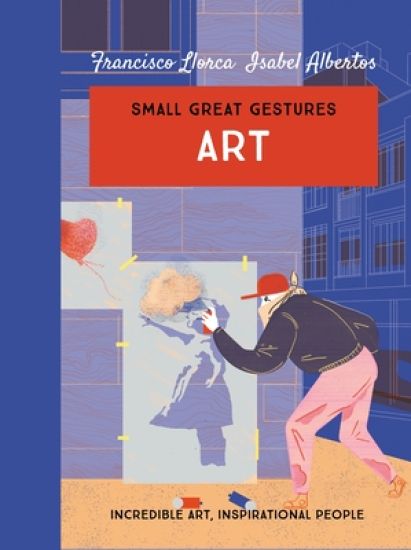
For those who loved Little People, BIG DREAMS, this new series showcases the lives and achievements of amazing men and women. From the Renaissance to the present day, this inspiring book paints a vivid picture of the lives and works of eleven artists who stood out from the crowd and changed how we see the world. Beginning with Giotto in Renaissance Florence and ending with Banksy's international street art, including Picasso in the Spanish Civil War and Frida Kahlo in 1920s Mexico, Art is a beautiful and entertaining book for budding artists everywhere.
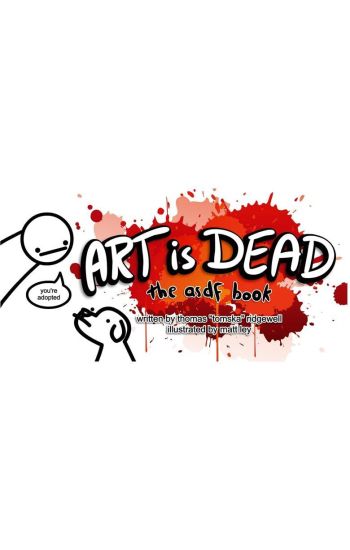
Art is Dead

Art is Dead

Thomas Ridgewell

Sphere
2015
sidottu
In 2008, Thomas "TomSka" Ridgewell uploaded a short animated film to YouTube; he called it asdfmovie. It has since been viewed more than 50 million times and has spawned eight sequels and many, many dedicated fans. Now, for the first time, the weird and wonderful world of asdf has exploded onto the page in ART IS DEAD, a book conceived and written by Tom and illustrated by Matt Ley. Featuring much-loved characters from the films, as well as brand-new, never-before-seen comics and bonus material - including the asdf origin story and Tom's own sketches - ART IS DEAD is a comic book like no other. Expect trains, potatoes, suicidal muffins and jokes about "death, destruction and things talking that don't normally talk", all wrapped up in book so awkwardly shaped it will make your shelves look weird. (Sorry about that.)