Kirjojen hintavertailu. Mukana 11 342 296 kirjaa ja 12 kauppaa.

Kirjahaku

Etsi kirjoja tekijän nimen, kirjan nimen tai ISBN:n perusteella.

1000 tulosta hakusanalla Alan J. Singer

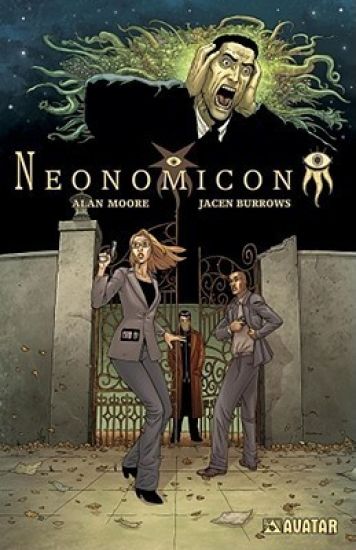
Alan Moore's Neonomicon

Alan Moore's Neonomicon

Alan Moore; Jacen Burrows; Sharang Biswas

Avatar Press
2011
nidottu
Comic book legend Alan Moore (WATCHMEN, FROM HELL) and brilliant artist Jacen Burrows deliver a chilling tale of Lovecraftian horror Brears and Lamper, two young and cocky FBI agents, investigate a fresh series of ritual murders somehow tied to the final undercover assignment of Aldo Sax -the once golden boy of the Bureau, now a convicted killer and inmate of a maximum security prison. From their interrogation of Sax (where he spoke exclusively in inhuman tongues) to a related drug raid on a seedy rock club rife with arcane symbols and otherworldly lyrics, they suspect that they are on the trail of something awful... but nothing can prepare them for the creeping insanity and unspeakable terrors they will face in the small harbor town of Innsmouth. NEONOMICON collects Alan Moore's 2010 comic book series for the first time in its entirety - including his original story, THE COURTYARD, which chronicled Aldo Sax's tragic encounter with the (somewhat) mortal agents of the Old Ones
Alan Hovhaness: Unveiling One of the Great Composers of the 20th Century

Alan Hovhaness: Unveiling One of the Great Composers of the 20th Century

Hinako Fujihara-Hovhaness

Quality Code Publishing
2025
sidottu
In the year 2000, after Alan's death, Hinako Fujihara-Hovhaness started writing poems, which was the only way she could cope with her great loss. They were written with her limited English, yet they were spontaneous and poignant, straight from her heart. After she had written hundreds of poems, it was not enough. Hinako started writing stories from my memories about Alan, events she had experienced with him. To Hinako, "Alan was a master of counterpoint and an intellectual, yet he had many different sides to his personality, from being a polite, distinguished gentleman to a wild savage, idealistic, and old-fashioned man to sexy womanizer. He understood human nature and emotion, and I think that is why his music touches people's hearts and is loved by them, even though his music is built on an intellectual foundation."
Alan Hovhaness: Unveiling One of the Great Composers of the 20th Century

Alan Hovhaness: Unveiling One of the Great Composers of the 20th Century

Hinako Fujihara-Hovhaness

Quality Code Publishing
2025
sidottu
In the year 2000, after Alan's death, Hinako Fujihara-Hovhaness started writing poems, which was the only way she could cope with her great loss. They were written with her limited English, yet they were spontaneous and poignant, straight from her heart. After she had written hundreds of poems, it was not enough. Hinako started writing stories from my memories about Alan, events she had experienced with him. To Hinako, "Alan was a master of counterpoint and an intellectual, yet he had many different sides to his personality, from being a polite, distinguished gentleman to a wild savage, idealistic, and old-fashioned man to sexy womanizer. He understood human nature and emotion, and I think that is why his music touches people's hearts and is loved by them, even though his music is built on an intellectual foundation."
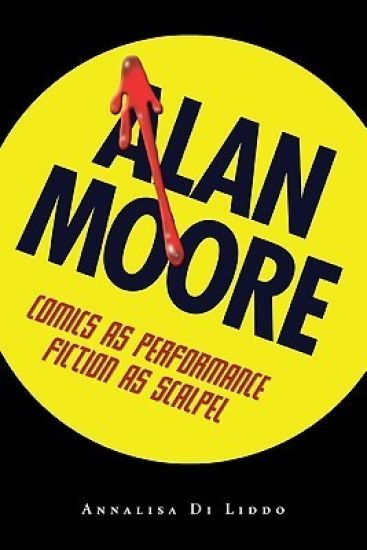
Alan Moore

Alan Moore

Annalisa Di Liddo

University Press of Mississippi
2009
nidottu
Eclectic British author Alan Moore (b. 1953) is one of the most acclaimed and controversial comics writers to emerge since the late 1970s. He has produced a large number of well-regarded comic books and graphic novels while also making occasional forays into music, poetry, performance, and prose.In Alan Moore: Comics as Performance, Fiction as Scalpel, Annalisa Di Liddo argues that Moore employs the comics form to dissect the literary canon, the tradition of comics, contemporary society, and our understanding of history. The book considers Moore's narrative strategies and pinpoints the main thematic threads in his works: the subversion of genre and pulp fiction, the interrogation of superhero tropes, the manipulation of space and time, the uses of magic and mythology, the instability of gender and ethnic identity, and the accumulation of imagery to create satire that comments on politics and art history. Examining Moore's use of comics to scrutinize contemporary culture, Di Liddo analyzes his best-known works--Swamp Thing, V for Vendetta, Watchmen, From Hell, Promethea, and Lost Girls. The study also highlights Moore's lesser-known output, such as Halo Jones, Skizz, and Big Numbers, and his prose novel Voice of the Fire. Alan Moore: Comics as Performance, Fiction as Scalpel reveals Moore to be one of the most significant and distinctly postmodern comics creators of the last quarter-century.
The Collected Letters of Alan Watts

The Collected Letters of Alan Watts

Alan Watts

New World Library
2018
nidottu
Philosopher, author, and lecturer Alan Watts (1915-1973) popularized Zen Buddhism and other Eastern philosophies for the counterculture of the 1960s. Today, new generations are finding his writings and lectures online, while faithful followers worldwide continue to be enlightened by his teachings. The Collected Letters of Alan Watts reveals the remarkable arc of Watts's colorful and controversial life, from his school days in England to his priesthood in the Anglican Church as chaplain of Northwestern University to his alternative lifestyle and experimentation with LSD in the heyday of the late sixties. His engaging letters cover a vast range of subject matter, with recipients ranging from High Church clergy to high priests of psychedelics, government officials, publishers, critics, family, and fans. They include C. G. Jung, Henry Miller, Gary Snyder, Aldous Huxley, Reinhold Niebuhr, Timothy Leary, Joseph Campbell, and James Hillman. Watts's letters were curated by two of his daughters, Joan Watts and Anne Watts, who have added rich, behind-the-scenes biographical commentary. Edited by Joan Watts & Anne Watts
Alan Brooke: Churchill's Right-Hand Critic

Alan Brooke: Churchill's Right-Hand Critic

Andrew Sangster

Casemate Publishers
2021
sidottu
Lord Alanbrooke was Churchill's right-hand man during World War II, and as Chief of the Imperial General Staff he had an integral part in shaping the strategy of Britain and the Allies. Despite this crucial role, he is very little known compared to military commanders such as Montgomery, Alexander, Slim, Mountbatten, Patton, or Eisenhower. This new biography of Lord Alanbrooke uses archival material and his diaries to trace his life, including his experiences in World War I and the development of his military career in the interwar years, with a focus on his post as the Chief of the Imperial General Staff during World War II.Voted the greatest Briton of the 20th century, Churchill has long been credited with almost single-handedly leading his country to victory in World War II. However without Brooke, a skilled tactician, at his side the outcome might well have been disastrous. Brooke more often than not served as a brake on some of Churchill's more impetuous ideas. However, while Brooke's diaries reveal his fury with some of Churchill's decisions, they also reveal his respect and admiration for the wartime prime minister. In return Churchill must surely have considered Brooke one of his most difficult subordinates but later wrote that he was "fearless, formidable, articulate, and in the end convincing".As CIGS, Brooke was integral to coordination between the Allied forces, and so had to wrestle with the cultural strategy clash between the British and Americans. Comments in his diaries offer up his opinions of both his British and American military colleagues – his negative assessments of Mountbatten’s ability, and acerbic comments on the difficult character of de Gaulle and the weaknesses of Eisenhower. Conversely he was clearly over-indulgent in the face of Montgomery's foibles. Brooke was often seen as a stern and humourless figure, but a study of his private life reveals an little-seen lighter side, a lifelong passion for birdwatching, and abiding love for his family. The two tragedies that befell his immediate family were a critical influence on his life. Sangster completes this new biography with a survey of the way various historians have assessed Brooke, explaining how he has lapsed into seeming obscurity in the years since his crucial part in the Allied victory in World War II.
Alan Moore

Alan Moore

University Press of Mississippi
2011
sidottu
British comics writer Alan Moore (b. 1953) has a reputation for equal parts brilliance and eccentricity. Living hermit-like in the same Midlands town for his entire life, he supposedly refuses contact with the outside world while creating his strange, dense comics, fiction, and performance art. While Moore did declare himself a wizard on his fortieth birthday and claims to have communed with extradimensional beings, reticence and seclusion have never been among his eccentricities. On the contrary, for long stretches of his career Moore seemed to be willing to chat with all comers: fanzines, industry magazines, other artists, newspapers, magazines, and personal websites. Well over one hundred interviews in the past thirty years serve as testimony to Moore's willingness to be engaged in productive conversation.Alan Moore: Conversations includes ten substantial interviews, beginning with Moore's first published conversation, conducted by V for Vendetta cocreator David Lloyd in 1981. The remainder cover nearly all of his major works, including Watchmen, V for Vendetta, Swamp Thing, Marvelman, The League of Extraordinary Gentlemen, Promethea, From Hell, Lost Girls, and the unfinished Big Numbers.While Moore's personal life and fraught business relations are discussed occasionally, the interviews chosen are principally devoted to Moore's creative practices and techniques, along with his shifting social, political, and philosophical beliefs. As such, Alan Moore: Conversations should add to any reader's enjoyment and understanding of Moore's work.
Alan Moore

Alan Moore

University Press of Mississippi
2011
nidottu
British comics writer Alan Moore (b. 1953) has a reputation for equal parts brilliance and eccentricity. Living hermit-like in the same Midlands town for his entire life, he supposedly refuses contact with the outside world while creating his strange, dense comics, fiction, and performance art. While Moore did declare himself a wizard on his fortieth birthday and claims to have communed with extradimensional beings, reticence and seclusion have never been among his eccentricities. On the contrary, for long stretches of his career Moore seemed to be willing to chat with all comers: fanzines, industry magazines, other artists, newspapers, magazines, and personal websites. Well over one hundred interviews in the past thirty years serve as testimony to Moore's willingness to be engaged in productive conversation.Alan Moore: Conversations includes ten substantial interviews, beginning with Moore's first published conversation, conducted by V for Vendetta cocreator David Lloyd in 1981. The remainder cover nearly all of his major works, including Watchmen, V for Vendetta, Swamp Thing, Marvelman, The League of Extraordinary Gentlemen, Promethea, From Hell, Lost Girls, and the unfinished Big Numbers.While Moore's personal life and fraught business relations are discussed occasionally, the interviews chosen are principally devoted to Moore's creative practices and techniques, along with his shifting social, political, and philosophical beliefs. As such, Alan Moore: Conversations should add to any reader's enjoyment and understanding of Moore's work.
Alan Ball

Alan Ball

University Press of Mississippi
2013
sidottu
Alan Ball: Conversations features interviews that span Alan Ball's entire career and include detailed observations and insights into his Academy Award-winning film American Beauty and Emmy Award-winning television shows Six Feet Under and True Blood. Ball began his career as a playwright in New York, and his work soon caught the attention of Hollywood television producers. After writing for the sitcoms Grace Under Fire and Cybill, Ball turned his attention to the screenplay that would become American Beauty. The critical success of this film opened up exciting possibilities for him in the realm of television. He created the critically acclaimed show Six Feet Under, and after the series finale, he decided to explore the issue of American bigotry toward the Middle East in his 2007 play All That I Will Ever Be and the film Towelhead, which he adapted and directed in the same year. Ball returned to television once again with the series True Blood--an adaptation of the humorous, entertaining, and erotic world of Charlaine Harris's vampire novels. In 2012 Ball announced that he would step down as executive producer of True Blood, in part, to produce both a new television series and his latest screenplay, What's the Matter with Margie?
Alan Lomax, Assistant in Charge

Alan Lomax, Assistant in Charge

University Press of Mississippi
2014
nidottu
Alan Lomax (1915-2002) began working for the Archive of American Folk Song at the Library of Congress in 1936, first as a special and temporary assistant, then as the permanent Assistant in Charge, starting in June 1937, until he left in late 1942. He recorded such important musicians as Woody Guthrie, Muddy Waters, Aunt Molly Jackson, and Jelly Roll Morton. A reading and examination of his letters from 1935 to 1945 reveal someone who led an extremely complex, fascinating, and creative life, mostly as a public employee. While Lomax is noted for his field recordings, these collected letters, many signed ""Alan Lomax, Assistant in Charge,"" are a trove of information until now available only at the Library of Congress. They make it clear that Lomax was very interested in the commercial hillbilly, race, and even popular recordings of the 1920s and after. These letters serve as a way of understanding Lomax's public and private life during some of his most productive and significant years. Lomax was one of the most stimulating and influential cultural workers of the twentieth century. Here he speaks for himself through his voluminous correspondence.
Alan Plays Ball: An Adventure with the Vowel a

Alan Plays Ball: An Adventure with the Vowel a

Brandon Terrell

Grasshopper Books
2021
sidottu
"In Alan Plays Ball, beginning readers learn about the many sounds and functions of the vowel A in a fun decodable sports story. Watch as Alan tries all kinds of sports, including baseball, soccer, basketball, tennis, and hockey. Vibrant illustrations and carefully leveled text will engage young readers in a supportive educational fiction reading experience and will enhance language arts, decodables, and phonics concepts. Supplementary back matter helps readers review the story, while a picture glossary reinforces new vocabulary. Alan Plays Ball also features reading tips for teachers and parents and a table of contents. Grasshopper Books offers simple, fun fiction for emerging readers. Alan Plays Ball is part of Jump 's Vowel Adventures series."
Alan Plays Ball: An Adventure with the Vowel a

Alan Plays Ball: An Adventure with the Vowel a

Brandon Terrell

Grasshopper Books
2021
nidottu
"In Alan Plays Ball, beginning readers learn about the many sounds and functions of the vowel A in a fun decodable sports story. Watch as Alan tries all kinds of sports, including baseball, soccer, basketball, tennis, and hockey. Vibrant illustrations and carefully leveled text will engage young readers in a supportive educational fiction reading experience and will enhance language arts, decodables, and phonics concepts. Supplementary back matter helps readers review the story, while a picture glossary reinforces new vocabulary. Alan Plays Ball also features reading tips for teachers and parents and a table of contents. Grasshopper Books offers simple, fun fiction for emerging readers. Alan Plays Ball is part of Jump 's Vowel Adventures series."
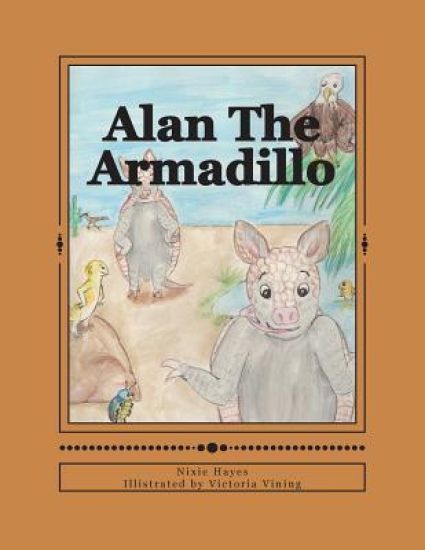
Alan the Armadillo

Alan the Armadillo

Nixie Hayes

Createspace Independent Publishing Platform
2018
nidottu
Alan is a small armadillo who has a problem. Alan is very curious and enjoys tasting anything that looks interesting. Enjoy seeing what mischief this armadillo gets into.
Alan Turing: The Life and Legacy of the English Computer Scientist Who Became World War II's Most Famous Codebreaker
*Includes pictures*Includes online resources and a bibliography for further reading"Sometimes, it is the people no one can imagine anything of who do the things no one can imagine..." - Alan TuringThe year is 1930. The United States is still freshly reeling from the cataclysmic stock market crash the previous October, and is desperately attempting to claw its way out from the slippery pits of the Great Depression. 4,000 miles away, British Prime Minister Ramsay MacDonald is struggling himself to prevail over a reality that is as irremediable as it is inextricable: preserving the Gold Standard and providing adequate aid to the poor and unemployed, the latter of which there were reportedly two million of by year's end.The situation in the United Kingdom is comparably dim, for not only had the British also been affected by the crash, they had yet to recover from the lasting wounds of the First World War. It would not be uncommon to see a mob of fuming men posted outside of a labor exchange or the so-called "instructional centers" introduced by Prime Minister MacDonald. These men were armed with not guns, but with placards the length of their torsos. "RELEASE US FROM HUNGER," one placard screamed in bold letters. "WE DEMAND WINTER RELIEF," read another. In another part of town, a number of impoverished families awaited their measly share of gruel, provided to them by a makeshift soup kitchen. The scenes became even more depressing following the setting of the sun. If one took a stroll through the streets of the "rough" neighborhoods, they would see countless silhouettes, large and small, camping out in alleyways, street corners, and embankments, huddled up in a futile attempt to escape the biting frost of winter.It was amidst this bleak atmosphere that a peerlessly profound young mind in South West England first envisioned a concept so momentous that it ultimately led to the creation of what is now considered the world's first computer. This young man was none other than Alan Turing, who was far from the suave, pipe-puffing dandy that many might associate with such a grand and futuristic idea. At the same time, Turing was hardly the kind of two-dimensional, stereotypically bookish character whose light bulb suddenly went off during an experiment binge either. On the contrary, Alan was a gauche and grief-stricken 17-year-old schoolboy who would channel all the pain and confusion from his poignant heartbreak into his tireless research, paving the path for the deeply transformative Computer Age.Alan Turing: The Life and Legacy of the English Computer Scientist Who Became World War II's Most Famous Codebreaker looks at the life of one of World War II's unsung heroes. Along with pictures of important people, places, and events, you will learn about Alan Turing like never before,
Alan Turing: The Life and Legacy of the English Computer Scientist Who Became World War II's Most Famous Codebreaker
*Includes pictures*Includes online resources and a bibliography for further reading"Sometimes, it is the people no one can imagine anything of who do the things no one can imagine..." - Alan TuringThe year is 1930. The United States is still freshly reeling from the cataclysmic stock market crash the previous October, and is desperately attempting to claw its way out from the slippery pits of the Great Depression. 4,000 miles away, British Prime Minister Ramsay MacDonald is struggling himself to prevail over a reality that is as irremediable as it is inextricable: preserving the Gold Standard and providing adequate aid to the poor and unemployed, the latter of which there were reportedly two million of by year's end.The situation in the United Kingdom is comparably dim, for not only had the British also been affected by the crash, they had yet to recover from the lasting wounds of the First World War. It would not be uncommon to see a mob of fuming men posted outside of a labor exchange or the so-called "instructional centers" introduced by Prime Minister MacDonald. These men were armed with not guns, but with placards the length of their torsos. "RELEASE US FROM HUNGER," one placard screamed in bold letters. "WE DEMAND WINTER RELIEF," read another. In another part of town, a number of impoverished families awaited their measly share of gruel, provided to them by a makeshift soup kitchen. The scenes became even more depressing following the setting of the sun. If one took a stroll through the streets of the "rough" neighborhoods, they would see countless silhouettes, large and small, camping out in alleyways, street corners, and embankments, huddled up in a futile attempt to escape the biting frost of winter.It was amidst this bleak atmosphere that a peerlessly profound young mind in South West England first envisioned a concept so momentous that it ultimately led to the creation of what is now considered the world's first computer. This young man was none other than Alan Turing, who was far from the suave, pipe-puffing dandy that many might associate with such a grand and futuristic idea. At the same time, Turing was hardly the kind of two-dimensional, stereotypically bookish character whose light bulb suddenly went off during an experiment binge either. On the contrary, Alan was a gauche and grief-stricken 17-year-old schoolboy who would channel all the pain and confusion from his poignant heartbreak into his tireless research, paving the path for the deeply transformative Computer Age.Alan Turing: The Life and Legacy of the English Computer Scientist Who Became World War II's Most Famous Codebreaker looks at the life of one of World War II's unsung heroes. Along with pictures of important people, places, and events, you will learn about Alan Turing like never before,