Kirjojen hintavertailu. Mukana 12 016 292 kirjaa ja 12 kauppaa.

Kirjahaku

Etsi kirjoja tekijän nimen, kirjan nimen tai ISBN:n perusteella.

1000 tulosta hakusanalla Alexander Pushkin

Alexander the Great: Lessons in Strategy

Alexander the Great: Lessons in Strategy

David J. Lonsdale

Routledge
2009
nidottu
This book offers a strategic analysis of one of the most outstanding military careers in history, identifying the most pertinent strategic lessons from the campaigns of Alexander the Great. David Lonsdale argues that since the core principles of strategy are eternal, the study and analysis of historical examples have value to the modern theorist and practitioner. Furthermore, as strategy is so complex and challenging, the remarkable career of Alexander provides the ideal opportunity to understand best practice in strategy, as he achieved outstanding and continuous success across the spectrum of warfare, in a variety of circumstances and environments. This book presents the thirteen most pertinent lessons that can be learned from his campaigns, dividing them into three categories: grand strategy, military operations, and use of force. Each of these categories provides lessons pertinent to the modern strategic environment. Ultimately, however, the book argues that the dominant factor in his success was Alexander himself, and that it was his own characteristics as a strategist that allowed him to overcome the complexities of strategy and achieve his expansive goals.
Alexander Pope
The Critical Heritage gathers together a large body of critical sources on major figures in literature. Each volume presents contemporary responses to a writer's work, enabling students and researchers to read for themselves, for example, comments on early performances of Shakespeare's plays, or reactions to the first publication of Jane Austen's novels. The carefully selected sources range from landmark essays in the history of criticism to journalism and contemporary opinion, and little published documentary material such as letters and diaries. Significant pieces of criticism from later periods are also included, in order to demonstrate the fluctuations in an author's reputation. Each volume contains an introduction to the writer's published works, a selected bibliography, and an index of works,authors and subjects. The Collected Critical Heritage set will be available as a set of 68 volumes and the series will also be available in mini sets selected by period (in slipcase boxes) and as individual volumes.
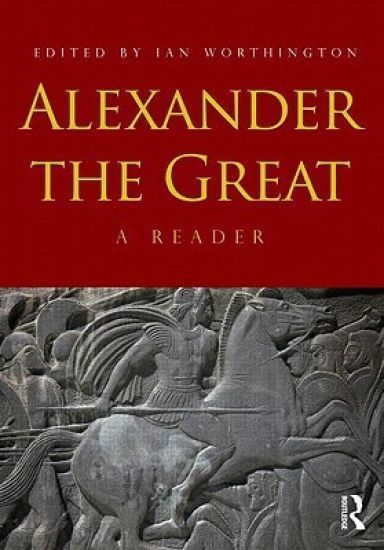
Alexander the Great
This exciting new edition is an indispensable guide for undergraduates to the study of Alexander the Great, showing the problems of the ancient source material, and making it clear that there is no single approach to be taken.The twelve thematic chapters contain a broad selection of the most significant published articles about Alexander, examining the main areas of debate and discussion:The SourcesAlexander’s Influences and the Macedonian Background Alexander’s Aims Alexander’s Battles and Generalship Alexander and the Greeks Alexander and the Persian Empire Alexander, India and the Gedrosian Desert From Mass Marriage to Death Alexander and the ‘Unity of Mankind’ Alexander and Deification Alexander and ConspiraciesAlexander: The ‘Great’? The Reader has the distinctive feature of translating a substantial number of the more inaccessible primary sources; each chapter is also prefaced with a succinct introduction to the topic under consideration.
Alexander the Great
This exciting new edition is an indispensable guide for undergraduates to the study of Alexander the Great, showing the problems of the ancient source material, and making it clear that there is no single approach to be taken.The twelve thematic chapters contain a broad selection of the most significant published articles about Alexander, examining the main areas of debate and discussion:The SourcesAlexander’s Influences and the Macedonian Background Alexander’s Aims Alexander’s Battles and Generalship Alexander and the Greeks Alexander and the Persian Empire Alexander, India and the Gedrosian Desert From Mass Marriage to Death Alexander and the ‘Unity of Mankind’ Alexander and Deification Alexander and ConspiraciesAlexander: The ‘Great’? The Reader has the distinctive feature of translating a substantial number of the more inaccessible primary sources; each chapter is also prefaced with a succinct introduction to the topic under consideration.
Alexander von Humboldt's Transatlantic Personae
Who was Alexander von Humboldt? Was he really a lone genius? Was he another European apologist for colonialism in the Americas or the father of Latin American independence? Was he a roving Romanticist, or did his sensibilities belong to the Enlightenment? Naturalist, philosopher, historian, and proto-sociologist--to name just some of the fields to which he contributed--, Humboldt is impossible to contain in a single identity or definition. His voluminous writings range across so many different fields of knowledge that his scholarly-scientific personae multiplied even during his lifetime, and they have continued to proliferate since his death in 1859. A household word throughout the nineteenth century, Humboldt was eventually eclipsed by Charles Darwin (whose own travels had been motivated by Humboldt’s) and disappeared from view for much of the twentieth century, notably in the United States. The essays in this collection testify to the renewed interest that Alexander von Humboldt’s multi-faceted work is inspiring in the twenty-first century, especially among cultural and literary historians from both sides of the Atlantic. This book was originally published as a special issue of Atlantic Studies.
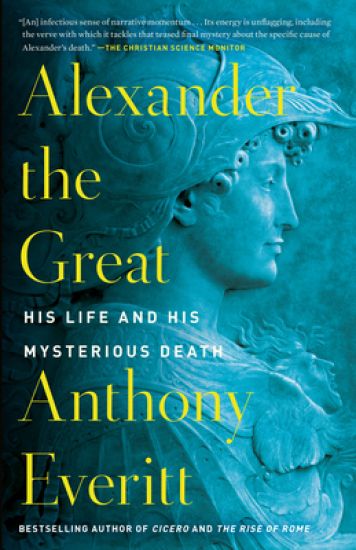
Alexander the Great

Alexander the Great

Anthony Everitt

G P Putnam's Sons
2021
nidottu
What can we learn from the stunning rise and mysterious death of the ancient world's greatest conqueror? An acclaimed biographer reconstructs the life of Alexander the Great in this magisterial revisionist portrait. " An] infectious sense of narrative momentum . . . Its energy is unflagging, including the verve with which it tackles that teased final mystery about the specific cause of Alexander's death."--The Christian Science Monitor More than two millennia have passed since Alexander the Great built an empire that stretched to every corner of the ancient world, from the backwater kingdom of Macedonia to the Hellenic world, Persia, and ultimately to India--all before his untimely death at age thirty-three. Alexander believed that his empire would stop only when he reached the Pacific Ocean. But stories of both real and legendary events from his life have kept him evergreen in our imaginations with a legacy that has meant something different to every era: in the Middle Ages he became an exemplar of knightly chivalry, he was a star of Renaissance paintings, and by the early twentieth century he'd even come to resemble an English gentleman. But who was he in his own time? In Alexander the Great, Anthony Everitt judges Alexander's life against the criteria of his own age and considers all his contradictions. We meet the Macedonian prince who was naturally inquisitive and fascinated by science and exploration, as well as the man who enjoyed the arts and used Homer's great epic the Iliad as a bible. As his empire grew, Alexander exhibited respect for the traditions of his new subjects and careful judgment in administering rule over his vast territory. But his career also had a dark side. An inveterate conqueror who in his short life built the largest empire up to that point in history, Alexander glorified war and was known to commit acts of remarkable cruelty. As debate continues about the meaning of his life, Alexander's death remains a mystery. Did he die of natural causes--felled by a fever--or did his marshals, angered by his tyrannical behavior, kill him? An explanation of his death can lie only in what we know of his life, and Everitt ventures to solve that puzzle, offering an ending to Alexander's story that has eluded so many for so long.
Alexander's Nursing Practice

Alexander's Nursing Practice

Elsevier Health Sciences
2024
nidottu
**Selected for 2025 Doody’s Core Titles® in Long Term Care and Home Care** Alexander’s Nursing Practice: Hospital and Home, Sixth Edition is the most comprehensive textbook available for undergraduate nursing students today. This resource will prepare students for their future role as healthcare professionals in a variety of settings. It covers all the basics of nursing, including care of patients with common disorders, core nursing issues like medicines management and infection prevention and control, and how to nurse specific patient groups. The sixth edition has been fully updated to incorporate the latest evidence, policies and registration requirements, and reflects the transformative changes currently occurring in healthcare policies, procedures and technologies. With a host of features to enhance the learning and teaching experience, this book will make a significant contribution to preparing compassionate nurses who will deliver patient-centred, high quality and holistic care. Designed to help the reader navigate the demands of the latest NMC educational requirements Expert team of contributors led by renowned editor, Ian Peate OBE FRCN Fully updated with the latest evidence and trends - incorporates the latest practice guidelines, research findings and clinical standards relevant to the nursing field Addresses the role of nurses in primary care settings, general practice nursing responsibilities, chronic disease management, health screening and the delivery of integrated, patient-centred care within the UK primary care landscape Richly illustrated throughout to reinforce key concepts, demonstrate clinical procedures and engage students in active learning Includes a wide range of helpful learning features including case studies and critical thinking exercises - helps the reader to analyse complex situations, make evidence-based decisions and communicate effectively with patients and healthcare team members Pedagogical features to help students navigate the textbook, organise their learning and review key concepts efficiently Supplemented with online material including MCQs, image bank, critical thinking questions, extra online material (supplementary text), website figure references and extra online images The latest NHS policies, guidelines and protocols; aligned to NMC standards for nursing practice, Code of Professional Conduct and regulatory requirements for nursing education in the UK Discussion of key legislation impacting nursing practice in the UK, such as the Health and Social Care Act, Mental Capacity Act, Data Protection Act and relevant provisions of the Human Rights Act, plus a special emphasis on the important issue of Duty of Candor Consideration of clinical governance frameworks, quality assurance mechanisms and risk management strategies implemented within the NHS to ensure patient safety, accountability and continuous improvement in healthcare delivery Emphasises the importance of collaborative practice and interdisciplinary teamwork within the UK healthcare system Integration of content related to patient safety initiatives and strategies endorsed by organisations such as the National Patient Safety Agency (NPSA) and the NHS Patient Safety Strategy Expanded coverage of community and public health nursing roles, responsibilities and interventions Explores mental health nursing practice within the UK context Enhanced discussion around parity of health ensuring equity and fairness in the provision of healthcare services, regardless of individuals' socio-economic status, ethnicity, gender, age or other characteristics
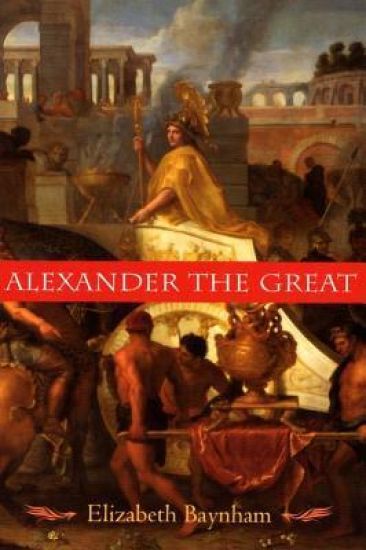
Alexander the Great

Alexander the Great

Elizabeth Baynham

The University of Michigan Press
2004
nidottu
He was a pupil of Aristotle and conqueror of much of the known world. This handsome commander, leading his army from the lofty perch of the wild steed Bucephalas, looked out with his one dark and one blue eye upon the world he ruled by divine ambition. The reign and personality of Alexander the Great---one of the most romantic and powerful kings in history---have remained a source of fascination from antiquity to the present. But because the ancient information surrounding the conqueror is rich, contradictory, and complex, every historian of this near-mythical ruler-whether ancient or modern-invariably creates his or her own Alexander. The unique work of one such ancient historian, Quintus Curtius, is the subject of Elizabeth Baynham's book. She mines Curtius' study of power for his contemporary perspective, historical methodology, and his portrait of the famous king and presents us with a brilliant, multifaceted study of this unique account regarding one of the most fascinating rulers in history.
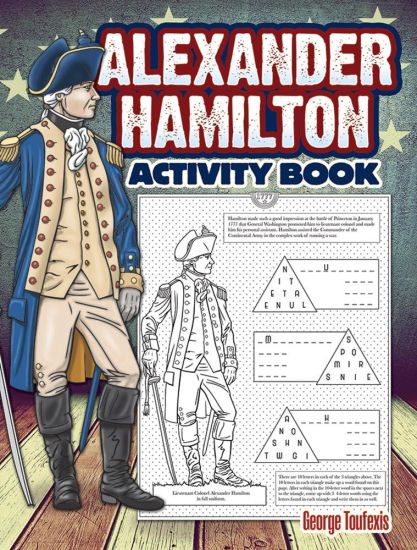
Alexander Hamilton Coloring Book

Alexander Hamilton Coloring Book

Steven James Petruccio

Dover Publications Inc.
2017
nidottu
Kids can color as they learn about the legendary Alexander Hamilton, whose fascinating life has spawned numerous books, articles, and a Tony Award(R)-winning Broadway musical. Captions accompany the well-researched illustrations, which recount the Founding Father's life and times, starting with his childhood in the West Indies and arrival in America. The realistic images portray Hamilton's roles as a soldier, lawyer, and statesman, climaxing in a depiction of the duel that ended his life.
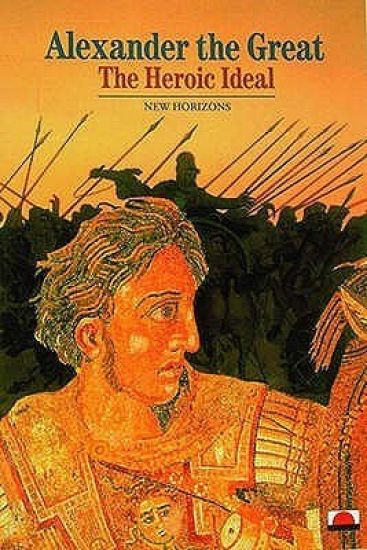
Alexander the Great

Alexander the Great

Pierre Briant; Jeremy Leggatt

Thames Hudson Ltd
1996
pokkari
Defeating the mighty Persian Empire at the age of 22, Alexander the Great rapidly conquered the rest of the then known world. This book traces the career of Alexander who was destined to become one of the greatest generals the world has known, and celebrates his legacy to Greek civilization.
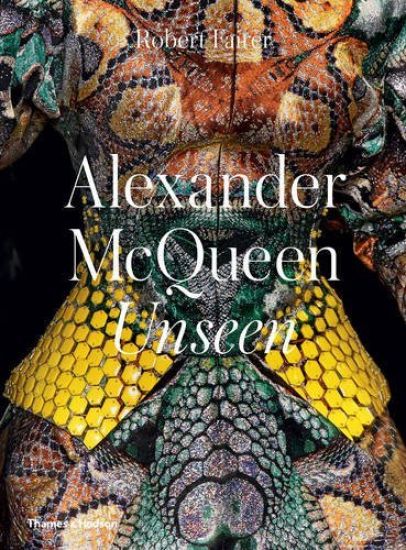
Alexander McQueen: Unseen

Alexander McQueen: Unseen

Robert Fairer

Thames Hudson Ltd
2016
sidottu
Alexander McQueen has grasped the public’s imagination like few other fashion designers before him, with exhibitions dedicated to his work continuing to attract record visitor numbers. Almost 500,000 people visited the V&A’s 2015 ‘Alexander McQueen: Savage Beauty’ exhibition, making it the most popular in the museum’s history. Opening with a brief essay on the designer’s work, Alexander McQueen: Unseen unfolds chronologically. Each collection is introduced by a concise text by Claire Wilcox, one of the foremost experts on the McQueen’s work, revisiting the designer’s most iconic creations across his entire career and revealing previously unseen behind- the-scenes moments that capture models, hairdressers, stylists, make-up artists and Alexander McQueen himself at their most candid and creative. Robert Fairer’s stunning and high-energy photographs, all previously unpublished, capture the glamour, grit and spirit that made McQueen’s flamboyant shows unique. A treasure-trove of inspiration, they make this publication a must-have reference for fashion and photography lovers alike.
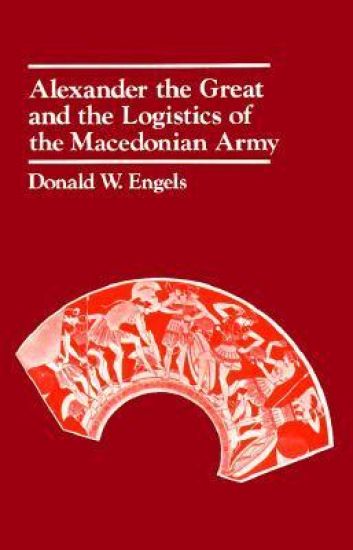
Alexander the Great and the Logistics of the Macedonian Army

Alexander the Great and the Logistics of the Macedonian Army

Donald W. Engels

University of California Press
1980
pokkari
'The most important work on Alexander the Great to appear in a long time. Neither scholarship nor semi-fictional biography will ever be the same again...Engels at last uses all the archaeological work done in Asia in the past generation and makes it accessible...Careful analyses of terrain, climate, and supply requirements are throughout combined in a masterly fashion to help account for Alexander's strategic decision in the light of the options open to him...The chief merit of this splendid book is perhaps the way in which it brings an ancient army to life, as it really was and moved: the hours it took for simple operations of washing and cooking and feeding animals; the train of noncombatants moving with the army...this is a book that will set the reader thinking. There are not many books on Alexander the Great that do' - "New York Review of Books".
Alexander to Actium

Alexander to Actium

Peter Green

University of California Press
1993
pokkari
The Hellenistic Age, the three extraordinary centuries from the death of Alexander in 323 B. C. to Octavian's final defeat of Antony and Cleopatra at the Battle of Actium, has offered a rich and variegated field of exploration for historians, philosophers, economists, and literary critics. Yet few scholars have attempted the daunting task of seeing the period whole, of refracting its achievements and reception through the lens of a single critical mind. Alexander to Actium was conceived and written to fill that gap. In this monumental work, Peter Green--noted scholar, writer, and critic--breaks with the traditional practice of dividing the Hellenistic world into discrete, repetitious studies of Seleucids, Ptolemies, Antigonids, and Attalids. He instead treats these successor kingdoms as a single, evolving, interrelated continuum. The result clarifies the political picture as never before. With the help of over 200 illustrations, Green surveys every significant aspect of Hellenistic cultural development, from mathematics to medicine, from philosophy to religion, from literature to the visual arts.Green offers a particularly trenchant analysis of what has been seen as the conscious dissemination in the East of Hellenistic culture, and finds it largely a myth fueled by Victorian scholars seeking justification for a no longer morally respectable imperialism. His work leaves us with a final impression of the Hellenistic Age as a world with haunting and disturbing resemblances to our own. This lively, personal survey of a period as colorful as it is complex will fascinate the general reader no less than students and scholars.
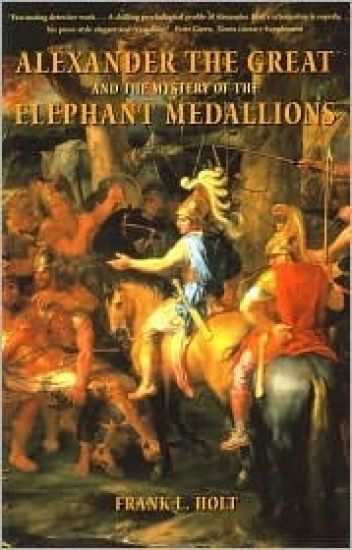
Alexander the Great and the Mystery of the Elephant Medallions

Alexander the Great and the Mystery of the Elephant Medallions

Frank L. Holt

University of California Press
2003
pokkari
To all those who witnessed his extraordinary conquests, from Albania to India, Alexander the Great appeared invincible. How Alexander himself promoted this appearance - how he abetted the belief that he enjoyed divine favor and commanded even the forces of nature against his enemies - is the subject of Frank L. Holt's absorbing book. Solid evidence for the "supernaturalized" Alexander lies in a rare series of medallions that depict the triumphant young king at war against the elephants, archers, and chariots of Rajah Porus of India at the Battle of the Hydaspes River. Recovered from Afghanistan and Iraq in sensational and sometimes perilous circumstances, these ancient artifacts have long animated the modern historical debate about Alexander. Holt's book, the first devoted to the mystery of these ancient medallions, takes us into the history of their discovery and interpretation, into the knowable facts of their manufacture and meaning, and, ultimately, into the king's own psyche and his frightening theology of war. The result is a valuable analysis of Alexander history and myth, a vivid account of numismatics, and a spellbinding look into the age-old mechanics of megalomania.
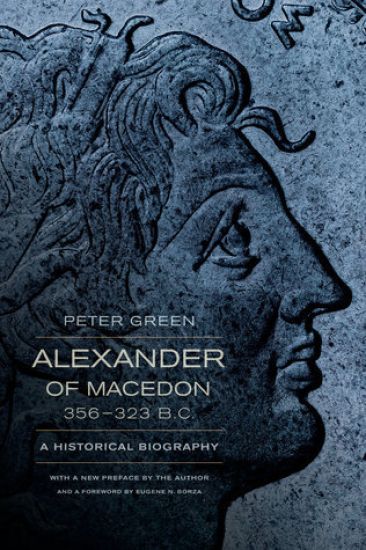
Alexander of Macedon, 356–323 B.C.

Alexander of Macedon, 356–323 B.C.

Peter Green; Eugene N. Borza

University of California Press
2013
pokkari
Until recently, popular biographers and most scholars viewed Alexander the Great as a genius with a plan, a romantic figure pursuing his vision of a united world. His dream was at times characterized as a benevolent interest in the brotherhood of man, sometimes as a brute interest in the exercise of power. Green, a Cambridge-trained classicist who is also a novelist, portrays Alexander as both a complex personality and a single-minded general, a man capable of such diverse expediencies as patricide or the massacre of civilians. Green describes his Alexander as "not only the most brilliant (and ambitious) field commander in history, but also supremely indifferent to all those administrative excellences and idealistic yearnings foisted upon him by later generations, especially those who found the conqueror, tout court, a little hard upon their liberal sensibilities." This biography begins not with one of the universally known incidents of Alexander's life, but with an account of his father, Philip of Macedonia, whose many-territoried empire was the first on the continent of Europe to have an effectively centralized government and military. What Philip and Macedonia had to offer, Alexander made his own, but Philip and Macedonia also made Alexander form an important context for understanding Alexander himself. Yet his origins and training do not fully explain the man. After he was named hegemon of the Hellenic League, many philosophers came to congratulate Alexander, but one was conspicuous by his absence: Diogenes the Cynic, an ascetic who lived in a clay tub. Piqued and curious, Alexander himself visited the philosopher, who, when asked if there was anything Alexander could do for him, made the famous reply, "Don't stand between me and the sun." Alexander's courtiers jeered, but Alexander silenced them: "If I were not Alexander, I would be Diogenes." This remark was as unexpected in Alexander as it would be in a modern leader. For the general reader, the book, redolent with gritty details and fully aware of Alexander's darker side, offers a gripping tale of Alexander's career. Full backnotes, fourteen maps, and chronological and genealogical tables serve readers with more specialized interests.
Alexander the Great and the Logistics of the Macedonian Army

Alexander the Great and the Logistics of the Macedonian Army

Engels Donald W.

University of California Press
2013
pokkari
"The most important work on Alexander the Great to appear in a long time. Neither scholarship nor semi-fictional biography will ever be the same again...The chief merit of this splendid book is perhaps the way in which it brings an ancient army to life, as it really was and moved". ("New York Review of Books"). "A volume for a considerable range of readers...It should be of interest to all students of military history before the advent of steam and, indeed, to anyone interested in movements of early population". ("Annals"). "[Engels] has achieved the apparently impossible: he has shed new and solid light on Alexander's campaigns...Rarely have I encountered as good a monograph". ("Military Affairs").
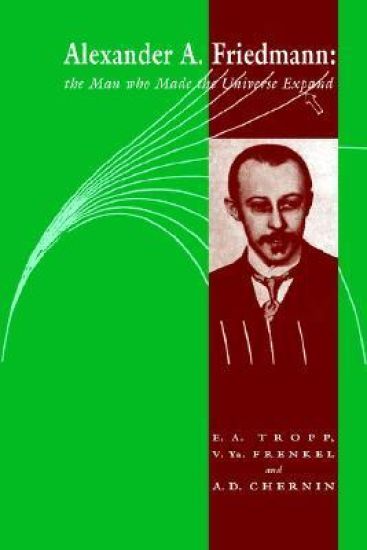
Alexander A Friedmann

Alexander A Friedmann

Eduard A. Tropp; Viktor Ya. Frenkel; Artur D. Chernin

Cambridge University Press
2006
pokkari
Our universe can be described mathematically by a simple model developed in 1922 at Petrograd (St Petersburg) by Alexander Friedmann (1888–1925), who predicted that the whole universe would expand and evolve with time before there was any observational evidence. He was an outstanding Soviet physicist, and this vivid 1993 biography is set in a wide historical background. The book is a window on the school and university years, military service, teaching and research during a seminal period of Soviet history. The authors include unique archival material, such as Friedmann's letters from the Front, as well as contemporary records and reminiscences of colleagues. There is a detailed treatment of his work in Theoretical Cosmology (1922–1924), set in the context of the organization of Soviet science at the time.
Alexander Herzen and the Role of the Intellectual Revolutionary
Alexander Herzen (1812–70) was the most outstanding figure in the early period of the Russian revolutionary movement. Lenin claimed him as a forerunner of the Bolsheviks, and Soviet scholars have sought to establish his latent sympathy with Marxism. In the west on the other hand, he has been seen as a precursor of Solzhenitsyn, the personification of protest against all forms of oppression. Dr Acton provides a compelling intellectual biography. The focus is on the years between 1847 and 1863. Herzen's ideas are set in the context of those political developments and dramatic private experiences that affected his outlook. His profound faith in human nature and in the inevitable triumph of socialism was undermined not only by the failure of the revolutions of 1848, but even more deeply by personal catastrophe - the discovery of the infidelity of his beautiful wife Natalie. This dual blow, Dr Acton shows, had a decisive impact upon Herzen's approach to Russian problems. It lay at the root of the ambivalent attitude he adopted towards peasant revolution in the critical period of Emancipation.