Kirjojen hintavertailu. Mukana 11 717 486 kirjaa ja 12 kauppaa.

Kirjahaku

Etsi kirjoja tekijän nimen, kirjan nimen tai ISBN:n perusteella.

1000 tulosta hakusanalla Alexandra Parma Cook; Noble David Cook

Negotiating Coexistence

Negotiating Coexistence

Alexandra Zimmermann; Brian McQuinn

Oxford University Press
2025
sidottu
The conservation of biodiversity and natural resources is ultimately and unavoidably about managing conflict. Tensions arise from access to land, competition for resources, and human decision-making, which in turn are amplified by conflicts over managing wildlife, protected areas, sustainable use, and struggles over inequalities, divisions, livelihoods, poverty, development, and human rights. Essentially, conservation cannot achieve its goals without effectively helping address these conflicts. Most biodiversity conservation professionals are trained in the natural sciences; biodiversity conservation, however, has become increasingly interdisciplinary. This textbook is a comprehensive guide to understanding and managing conflicts in conservation and explores the intersection of negotiation, conflict resolution, and biodiversity conservation by providing a practical framework for understanding and addressing such conflicts. In this book, the authors show how conflict resolution is both an art and a science. They explain the unavoidably messy, human nature of conflicts while providing a structured way of moving forward. The book introduces key conflict resolution principles, such as the importance of dignity, respect, and willingness, and provides a structured approach to understanding and analysing conflicts. Written in an accessible, non-technical style, Negotiating Coexistence: The art and science of resolving conflicts in conservation, is an essential resource for anyone working in biodiversity conservation and related fields. By bridging expertise in negotiation and conflict resolution with the realities of conservation work, this book serves as a vital resource for practitioners, professionals, researchers, and students alike.

Negotiating Coexistence

Negotiating Coexistence

Alexandra Zimmermann; Brian McQuinn

Oxford University Press
2025
nidottu
The conservation of biodiversity and natural resources is ultimately and unavoidably about managing conflict. Tensions arise from access to land, competition for resources, and human decision-making, which in turn are amplified by conflicts over managing wildlife, protected areas, sustainable use, and struggles over inequalities, divisions, livelihoods, poverty, development, and human rights. Essentially, conservation cannot achieve its goals without effectively helping address these conflicts. Most biodiversity conservation professionals are trained in the natural sciences; biodiversity conservation, however, has become increasingly interdisciplinary. This textbook is a comprehensive guide to understanding and managing conflicts in conservation and explores the intersection of negotiation, conflict resolution, and biodiversity conservation by providing a practical framework for understanding and addressing such conflicts. In this book, the authors show how conflict resolution is both an art and a science. They explain the unavoidably messy, human nature of conflicts while providing a structured way of moving forward. The book introduces key conflict resolution principles, such as the importance of dignity, respect, and willingness, and provides a structured approach to understanding and analysing conflicts. Written in an accessible, non-technical style, Negotiating Coexistence: The art and science of resolving conflicts in conservation, is an essential resource for anyone working in biodiversity conservation and related fields. By bridging expertise in negotiation and conflict resolution with the realities of conservation work, this book serves as a vital resource for practitioners, professionals, researchers, and students alike.
Stance

Stance

Alexandra Jaffe

Oxford University Press Inc
2009
sidottu
All communication involves acts of stance, in which speakers take up positions vis-à-vis the expressive, referential, interactional and social implications of their speech. This book brings together contributions in a new and dynamic current of academic explorations of stancetaking as a sociolinguistic phenomenon. Drawing on data from such diverse contexts as advertising, tourism, historical texts, naturally occurring conversation, classroom interaction and interviews, leading authors in the field of sociolinguistics in this volume explore how linguistic stancetaking is implicated in the representation of self, personal style and acts of stylization, and self- and other-positioning. The analyses also focus on how speakers deploy and take up stances vis-a-vis sociolinguistic variables and the critical role of stance in the processes of indexicalization: how linguistic forms come to be associated with social categories and meanings. In doing so, many of the authors address critical issues of power and social reproduction, examining how stance is implicated in the production, reproduction and potential change of social and linguistic hierarchies and ideologies. This volume maps out the terrain of existing sociolinguistic and linguistic anthropological research on stance, synthesizes how it relates to existing theoretical orientations, and identifies a framework for future research.
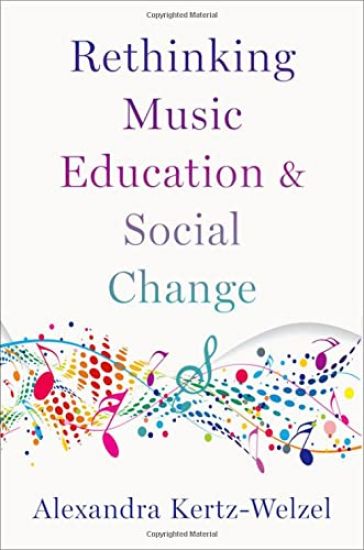
Rethinking Music Education and Social Change

Rethinking Music Education and Social Change

Alexandra Kertz-Welzel

OXFORD UNIVERSITY PRESS INC
2022
sidottu
The arts, and particularly music, are well-known agents for social change. They can empower, transform, or question. They can be a mirror of society's current state and a means of transformation. They are often the last refuge when all attempts at social change have failed. But are the arts able to live up to these expectations? Can music education cause social change? Rethinking Music Education and Social Change offers timely answers to these questions. It presents an imaginative, yet critical approach. At once optimistic and realistic, the book asseses music education's relation to social change and offers a new vision for music education as utopian theory and practice. As an important topic in sociology and political science, utopia offers a new tradition of thinking and a scholarly foundation for music education's relation to social change.
Rethinking Music Education and Social Change

Rethinking Music Education and Social Change

Alexandra Kertz-Welzel

OXFORD UNIVERSITY PRESS INC
2022
nidottu
The arts, and particularly music, are well-known agents for social change. They can empower, transform, or question. They can be a mirror of society's current state and a means of transformation. They are often the last refuge when all attempts at social change have failed. But are the arts able to live up to these expectations? Can music education cause social change? Rethinking Music Education and Social Change offers timely answers to these questions. It presents an imaginative, yet critical approach. At once optimistic and realistic, the book asseses music education's relation to social change and offers a new vision for music education as utopian theory and practice. As an important topic in sociology and political science, utopia offers a new tradition of thinking and a scholarly foundation for music education's relation to social change.
Awkwardness

Awkwardness

Alexandra Plakias

OXFORD UNIVERSITY PRESS INC
2024
sidottu
Awkwardness offers an account of the psychology and philosophical significance of a ubiquitous social phenomenon. Our aversion to awkwardness mirrors our desire for inclusion. This explains its power to influence and silence us: as social creatures, we don't want to mark ourselves as outsiders. As a result, our fear of awkwardness inhibits critique and conversation, acting as an impediment to moral and social progress. Even the act of describing people as "awkward" exacerbates existing inequities, by consigning them to a social status that gives them less access to the social goods (knowledge, confidence, social esteem) needed to navigate potentially awkward situations. Awkwardness discusses how we ostracize and punish those who fail to fit into existing social categories; how we all depend on--and are limited by--social scripts and norms for guidance; and how these norms frequently let us down when we need them. But awkwardness has a positive side: it can highlight opportunities for moral and social improvement, by revealing areas where our social norms and scripts fail to meet our needs or have yet to catch up with changing social and moral realities. Awkwardness ultimately underscores the conflict between our moral motivations and our desire for social approval and conformity.
Someone Else's Music

Someone Else's Music

Alexandra Wilson

OXFORD UNIVERSITY PRESS INC
2025
sidottu
In Britain today, opera is routinely called elitist. But things were not always so. Examining shifting cultural attitudes over the century from 1920 to 2020, Someone Else's Music reveals a hidden history of popular opera-going in Britain, which defies the opera-elitism stereotype. At the same time, the book traces how, when, and why that stereotype arose. It uses opera as a lens through which to examine the broader history of changing cultural values in the UK, from 1920s Reithian ideals about art's civilising qualities to contemporary culture wars. The controversies opera has prompted over the last century reveal a great deal about national identity — who Britons think they are and who they want to be. The book ranges widely across topics including education, public broadcasting, arts policy, and attitudes towards subsidy, and traces opera's surprisingly close relationship with popular culture. We meet a diverse cast of characters, including working-class East-End opera fans, opera-singing Welsh miners, soldiers discovering opera in wartime Italy, and holidaymakers watching it at Butlin's. The book is as much about the secretary camping out in the queue for gallery tickets as it is about the duchess in the stalls. But at what point did people start calling opera elitist and why? Analysing lasting stereotypes around opera, Wilson reveals them to be politically motivated, founded in deep-seated British anxieties about class, education, and national identity. Someone Else's Music is essential reading for anybody who wants to understand the debates we are having today about arts funding, accessibility and who opera is 'for'. It reveals that opera used to be for everyone - and shows us how it could be again.
Meanings of Manhood in Early Modern England

Meanings of Manhood in Early Modern England

Alexandra Shepard

Clarendon Press
2003
sidottu
This path-breaking study explores the diverse and varied meanings of manhood in early modern England and their complex, and often contested, relationship with patriarchal principles. Using social, political and medical commentary, alongside evidence of social practice derived from court records, Dr Shepard argues that patriarchal ideology contained numerous contradictions, and that, while males were its primary beneficiaries, it was undermined and opposed by men as well as women. Patriarchal concepts of manhood existed in tension both with anti-patriarchal forms of resistance and with alternative codes of manhood which were sometimes primarily defined independently of patriarchal imperatives. As a result the differences within each sex, as well as between them, were intrinsic to the practice of patriarchy and the social distribution of its dividends in early modern England.
Providence in Early Modern England

Providence in Early Modern England

Alexandra Walsham

Oxford University Press
2001
nidottu
Providence in Early Modern England is the most extensive study to date of the sixteenth- and seventeenth-century belief that God actively intervened in human affairs to punish, reward, warn, try, and chastise. Providentialism has often been seen as a distinctive hallmark of puritan piety. However, Dr Walsham argues that it was a cluster of assumptions which penetrated every sector of English society, cutting across the boundaries created by status and creed, education and wealth. She explores a range of dramatic events and puzzling phenomena in which contemporaries detected the divine finger at work: tragic accidents and sudden deaths, strange sights and mysterious portents, monstrous births and popular prophets, terrible disasters and raging epidemics. She shows how providence helped forge a powerful myth of Protestant nationhood and a lively sense of confessional identity and how, simultaneously, it exacerbated the political and ecclesiastical tensions which culminated in the outbreak of the civil wars in 1642. Framed as a contribution to the continuing debate about the impact, character, and broader repercussions of the English Reformation, this book seeks to deflect attention away from the negative and iconoclastic aspects of the advent of Protestantism towards the undercurrents of continuity that eased the enormous upheavals of the era. It highlights some of the ways in which people adjusted to the religious and cultural revolution as a permanent fact. Based on a detailed analysis of sermons and tracts published by Protestant ministers, and ballads and pamphlets reporting 'true and wonderful newes', it also sheds light on the role of literacy and print in a society in which oral and visual modes of communication continued to thrive.
Classifiers

Classifiers

Alexandra Y. Aikhenvald

Oxford University Press
2000
sidottu
Almost all languages have some grammatical means for the linguistic categorization of nouns. Well-known systems such as the lexical numeral classifiers of South-East Asia, on the one hand, and the highly grammaticalized gender agreement classes of Indo-European languages, on the other, are the extremes of a contiuum. They can have a similar semantic basis, and one can develop from the other. Classifiers come in different morphological forms; they can be free nouns, clitics, or affixes. Some languages combine several varieties of classifiers. Different types of classifiers show varying correlations with other grammatical categories. In addition, they differ in their semantics, in the way they develop, and in the way they become obsolescent and disappear. These parameters are the basis for the typology of classifiers presented here. This book is almost certainly the most substantial cross-linguistic account of classifiers ever published. Its range of exemplification includes major and minor languages from every continent (several from the author's own fieldwork). The work combines original research with innovative analysis and will interest typologists, those working in the field of morphosyntactic variation and lexical semantics, and exponents of formal theories who wish to explain the range of linguistic diversity found in natural language.
Human Rights and Democratization in Latin America

Human Rights and Democratization in Latin America

Alexandra Barahona De Brito

Oxford University Press
1997
sidottu
This insightful new work analyses the attempts by Chile and Uruguay to resolve the human rights violations conflicts inherited from military dictatorships. The author focuses on how the post-transitional democratic governments dealt with demmands for official recognition of the truth about the human rights violations committed by the military regimes and for punishment of those guilty of committing or ordering those offences. Alexandra DeBrito sheds light on the political conditions which permitted - or prevented - the politics of truth-telling and justice under these successor regimes. This is the first study to make comparative assessment of human rights abuse in Uruguay and Chile in this way. The author contends that the experiences of these countries offer formative examples of attempts to tackle fundamental aspects of the policies of transition and democratization. She makes an original contribution to our understanding of the key political, legal, and moral issues involved.
The Languages of the Amazon

The Languages of the Amazon

Alexandra Y. Aikhenvald

Oxford University Press
2015
nidottu
This is the first guide and introduction to the extraordinary range of languages in Amazonia, which include some of the most the most fascinating in the world and many of which are now teetering on the edge of extinction. Alexandra Aikhenvald, one of the world's leading experts on the region, provides an account of the more than 300 languages. She sets out their main characteristics, compares their common and unique features, and describes the histories and cultures of the people who speak them. The languages abound in rare features. Most have been in contact with each other for many generations, giving rise to complex patterns of linguistic influence. The author draws on her own extensive field research to tease out and analyse the patterns of their genetic and structural diversity. She shows how these patterns reveal the interrelatedness of language and culture; different kinship systems, for example, have different linguistic correlates. Professor Aikhenvald explains the many unusual features of Amazonian languages, which include evidentials, tones, classifiers, and elaborate positional verbs. She ends the book with a glossary of terms, and a full guide for those readers interested in following up a particular language or linguistic phenomenon. The book is free of esoteric terminology, written in its author's characteristically clear style, and brought vividly to life with numerous accounts of her experience in the region. It may be used as a resource in courses in Latin American studies, Amazonian studies, linguistic typology, and general linguistics, and as reference for linguistic and anthropological research.
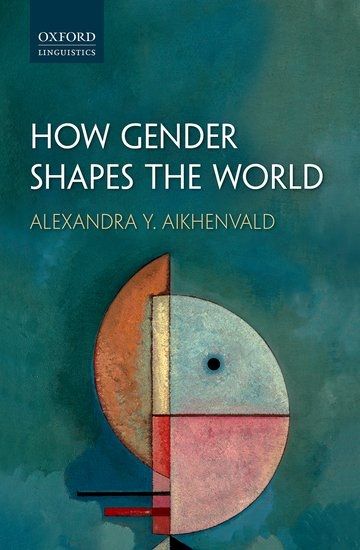
How Gender Shapes the World

How Gender Shapes the World

Alexandra Y. Aikhenvald

Oxford University Press
2016
sidottu
This is a book about the multi-faceted notion of gender. Gender differences form the basis for family life, patterns of socialization, distribution of tasks, and spheres of responsibilities. The way gender is articulated shapes the world of individuals, and of the societies they live in. Gender has three faces: Linguistic Gender-the original sense of 'gender'-is a feature of many languages and reflects the division of nouns into grammatical classes or genders (feminine, masculine, neuter, and so on); Natural Gender, or sex, refers to the division of animates into males and females; and Social Gender reflects the social implications and norms of being a man or a woman (or perhaps something else). Women and men may talk and behave differently, depending on conventions within the societies they live in, and their role in language maintenance can also vary. The book focuses on how gender in its many guises is reflected in human languages, how it features in myths and metaphors, and the role it plays in human cognition. Examples are drawn from all over the world, with a special focus on Aikhenvald's extensive fieldwork in Amazonia and New Guinea.
Claiming a Promised Inheritance

Claiming a Promised Inheritance

Alexandra Braun

Oxford University Press
2022
sidottu
Claiming a Promised Inheritance examines those cases where a person is promised a future inheritance and, having acted on it, later discovers that the promise is unfulfilled. The book structures its analysis and argument around the stories of disappointed promisees and their unfulfilled expectations of a future inheritance, and how they might seek redress. It maps and compares the various, and often very diverse range of legal responses that a promisee can avail herself of across different legal areas of the law (ranging from contract law to property law, employment law, unjust and unjustified enrichment law, and succession law) and in both common and civil law traditions. Braun asks how these responses protect the interests of promisees and whether they are sensitive to the context in which such promises are expressed. In doing so, the focus rests on the level of protection the various forms of redress grant, their scope, and the challenges promisees face when brining a claim, but also on the values and interests that are at stake when granting relief. This book argues that due to the social and legal context within which promises of a future inheritance are normally made, promisees are usually in a vulnerable position that can easily by exploited. It further argues that the law is usually more acutely attuned to the risks that the promisor incurs and that greater attention should be paid to the challenges promisees face. Claiming a Promised Inheritance thus complements the traditional viewpoint by bringing into focus the (too often ignored) perspective of promisees.
Serial Verbs

Serial Verbs

Alexandra Y. Aikhenvald

Oxford University Press
2018
sidottu
This book provides an in-depth typological account of the forms, functions, and histories of serial verb constructions. Serial verbs, in which several verbs combine to form a single predicate, describe what is conceptualized as a single event. The verbs in the construction have the same tense, aspect, mood, modality, and evidentiality values, cannot be negated or questioned separately, and usually share the same subject and object. They are a powerful means of portraying various facets of one event, and can express grammatical meanings such as aspect, direction, and causation, particularly in languages where few other means are available. In this volume, Alexandra Aikhenvald seeks to answer unresolved questions such as: What are the parameters of variation in serial verbs? How do serial verbs differ from other, superficially similar multi-verb constructions? How do serial verbs emerge, and what happens to them over time? What role do they play in the representation of event structure? The book uses an inductively-based framework for the analysis and draws on data from languages with different typological profiles and genetic affiliations. It will be of interest to researchers and students from a wide range of fields of linguistics, especially typology, anthropological linguistics, and language contact.
Security Entrepreneurs

Security Entrepreneurs

Alexandra Gheciu

Oxford University Press
2018
sidottu
Focusing on four East European polities-Bosnia, Serbia, Bulgaria, and Romania--this book examines the dynamics and implications of processes of commercialization of security that have occurred following the collapse of communist regimes. These processes have been central to post-communist liberalization, and have profoundly shaped those states and their integration into European institutional structures and global economic and political circuits. They have also affected -- and been shaped by-- the behaviour and power of regional and global actors (e.g. European institutions, regional, and global corporations) in Eastern Europe. By virtue of the fact that they combine in complex ways local, national, regional, and global dynamics and actors, processes of security commercialization in the former Eastern bloc can be seen as instances of 'glocalization'. Several aspects of security commercialization are particularly important. To begin with, private actors --specifically private security companies (PSCs)-- have been reconstituted as partial agents of public power. As such, they have come to be systematically involved in performing security practices traditionally associated with the state. In addition, a potent commercial logic has come to permeate public security institutions. This has led to redefinition of the relationship between the state and its population in ways that defy conventional wisdom about the role of the state, and pose difficult normative challenges. More broadly, processes of security commercialization in Eastern Europe, which involve important performative dimensions, have led to the emergence of complex, hybrid networks of security providers that transcend domestic/international, public/private boundaries and behave, in many ways, as entrepreneurs.
Accounting for Oneself

Accounting for Oneself

Alexandra Shepard

Oxford University Press
2018
nidottu
Accounting for Oneself is a major new study of the social order in early modern England, as viewed and articulated from the bottom up. Engaging with how people from across the social spectrum placed themselves within the social order, it pieces together the language of self-description deployed by over 13,500 witnesses in English courts when answering questions designed to assess their creditworthiness. Spanning the period between 1550 and 1728, and with a broad geographical coverage, this study explores how men and women accounted for their 'worth' and described what they did for a living at differing points in the life-cycle. A corrective to top-down, male-centric accounts of the social order penned by elite observers, the perspective from below testifies to an intricate hierarchy based on sophisticated forms of social reckoning that were articulated throughout the social scale. A culture of appraisal was central to the competitive processes whereby people judged their own and others' social positions. For the majority it was not land that was the yardstick of status but moveable property-the goods and chattels in people's possession ranging from livestock to linens, tools to trading goods, tables to tubs, clothes to cushions. Such items were repositories of wealth and the security for the credit on which the bulk of early modern exchange depended. Accounting for Oneself also sheds new light on women's relationship to property, on gendered divisions of labour, and on early modern understandings of work which were linked as much to having as to getting a living. The view from below was not unchanging, but bears witness to the profound impact of widening social inequality that opened up a chasm between the middle ranks and the labouring poor between the mid-sixteenth and mid-seventeenth centuries. As a result, not only was the social hierarchy distorted beyond recognition, from the later-seventeenth century there was also a gradual yet fundamental reworking of the criteria informing the calculus of esteem.
How Gender Shapes the World

How Gender Shapes the World

Alexandra Y. Aikhenvald

Oxford University Press
2018
nidottu
This is a book about the multi-faceted notion of gender. Gender differences form the basis for family life, patterns of socialization, distribution of tasks, and spheres of responsibilities. The way gender is articulated shapes the world of individuals, and of the societies they live in. Gender has three faces: Linguistic Gender-the original sense of 'gender'-is a feature of many languages and reflects the division of nouns into grammatical classes or genders (feminine, masculine,This is a book about the multi-faceted notion of gender. Gender differences form the basis for family life, patterns of socialization, distribution of tasks, and spheres of responsibilities. The way gender is articulated shapes the world of individuals, and of the societies they live in. Gender has three faces: Linguistic Gender-the original sense of 'gender'-is a feature of many languages and reflects the division of nouns into grammatical classes or genders (feminine, masculine, neuter, and so on); Natural Gender, or sex, refers to the division of animates into males and females; and Social Gender reflects the social implications and norms of being a man or a woman (or perhaps something else). Women and men may talk and behave differently, depending on conventions within the societies they live in, and their role in language maintenance can also vary. The book focuses on how gender in its many guises is reflected in human languages, how it features in myths and metaphors, and the role it plays in human cognition. Examples are drawn from all over the world, with a special focus on Aikhenvald's extensive fieldwork in Amazonia and New Guinea.
Marketing English Books, 1476-1550

Marketing English Books, 1476-1550

Alexandra da Costa

Oxford University Press
2020
sidottu
The monograph series Oxford Studies in Medieval Literature and Culture showcases the plurilingual and multicultural quality of medieval literature and actively seeks to promote research that not only focuses on the array of subjects medievalists now pursue - in literature, theology, and philosophy, in social, political, jurisprudential, and intellectual history, the history of art, and the history of science - but also that combines these subjects productively. It offers innovative studies on topics that may include, but are not limited to, manuscript and book history; languages and literatures of the global Middle Ages; race and the post-colonial; the digital humanities, media and performance; music; medicine; the history of affect and the emotions; the literature and practices of devotion; the theory and history of gender and sexuality, ecocriticism and the environment; theories of aesthetics; medievalism. Marketing English Books is about how the earliest printers moulded demand and created new markets. Until the advent of print, the sale of books had been primarily a bespoke trade, but printers faced a new sales challenge: how to sell hundreds of identical books to individuals, who had many other demands on their purses. This book contends that this forced printers to think carefully about marketing and potential demand, for even if they sold through a middleman--as most did--that wholesaler, bookseller, or chapman needed to be convinced the books would attract customers. Marketing English Books sets out, therefore, to show how markets for a wide range of texts were cultivated by English printers between 1476 and 1550 within a wider, European context: devotional tracts; forbidden evangelical books; romances, gests, and bawdy tales; news; pilgrimage guides, souvenirs and advertisements; and household advice. Through close analysis of paratexts--including title-pages, prefaces, tables of contents, envoys, colophons, and images--the book reveals the cultural impact of printers in this often overlooked period. It argues that while print and manuscript continued alongside each other, developments in the marketing of printed texts began to change what readers read and the place of reading in their lives on a larger scale and at a faster pace than had occurred before, shaping their expectations, tastes, and even their practices and beliefs.
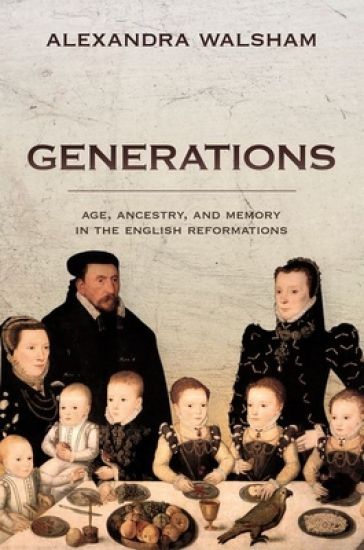
Generations

Generations

Alexandra Walsham

Oxford University Press
2023
sidottu
This book examines England's plural and protracted Reformations through the novel prism of the generations. Approaching generation as a biological unit and a social cohort, it demonstrates that the tumultuous religious developments that stretched across the sixteenth and seventeenth centuries not merely transformed the generations but were also forged by them. It provides compelling new insights into how people experienced and navigated the profound challenges that the Reformations posed in everyday life. Alexandra Walsham investigates how age and ancestry were implicated in the theological and cultural upheavals of the era and how these in turn reconfigured the nexus between memory, history, and time. Generations explores the manifold ways in which the Reformations shaped the horizontal relationships that men, women, and children formed with their siblings, kin, and peers, as well as the vertical ones that tied them to their dead ancestors and their future heirs. It highlights the vital part that families bound by blood and by faith played in the making of current events and in recording the past for posterity. Drawing on previously untapped archival evidence, in tandem with a rich array of printed texts, visual images, and material objects, this study offers poignant glimpses of individual lives and casts fascinating light on how families were both torn apart and brought closer together by the English Reformations.