Kirjojen hintavertailu. Mukana 11 244 527 kirjaa ja 12 kauppaa.

Kirjahaku

Etsi kirjoja tekijän nimen, kirjan nimen tai ISBN:n perusteella.

1000 tulosta hakusanalla Alfred Ainger

Les Caprices de Marianne de Alfred de Musset (fiche de lecture et analyse complète de l'oeuvre)
Venez d couvrir Les Caprices de Marianne d'Alfred de Musset, gr ce une analyse litt raire de r f rence crite par un sp cialiste universitaire, cette fiche de lecture est recommand e par de nombreux enseignants. Cet ouvrage contient la biographie de l' crivain, le r sum d taill , le mouvement litt raire, le contexte de publication de l'oeuvre et l'analyse compl te. Retrouvez tous nos titres sur: www.fichedelecture.fr.

Il faut qu'une porte soit ouverte ou fermée de Alfred de Musset (fiche de lecture et analyse complète de l'oeuvre)
Venez d couvrir Il faut qu'une porte soit ouverte ou ferm e d'Alfred de Musset gr ce une analyse litt raire de r f rence crite par un sp cialiste universitaire, cette fiche de lecture est recommand e par de nombreux enseignants. Cet ouvrage contient la biographie de l' crivain, le r sum d taill , le mouvement litt raire, le contexte de publication de l'oeuvre et l'analyse compl te. Retrouvez tous nos titres sur: www.fichedelecture.fr.
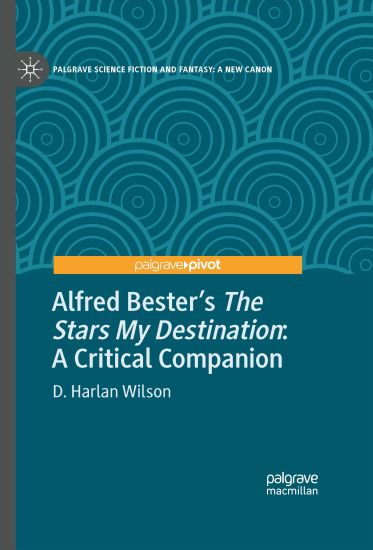
Alfred Bester’s The Stars My Destination

Alfred Bester’s The Stars My Destination

D. Harlan Wilson

Springer Nature Switzerland AG
2022
sidottu
In this comprehensive study of The Stars My Destination, D. Harlan Wilson makes a case for the continued significance of Alfred Bester’s SF masterwork, exploring its distinctive style, influences, intertextuality, affect, and innovation as well as its extensive metafictional properties. In Stars, Bester established himself as a son of the pulp-SF and high-modernist writers that preceded him and a forefather to the New Wave and cyberpunk movements that followed his lead. Wilson’s study depicts Bester as an SF insider as much as an outlier, writing in the spirit of the genre but breaking with the fixation on hard science in favor of psychological interiority, literary experimentation, and adult themes. The book combines close-readings of the novel with broader concerns about contemporary media, technoculture, and the current state of SF itself. In Wilson’s view, SF is a moribund artform, and Stars foresaw the inevitable science fictionalization of our benighted world. With scholarly lucidity and precision, Wilson shows us that Stars pointed the way to what we have (un)become.
Alfred Bester’s The Stars My Destination

Alfred Bester’s The Stars My Destination

D. Harlan Wilson

Springer Nature Switzerland AG
2023
nidottu
In this comprehensive study of The Stars My Destination, D. Harlan Wilson makes a case for the continued significance of Alfred Bester’s SF masterwork, exploring its distinctive style, influences, intertextuality, affect, and innovation as well as its extensive metafictional properties. In Stars, Bester established himself as a son of the pulp-SF and high-modernist writers that preceded him and a forefather to the New Wave and cyberpunk movements that followed his lead. Wilson’s study depicts Bester as an SF insider as much as an outlier, writing in the spirit of the genre but breaking with the fixation on hard science in favor of psychological interiority, literary experimentation, and adult themes. The book combines close-readings of the novel with broader concerns about contemporary media, technoculture, and the current state of SF itself. In Wilson’s view, SF is a moribund artform, and Stars foresaw the inevitable science fictionalization of our benighted world. With scholarly lucidity and precision, Wilson shows us that Stars pointed the way to what we have (un)become.
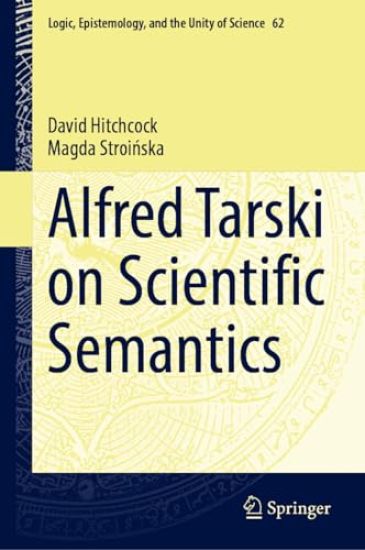
Alfred Tarski on Scientific Semantics

Alfred Tarski on Scientific Semantics

David Hitchcock; Magda Stroinska

Springer International Publishing AG
2025
sidottu
This book tells the story of the landmark event in modern logic whereby Alfred Tarski became “the man who defined truth”. Alfred Tarski’s classic monograph on truth became known internationally in 1935, when he presented its ideas in German at an international conference and collaborated in preparation of its German translation. This book provides the first English translation of the Polish version of Tarski’s conference paper, which for purposes of comparison is printed side-by-side with a new exact English translation of the German version. It offers for the first time a comprehensive and detailed analysis of the paper, and for the first time a description and analysis of the discussion of the paper immediately after its presentation. It discusses 22 substantive differences between the two versions. The book also extracts from recently discovered correspondence about the German translation of the truth monograph how it was decided to produce such a translation, the process of vetting and changing the translation, changes requested by Tarski, objections to the appeal to intuition in the Polish original (supported by a list of those appeals with their replacements in the German and English translations), other translational issues, discrepancies other than those concerning appeals to intuition between the Polish original and its German translation, the “Keystone cops” saga of Tarski’s off-prints, and monetary matters. It lists from Tarski’s journal his skiing, mountaineering and tourist trips in 1935, and describes his companions on those trips. An electronic supplement translates or summarizes the complete correspondence, with comments, and includes images from Tarski’s journal of his itineraries of his 1935 trips, with the editors' explanatory comments.
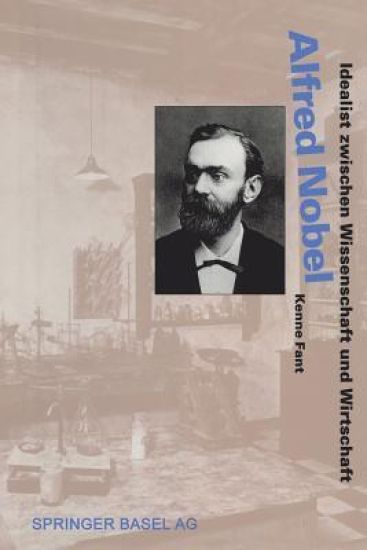
Alfred Nobel

Alfred Nobel

Kenne Fant

Springer Basel
2014
nidottu
The only full-length biography of the founder of the Nobel Prize. Few documents have had a more enduring influence on our century than Alfred Nobel's last will and testament, for these handwritten sheets established the most coveted and prestigious awards on earth. The Nobel Prizes represent glory and world stature, and are the stuff of immortality. Yet the man whose name they bear has been lost to near obscurity. As Kenne Fant shows in this fascinating biography, Alfred Nobel's life contained fierce and troubling paradoxes. He invented dynamite and revolutionized the technology of destruction, yet his dreams of a disarmed world inspired him to create the Nobel Peace Prize. One of the most powerful men of his time, Nobel was viewed by some as the model of success and entrepreneurial drive; to his workers, he was an enlightened and scrupulously honest employer in an age of heartless exploitation. Others, however, blamed him for the accidents caused by his inventions and labeled him the merchant of death. Victor Hugo called him Europe's richest vagabond because he moved about too restlessly. Harassed by imitators, sycophants, and frauds, and struggling continuously with bureaucracies and patent offices (only Thomas Edison surpassed him in the number of patents obtained), Nobel was often desperately lonely. Making extensive use of Nobel's letters and writing, Fan's portrait reveals Nobel in all his aspects--industrialist, pacifist, arms manufacturer, and poet--and does full justice to a compelling and visionary figure whose name will resonate for generations.
Alfred Döblin

Alfred Döblin

De Gruyter
2009
sidottu
Döblin’s texts, which range widely across contemporary discourses, are paradigms of the encounter between literary and scientific modernity. With their use of 'Tatsachenphantasie’, they explode conventional language, seeking a new connection with the world of objects and things. This volume reassesses and reevaluates the uniquely interdisciplinary quality of Döblin’s interdiscursive, factually-inspired poetics by offering challenging new perspectives on key works. The volume analyses not only some of Döblin’s best-known novels and stories, but also neglected works including his early medical essays, political journalism and autobiographical texts. Other topics addressed are Döblin’s engagement with German history; his relation to medical discourse; his topography of Berlin; his aestheticisation of his own biography and his relation to other major writers such as Heine, Benn, Brecht and Sebald. With contributions in English and in German by scholars from Germany and the United Kingdom, the volume presents insights into Döblin that are of value to advanced researchers and to students alike.
Alfred Andersch 'Revisited'
So spektakular W.G. Sebald die Beziehung zwischen Leben und Werk Alfred Anderschs skandalisierte, so entschieden lehnte man vor allem in Deutschland diesen Ansatz als unzulassiges Verquicken von strikt zu Trennendem ab. Deshalb bleibt bis heute offen, wie sich bei Andersch literarische Konstruktion und lebensgeschichtlicher Stoff tatsachlich zueinander verhalten. Zur Klarung dieser Frage arbeiten nun Literatur- und Geschichtswissenschaftler eng zusammen. Konnte es sein, dass gerade Autoren wie Andersch, die sich selber als non-konformistisch bezeichneten, zu "Konformisten eines biografischen Moralismus" (U. Wittstock) wurden, der es ihnen erschwerte, sich zu Zugestandnissen an das NS-Regime, und seien es vergleichsweise geringe, nachtraglich zu bekennen? Auch die Motivationslagen Sebalds werden in den hier prasentierte Beitragen angesprochen und diskutiert. Die Ergebnisse durften fur alle interessant sein, die sich mit Problemen und Verdiensten der deutschen Nachkriegsliteratur beschaftigen.
Alfred Flechtheim

Alfred Flechtheim

De Gruyter Oldenbourg
2015
isokokoinen pokkari
Alfred Flechtheim was one of the most important art dealers of his era. His galleries included works by Paul Klee and Pablo Picasso. Persecuted by the Nazi regime, Flechtheim fled abroad. The fate of much of his collection remains obscure and a matter of contention to this day. In this study, experts from various disciplines use the example of Flechtheim to address controversial questions about the restitution of plundered art.
Alfred Rahlfs (1865-1935) und die kritische Edition der Septuaginta
Mit dem Namen von Alfred Rahlfs verbindet sich vor allem seine 1935 erschienene ‚Handausgabe', die noch immer als weltweit gebrauchte Standardedition der Septuaginta gilt. Demgegenüber geriet sein umfassendes wissenschaftliches Gesamtœuvre zunehmend in Vergessenheit, während seine Biographie bis heute weitgehend im Verborgenen geblieben ist. In der vorliegenden Monographie wird zum ersten Mal der Versuch unternommen, die gesamte Vielfalt der Rezensionen, Abhandlungen und Textausgaben von Rahlfs einer detaillierten werkgeschichtlichen Analyse zu unterziehen, an die sich eine synthetische Rekonstruktion seiner textkritischen und editionsphilologischen Methodik anschließt. Auf diese Weise werden die bahnbrechenden Erkenntnisse dieses großen Göttinger Gelehrten in ihrer bis ins 21. Jahrhundert reichenden wissenschaftsgeschichtlichen Bedeutung für die Erforschung und kritische Edition des Septuaginta-Textes transparent, deren Verankerung in der Editionsphilologie des 19. Jh. ebenso wie ihre im institutionellen Rahmen des 1908 gegründeten Septuaginta-Unternehmens der Göttinger Akademie der Wissenschaften sich vollziehende Weiterentwicklung aus der erstmaligen vollständigen Darstellung seiner Biographie ersichtlich werden.
Alfred Loisy and the Making of History of Religions
This monograph studies the professionalization of History of religions as an academic discipline in late 19th and early 20th century France and Europe. Its common thread is the work of the French Modernist priest and later Professor of History of religions at the Collège de France, Alfred Loisy (1857-1940), who participated in many of the most topical debates among French and international historians of religions. Unlike his well-studied Modernist theology, Loisy’s writings on comparative religion, and his rich interactions with famous scholars like F. Cumont, M. Mauss, or J.G. Frazer, remain largely unknown. This monograph is the first to paint a comprehensive picture of his career as a historian of religions before and after his excommunication in 1908. Through a contextual analysis of publications by Loisy and contemporaries, and a large corpus of private correspondence, it illuminates the scientification of the discipline between 1890-1920, and its deep entanglement with religion, politics, and society. Particular attention is also given to the role of national and transnational scholarly networks, and the way they controlled the theoretical and institutional frameworks for studying the history of religions.