Allen County Fishing & Floating Guide Book Over 370 full 8 1/2 x 11 pages of information and maps available. Fishing information for ALL of the county's public ponds and lakes, listing types of fish for each pond or lake, average sizes, and exact locations with GPS coordinates and directions. Also included is fishing information for most of the streams and rivers including access points and public areas with road contact and crossing points and also includes fish types and average sizes. NEW NEW Now with a complete set of 12 full sized U.S.G.S. Topographical Maps for the entire county that cost from $8.00 to $15.00 each but are included on the disk for FREE. These maps are complete full sized 7.5 minute series quadrangle maps in 1:24,000 scale and can be opened with Paint or may other types of software. Contains complete information on Auglaize River*, Bresler Reservoir, Buckeye Lake, Ferguson Reservoir, Heritage Park Lake, Kendrick Woods Metropark Lake, Lima Lake, Lost Creek Reservoir, Metzger Reservoir, Miami & Erie Canal, Ottawa River*, Schoonover Park Lake, Sugar Creek, and Twin Lakes Reservoir(* are floatable or canoeable rivers)
The Corey Allen Story is a fictional Western novel about friends and a family with a small boy moving out west in the 1800s. The boy grows up, becomes a master with a six-gun, and dreams of owning his own cattle ranch someday.
This book is the history of the William (Bill) Allen and Ethel Pace families. Bill and Ethel raised their eight children in the Ozark Hills during the depression and some of their children's stories of growing up are included. It has an account of their ancestors along with some noteworthy Allens and Paces. There is a listing of surnames of all the ancestors leading to Bill and Ethel starting with when they landed in America, where they came from, the year they arrived and point of entry. There is also a listing of the descendants of Bill and Ethel as of the winter of 2019.
Edward Heron-Allen was a solicitor by profession but he was also a distinguished zoologist (F.R.S.), historian, Persian scholar and translator. This is his chronicle of the impact of the First World War on the lives of himself, his family and friends in Selsey and London, his military training with the Sussex Volunteer Regiment and officer training in Tunbridge Wells, and his experiences in the propaganda department of the War Office. He vividly recounts the privations suffered by the local Sussex community and his experiences of the destruction at the Western Front.
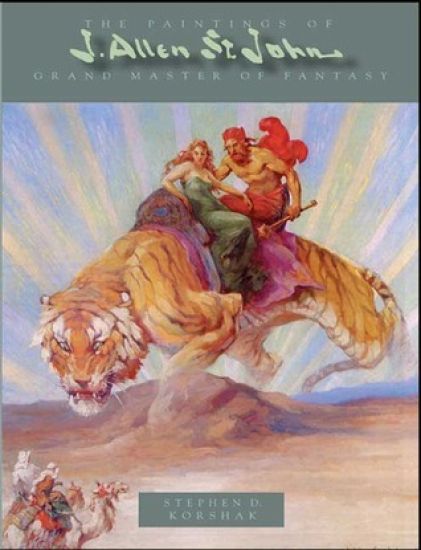
This is the greatest work of the greatest pulp artist. The masterful paintings of J. Allen St. John, the illustrator of "Tarzan", John Carter of "Mars", and many other pulp icons, inspired generations of later artists, including Frank Frazetta, Roy G. Krenkel, and Jeffrey Jones. "The Paintings of J. Allen St. John" presents the artist's full-colour fantasy and science-fiction paintings for novels and pulp magazine stories by famous authors, such as Edgar Rice Burroughs. Essays by today's top science-fiction writers, including Jack Williamson, illustrator, Vincent Di Fate and historian, Robert R. Barrett, make this book - Vanguard's second devoted to the art of St. John - essential for any fantasy collection. It includes more than 170 paintings of "Tarzan", John Carter of "Mars", and more - many shot from original paintings. It also features essays by top science fiction authors.
This, Vanguard's second volume devoted to the work of J. Allen St. John concentrates on the artist's full-color fantasy, science-fiction and adventure paintings for novels and Pulp-magazines for famous authors, Edgar Rice Burroughs, Jack Williamson, Robert E. Howard and more. St. John is the original grand master illustrator of Tarzan, John Carter of Mars (now in major motion picture development by Pixar), and others. His illustrations inspired generations of later fantastic artists including Roy G. Krenkel, Jeffrey Jones and Frank Frazetta. St. John will always be recognized as the first, and most important illustrator of Burroughs' writings and this book is produced with the full endorsement and cooperation of Edgar Rice Burroughs Inc. Also featured are essays by renowned science-fiction author Jack Williamson; Danton Burroughs, Lin Carter, and illustrators Vincent Di Fate, and Frank Frazetta. St. John began his career by studying the old master in the museums of Paris around 1880. Returning to America, his notoriety among Fine Art enthusiasts developed with recognition from the Society of American Artists and Metropolitan magazine in 1889. The artist went on to become a professor of drawing and painting at both The American Academy of Art and the Chicago Art Institute, but his greatest notoriety came as he ventured into the colorful world of Pulp magazine and adventure book illustration. For the readers of fantasy, science fiction and adventure, St. John surpassed the work of his famous contemporaries Frank Schoonover, James Montgomery Flagg, and N. C. Wyeth, and led the way for future masters, including Roy G. Krenkel, the Brothers Hildebrandt, and Frank Frazetta. INTRODUCTION BT LIN CARTER AFTERWORD BY FRANK FRAZETTA
To the abdominal surgeon a first successful Whipple procedure is what a first combat mission is to the fighter pilot: a symbol of competence -- the fruits of prolonged training. Not many surgeons managed to incorporate their names into a commonly used eponym; Allen Whipple did and so became immortalised as a household name to surgeons world-wide. Yet, little has been known and written about Whipple, the great American surgeon -- the person and his other interests. This is what this book is about: an edited version of Whipple's previously unpublished memories, which until now -- for more than forty years -- has collected dust. In these pages the retired Whipple describes the journey of his life from the very beginning in Persia, where he was born, to the very end in New Jersey where he died. He provides snap shots of himself, his family and friends, his colleagues, and the changing times in which he lived. The editors have abbreviated the original manuscript by a third and have added footnotes and illustrations. An introduction and 'end page' adds perspective to the memoirs. It has been said "God put the pancreas in the back because he did not want surgeons messing with it". Allen Whipple had the courage to mess with the pancreas and to show us how to mess with it successfully. But what kind of man was he and how did he arrive at his achievements? Find out in this book.
The Ten Allen Keys of Successful Secondary Headship is meant as a useful procedure guide for new and experienced secondary senior leaders to digest before choosing to reject adapt or follow; and a vocational beliefs and principles challenge for those senior leaders to wrestle with before developing into imperatives of their own. It makes the clear distinction between senior managers and senior leaders, is content for those not suited to leadership instead to manage, and it unapologetically asserts that the primary or secondary school Headteacher is the lead professional working in the school, the one person who can make or break the school's chances of success, and as such, who must have the temperament and capability of a leader. This book will prove useful to leaders and managers, and to those, including parents, who are interested in workable and productive pathways through the process of school and home-based education.
"The best of Brien Cole's work is the story Morning Parrot Trees. And it is superb. The concreteness and fantasy of Fisher's search for the parrot flower are perfectly poised. This is imaginative writing of a high order. The technique is to take the reader inside the action and never let go. His skill lies in knowing what matters. Perhaps his most impressive characteristic is that he does know what matters and resists wasting words on unnecessary explanations. The best of these stories are mulled over and mature, every detail lovingly placed." - Rodney Hall, Sydney Morning Herald"Brien Cole has the rare ability in a prose writer of handling flamboyant metaphors with credible panache, and rhythm avoiding the ponderous... We experience the casual interchange between fantasy and reality that distinguishes the best of Peter Carey's work - the insinuating reasonableness of the fable rather than simply gawking at the bizarre. Brien Cole's characters are impossible to place socially - blue collar fringe dwellers, bourgeois drop-outs... They communicate only haphazardly with their fellows, yet feel betrayed by nature. A fascinating collection both of characters and of stories. The most original I have encountered for some time." - Bill Turner, Imprint
Proud to be AME, young "Sassy" loves everything about her African Methodist Episcopal church. After learning how it was founded in Sassy Discovers the AME Church, now she and her friends and her brother, Franklin, are excited to research and make youth-group presentations about other famous African Americans who have made a difference. Curious about their founder's family, Sassy becomes a history detective determined to uncover the truth about his son, Peter Allen. In Sassy Uncovers Peter Allen's Secret, what amazing story will Sassy get to tell?
Proud to be AME, young "Sassy" loves everything about her African Methodist Episcopal church. After learning how it was founded in Sassy Discovers the AME Church, now she and her friends and her brother, Franklin, are excited to research and make youth-group presentations about other famous African Americans who have made a difference. Curious about their founder's family, Sassy becomes a history detective determined to uncover the truth about his son, Peter Allen. In Sassy Uncovers Peter Allen's Secret, what amazing story will Sassy get to tell?
In 1776, seventeen-year-old Jacob Allen has already lost his father who fought alongside other Americans hoping to free themselves from Britain's control of their destiny. The family can only hope that his older brother Ted is still alive and fighting somewhere. When asked, Jacob leaps at the opportunity to help deliver much needed supplies to Washington's army. What he assumes will be only a matter of days before he returns to tend the family farm turns into months of imprisonment, escape, and fighting for the cause. Jacob's common sense, his hunting skills, his patriotism lead him in and out of danger, and he learns not to take anyone at face value: some who should be patriots and friends of the cause are less reliable than those he thinks he shouldn't trust.
Nominations of Kevin Allen Hassett and Pamela Hughes Patenaude: hearing before the Committee on Banking, Housing, and Urban Affairs, United States Senate, One Hundred Fifteenth Congress, first session, on nominations of Kevin Allen Hassett, of Massachusetts, to be chairman, Council of Economic Advisers; Pamela Hughes Patenaude, of New Hampshire, to be Deputy Secretary, U.S. Housing and Urba
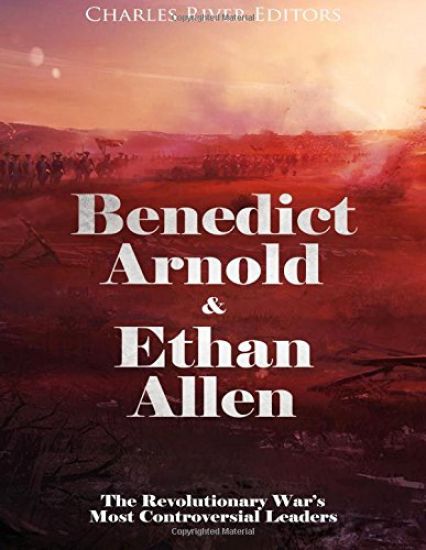
*Includes pictures *Includes contemporary accounts *Includes online resources and a bibliography for further reading The story of Ethan Allen and his Green Mountain Boys is one of those delightful tales that American schoolchildren hear about in school, but it is also one that is much more interesting to read about in older age. Unlike revered Founding Fathers such as George Washington and Thomas Jefferson, who came from Virginian plantations, Allen was a rough and tumble frontiersman more likely to fight than talk. And yet, he was in no way a dullard, but instead as well-read as many of his contemporaries and more so than the average man of his day. His family story reads almost like a cheap novel, from his heretic father to his hotheaded brothers and his shrewish first wife. By the time he was 30 years old, Allen had run up a significant list of skirmishes with law, something most of his fellow Revolutionary War heroes managed to avoid. Unlike Washington, who received his military training as a soldier in the famous British Army, Allen learned to fight in the backwoods of what is now Vermont, struggling alongside others for independence years before Jefferson wrote the Declaration of Independence. While Ethan Allen's potential treachery is still a subject for debate, that is certainly not the case for American history's most infamous traitor. On October 7, 1777, Benedict Arnold rode out against orders and led an American assault against British forces led by General John Burgoyne in one of the climactic battles and ultimate turning point of the war at Saratoga. Near the end of the most important American victory of the Revolution, Arnold's leg was shattered by a volley that also hit his horse, which fell on the leg as well. Arnold would later remark that he wish the shot had hit him in the chest. If it had, he would be remembered as one of America's greatest war heroes, and probably second only to George Washington among the generals of the Revolution. In fact, when Arnold was injured at the height of his success in October 1777, he had been the most successful leader of American forces during the war to date. Arnold had been instrumental in the seizure of Fort Ticonderoga in 1775, he constructed the first makeshift American navy to defend Lake Champlain and delay British campaigning in 1776, and he was the principal leader at Saratoga in 1777. Even his unsuccessful campaign to Quebec in the winter of 1775 is remembered primarily for the amazing logistical feats undertaken by Arnold and his men to even reach the target. History has accorded Arnold his fair share of credit for the fighting he participated in from 1775-1777. The problem is his contemporaries did not. Arnold was better on the field than any other American general in those years, but his mercurial personality rubbed some the wrong way, and other self-promoting generals, from Ethan Allen to Horatio Gates, credited themselves with success at Arnold's expense. Meanwhile, the Second Continental Congress frequently if inadvertently slighted Arnold, failing to duly promote him in a timely fashion and failing to pay him four years of back pay even as he spent his own private fortune training, equipping, and feeding his army and navy. Historian William Sterne Randall estimates Congress shorted Arnold out of the equivalent of $275,000. Today, of course, all of that has been overshadowed by Arnold's treacherous plot to turn over West Point to the British in 1780. As every American knows, Arnold's plot was uncovered, and he barely escaped to the British side, where he was just as distrusted and nearly as despised. Though he would serve as a brigadier-general for the British through the end of the war, his personal fortune and reputation were permanently tarnished. The man who could have been one of his country's greatest heroes became its most despised traitor.
*Includes pictures *Includes contemporary accounts *Includes online resources and a bibliography for further reading The story of Ethan Allen and his Green Mountain Boys is one of those delightful tales that American schoolchildren hear about in school, but it is also one that is much more interesting to read about in older age. Unlike revered Founding Fathers such as George Washington and Thomas Jefferson, who came from Virginian plantations, Allen was a rough and tumble frontiersman more likely to fight than talk. And yet, he was in no way a dullard, but instead as well-read as many of his contemporaries and more so than the average man of his day. His family story reads almost like a cheap novel, from his heretic father to his hotheaded brothers and his shrewish first wife. By the time he was 30 years old, Allen had run up a significant list of skirmishes with law, something most of his fellow Revolutionary War heroes managed to avoid. Unlike Washington, who received his military training as a soldier in the famous British Army, Allen learned to fight in the backwoods of what is now Vermont, struggling alongside others for independence years before Jefferson wrote the Declaration of Independence. While Ethan Allen's potential treachery is still a subject for debate, that is certainly not the case for American history's most infamous traitor. On October 7, 1777, Benedict Arnold rode out against orders and led an American assault against British forces led by General John Burgoyne in one of the climactic battles and ultimate turning point of the war at Saratoga. Near the end of the most important American victory of the Revolution, Arnold's leg was shattered by a volley that also hit his horse, which fell on the leg as well. Arnold would later remark that he wish the shot had hit him in the chest. If it had, he would be remembered as one of America's greatest war heroes, and probably second only to George Washington among the generals of the Revolution. In fact, when Arnold was injured at the height of his success in October 1777, he had been the most successful leader of American forces during the war to date. Arnold had been instrumental in the seizure of Fort Ticonderoga in 1775, he constructed the first makeshift American navy to defend Lake Champlain and delay British campaigning in 1776, and he was the principal leader at Saratoga in 1777. Even his unsuccessful campaign to Quebec in the winter of 1775 is remembered primarily for the amazing logistical feats undertaken by Arnold and his men to even reach the target. History has accorded Arnold his fair share of credit for the fighting he participated in from 1775-1777. The problem is his contemporaries did not. Arnold was better on the field than any other American general in those years, but his mercurial personality rubbed some the wrong way, and other self-promoting generals, from Ethan Allen to Horatio Gates, credited themselves with success at Arnold's expense. Meanwhile, the Second Continental Congress frequently if inadvertently slighted Arnold, failing to duly promote him in a timely fashion and failing to pay him four years of back pay even as he spent his own private fortune training, equipping, and feeding his army and navy. Historian William Sterne Randall estimates Congress shorted Arnold out of the equivalent of $275,000. Today, of course, all of that has been overshadowed by Arnold's treacherous plot to turn over West Point to the British in 1780. As every American knows, Arnold's plot was uncovered, and he barely escaped to the British side, where he was just as distrusted and nearly as despised. Though he would serve as a brigadier-general for the British through the end of the war, his personal fortune and reputation were permanently tarnished. The man who could have been one of his country's greatest heroes became its most despised traitor.