
Kirjahaku
Etsi kirjoja tekijän nimen, kirjan nimen tai ISBN:n perusteella.
1000 tulosta hakusanalla Amelia Atwater-Rhodes
Lost Man's Lane: A Second Episode in the Life of Amelia Butterworth
Anna Katharine Green
Createspace Independent Publishing Platform
2014
nidottu

Lost Man's Lane: A Second Episode in The Life of Amelia Butterworth
Anna Katharine Green
Createspace Independent Publishing Platform
2015
nidottu

Forever, Love: Amelia Earhart: Life after 1937
Teresa M. Shafer
Createspace Independent Publishing Platform
2015
nidottu

Lost Man's Lane: A Second Episode in the Life of Amelia Butterworth
Anna Katharine Green
Createspace Independent Publishing Platform
2015
nidottu
A thousand-mile walk to the Gulf, By John Muir, edited By William Frederic Bade: (January 22, 1871 ? March 4, 1936), and illustrated By Miss Amelia M.
William Frederic Bade; Amelia M. Watson; John Muir
Createspace Independent Publishing Platform
2016
nidottu
John Muir ( April 21, 1838 - December 24, 1914) also known as "John of the Mountains", was a Scottish-American naturalist, author, environmental philosopher and early advocate of preservation of wilderness in the United States. His letters, essays, and books telling of his adventures in nature, especially in the Sierra Nevada of California, have been read by millions. His activism helped to preserve the Yosemite Valley, Sequoia National Park and other wilderness areas. The Sierra Club, which he founded, is a prominent American conservation organization. The 211-mile (340 km) John Muir Trail, a hiking trail in the Sierra Nevada, was named in his honor.Other such places include Muir Woods National Monument, Muir Beach, John Muir College, Mount Muir, Camp Muir and Muir Glacier. In Scotland, the John Muir Way, a 130-mile-long route, was named in honor of him. In his later life, Muir devoted most of his time to the preservation of the Western forests. He petitioned the U.S. Congress for the National Park bill that was passed in 1890, establishing Yosemite National Park. The spiritual quality and enthusiasm toward nature expressed in his writings inspired readers, including presidents and congressmen, to take action to help preserve large nature areas.He is today referred to as the "Father of the National Parks"and the National Park Service has produced a short documentary about his life. Muir has been considered "an inspiration to both Scots and Americans".Muir's biographer, Steven J. Holmes, believes that Muir has become "one of the patron saints of twentieth-century American environmental activity," both political and recreational. As a result, his writings are commonly discussed in books and journals, and he is often quoted by nature photographers such as Ansel Adams."Muir has profoundly shaped the very categories through which Americans understand and envision their relationships with the natural world," writes Holmes.Muir was noted for being an ecological thinker, political spokesman, and religious prophet, whose writings became a personal guide into nature for countless individuals, making his name "almost ubiquitous" in the modern environmental consciousness. According to author William Anderson, Muir exemplified "the archetype of our oneness with the earth", 9] while biographer Donald Worster says he believed his mission was "...saving the American soul from total surrender to materialism." 10]:403 On April 21, 2013, the first ever John Muir Day was celebrated in Scotland, which marked the 175th anniversary of his birth, paying homage to the conservationist........... William Frederic Bade (January 22, 1871 - March 4, 1936), perhaps best known as the literary executor and biographer of John Muir, was a versatile scholar of wide interests. As an archaeologist, he led the excavation of Tell en-Nasbeh in Palestine, now believed on the basis of his work to be the biblical city of Mizpah in Benjamin. He was also an ordained Moravian minister, a professor of ancient languages, a theologian and bible scholar, a mountaineer, a conservationist and a naturalist. Born and raised in Minnesota, he studied at Moravian College and its seminary as well as other universities. He served on the faculties of Moravian Theological Seminary and then the Pacific School of Religion......... Amelia Montague Watson (1856-1934) illustrator

The Scandalous Lives of Carolina Belles Marie Boozer and Amelia Feaster: Flirting with the Enemy
Tom Elmore
History Press Library Editions
2014
sidottu
In Civil War Columbia, South Carolina, no women were more gossiped about than Amelia Feaster and her teenage daughter, Marie Boozer. The Philadelphia-born Feaster, a widow three times before her thirty-first birthday, aided the Union war effort from her home, while Marie became infamous for her beauty and vanity. For over a century, scandalous tales of these women have been published across the nation, linking them to rich and powerful men both at home and abroad. Historian Tom Elmore sorts through the many myths and legends--involving such things as adultery, decapitation and the Russian tsar's jewels--about Feaster and Boozer to present the first fact-based biography of these two nineteenth-century tabloid queens.

We spend our lives telling people who we are. When we're gone, we're who we really were.Health issues are finally forcing Myrtle out of her house. In her nineties, she's foul-mouthed and bigoted to everyone, including Season, her latest fresh-out-of-school caregiver. The truths the two women learn from each other leave both forever changed.
The Magic History Book and the Secret Flier: Starring Amelia Earhart!
Stephanie Peters
Stone Arch Books
2024
sidottu
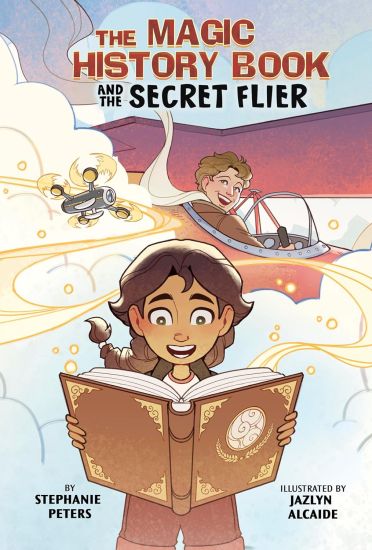
The Magic History Book and the Secret Flier: Starring Amelia Earhart!
Stephanie Peters
Stone Arch Books
2024
nidottu

Boom! Comics by Amelia: A What Happens Next Comic Book for Budding Illustrators and Story Tellers
Bokkaku Dojinshi
Createspace Independent Publishing Platform
2018
nidottu
Grab This Deal For The Comics Artist In Your Life For Less Than $12See that girl always doodling and dreaming up stories and plots? She's gonna LOVE the What Happens Next Comic Book For Budding Artists edition, created especially for young artists between 9 and 14 years of age.Bokkaku Dojinshi has created this book as a 6 by 9 inch, perfect pocket book form. Plenty of different templates to explore as well as loads of room to keep track of plot ideas.There is even space for special expression studies of the main characters so the budding artist hits the right emotion in her images every single time.This book is perfect for: mangagraphic novelsSunday funniesanimefan fictionParents and teachers love What Happens Next Comics series for these reasons: helps speech developmentincreases literacydevelops a sense of sequencecreates confidencedevelops an appreciation for artboots creativityOnce you get this book, notice how handy it is - perfect pocket book size means no bulky bags on summer trips or lazy afternoons under a willow tree. All you need is your pencil and ink pen Can't wait to see what you make of your And then... comic book
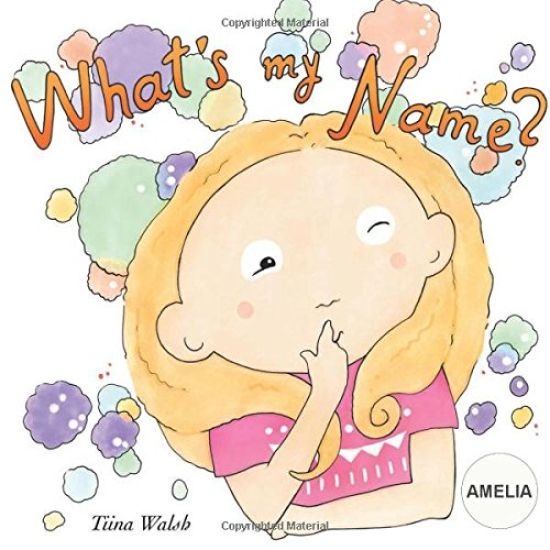
A personalised storybook for girls called AMELIA. The story is based on the letters of the child's own name. All books are different from one another. The girl wakes up but can't remember her name. Magic Mouse knows how to solve the problem. They go on a wonderful adventure in the Magic Bus Translated and adapted by the author from the top-selling Finnish language children's namebook series "Tytt /Poika, joka unohti nimens ". The beautiful hand-drawn pictures will delight both the young and the young-at-heart Looking for a namebook "What's my name?" but couldn't find a book for the name you are looking for? Please don't hesitate to contact me with your name request -Tiina Walsh Author fb.me/whatsmynamestorybooks for more details about the storybooks

Misterio En Egipto / Mystery in Egypt: Los Misterios de Amelia Peabody / The Amelia Peabody Mysteries Volume 1
Elizabeth Peters
Editorial Alma
2025
nidottu
2. Victoria Georgiana Charlotte Eugenie of Glen Garry and Rannoch -- Georgie to friends -- is the thirty-fourth in the line of succession to the throne of England, a true lady educated in select Swiss boarding schools, from a noble family and... in ruin. At the age of twenty-one, fleeing from a possible arrangement with a marriageable prince, she decides to leave the family castle in Scotland and move to London to forge her destiny. But it's not going to be that easy. As her sister-in-law always tells him: "a member of the royal family, no matter how secondary, has the duty not to disappoint his own". Georgie will not hesitate to honor her lineage, even if it means hiding her identity to provide for her sustenance, spy on the Prince of Wales on the orders of the Queen or clarify how a dead man ended up in her bathtub. Amelia Peabody no es lo que se dice una dama victoriana al uso. Decidida y aventurera, al morir su padre y heredar una gran fortuna, decide embarcarse en un viaje por Europa, cuya primera escala es Roma. All rescata a Evelyn Barton-Forbes, la nieta de un conde ca da en desgracia, y se la lleva consigo a Egipto. Juntas explorar n el pa s de los faraones y se incorporar n
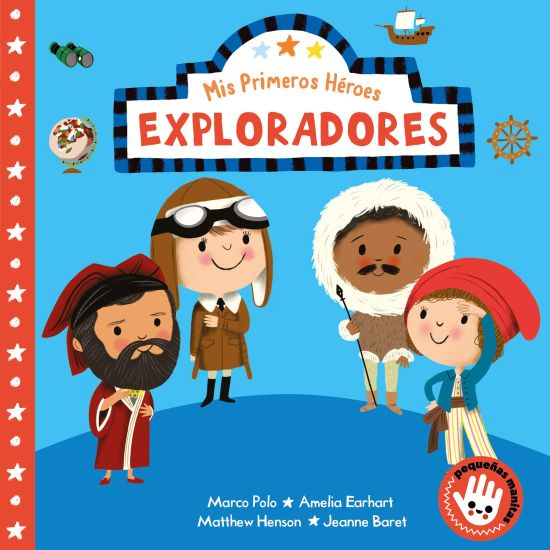
MIS Primeros Héroes: Exploradores / My First Heroes: Explorers: Marco Polo - Amelia Earhart - Mathhew Henson - Jeanne Baret
Nila Aye
Beascoa
2021
sidottu
En este libro de cart n con pesta as m viles, concebido especialmente para beb s a partir de 10 meses, los peques de la casa conocer n a cuatro importantes exploradores que reorrieron nuestro mundo.En este t tulo de la colecci n Mis primeros h roes, los m s peque os descubrir n algunos de los exploradores m s importantes de la historia. Descubrir n las vidas del mercader veneciano Marco Polo, la bot nica francesa Jeanne Baret, el explorador estadounidense Matthew Henson y la avidora estadounidense Amelia Earhart. Empujando y tirando de las pesta as, los peque os lectores podr n deslizar las escenas de este libro para descubrir las inspiradoras vidas y el incre ble trabajo de estos cuatro de los m s importantes exploradores que recorrieron nuestro mundo. Los libros de cart n con el sello «Peque as manitas est n pensados espec ficamente para beb s a partir de 10 meses. Son la herramienta ideal para acercar a los beb s al mundo de los libros, as como para empezar a trabajar con ellos los primeros conceptos de aprendizaje temprano. Adem s, su formato est adaptado espec ficamente sus necesidades: tienen el tama o adecuado para sus manitas y est n impresos en materiales resistentes a su infinita energ a. ENGLISH DESCRIPTION In this board book with movable tabs, which are especially made for babies from 10 months and up, little ones will meet four important explorers who reoriented and shifted our world. In this title of the My First Heroes collection, the little ones will discover and get to know some of the most important explorers in history. They will discover the lives of Venetian merchant Marco Polo, French botanist Jeanne Baret, American explorer Matthew Henson, and American aviator Amelia Earhart. By pushing and pulling on the tabs, little readers can slide through the scenes in this book to discover the inspiring lives and incredible work of these four important explorers who traveled our world. Board books with the "Little Hands" seal on them are specifically designed for babies 10 months and older. They are the ideal tool to bring babies closer to the magical world of books, and also to start working with them on the concept of early learning. In addition, this format is designed specifically for their needs: they are the right size for their little hands and they are printed on materials resistant to their endless energy.

Under en autografsignering kliver en främmande man fram ur publikvimlet och i det närmaste avrättar internet-fenomenet Amelia Simonsson med tre skott. Alldeles innan har han frågat henne om hon vill bli hans flickvän. Men det här är inte enbart historien om hur vi hamnade där. Du måste älska livet, Amelia är en berättelse om att växa upp med ADHD/dyslexi (och med andra ord vara en väldigt jobbig människa), om att finna tryggheten i musiken och internet, om att driva värdshus på Gotland och om den årliga Medeltidsveckan i Rosornas och Ruinernas stad. Det är en berättelse om den sortens kärlek eller sorg som vi aldrig riktigt kan förbereda oss inför. Sedan får vi förstås inte glömma giljotinen i familjen Simonssons källare. Den sista kvarlevan från en flera hundra år gammal familjetragedi. Likväl ett stort mysterium. För vem ställde den där, egentligen?

Lost Man'S Lane A Second Episode In The Life Of Amelia Butterworth
Green Anna Katharine
Double 9 Books
2023
nidottu
In 1898, Anna Katharine Green wrote the timeless detective tale "Lost Man's Lane". This narrative centers on the death of a rich man by the name of Mr. Leroy, whose life is taken while traveling down the desolate backroad famously referred to as "Lost Man's Lane". Leading the investigation is the sharp and intuitive Mr. Gryce, who unravels a complex network of deceit and hidden truths. Blamed for the crime were both the Leroy clan and the area medical expert who had been aiding the victim. However, the inquiry quickly shifted to Rosamond Trent, a lady who had been promised to Leroy's son but was then ditched for someone richer. But, how Rosamand plays a role in Leroy's murder? Who killed Leroy? This tale explores concepts of affection, envy, and infidelity, all while flaunting the author's knack for developing elaborate storylines that hold readers' attention until the final page.

Lost Man's Lane: A Second Episode in the Life of Amelia Butterworth (Edition1st)
Anna Katharine Green
Pharos Books Private Limited
2023
nidottu
""Lost Man's Lane"" is a compelling mystery novel written by Anna Katharine Green, published in 1898. Set in a small New England village, the story revolves around the mysterious disappearance of a young woman named Agnes Blakely. She vanishes one evening while walking down a secluded lane known locally as Lost Man's Lane. The lane itself is shrouded in eerie tales and whispered legends, adding to the suspense of the novel. Its winding path through dense woods and overgrown thickets becomes a focal point for the investigation led by detective Ebenezer Gryce. As Gryce delves deeper into the case, he uncovers dark secrets and hidden motives within the close-knit community. The atmospheric descriptions of Lost Man's Lane evoke a sense of foreboding and mystery, mirroring the uncertainty surrounding Agnes Blakely's fate. Green's skillful prose and intricate plotting keep readers engaged as they follow Gryce's meticulous investigation, filled with twists and unexpected revelations. Ultimately, ""Lost Man's Lane"" is not just a tale of a missing person, but also a study of human nature and the complexities of rural life in late 19th-century America. It remains a classic example of Anna Katharine Green's mastery of the detective genre and her ability to craft suspenseful narratives that stand the test of time.

Lost Man's Lane: A Second Episode in the Life of Amelia Butterworth (Edition2024)
Anna Katharine Green
Neelkanth Prakashan
2024
nidottu

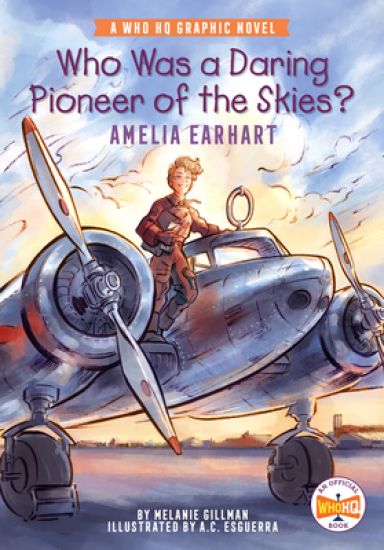
Who Was a Daring Pioneer of the Skies?: Amelia Earhart
Melanie Gillman
Penguin Putnam Inc
2022
pokkari
Presenting Who HQ Graphic Novels: an exciting new addition to the #1 New York Times Best-Selling Who Was? series! Explore the story of Amelia Earhart, as she embarks on her second and final journey around the globe. A story of determination, heart, and courage, this graphic novel invites readers to immerse themselves into the daring grit of the aviation pioneer -- brought to life by gripping narrative and vivid full-colour illustrations that fly off the page.