Kirjojen hintavertailu. Mukana 11 342 296 kirjaa ja 12 kauppaa.

Kirjahaku

Etsi kirjoja tekijän nimen, kirjan nimen tai ISBN:n perusteella.

1000 tulosta hakusanalla Annette Smith

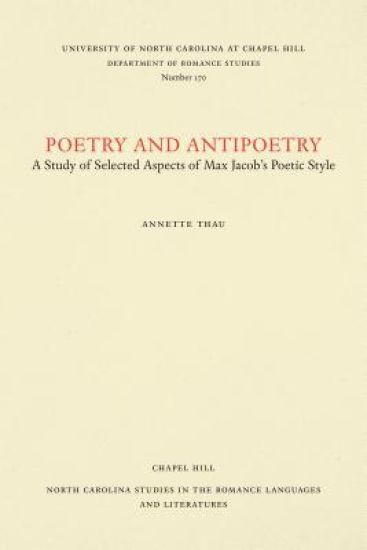
Poetry and Antipoetry

Poetry and Antipoetry

Annette Thau

The University of North Carolina Press
1976
nidottu
Jacob's reputation has traditionally been that of a verbal acrobat. This book is an analysis of the major stylistic devices of his poems and prose poems: puns, parody, and imagery. The author shows how the poet uses devices to communicate with his reader. This beautifully unified study reveals the richness and complexity of Jacob's lyrical style and considerably changes the traditional concept of his poetry.
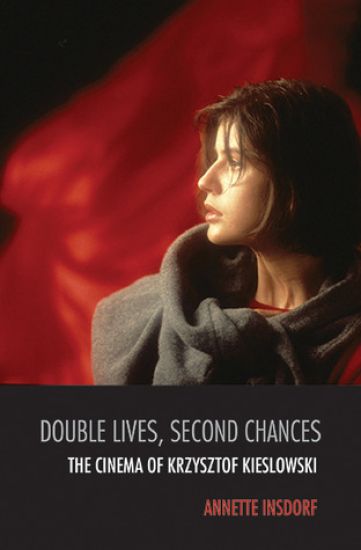
Double Lives, Second Chances

Double Lives, Second Chances

Annette Insdorf

Northwestern University Press
2013
nidottu
Krzysztof Kieslowski (1941 – 1996) is widely recognised as one of the greatest filmmakers of the latter half of the twentieth century. Beginning as a documentarian who took on controversial subjects in communist Poland in the 1960’s and 70’s, Kieslowski gained an international reputation with his later narrative films The Double Life of Veronique and the Three Colours trilogy (Blue, White, and Red). He also made the Decalogue, a celebrated series for Polish television. The first comprehensive analysis of Kieslowski’s entire body of work to be published in English, Annette Insdorf’s book still stands as the best introduction to a uniquely gifted artist.
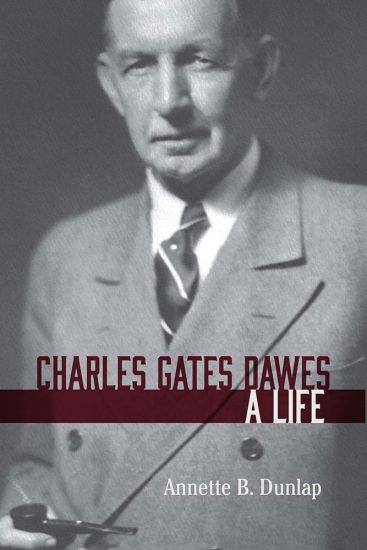
Charles Gates Dawes

Charles Gates Dawes

Annette B. Dunlap

Northwestern University Press
2016
nidottu
Charles Gates Dawes: A Life is the first comprehensive biography of an American in whose fascinating story contemporary readers can follow the struggles and triumphs of early twentieth-century America and Europe.Dawes is most known today as vice president of the United States under Calvin Coolidge, but he also distinguished himself and his hometown of Evanston, Illinois, on the world stage with the 1925 Nobel Peace Prize. This engrossing biography traces how, when the punitive armistice that ended the First World War resulted in a disabled, restive Germany, Dawes’s diplomatic legerdemain averted war through a renegotiation of Germany’s debt repayments.Dawes’s diplomatic and political achievements, however, were only the illustrious capstones to a multifaceted career that included military service, law, finance, and business on the local, state, national, and global stages. In every arena of his life, he combined the social graces of the Gilded Age with the spirit of service of the Progressive Era.Despite his life of disciplined service, Dawes was an ebullient and irrepressible figure. Dawes’s salty language was often colorful fodder for tabloid and magazine writers of his era. In this captivating biography, Annette B. Dunlap recounts the story of an original American who enlightened and enlivened his world.
Charles Gates Dawes

Charles Gates Dawes

Annette B. Dunlap

Northwestern University Press
2016
sidottu
Charles Gates Dawes: A Life is the first comprehensive biography of an American in whose fascinating story contemporary readers can follow the struggles and triumphs of early twentieth-century America and Europe.Dawes is most known today as vice president of the United States under Calvin Coolidge, but he also distinguished himself and his hometown of Evanston, Illinois, on the world stage with the 1925 Nobel Peace Prize. This engrossing biography traces how, when the punitive armistice that ended the First World War resulted in a disabled, restive Germany, Dawes’s diplomatic legerdemain averted war through a renegotiation of Germany’s debt repayments.Dawes’s diplomatic and political achievements, however, were only the illustrious capstones to a multifaceted career that included military service, law, finance, and business on the local, state, national, and global stages. In every arena of his life, he combined the social graces of the Gilded Age with the spirit of service of the Progressive Era.Despite his life of disciplined service, Dawes was an ebullient and irrepressible figure. Dawes’s salty language was often colorful fodder for tabloid and magazine writers of his era. In this captivating biography, Annette B. Dunlap recounts the story of an original American who enlightened and enlivened his world.
Intimations

Intimations

Annette Insdorf

Northwestern University Press
2017
nidottu
In this first study in English of a master of Polish cinema, Annette Insdorf explores Has's thirteen feature films with the same deep insight of her groundbreaking book on Krzysztof Kieslowski, Double Lives, Second Chances (Northwestern, 2013).Wojciech Has's films are still less known outside of his native Poland than those of his countrymen Andrzej Wajda, Krzysztof Zanussi, and Krzysztof Kieslowski. Yet thanks to his singular vision, many critics rank Has among the masters of world cinema. Some of his movies have developed a cult following, notably The Saragossa Manuscript, the favorite film of the Grateful Dead's Jerry Garcia, which has been praised by directors Luis Buñuel, Francis Ford Coppola, and Roman Polanski.Has's films reveal the inner lives of his characters, which he portrays by giving free rein to his own wildly creative imagination. In addition to The Saragossa Manuscript, his diverse and innovative filmography includes The Hourglass Sanatorium, a vividly surreal depiction of Hassidic life in Poland between the world wars; The Noose, a stark poetic drama about a lucid alcoholic who knows he will not be able to kick the habit; and How to Be Loved, in which an actress remembers her wartime past.Has made disparate but formally striking movies infused with European strains of existentialism and the avant-garde. With many of his films being restored and rereleased, new generations of film lovers are discovering his artistic genius. Intimations: The Cinema of Wojciech Has is the definitive guide in English to his work.
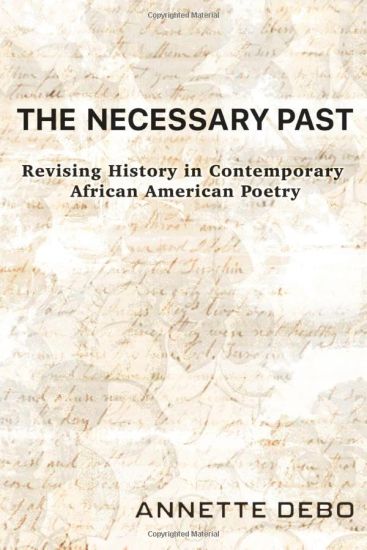
The Necessary Past

The Necessary Past

Annette Debo

NORTHWESTERN UNIVERSITY PRESS
2024
nidottu
Uncovering how poetry refigures Black history to imagine a more just present and future “Poets are lyric historians,” proclaimed Langston Hughes. Today, historical poetry offers a lyric history necessary to our current moment—poetry with the power to correct the past, realign the present, and create a more hopeful, or even hoped-for, future. The Necessary Past: Revising History in Contemporary African American Poetry focuses on six of today’s most celebrated poets: Elizabeth Alexander, Natasha Trethewey, A. Van Jordan, Kevin Young, Frank X Walker, and Camille T. Dungy. Their works reimagine the interiority of Black historical figures like the so-called Venus Hottentot Sara Baartman and the would-be spelling champion MacNolia Cox, the African American Native Guard who fought in the Civil War and the unknown victims of domestic violence, Jack Johnson and Jean-Michel Basquiat, Medgar Evers and those freed and enslaved in the early nineteenth century. These poets shift the power dynamic in revising our shared history, reconfiguring who speaks and whose stories are told, and writing a past that frees readers to change the present and envision a more just future.
The Necessary Past

The Necessary Past

Annette Debo

NORTHWESTERN UNIVERSITY PRESS
2024
sidottu
Uncovering how poetry refigures Black history to imagine a more just present and future “Poets are lyric historians,” proclaimed Langston Hughes. Today, historical poetry offers a lyric history necessary to our current moment—poetry with the power to correct the past, realign the present, and create a more hopeful, or even hoped-for, future. The Necessary Past: Revising History in Contemporary African American Poetry focuses on six of today’s most celebrated poets: Elizabeth Alexander, Natasha Trethewey, A. Van Jordan, Kevin Young, Frank X Walker, and Camille T. Dungy. Their works reimagine the interiority of Black historical figures like the so-called Venus Hottentot Sara Baartman and the would-be spelling champion MacNolia Cox, the African American Native Guard who fought in the Civil War and the unknown victims of domestic violence, Jack Johnson and Jean-Michel Basquiat, Medgar Evers and those freed and enslaved in the early nineteenth century. These poets shift the power dynamic in revising our shared history, reconfiguring who speaks and whose stories are told, and writing a past that frees readers to change the present and envision a more just future.
From the Greek Mimes to Marcel Marceau and Beyond

From the Greek Mimes to Marcel Marceau and Beyond

Annette Bercut Lust

Scarecrow Press
2002
nidottu
Annette Bercut Lust has spent a lifetime developing the knowledge to produce this definitive work on mime. One of the few studies covering the historical flow of mime from its beginnings to postmodern movement theatre, this book explores the evolution of mime and pantomime from the Greeks to the twentieth century, depicting the role of mime in dance, clowning, the cinema, and verbal theatre throughout the centuries. It is also an in-depth study of twentieth-century mime masters, including Jacques Lecoq, Etienne Decroux, Jean-Louis Barrault, and Marcel Marceau. In addition to defining and tracing the history of mime, Lust documents present-day training programs in North America and Europe, providing contact addresses and information on mime festivals and centers. A filmography listing mime and mime-related films and an extensive bibliography contribute to the usefulness of the book. There is also a chart tracing the origins of mime to the present and a chart demonstrating exponents of the various styles and schools of mime. With over 60 illustrations, this worldwide study is indispensable for the student, teacher, or fan of mime.
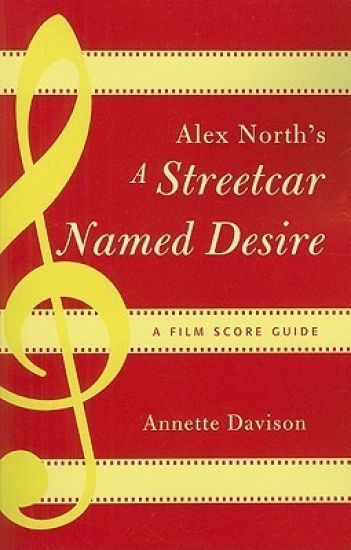
Alex North's A Streetcar Named Desire

Alex North's A Streetcar Named Desire

Annette Davison

Scarecrow Press
2009
nidottu
Alex North's A Streetcar Named Desire: A Film Score Guide examines the acclaimed score for Elia Kazan's much-celebrated adaptation of Tennessee Williams's A Streetcar Named Desire (1951). Situating the score within the context of Alex North's life and career, the book begins with an overview of North's musical training and his works up to his first scores for Hollywood in 1950, demonstrating how his experience in writing music for stage, concert hall, dance, and documentaries each contributed to the skills necessary for film composition. Annette Davison uses examples from North's film career to identify and describe his scoring techniques. Using manuscript and archival research, Davison explores both the play's debut stage production and the film's production process, with a particular emphasis on the genesis and development of the music heard in the film. Considering the influence and changes imposed by the film's studio (Warner Bros.), the Production Code Administration, and the Catholic Legion of Decency on the film, Davison explores the impact of these changes on the interpretation of this finely balanced drama, comparing the different versions of the film and its scores. The book concludes with a full and detailed analysis of the jazz-inflected score, taking a holistic approach and using both musicology and film studies to investigate the ways it gives a dynamic shape to the film as a whole.
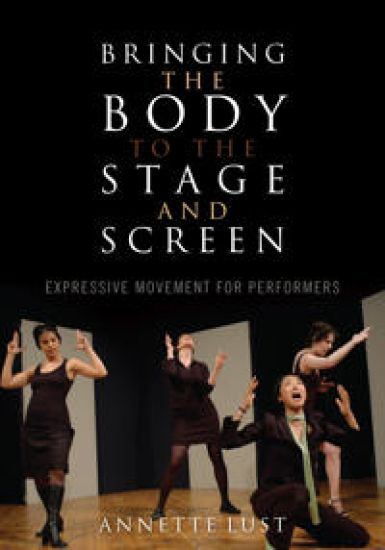
Bringing the Body to the Stage and Screen

Bringing the Body to the Stage and Screen

Annette Lust

Scarecrow Press
2011
sidottu
As stage and screen artists explore new means to enhance their craft, a new wave of interest in expressive movement and physical improvisation has developed. And in order to bring authenticity and believability to a character, it has become increasingly vital for actors to be aware of movement and physical acting. Stage and screen artists must now call upon physical presence, movement on stage, non-verbal interactions, and gestures to fully convey themselves. In Bringing the Body to the Stage and Screen, Annette Lust provides stage and screen artists with a program of physical and related expressive exercises that can empower their art with more creativity. In this book, Lust provides a general introduction to movement, including definitions and differences between movement on the stage and screen, how to conduct a class or learn on one's own, and choosing a movement style. Throughout the book and in the appendixes, Lust incorporates learning programs that cover the use of basic physical and expressive exercises for the entire body. In addition, she provides original solo and group pantomimes; improvisational exercises; examples of plays, fiction, poetry, and songs that may be interpreted with movement; a list of training centers in America and Europe; and an extensive bibliography and videography. With 15 interviews and essays by prominent stage and screen actors, mimes, clowns, dancers, and puppeteers who describe the importance of movement in their art and illustrated with dozens of photos of renowned world companies and artists, Bringing the Body to the Stage and Screen will be a valuable resource for theater teachers and students, as well as anyone engaged in the performing arts.
Bringing the Body to the Stage and Screen

Bringing the Body to the Stage and Screen

Annette Lust

Scarecrow Press
2011
nidottu
As stage and screen artists explore new means to enhance their craft, a new wave of interest in expressive movement and physical improvisation has developed. And in order to bring authenticity and believability to a character, it has become increasingly vital for actors to be aware of movement and physical acting. Stage and screen artists must now call upon physical presence, movement on stage, non-verbal interactions, and gestures to fully convey themselves. In Bringing the Body to the Stage and Screen, Annette Lust provides stage and screen artists with a program of physical and related expressive exercises that can empower their art with more creativity. In this book, Lust provides a general introduction to movement, including definitions and differences between movement on the stage and screen, how to conduct a class or learn on one's own, and choosing a movement style. Throughout the book and in the appendixes, Lust incorporates learning programs that cover the use of basic physical and expressive exercises for the entire body. In addition, she provides original solo and group pantomimes; improvisational exercises; examples of plays, fiction, poetry, and songs that may be interpreted with movement; a list of training centers in America and Europe; and an extensive bibliography and videography. With 15 interviews and essays by prominent stage and screen actors, mimes, clowns, dancers, and puppeteers who describe the importance of movement in their art and illustrated with dozens of photos of renowned world companies and artists, Bringing the Body to the Stage and Screen will be a valuable resource for theater teachers and students, as well as anyone engaged in the performing arts.
Commons of the Mind

Commons of the Mind

Annette Baier

Open Court Publishing Co ,U.S.
1999
pokkari
Since Descartes, it has seemed natural for philosophers to take reason to be complete in each individual reasoner. Locke wrote, "God, that hath given the World to Men in common, hath also given them Reason..."In The Commons of the Mind, Annette C. Baier asks whether reason and other aspects of mind are possessed "in common" in the strong Lockean sense. She looks at the relation between two views of mind: on the one hand, the idea that mind is something possessed by each individual, independently of membership in a culture and a society, and on the other hand, the idea that mental activities and states are essentially social. She focuses her examination on three activities we take to be quintessentially mental ones, reasoning, intending, and moral reflection, in each case emphasizing the interdependence of minds, and the role of social practices in setting the norms governing these mental activities.Professor Baier defends the view that both our reasoning and our intention-formation require a commons of the mind, that is, the background existence of shared reasonings, intentions, and actions. However, she concludes that moral reflection, as a social capacity, is still in its infancy and that a commons of the mind is by no means assured with regard to morality.This volume is based on Professor Baier's Cams Lectures delivered at the meeting of the Eastern Division of the American Philosophical Association in December 1995.Excerpt from The Commons of the Mind: "How are we to decide whether to take reason to be an essentially private thing that can, however, turn on a public display when it chooses to do so, or, like conversing, to be an essentially social skill, which can, however, be retained a while through periods of solitary confinement?"
Journeys Through Ethnography

Journeys Through Ethnography

Annette Lareau; Jeffrey Shultz

Westview Press Inc
1996
nidottu
Learning how to carry out research projects using participant observation and in-depth interviews has become a priority for scholars in a wide range of fields, including anthropology, sociology, education, social work, nursing, and psychology. This book, a collection of well-known fieldwork accounts covering the qualitative research process, aims to help undergraduate students, graduate students, and scholars in the social sciences understand common problems in the research process and learn strategies for resolving them.Unlike methods books that treat research issues in a superficial or prescriptive fashion, this book realistically portrays, through researchers own accounts, the process of discovery and resolution of conflicts involved in fieldwork. It also shows the costs involved in the choice of solutions. Students and seasoned scholars alike will find the collection a source of knowledge, inspiration, and comfort concerning the complexity of conducting fieldwork.
Thinking About Dementia

Thinking About Dementia

Annette Leibing; Lawrence Cohen

Rutgers University Press
2006
nidottu
Bringing together essays by nineteen respected scholars, this volume approaches dementia from a variety of angles, exploring its historical, psychological, and philosophical implications. The authors employ a cross-cultural perspective that is based on ethnographic fieldwork and focuses on questions of age, mind, voice, self, loss, temporality, memory, and affect.Taken together, the essays make four important and interrelated contributions to our understanding of the mental status of the elderly. First, cross-cultural data show that the aging process, while biologically influenced, is also culturally constructed. Second, ethnographic reports raise questions about the diagnostic criteria used for defining the elderly as demented. Third, case studies show how a diagnosis affects a patient's treatment in both clinical and familial settings. Finally, the collection highlights the gap that separates current biological understandings of aging from its cultural meanings.As Alzheimer's disease and other forms of dementia continue to command an ever-increasing amount of attention in medicine and psychology, this book will be essential reading for anthropologists, social scientists, and health care professionals.
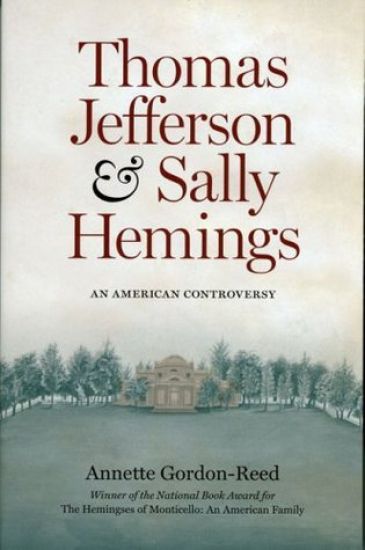
Thomas Jefferson and Sally Hemmings

Thomas Jefferson and Sally Hemmings

Annette Gordon-Reed

University of Virginia Press
1998
nidottu
When Annette Gordon-Reed's groundbreaking study was first published, rumors of Thomas Jefferson's sexual involvement with his slave Sally Hemings had circulated for two centuries. Among all aspects of Jefferson's renowned life, it was perhaps the most hotly contested topic. The publication of Thomas Jefferson and Sally Hemings intensified this debate by identifying glaring inconsistencies in many noted scholars' evaluations of the existing evidence. In this study, Gordon-Reed assembles a fascinating and convincing argument: not that the alleged thirty-eight-year liaison necessarily took place but rather that the evidence for its taking place has been denied a fair hearing.Friends of Jefferson sought to debunk the Hemings story as early as 1800, and most subsequent historians and biographers followed suit, finding the affair unthinkable based upon their view of Jefferson's life, character, and beliefs. Gordon-Reed responds to these critics by pointing out numerous errors and prejudices in their writings, ranging from inaccurate citations, to impossible time lines, to virtual exclusions of evidence-especially evidence concerning the Hemings family. She demonstrates how these scholars may have been misguided by their own biases and may even have tailored evidence to serve and preserve their opinions of Jefferson. This updated edition of the book also includes an afterword in which the author comments on the DNA study that provided further evidence of a Jefferson and Hemings liaison.Possessing both a layperson's unfettered curiosity and a lawyer's logical mind, Annette Gordon-Reed writes with a style and compassion that are irresistible. Each chapter revolves around a key figure in the Hemings drama, and the resulting portraits are engrossing and very personal. Gordon-Reed also brings a keen intuitive sense of the psychological complexities of human relationships-relationships that, in the real world, often develop regardless of status or race. The most compelling element of all, however, is her extensive and careful research, which often allows the evidence to speak for itself. Thomas Jefferson and Sally Hemings: An American Controversy is the definitive look at a centuries-old question that should fascinate general readers and historians alike.
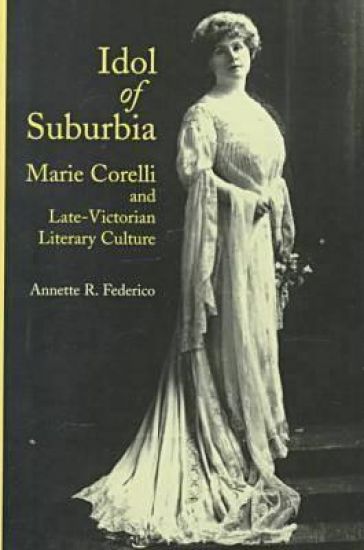
Idol of Suburbia

Idol of Suburbia

Annette Federico

University of Virginia Press
2000
sidottu
Marie Corelli was the most popular novelist of the turn of the 20th century, outselling Hall Caine, Mrs Humphrey Ward, H.G. Wells and Arthur Conan Doyle by the thousands. For 30 years she was ridiculed by reviewers and the literary elite, but these opinions had no impact on her mass appeal. In 1895, she broke all previous publishing records, and by 1906 a Corelli novel sold 100,000 copies a year. This text seeks to return Corelli to conversations about the late-Victorian and Edwardian literary world. As Annette R. Federico points out, Corelli's participation in the cultural life of her time was highly creative, combative and contradictory. Her ongoing war with highbrow literary critics and her management of her own image illuminate continuing debates about literary value, class hegemony and gender politics at the fin de siecle. In examining Corelli's celebrity and her protean literary talents in the context of a changing book market, Federico reveals the profusion of the late-Victorian literary imagination. She analyzes Corelli's participation in literary decadence, feminism, and New Woman fiction, and she discusses how seriously we should take her aesthetic and its literary influence. Federico asks why heterosexual love seems pathological in so many of Corelli's novels and assesses the validity of biographical and psychoanalytic explanations of her celibacy and her lifelong companionship with another woman.
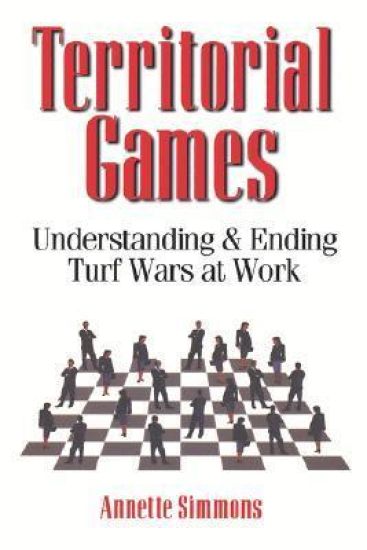
Territorial Games

Territorial Games

Annette Simmons

Amacom
2018
nidottu
This book analyzes 10 insidious and instinctual acts of gamesmanship, and supplies positive strategies for combating territorial behavior.Power, position, property. That's been the name of the game throughout human history. And the urge to gain new territory -- or keep what's already been acquired -- certainly shows up in our daily work lives. The workplace, in fact, is ablaze with battles over information, relationships, and authority -- and everyone is fighting for psychological survival.Written from the perspective of a behavioral scientist and drawn from in-depth interviews with corporate managers, Territorial Games explains how to:understand the roots of territorialityrecognize the signs and symptoms of territorial gamesfocus on organizational goals rather than individual turf warspromote teamwork throughout an organizationapply counterstrategies to change destructive behaviorCamouflage, occupation, shunning, and intimidation.…these turf wars are some of the most unproductive and morale-squashing activities that employees engage in. Learn how to understand and end turf wars at work with help from this insightful guide.
A Safe Place for Dangerous Truths
No more "checking for feet." This illuminating guide gets people to tell the truth at the meeting--not in the bathroom afterwards.Almost everybody lies. In one recent survey, 93% of people admitted to lying regularly at work! Why? Because it's safer than telling the truth. Sadly, organizations cannot succeed in this poisonous world of half-truths, strategic omissions, and doctored information.A Safe Place for Dangerous Truths shows how the formal process of "dialogue" can create a safe place to tell the truth.In a lively discussion, author Annette Simmons shows managers how to use this technique to:encourage truth-telling by reducing fearprompting self-examination, and opening mindsbuild trust where suspicion and cynicism held swayinspire individuals to think and learn as a grouphelp groups talk through tough issues and move to collaborative actionTo function optimally, businesses must create an environment where people feel free to tell the truth, no matter how disturbing. Only then can organizations unleash the responsiveness, creativity, and enthusiasm necessary to achieve their goals.
The Hildegard of Bingen Pilgrimage Book

The Hildegard of Bingen Pilgrimage Book

Annette Esser

Liturgical Press
2022
pokkari
2023 Catholic Media Association First Place Award, Pilgrimages/Catholic Travel The Hildegard of Bingen Pilgrimage Way is a new path that invites pilgrims from all over the world to walk along the historic sites where the saint lived in the twelfth century. The route leads pilgrims on 140 kilometers (87 miles) from Idar-Oberstein via Disibodenberg and Sponheim to St. Hildegard’s Abbey in Eibingen on the Rhine. It is a path through a fascinating Central European landscape, into Hildegard’s visionary work, into one’s own spirituality, and into God.The Hildegard of Bingen Pilgrimage Book directs you along the way, offering short descriptions of each of the ten stages. It also provides profound information about Hildegard’s life and her theological, musical, medical, and botanical works. Biblical texts and meditative poems are included to offer you additional inspiration, furthering the potential for your own spiritual discoveries in the company of Hildegard.
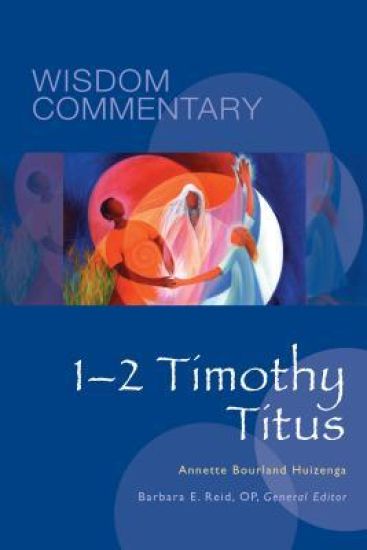
1–2 Timothy, Titus

1–2 Timothy, Titus

Annette Bourland Huizenga

Liturgical Press
2016
sidottu
The author of 1 Timothy, 2 Timothy, and Titus argues in favor of a “traditional” Greco-Roman gender ideology: that because men and women are biologically different, they ought to behave differently in the family and society. His gender-specific beliefs carry over into his teachings for the house churches, where only free married men are eligible to serve as leaders, teachers, and preachers, while women are expected to take up the subordinate female domestic roles of wife, mother, and household manager. This volume encourages a deeper engagement with the difficult issues—gender, race, and power—raised by these letters. By studying the Pastoral Letters with our minds sharpened and our hearts turned toward a generous freedom, we can struggle most productively with the influences of their teachings, past and present, and we can create a future church and a future world that are more just, truly inclusive, and indelibly marked by God’s grace. From the Wisdom Commentary series Feminist biblical interpretation has reached a level of maturity that now makes possible a commentary series on every book of the Bible. It is our hope that Wisdom Commentary, by making the best of current feminist biblical scholarship available in an accessible format to ministers, preachers, teachers, scholars, and students, will aid all readers in their advancement toward God’s vision of dignity, equality, and justice for all. The aim of this commentary is to provide feminist interpretation of Scripture in serious, scholarly engagement with the whole text, not only those texts that explicitly mention women. A central concern is the world in front of the text, that is, how the text is heard and appropriated by women. At the same time, this commentary aims to be faithful to the ancient text, to explicate the world behind the text, where appropriate, and not impose contemporary questions onto the ancient texts. The commentary addresses not only issues of gender (which are primary in this project) but also those of power, authority, ethnicity, racism, and classism, which all intersect. Each volume incorporates diverse voices and differing interpretations from different parts of the world, showing the importance of social location in the process of interpretation and that there is no single definitive feminist interpretation of a text.