Kirjojen hintavertailu. Mukana 12 390 323 kirjaa ja 12 kauppaa.

Kirjahaku

Etsi kirjoja tekijän nimen, kirjan nimen tai ISBN:n perusteella.

1000 tulosta hakusanalla Anon.

The Lived Experiences of a Non-Academic Woman of Colour Working in UK Higher Education
What does it mean to navigate UK higher education as a non-academic Black woman, foreign-born and working within predominantly White institutions? This powerful book offers a rare and necessary perspective, uncovering the ways race, gender, and foreignness intersect to shape identity, career, and belonging. Through deeply personal narratives, reflective analysis, and scholarly insight, Dr. Abigal Muchecheti reveals how systemic colorism, unconscious bias, and institutional racism persist in spaces that claim diversity. She highlights how foreign-born Black women in particular are hyper-visible yet undervalued, often facing compounded exclusion because of accent, cultural background, and perceived "outsider" status. Challenging the illusion of meritocracy in higher education, this book builds on intersectionality theory and key research to illuminate how hidden barriers continue to marginalize women of colour in the sector. Ideal for students, scholars, and practitioners in Black Studies, Gender Studies, Sociology, Anti-Racism, and Higher Education, as well as anyone committed to understanding and dismantling systemic inequalities.
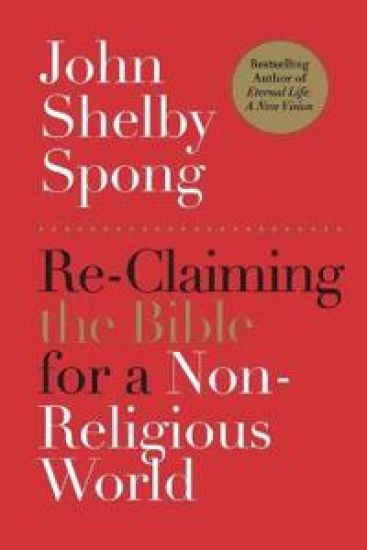
Re-Claiming the Bible for a Non-Religious World
In Re-Claiming the Bible for a Non-Religious World, bishop and social activist John Shelby Spong argues that 200 years of biblical scholarship has been withheld from lay Christians. In this brilliant follow-up to Spong's previous books Eternal Life and Jesus for the Non-Religious, Spong not only reveals the crucial truths that have long been kept hidden from the public eye, but also explores what the history of the Bible can teach us about reading its stories today and living our lives for tomorrow.Sarah Sentilles, author of Breaking Up With God: A Love Story, applauds John Shelby Spong's Reclaiming the Bible for a Non-Religious World, writing that "pulsing beneath his brilliant, thought-provoking, passionate book is this question: can Christianity survive the education of its believers?...A question Bishop Spong answers with a resounding yes."
Temporal Administration of the Religious House in a Non Exempt Clerical Pontifical Institute
CUA Press is proud to announce the CUA Studies in Canon Law. In conjunction with the School of Canon Law of the Catholic University of America, we are making available, both digitally and in print, more than 400 canon law dissertations from the 1920s to 1960s, many of which have long been unavailable.These volumes are rich in historical content, yet remain relevant to canon lawyers today. Topics covered include such issues as abortion, excommunication, and infertility. Several studies are devoted to marriage and the annulment process; the acquiring and disposal of church property, including the union of parishes; the role and function of priests, vicars general, bishops, and cardinals; and juridical procedures within the church.For those who seek to understand current ecclesial practices in light of established canon law, these books will be an invaluable resource.
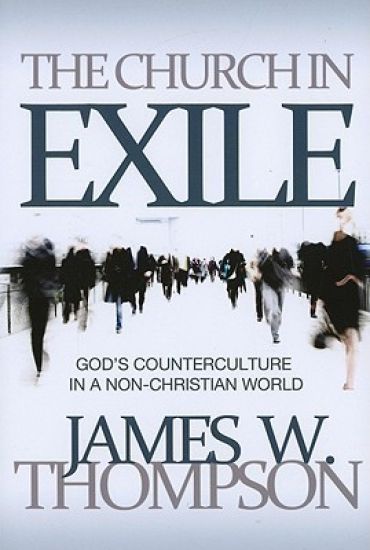
Church in Exile: God's Counterculture in a Non-Christian World

Church in Exile: God's Counterculture in a Non-Christian World

James W. Thompson

Leafwood Publishers Acu Press
2011
nidottu
Christians have become more and more a minority group in American culture, and so now find themselves in a situation similar to the early Christians-facing the challenge of living as cultural exiles. The Church in Exile draws upon the epistle of 1 Peter, which was written to "exiles," to help us learn how to live faithfully when many around us do not share Christian values. Because Christians in America now belong to a distinctly minority group, their behavior will increasingly be considered strange to the majority of the population. This new situation presents Christians with demanding tests--on the job, at school, and in our relationships with neighbors. We are now discovering the challenge of being Christians when that is not a popular identity. During the first four centuries, Christians met in small house churches surrounded by neighbors and even family members who scorned their beliefs and their morality. 1 Peter was written to such believers. The "alien" Christians who first read 1 Peter were not strangers in their own lands because of their skin colors or their nationalities. Their obedience to the call of Christ had made them exiles. According to 1 Peter, Christians are "aliens and exiles" (2:11). The Christian life is similar to the Israelites in Egypt or Babylon, who also did not assimilate into the larger population. So today, how do we find the resources to live as exiles? The epistle of 1 Peter is a sermon that was originally preached to offer such resources. The Church in Exile applies this message to Christians in Dallas, Atlanta, Los Angeles, and Chicago in the early twenty-first century, showing us how to live as a counterculture in a non-Christian world.
Joseph Smith's United Order: A Non-Communalistic Interpretation
Socialism was never a part of Mormon doctrine, but internal and external proponents of socialism have nonetheless been able convince many members (and outsiders), through perpetuating myths and legends, that it has been or is a part of church doctrine. The Mormon Church (The Church of Jesus Christ of Latter-day Saints) was organized in 1830 and immediately began moving westward from New York to Kirtland, Ohio, and Independence, Missouri, and, later, from about 1838 to 1845, to Nauvoo, Illinois. The next move was to Utah beginning in 1847. Numerous cooperative efforts were necessary at each stage to help the poorer and weaker members of the Church move along with the others. Some of its first converts had been members of communal societies before their contacts with the Mormons. Also, the enemies of the Church found an untrue but effective epithet against "those sheep-stealing Mormons" by calling their new organization "common stock" communalism or socialism, a damning charge in the political atmosphere of the time.Joseph Smith went to great efforts to speak and write against this falsehood, declaring that it had nothing to do with the church. His successor Brigham Young continued the practice of denouncing this false claim, declaring that such a doctrine could destroy the church, especially in its precarious Utah setting. Nonetheless, it appears that the external enemies of the church and some of its politically leftwing members have, by sheer weight of repetition, made it part of the unofficial lore of the church.The term "united order" came from the "united firm," one name for the early church business partnerships. The term "united order" also comes from the Brigham Young era of the church's history, and needs to be further explained in that unique context, as is done in the subsequent book, Brigham Youngs United Order. With no powers of self-government granted the Mormons for the first 22 years of their time in Utah, some unusual and creative temporary substitutes were invented.The official history of the church makes it clear that various practical methods were used to solve problems as they arose, many involving cooperation, as one might expect of any tight-knit religious body, but none required any doctrinaire overriding of the principle of private ownership of property, as the centralizing socialists would like to see. For one thing, that would be severely inconsistent with the constitution of the United States.In the first 8 years of the church's existence, it was not legally possible to organize it as a corporation as it is today. As an unsatisfactory but necessary stop-gap measure, a common-law business partnership was organized to carry on church business of all kinds. (The partners also constituted a temporary Quorum of the Twelve for ecclesiastical purposes.) In the normal accounting practices of partnerships, all partners are assumed to be agents of all the others, and also to share equally in the both the liabilities and profits of the business, including being personally liable for all the partnership's debts. There is thus no escape from full liability, but the use of silent (unknown) partners can give those unknown partners a small amount of financial protection. It is strange to see that misunderstandings of the British common law (and misunderstandings of many other events and circumstances as well) have been used in political and polemical efforts to justify pressing socialism into the canon of church doctrine, but socialism (centralized ownership and control of nearly everything) can never be part of a value system that emphasizes individual responsibility. It is no accident that Utah is mostly a conservative, Republican state. This apparent inconsistency deep within the doctrines of the church will likely lead to a whole set of difficulties as the church grows in size and influence. At some point this issue must be cleared up, and this book should help.
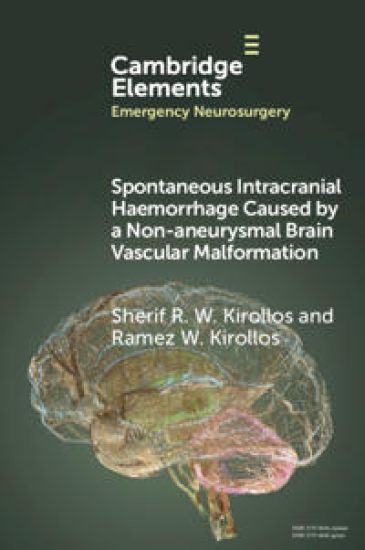
Spontaneous Intracranial Haemorrhage Caused by a Non-aneurysmal Brain Vascular Malformation

Spontaneous Intracranial Haemorrhage Caused by a Non-aneurysmal Brain Vascular Malformation

Sherif R. W. Kirollos; Ramez W. Kirollos

Cambridge University Press
2025
pokkari
Emergency management of intracranial haemorrhage due to AVMs, DAVFs, and cavernomas involves addressing both the haemorrhage consequences and the underlying vascular lesion. Clinical evaluation and diagnostic workup identify factors necessitating urgent intervention and define the vascular lesion. Urgent intervention may involve ICH management with increased ICP or CSF drainage for acute hydrocephalus. Definitive intervention for the vascular lesion may coincide with or follow evacuation of the intracranial haematoma. Careful considerations and precautions are taken independently or concurrently with the vascular lesion. Indications and timing for AVM intervention involve determining the bleeding source, evaluating mass effect, and assessing the utility of existing ICH for microsurgical AVM resection. Modified microsurgical techniques ensure safety. DAVF intervention with ICH or ASDH requires urgent endovascular treatment and surgical nuances. Cavernoma intervention follows straightforward indications and timing, while brainstem cavernomas require careful consideration of early intervention. Aftercare and a team approach are vital.
Succeeding Without Leading: How to create a successful career in a non-leadership role
Too often we're told that to be successful we have to keep climbing the career leader - whether we're really geared towards leading people or not. In Succeeding Without Leading, you'll learn that this may not be the best definition of success for you. You'll discover what it means to be great outside of leadership - to be a great "follower." This includes finding out how to use your own personality, skills and abilities to find or create a good job fit by using your MBTI, DISC, and Strengthsfinder results.Then, you'll be able to recognize when you're in the right job, with the right leader and the right organization. Discover how to figure this out before you jump to a new opportunity and find out what to do if you're already in a job that's not a great fit. Finally, get guidance on figuring out your next steps. Learn how to use your current skills and improve on them to enhance your current job or move into a position that's better suited for you.You can create a successful career in a non-leadership role
Anal Sex: THE SEXUAL ABUSE OF A NON SEXUAL ORGAN with huge health risks INCLUDING STERILITY.: SEX IS FOR PROCREATION AND IT WAS
This book is about the controversial issue of anal sex.The proponents of this controversial sexual activity, talk about sexual pleasure and more pleasure, but is it worth the potential health risks? Read this book before you decide if you should or you should not engage in this controversial sexual activity or any other sexual activity. Whatever consenting adults do or do not do in the privacy of their homes, it is their business and nobody's else.After reading this book, whatever the readers decide to do or not do, it is their own decision and nobody's else.. This book is about raising the awareness of the benefits, if any, and mostly the potential health risks of such a controversial sexual activity.Any sexual activity is a health issue with many potential health risks.Anal sex is the abuse of a non sexual organ with potential huge health risks to both parties involved but as long as consenting adults want to take such risks that's their choice and if their health pays the price.............well, it is their own choice..Read the book and make your own decision The author.
How to Stop Bullying towards a non-violent school
By providing teachers with a practical intervention program to prevent bullying in their schools, this book gives the reader tried and tested strategies to tackle a very challenging problem. Creating a safe school environment where pupils feel secure is increasingly difficult, but this book shows how to devise a strategy, put it into practice, measure its effectiveness and extend the good practice into the wider community. The involvement of young people is a key element of this process. With its roots firmly in practice, the book is based on a study of' common characteristics of schools that have successfully reduced bullying; case studies that show how change can be achieved; raising whole-school awareness of the problem; how to tackle bullying as a whole-school issue; involving the students and the student council; delivering in-service training to colleagues. Primary and secondary school teachers, the school management team, learning mentors, teaching assistants and governors will find the guidance clear and suggested approaches helpful.
Women and Islamic Law in a Non-Muslim State
This book is methodologically unique in scholarly literature on Muslim society. Its originality lies in the fact that the rich material offered by the shari'a courts is given a thorough analysis with a view to drawing conclusions about the present-day phenomena in Arab society and processes that the society has been undergoing in modern times.Aharon Layish examines every aspect of the social status of Muslim women that finds expression in the shari'a courts: the age of marriage, stipulations inserted in the marriage contract, dower, polygamy, maintenance and obedience, divorce, custody of the children, guardianship, and succession. Each chapter opens with a short legal introduction based on all the sources of law applying in shari'a courts, followed by social analyses and a study of the attitudes and approaches of the qadis, or Muslim religious judges. Layish examines the relationship between shari'a and Israeli legislation: Do shari'a courts have regard to the provisions of Israeli law? What is the relationship between shari'a and social custom, and which is decisive in regard to Israeli Muslim women? To what extent does Israeli law actually affect Israeli Muslim women? What is the attitude of the qadis, toward Israeli legislation?Women and Islamic Law in a Non-Muslim State is an important and original study that will be of interest to students and scholars of Islamic law, comparative law, sociology, and modernization.
Women and Islamic Law in a Non-Muslim State
This book is methodologically unique in scholarly literature on Muslim society. Its originality lies in the fact that the rich material offered by the shari'a courts is given a thorough analysis with a view to drawing conclusions about the present-day phenomena in Arab society and processes that the society has been undergoing in modern times.Aharon Layish examines every aspect of the social status of Muslim women that finds expression in the shari'a courts: the age of marriage, stipulations inserted in the marriage contract, dower, polygamy, maintenance and obedience, divorce, custody of the children, guardianship, and succession. Each chapter opens with a short legal introduction based on all the sources of law applying in shari'a courts, followed by social analyses and a study of the attitudes and approaches of the qadis, or Muslim religious judges. Layish examines the relationship between shari'a and Israeli legislation: Do shari'a courts have regard to the provisions of Israeli law? What is the relationship between shari'a and social custom, and which is decisive in regard to Israeli Muslim women? To what extent does Israeli law actually affect Israeli Muslim women? What is the attitude of the qadis, toward Israeli legislation?Women and Islamic Law in a Non-Muslim State is an important and original study that will be of interest to students and scholars of Islamic law, comparative law, sociology, and modernization.