Miller's metaphysics, including his approach to God, is broad, deep, and original, with the potential to make a fruitful contribution to contemporary philosophy. Yet it has not received the critical attention it deserves. Miller's work deserves critical attention because of its thorough and original defense of three highly controversial positions: that existence is a real property of concrete individuals; that it is possible to prove, without assuming any principle of sufficient reason, that there is an uncaused cause of the universe; and that the uncaused cause is the simple God of classical theism. Miller's position on existence is an important alternative in current analytical philosophy to what Miller calls the "Frege-Russell-Quine" theory, and the neo-Meinongian positions of Terence Parsons and Ed Zalta. Miller's argument for an uncaused cause of the universe has been described one of the most ambitious theistic arguments produced by a well-respected, contemporary, analytic philosopher. Analysis of Existing: Barry Miller's Approach to God is the first clear, systematic interpretation of Miller's theistic philosophy.
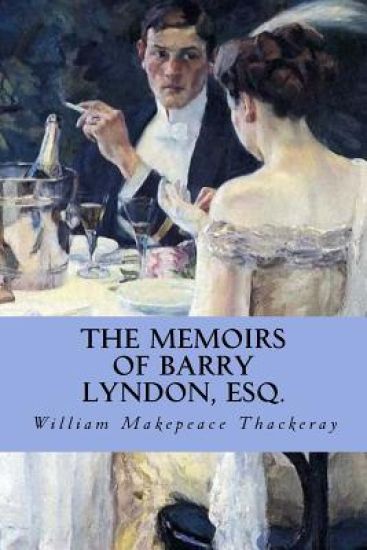
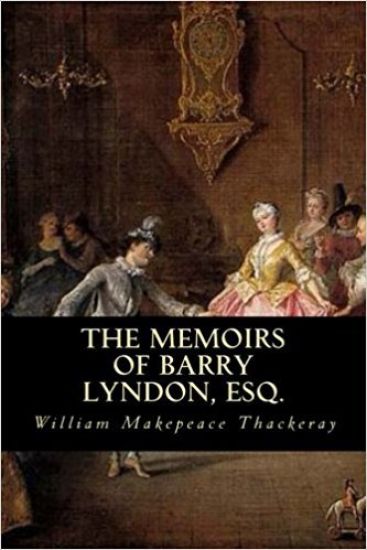
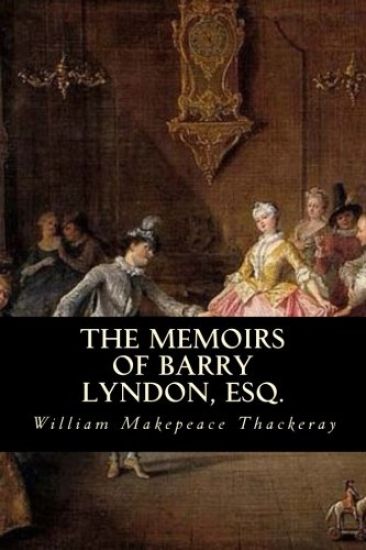
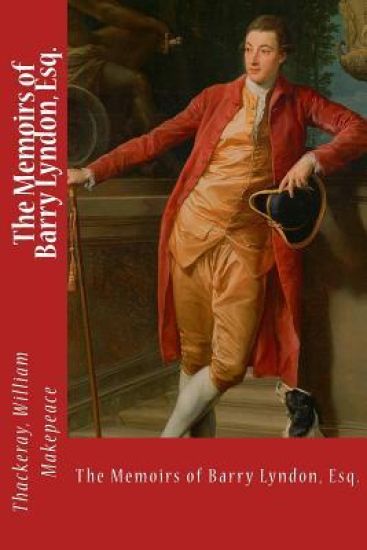
Barry Lyndon-far from the best known, but by some critics acclaimed as the finest, of Thackeray's works-appeared originally as a serial a few years before VANITY FAIR was written; yet it was not published in book form, and then not by itself, until after the publication of VANITY FAIR, PENDENNIS, ESMOND and THE NEWCOMES had placed its author in the forefront of the literary men of the day. So many years after the event we cannot help wondering why the story was not earlier put in book form; for in its delineation of the character of an adventurer it is as great as VANITY FAIR, while for the local colour of history, if I may put it so, it is no undistinguished precursor of ESMOND. In the number of FRASER'S MAGAZINE for January 1844 appeared the first instalment of 'THE LUCK OF BARRY LYNDON, ESQ., A ROMANCE OF THE LAST CENTURY, by FitzBoodle, ' and the story continued to appear month by month-with the exception of October-up to the end of the year, when the concluding portion was signed 'G. S. FitzBoodle.' FITZBOODLE'S CONFESSIONS, it should be added, had appeared occasionally in the magazine during the years immediately precedent, so that the pseudonym was familiar to FRASER'S readers. The story was written, according to its author's own words, 'with a great deal of dulness, unwillingness and labour, ' and was evidently done as the instalments were required, for in August he wrote 'read for "B. L." all the morning at the club, ' and four days later of '"B. L." lying like a nightmare on my mind.' The journey to the East-which was to give us in literary results NOTES OF A JOURNEY FROM CORNHILL TO GRAND CAIRO-was begun with BARRY LYNDON yet unfinished, for at Malta the author noted on the first three days of November-'Wrote Barry but slowly and with great difficulty.' 'Wrote Barry with no more success than yesterday.' 'Finished Barry after great throes late at night.' In the number of Fraser's for the following month, as I have said, the conclusion appeared. A dozen years later, in 1856, the story formed the first part of the third volume of Thackeray's MISCELLANIES, when it was called MEMOIRS OF BARRY LYNDON, ESQ., WRITTEN BY HIMSELF. Since then, it has nearly always been issued with other matter, as though it were not strong enough to stand alone, or as though the importance of a work was mainly to be gauged by the number of pages to be crowded into one cover. The scheme of the present edition fortunately allows fitting honour to be done to the memoirs of the great adventurer. .
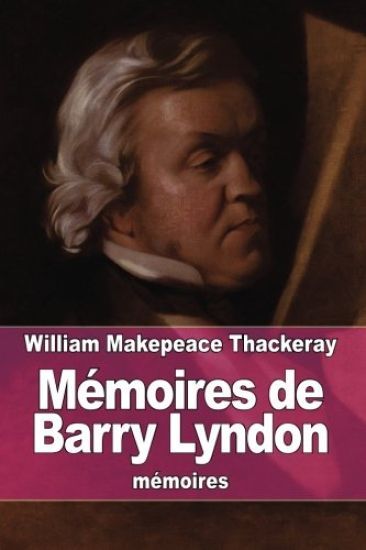
Redmond Barry fuit son Irlande natale apr s un duel, convaincu tort qu'il a tu son adversaire. Il s'engage dans l'arm e anglaise pour la Guerre de Sept Ans (1756-1763), puis est captur par les troupes prussiennes qui le chargent d'espionner le Chevalier de Bali-Bari (alias Ballybarry, Bally-Barry ou Balibari). Lorsque Bali-Bari s'av re n' tre autre que son oncle Cornelius Barry, les deux comp res s'installent en tant que tricheurs aux cartes professionnels. Barry conna t le succ s au jeu et devient l'homme la mode. Apr s un long si ge, parodie d'une parade nuptiale, il pouse une riche veuve assez sotte, la comtesse de Lyndon dont il prend le nom. Il dilapide sa fortune, la maltraite, ainsi que son fils, et ne se montre affectueux qu'envers sa m re et son propre fils, Bryan, qu'il g te jusqu' ce que le jeune gar on soit tu dans un accident de cheval. Finalement, la comtesse, avec l'aide de son fils Lord Bullingdon, maintenant grandi et chappant aux brutalit s de son beau-p re, se lib re de son emprise et recouvre sa libert . Barry est contraint de s'exiler l' tranger o il re oit de son pouse une pension de 300 (ce qui, pour l' poque, est une belle somme). Toutefois, rattrap par ses dettes, en fait pi g par sa femme, il est arr t et passe le reste de ses jours dans la prison de la Fleet (Fleet Prison) Londres, o , priv de son allocation annuelle par les d c s de Lady Lyndon, puis de Lord Bullingdon, alcoolique et pr matur ment s nile, toujours soign par sa vieille m re d vou e, il conna t la plus compl te d ch ance. Un court pilogue mentionne sa mort, rassemble les quelques fils de l'action rest s pars et fait le point sur les personnages laiss s en suspens, en particulier les Tiptoff, h ritiers des biens de Lady Lyndon.
R dig e sous la forme de m moires, cette histoire est celle de l'ascension sociale et de la chute d'un homme arriviste et amoral. Suite un duel au cours duquel il pense avoir tu son adversaire, le jeune Redmond Barry quitte son Irlande natale pour s'engager dans l'arm e anglaise. C'est la premi re tape de sa vie aventureuse qui le conduira participer la guerre de sept ans puis d serter, ne pouvant supporter la rudesse de la vie militaire. Vivant clandestinement, Redmond d couvre le jeu, en fait son m tier et r ussit. Il va pouvoir rentrer au pays en homme influent... Stanley Kubrick a port ce roman au cin ma en 1975
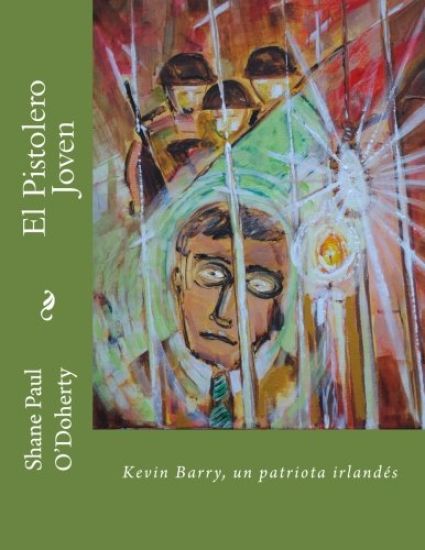
El patriota irland s Kevin Barry ten a 18 a os cuando el uno de noviembre de 1920 fue ejecutado por participar en una emboscada del IRA donde murieron tres j venes soldados brit nicos de 15, 19 y 20 a os de edad. Kevin se convirti en una h roe nacional y en un m rtir de la Guerra de Independencia irlandesa. En este libro, el antiguo voluntario del IRA, Shane Paul O'Doherty, cuenta la verdadera historia de la detenci n, confinamiento y ejecuci n de Kevin y tambi n detalla como la intensa f cat lica de Kevin le ayud a morir con valent a y con una limpia conciencia.
In the number of FRASER'S MAGAZINE for January 1844 appeared the first instalment of 'THE LUCK OF BARRY LYNDON, ESQ., A ROMANCE OF THE LAST CENTURY, by FitzBoodle, ' and the story continued to appear month by month-with the exception of October-up to the end of the year, when the concluding portion was signed 'G. S. FitzBoodle.' FITZBOODLE'S CONFESSIONS, it should be added, had appeared occasionally in the magazine during the years immediately precedent, so that the pseudonym was familiar to FRASER'S readers. The story was written, according to its author's own words, 'with a great deal of dulness, unwillingness and labour, ' and was evidently done as the instalments were required, for in August he wrote 'read for "B. L." all the morning at the club, ' and four days later of '"B. L." lying like a nightmare on my mind.' The journey to the East-which was to give us in literary results NOTES OF A JOURNEY FROM CORNHILL TO GRAND CAIRO-was begun with BARRY LYNDON yet unfinished, for at Malta the author noted on the first three days of November-'Wrote Barry but slowly and with great difficulty.' 'Wrote Barry with no more success than yesterday.' 'Finished Barry after great throes late at night.' In the number of Fraser's for the following month, as I have said, the conclusion appear