Kirjojen hintavertailu. Mukana 12 083 983 kirjaa ja 12 kauppaa.

Kirjahaku

Etsi kirjoja tekijän nimen, kirjan nimen tai ISBN:n perusteella.

1000 tulosta hakusanalla Barry Wilson

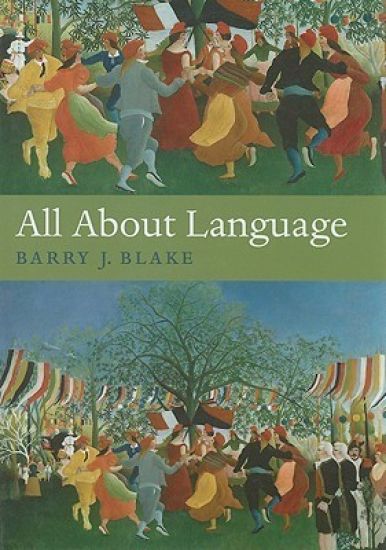
All About Language

All About Language

Barry J. Blake

Oxford University Press
2008
sidottu
In clear, congenial style Barry Blake explains how language works. He describes the make-up of words and how they're built from sounds and signs and put together in phrases and sentences. He examines the dynamics of conversation and the relations between the sound and meaning. He shows how languages help their users connect to each other and to the world, how they vary around the world, why they never stop changing, and that no two people speak a language in the same way. He looks at how language is acquired by infant children, how it relates to thought, and its operations in the brain. He investigates current trends and issues such as the levelling of linguistic class differences and the rise of new secret or in-group languages such as argot and teenspeak. He describes the history of writing from its origins to digital diffusion, and ends by looking at how language might have originated and then evolved among our distant hominid and primate ancestors. Language is crucial to every aspect of our lives whether we're thinking, talking, or dreaming. Barry Blake reveals the wonders that lie beneath the surface of everyday communication, enriching his exposition with a unique blend of anecdote and humour. His engaging guide is for everyone curious about language or who needs to know more about it.
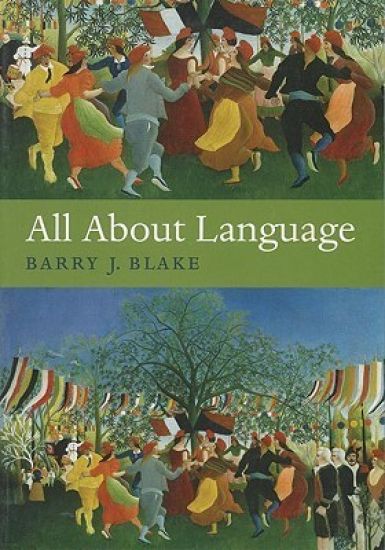
All About Language

All About Language

Barry J. Blake

Oxford University Press
2008
nidottu
In clear, congenial style Barry Blake explains how language works. He describes the make-up of words and how they're built from sounds and signs and put together in phrases and sentences. He examines the dynamics of conversation and the relations between the sound and meaning. He shows how languages help their users connect to each other and to the world, how they vary around the world, why they never stop changing, and that no two people speak a language in the same way. He looks at how language is acquired by infant children, how it relates to thought, and its operations in the brain. He investigates current trends and issues such as the levelling of linguistic class differences and the rise of new secret or in-group languages such as argot and teenspeak. He describes the history of writing from its origins to digital diffusion, and ends by looking at how language might have originated and then evolved among our distant hominid and primate ancestors. Language is crucial to every aspect of our lives whether we're thinking, talking, or dreaming. Barry Blake reveals the wonders that lie beneath the surface of everyday communication, enriching his exposition with a unique blend of anecdote and humour. His engaging guide is for everyone curious about language or who needs to know more about it.
Understanding Human Knowledge

Understanding Human Knowledge

Barry Stroud

Clarendon Press
2002
nidottu
Barry Stroud has, since the 1970s, been a key contributor to the philosophical study of human knowledge. This book presents the best of his essays in this area. More than half are concerned with identifying clearly the question or issue that philosophical theories of knowledge are meant to answer.
Financial Crises and What to Do About Them

Financial Crises and What to Do About Them

Barry Eichengreen

Oxford University Press
2002
sidottu
In this study, the author provides a critical assessment of the official sector's efforts to more effectively manage financial crises in emerging markets. Professor Eichengreen reviews international initiatives on both the crisis prevention and crisis resolution fronts.
Financial Crises and What to Do About Them

Financial Crises and What to Do About Them

Barry Eichengreen

Oxford University Press
2002
nidottu
This work explains the patterns behind financial crises, examines international financial architecture, makes recommendations for avoiding the dangers of crises (and managing them better when they do occur), and shows how official efforts to strengthen the international financial system may have made life more difficult for the poorest countries.
Models, Truth, and Realism

Models, Truth, and Realism

Barry Taylor

Clarendon Press
2006
sidottu
Barry Taylor's book mounts an argument against one of the fundamental tenets of much contemporary philosophy, the idea that we can make sense of reality as existing objectively, independently of our capacities to come to know it. Part One sets the scene by arguings that traditional realism can be explicated as a doctrine about truth - that truth is objective, that is, public, bivalent, and epistemically independent. Part Two, the centrepiece of the book, shows how a form of Hilary Putnam's model-theoretic argument demonstrates that no such notion of truth can be founded on the idea of correspondence, as explained in model-theoretic terms (more traditional accounts of correspondence having been already disposed of in Part One). Part Three argues that non-correspondence accounts of truth - truth as superassertibility or idealized rational acceptability, formal conceptions of truth, Tarskian truth - also fail to meet the criteria for objectivity; along the way, it also dismisses the claims of the latterday views of Putnam, and of similar views articulated by John McDowell, to constitute a new, less traditional form of realism. In the Coda, Taylor bolsters some of the considerations advanced in Part Three in evaluating formal conceptions of truth, by assessing and rejecting the claims of Robert Brandom to have combined such an account of truth with a satisfactory account of semantic structure. He concludes that there is no defensible notion of truth which preserves the theses of traditional realism, nor any extant position sufficiently true to the ideals of that doctrine to inherit its title. So the only question remaining is which form of antirealism to adopt.
The Phenomenal Self

The Phenomenal Self

Barry Dainton

Oxford University Press
2008
sidottu
Barry Dainton presents a fascinating new account of the self, the key to which is experiential or phenomenal continuity. Provided our mental life continues we can easily imagine ourselves surviving the most dramatic physical alterations, or even moving from one body to another. It was this fact that led John Locke to conclude that a credible account of our persistence conditions - an account which reflects how we actually conceive of ourselves - should be framed in terms of mental rather than material continuity. But mental continuity comes in different forms. Most of Locke's contemporary followers agree that our continued existence is secured by psychological continuity, which they take to be made up of memories, beliefs, intentions, personality traits, and the like. Dainton argues that that a better and more believable account can be framed in terms of the sort of continuity we find in our streams of consciousness from moment to moment. Why? Simply because provided this continuity is not lost - provided our streams of consciousness flow on - we can easily imagine ourselves surviving the most dramatic psychological alterations. Phenomenal continuity seems to provide a more reliable guide to our persistence than any form of continuity. The Phenomenal Self is a full-scale defence and elaboration of this premise. The first task is arriving at an adequate understanding of phenomenal unity and continuity. This achieved, Dainton turns to the most pressing problem facing any experience-based approach: losses of consciousness. How can we survive them? He shows how the problem can be solved in a satisfactory manner by construing ourselves as systems of experiential capacities. He then moves on to explore a range of further issues. How simple can a self be? How are we related to our bodies? Is our persistence an all-or-nothing affair? Do our minds consist of parts which could enjoy an independent existence? Is it metaphysically intelligible to construe ourselves as systems of capacities? The book concludes with a novel treatment of fission and fusion.
Hall of Mirrors

Hall of Mirrors

Barry Eichengreen

Oxford University Press Inc
2015
sidottu
The Great Depression and the Great Recession are the two great economic crises of the past hundred years. While there are accounts of both episodes, no one has yet attempted a sustained comparative analysis. In Hall of Mirrors, Barry Eichengreen draws on his unparalleled expertise for a brilliantly conceived dual-track account of the two crises and their consequences. Rather than telling the stories of the two crises in sequence, instead he weaves them together. He describes the two bubble-fuelled build-ups, then the onset of crisis, the subsequent financial and economic and collapse, the policy response, and finally the recovery. A theme of Eichengreen's narrative is that while the policy response to the Great Recession was importantly shaped by perceptions of the Great Depression -- contemporary policymakers did in fact learn lessons from the Depression that enabled them, this time, to prevent the worst -- they could have done better. Their failure to do so reflected a tendency to take the lessons of the Depression too literally, leading to an inability to recognize important respects in which circumstances, and specifically the structure of financial markets, had changed -- precisely in response to the policies put in place due to the Depression. In addition, success was the mother of failure: the success of the policy response took the wind out of reformers' sails. It diminished support for the kind of far-reaching social and financial reforms adopted in the 1930s. It allowed policy makers and society to prematurely indulge their desire for a return to normal policies before a normal economy had been restored. To be sure, this more recent crisis was better managed than the earlier one, which resulted in widespread social distress and, in the worst case, the rise of fascism. But a wiser collective response after 2008 would have staved off the painfully slow growth that subsequently plagued the United States and Europe.
Druids

Druids

Barry Cunliffe

Oxford University Press
2010
nidottu
Who were the Druids? What do we know about them? Do they still exist today? The Druids first came into focus in Western Europe - Gaul, Britain, and Ireland - in the second century BC. They are a popular subject; they have been known and discussed for over 2,000 years and few figures flit so elusively through history. They are enigmatic and puzzling, partly because of the lack of knowledge about them has resulted in a wide spectrum of interpretations. Barry Cunliffe takes the reader through the evidence relating to the Druids, trying to decide what can be said and what can't be said about them. He examines why the nature of the druid caste changed quite dramatically over time, and how successive generations have interpreted the phenomenon in very different ways. ABOUT THE SERIES: The Very Short Introductions series from Oxford University Press contains hundreds of titles in almost every subject area. These pocket-sized books are the perfect way to get ahead in a new subject quickly. Our expert authors combine facts, analysis, perspective, new ideas, and enthusiasm to make interesting and challenging topics highly readable.
The Oxford Handbook of Political Economy

The Oxford Handbook of Political Economy

Barry R. Weingast; Donald Wittman

Oxford University Press
2008
nidottu
Over its long lifetime, "political economy" has had many different meanings: the science of managing the resources of a nation so as to provide wealth to its inhabitants for Adam Smith; the study of how the ownership of the means of production influenced historical processes for Marx; the study of the inter-relationship between economics and politics for some twentieth-century commentators; and for others, a methodology emphasizing individual rationality (the economic or "public choice" approach) or institutional adaptation (the sociological version). This Handbook views political economy as a grand (if imperfect) synthesis of these various strands, treating political economy as the methodology of economics applied to the analysis of political behavior and institutions. This Handbook surveys the field of political economy, with 58 chapters ranging from micro to macro, national to international, institutional to behavioral, methodological to substantive. Chapters on social choice, constitutional theory, and public economics are set alongside ones on voters, parties and pressure groups, macroeconomics and politics, capitalism and democracy, and international political economy and international conflict.
Advanced Statistical Mechanics

Advanced Statistical Mechanics

Barry M McCoy

Oxford University Press
2009
sidottu
Statistical Mechanics is the study of systems where the number of interacting particles becomes infinite. In the last fifty years tremendous advances have been made which have required the invention of entirely new fields of mathematics such as quantum groups and affine Lie algebras. They have engendered remarkable discoveries concerning non-linear differential equations and algebraic geometry, and have produced profound insights in both condensed matter physics and quantum field theory. Unfortunately, none of these advances are taught in graduate courses in statistical mechanics. This book is an attempt to correct this problem. It begins with theorems on the existence (and lack) of order for crystals and magnets and with the theory of critical phenomena, and continues by presenting the methods and results of fifty years of analytic and computer computations of phase transitions. It concludes with an extensive presentation of four of the most important of exactly solved problems: the Ising, 8 vertex, hard hexagon and chiral Potts models.
Serious Offenders

Serious Offenders

Barry Godfrey; David Cox; Stephen Farrall

Oxford University Press
2010
sidottu
Serious Offenders: A Historical Study of Habitual Criminals examines the persistent offending careers of men and women operating in northwest England between the 1840s and 1940s. The book focuses on a group of serious and persistent offenders who as well as offending in the region, had lengthy offending careers spanning several decades in various other locations. These were highly mobile persistent serious offenders who appear not to have been so closely bound in to the processes and structures which aided desistence from offending for the vast majority of the petty offenders. The authors discuss questions such as: Why did some people remain minor offenders, whilst others developed into serious offenders? What were the triggers which propelled previously minor offenders towards persistent serious criminality? What part did changes in criminal legislation play in these processes? They conclude by drawing on the lessons to be learnt for today's debates about the regulation and surveillance of serious habitual offenders.
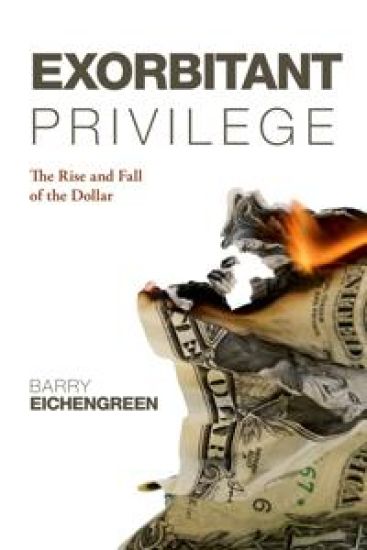
Exorbitant Privilege

Exorbitant Privilege

Barry Eichengreen

Oxford University Press
2011
sidottu
For more than half a century, the dollar has been not just America's currency but the world's. It is used globally by importers, exporters, investors, governments and central banks alike. This singular role of the dollar is a source of strength for the United States. It is, as a critic of U.S. policies once put it, America's "exorbitant privilege." But now, with U.S. budget deficits extending as far as the eye can see, holding dollars is viewed as a losing proposition. Some say that the dollar may soon cease to be the world's standard currency, which would depress U.S. living standards and weaken the country's international influence. In Exorbitant Privilege, one of our foremost economists, Barry Eichengreen, traces the rise of the dollar to international prominence. He shows how the greenback dominated internationally in the second half of the 20th century for the same reasons that the United States dominated the global economy. But now, with the rise of China, India, Brazil and other emerging economies, America no longer towers over the global economy. It follows, Eichengreen argues, that the dollar will not be as dominant. But this does not mean that coming changes need be sudden and dire or that the dollar is doomed to lose its international status. Challenging the presumption that there is room for only one true global currency, Eichengreen shows that several currencies have regularly shared this role. What was true in the distant past will be true, once again, in the not-too-distant future. The dollar will lose its international currency status, Eichengreen warns, only if the United States repeats the mistakes that led to the financial crisis and only if it fails to put its fiscal and financial house in order. Incisive, challenging and iconoclastic, Exorbitant Privilege, is a fascinating analysis of the changes that lie ahead. It is a challenge, equally, to those who warn that the dollar is doomed and to those who regard its continuing dominance as inevitable.
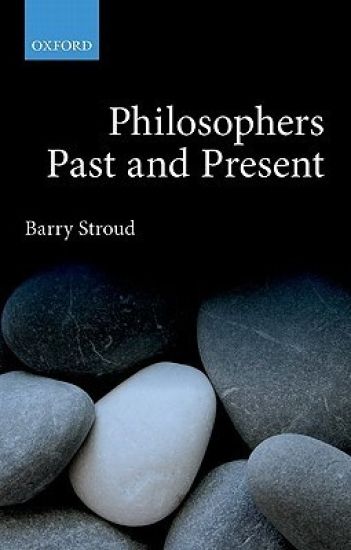
Philosophers Past and Present

Philosophers Past and Present

Barry Stroud

Oxford University Press
2011
sidottu
This volume of uncollected essays by Barry Stroud explores central issues and ideas in the work of individual philosophers, ranging from Descartes, Berkeley, Locke, and Hume to Quine, Burge, McDowell, Goldman, Fogelin, and Sosa in our own day. Seven of the essays focus on David Hume, and examine the sources and implications of his 'naturalism' and his 'scepticism'. Three others deal with the legacy of that 'naturalism' in the twentieth century. In each case Stroud moves beyond providing a description of historical contexts and developments, and confronts the philosophical issues as they present themselves to the philosophers in question.
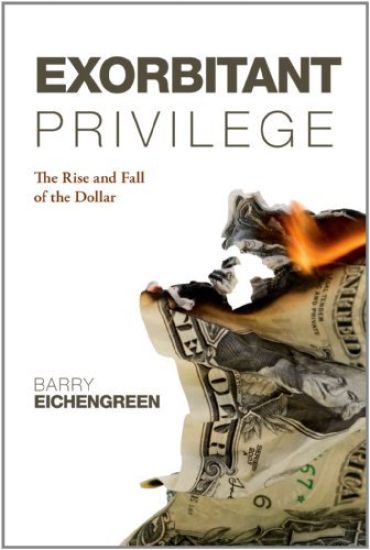
Exorbitant Privilege

Exorbitant Privilege

Barry Eichengreen

Oxford University Press
2012
nidottu
For more than half a century, the dollar has been not just America's currency but the world's. It is used globally by importers, exporters, investors, governments and central banks alike. This singular role of the dollar is a source of strength for the United States. It is, as a critic of U.S. policies once put it, America's "exorbitant privilege." But now, with U.S. budget deficits extending as far as the eye can see, holding dollars is viewed as a losing proposition. Some say that the dollar may soon cease to be the world's standard currency, which would depress U.S. living standards and weaken the country's international influence. In Exorbitant Privilege, one of our foremost economists, Barry Eichengreen, traces the rise of the dollar to international prominence. He shows how the greenback dominated internationally in the second half of the 20th century for the same reasons that the United States dominated the global economy. But now, with the rise of China, India, Brazil and other emerging economies, America no longer towers over the global economy. It follows, Eichengreen argues, that the dollar will not be as dominant. But this does not mean that coming changes need be sudden and dire DL or that the dollar is doomed to lose its international status. Challenging the presumption that there is room for only one true global currency, Eichengreen shows that several currencies have regularly shared this role. What was true in the distant past will be true, once again, in the not-too-distant future. The dollar will lose its international currency status, Eichengreen warns, only if the United States repeats the mistakes that led to the financial crisis and only if it fails to put its fiscal and financial house in order. Incisive, challenging and iconoclastic, Exorbitant Privilege, is a fascinating analysis of the changes that lie ahead. It is a challenge, equally, to those who warn that the dollar is doomed and to those who regard its continuing dominance as inevitable.
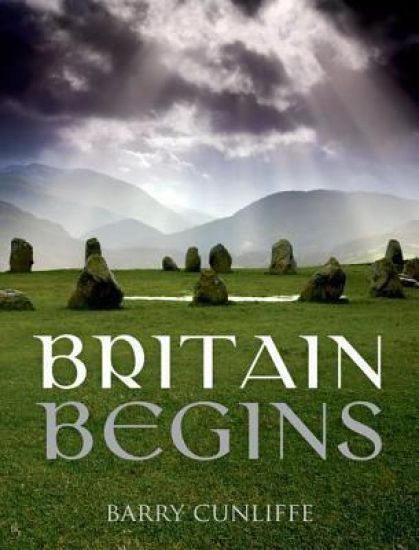
Britain Begins

Britain Begins

Barry Cunliffe

Oxford University Press
2013
nidottu
The last Ice Age, which came to an end about 12,000 years ago, swept the bands of hunter gatherers from the face of the land that was to become Britain and Ireland, but as the ice sheets retreated and the climate improved so human groups spread slowly northwards, re-colonizing the land that had been laid waste. From that time onwards Britain and Ireland have been continuously inhabited and the resident population has increased from a few hundreds to more than 60 million. Britain Begins is nothing less than the story of the origins of the British and the Irish peoples, from around 10,000BC to the eve of the Norman Conquest. Using the most up to date archaeological evidence together with new work on DNA and other scientific techniques which help us to trace the origins and movements of these early settlers, Barry Cunliffe offers a rich narrative account of the first islanders - who they were, where they came from, and how they interacted one with another. Underlying this narrative throughout is the story of the sea, which allowed the islanders and their continental neighbours to be in constant contact. The story told by the archaeological evidence, in later periods augmented by historical texts, satisfies our need to know who we are and where we come from. But before the development of the discipline of archaeology, people used what scraps there were, gleaned from Biblical and classical texts, to create a largely mythological origin for the British. Britain Begins also explores the development of these early myths, which show our ancestors attempting to understand their origins. And, as Cunliffe shows, today's archaeologists are driven by the same desire to understand the past - the only real difference is that we have vastly more evidence to work with.
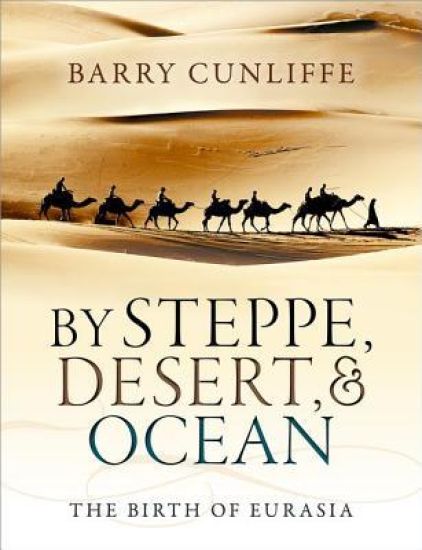
By Steppe, Desert, and Ocean

By Steppe, Desert, and Ocean

Barry Cunliffe

Oxford University Press
2017
nidottu
By Steppe, Desert, and Ocean is nothing less than the story of how humans first started building the globalized world we know today. Set on a huge continental stage, from Europe to China, it is a tale covering over 10,000 years, from the origins of farming around 9000 BC to the expansion of the Mongols in the thirteenth century AD. An unashamedly 'big history', it charts the development of European, Near Eastern, and Chinese civilizations and the growing links between them by way of the Indian Ocean, the silk Roads, and the great steppe corridor (which crucially allowed horse riders to travel from Mongolia to the Great Hungarian Plain within a year). Along the way, it is also the story of the rise and fall of empires, the development of maritime trade, and the shattering impact of predatory nomads on their urban neighbours. Above all, as this immense historical panorama unfolds, we begin to see in clearer focus those basic underlying factors - the acquisitive nature of humanity, the differing environments in which people live, and the dislocating effect of even slight climatic variation - which have driven change throughout the ages, and which help us better understand our world today.
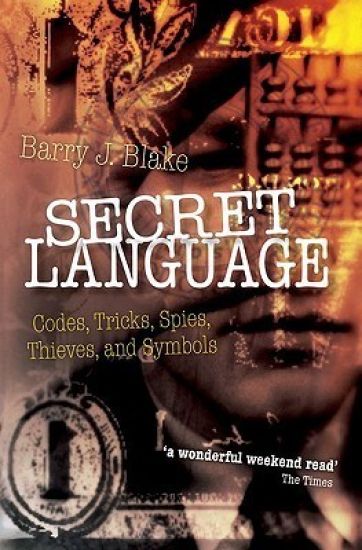
Secret Language

Secret Language

Barry J. Blake

Oxford University Press
2011
nidottu
This book is about language that is designed to mean what it does not seem to mean. Ciphers and codes conceal messages and protect secrets. Symbol and magic hide meanings to delight or imperil. Languages made to baffle and confuse let insiders talk openly without being understood by those beyond the circle. Barry Blake looks at these and many more. He explores the history and uses of the slangs and argots of schools and trades. He traces the centuries-old cants used by sailors and criminals in Britain, among them Polari, the mix of Italian, Yiddish, and slang once spoken among strolling players and circus folk and taken up by gays in the twentieth century. He examines the sacred languages of ancient cults and religions, uncovers the workings of onomancy, spells, and gematria, looks into the obliqueness of allusion and parody, and celebrates the absurdities of euphemism and jargon. Secret Language takes the reader on fascinating excursions down obscure byways of language, ranging across time and culture. With revelations on every page it will entertain anyone with an urge to know more about the most arcane and curious uses of language.
The Phenomenal Self

The Phenomenal Self

Barry Dainton

Oxford University Press
2011
nidottu
Barry Dainton presents a fascinating new account of the self, the key to which is experiential or phenomenal continuity. Provided our mental life continues we can easily imagine ourselves surviving the most dramatic physical alterations, or even moving from one body to another. It was this fact that led John Locke to conclude that a credible account of our persistence conditions - an account which reflects how we actually conceive of ourselves - should be framed in terms of mental rather than material continuity. But mental continuity comes in different forms. Most of Locke's contemporary followers agree that our continued existence is secured by psychological continuity, which they take to be made up of memories, beliefs, intentions, personality traits, and the like. Dainton argues that a better and more believable account can be framed in terms of the sort of continuity we find in our streams of consciousness from moment to moment. Why? Simply because provided this continuity is not lost - provided our streams of consciousness flow on - we can easily imagine ourselves surviving the most dramatic psychological alterations. Phenomenal continuity seems to provide a more reliable guide to our persistence than any form of continuity. The Phenomenal Self is a full-scale defence and elaboration of this premise. The first task is arriving at an adequate understanding of phenomenal unity and continuity. This achieved, Dainton turns to the most pressing problem facing any experience-based approach: losses of consciousness. How can we survive them? He shows how the problem can be solved in a satisfactory manner by construing ourselves as systems of experiential capacities. He then moves on to explore a range of further issues. How simple can a self be? How are we related to our bodies? Is our persistence an all-or-nothing affair? Do our minds consist of parts which could enjoy an independent existence? Is it metaphysically intelligible to construe ourselves as systems of capacities? The book concludes with a novel treatment of fission and fusion.