Kirjojen hintavertailu. Mukana 11 342 296 kirjaa ja 12 kauppaa.

Kirjahaku

Etsi kirjoja tekijän nimen, kirjan nimen tai ISBN:n perusteella.

1000 tulosta hakusanalla Benedict Boo

Explaining Wealth Inequality

Explaining Wealth Inequality

Benedict Atkinson

Taylor Francis Ltd
2021
sidottu
This book discusses the origins of wealth inequality and explains how societies can reform to avoid the catastrophe of inequality-induced social breakdown. It develops a theoretical and practical understanding of the principles behind the concept of ownership and property, complete with historical examples. It proposes a new research perspective focusing on how the problem of wealth concentration is ameliorated by cooperative and collaborative initiatives to enhance the public sphere, without derogating from the private. The book is based on research data compiled from taxation and household data to explore the theme that wealth inequality is made inevitable by possessive behaviour expressed in possessive language. It shows that while inequality is inescapable, we can adopt policies where resources are more efficiently and broadly distributed for public benefit. Such policies are directed towards encouraging voluntary, as opposed to compulsory, wealth transfer to achieve public good. The primary market for the book consists of academics and students from the fields of economics, including growth and developmental economics, law, sociology, history, business and international trade. It also provides a practical resource for government policy analysts wanting to develop a more detailed understanding of the role played by wealth inequality in a range of social problems.
Explaining Wealth Inequality

Explaining Wealth Inequality

Benedict Atkinson

TAYLOR FRANCIS LTD
2023
nidottu
This book discusses the origins of wealth inequality and explains how societies can reform to avoid the catastrophe of inequality-induced social breakdown. It develops a theoretical and practical understanding of the principles behind the concept of ownership and property, complete with historical examples. It proposes a new research perspective focusing on how the problem of wealth concentration is ameliorated by cooperative and collaborative initiatives to enhance the public sphere, without derogating from the private. The book is based on research data compiled from taxation and household data to explore the theme that wealth inequality is made inevitable by possessive behaviour expressed in possessive language. It shows that while inequality is inescapable, we can adopt policies where resources are more efficiently and broadly distributed for public benefit. Such policies are directed towards encouraging voluntary, as opposed to compulsory, wealth transfer to achieve public good. The primary market for the book consists of academics and students from the fields of economics, including growth and developmental economics, law, sociology, history, business and international trade. It also provides a practical resource for government policy analysts wanting to develop a more detailed understanding of the role played by wealth inequality in a range of social problems.
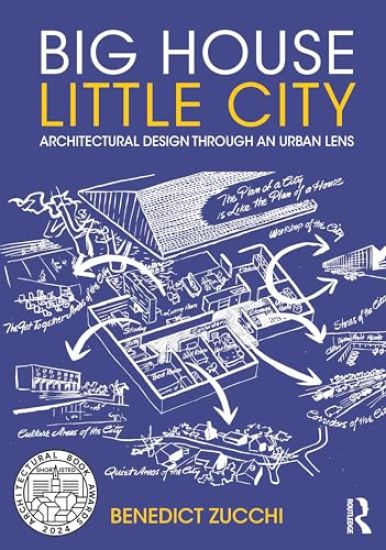
Big House Little City

Big House Little City

Benedict Zucchi

TAYLOR FRANCIS LTD
2023
nidottu
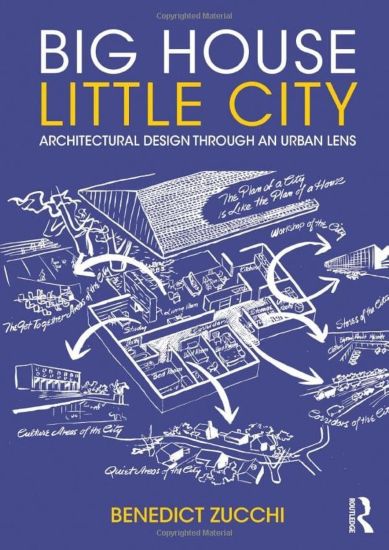
***Shortlisted for the Architectural Book Awards 2024***Combining architectural and urban thinking in an unusual and engaging way, this book presents an integrated approach to architectural theory and design. Leon Battista Alberti’s assertion in his famous Renaissance treatise that ‘the city is like a big house, and the house is in turn like a little city’ forms the springboard for a series of reflections on architecture’s relationship with urbanism and how their once intimate symbiosis, unravelled by International Style Modernism, can be recovered.Explicit references to Alberti’s house-city phrase have been made by figures as diverse as the architects Louis Kahn, Aldo Van Eyck, Denys Lasdun and Niels Torp and novelist Italo Calvino. But, as the book shows, thinking of buildings as little cities provides a new lens through which to reappraise the contributions of many other architects, including Le Corbusier, Frank Lloyd Wright, Alvar Aalto, Eliel Saarinen, Bernard Rudofsky, Hans Scharoun, Leon Krier, Fumihiko Maki, Charles Correa and Team 10.In doing so, the author identifies common themes that form an unexpected bridgehead between the urban and architectural approaches of Antiquity, the Middle Ages, Renaissance and 20th century. The book explores buildings from across the globe, including lesser-known projects, such as Wright’s unbuilt house in Italy or Saarinen’s master plan for Cranbrook Academy, as well as more recent projects by Niels Torp, Behnisch Architekten, Sou Fujimoto, Peter Barber and WOHA.It concludes with practical case studies of residential, health, education and workplace projects from different countries, fulsomely illustrated with many drawings and photographs. These show how architectural design viewed through an urban lens provides a conceptual framework for breaking down the scale of large buildings and integrating them with their context. And crucially, these also show a very accessible way of explaining evolving designs to the intended users and eliciting their participation in the design process.The book offers a compelling approach to the design of projects at all scales, within an ecological perspective: the sense that big and small, cities and buildings must be approached holistically if we are to reverse the degradation and depletion of our habitat, both natural and man-made.
Big House Little City

Big House Little City

Benedict Zucchi

TAYLOR FRANCIS LTD
2023
sidottu
***Shortlisted for the Architectural Book Awards 2024***Combining architectural and urban thinking in an unusual and engaging way, this book presents an integrated approach to architectural theory and design. Leon Battista Alberti’s assertion in his famous Renaissance treatise that ‘the city is like a big house, and the house is in turn like a little city’ forms the springboard for a series of reflections on architecture’s relationship with urbanism and how their once intimate symbiosis, unravelled by International Style Modernism, can be recovered.Explicit references to Alberti’s house-city phrase have been made by figures as diverse as the architects Louis Kahn, Aldo Van Eyck, Denys Lasdun and Niels Torp and novelist Italo Calvino. But, as the book shows, thinking of buildings as little cities provides a new lens through which to reappraise the contributions of many other architects, including Le Corbusier, Frank Lloyd Wright, Alvar Aalto, Eliel Saarinen, Bernard Rudofsky, Hans Scharoun, Leon Krier, Fumihiko Maki, Charles Correa and Team 10.In doing so, the author identifies common themes that form an unexpected bridgehead between the urban and architectural approaches of Antiquity, the Middle Ages, Renaissance and 20th century. The book explores buildings from across the globe, including lesser-known projects, such as Wright’s unbuilt house in Italy or Saarinen’s master plan for Cranbrook Academy, as well as more recent projects by Niels Torp, Behnisch Architekten, Sou Fujimoto, Peter Barber and WOHA.It concludes with practical case studies of residential, health, education and workplace projects from different countries, fulsomely illustrated with many drawings and photographs. These show how architectural design viewed through an urban lens provides a conceptual framework for breaking down the scale of large buildings and integrating them with their context. And crucially, these also show a very accessible way of explaining evolving designs to the intended users and eliciting their participation in the design process.The book offers a compelling approach to the design of projects at all scales, within an ecological perspective: the sense that big and small, cities and buildings must be approached holistically if we are to reverse the degradation and depletion of our habitat, both natural and man-made.
Sustainable Futures for Climate Adaptation

Sustainable Futures for Climate Adaptation

Benedict Anderson

TAYLOR FRANCIS LTD
2023
sidottu
Considering sustainability as a flawed and restrictive term in practice, Sustainable Futures for Climate Adaptation argues that we must radically adapt humanity and reform society, cities, buildings, and our approach to migration in order to coexist in harmony with our natural environments.The book conceives an Earth–human coexistence where the world’s regions are shared globally between all people, in contrast to a reality where we have lost touch with the natural world. It is this decoupling of humanity and nature that has brought us to the brink of climate disaster. In response, Benedict Anderson explores the concept of ‘wearing our ecology’, where human mobility is synchronized with the environment, merging people with landscapes, topographies, and geographies. Anderson argues that we need to create new migration routes for people moving between the Global South and North and establish flexible and adaptive living environments. Only by rethinking separations between urban and rural, resource extraction and consumption, racial prejudice and accessibility are we able to forge a closer partnership with nature to adapt to climate change and mitigate the worst of its effects.Touching on themes of adaptive urban design, racial and gender segregation and inequality, and climate apocalypticism, this book will be valuable reading for researchers, scholars, and upper-level students in the fields of urban studies, migration studies, human geography, ecology, politics, and design.
Sustainable Futures for Climate Adaptation

Sustainable Futures for Climate Adaptation

Benedict Anderson

TAYLOR FRANCIS LTD
2025
nidottu
Considering sustainability as a flawed and restrictive term in practice, Sustainable Futures for Climate Adaptation argues that we must radically adapt humanity and reform society, cities, buildings, and our approach to migration in order to coexist in harmony with our natural environments.The book conceives an Earth–human coexistence where the world’s regions are shared globally between all people, in contrast to a reality where we have lost touch with the natural world. It is this decoupling of humanity and nature that has brought us to the brink of climate disaster. In response, Benedict Anderson explores the concept of ‘wearing our ecology’, where human mobility is synchronized with the environment, merging people with landscapes, topographies, and geographies. Anderson argues that we need to create new migration routes for people moving between the Global South and North and establish flexible and adaptive living environments. Only by rethinking separations between urban and rural, resource extraction and consumption, racial prejudice and accessibility are we able to forge a closer partnership with nature to adapt to climate change and mitigate the worst of its effects.Touching on themes of adaptive urban design, racial and gender segregation and inequality, and climate apocalypticism, this book will be valuable reading for researchers, scholars, and upper-level students in the fields of urban studies, migration studies, human geography, ecology, politics, and design.
The Gods' Assembly

The Gods' Assembly

Benedict Riosa

Benedict Riosa
2024
pokkari
In this satirical play, gods (and goddesses) from different religions get together for their recurring Assembly. Trying to keep things business-like and professional, they consider requests, have their plans assessed, discuss topics of interest and vie for recognition. During the Assembly sessions, soon old grudges surface, odd alliances are formed, tempers flare and secrets are revealed. One thing these deities have in common, though, is their contempt for the unsuspecting mortals under their sway. When told that the play was twisted, the author replied, "True; but not as twisted as the knots religious apologists tie themselves in when trying to defend the indefensible."
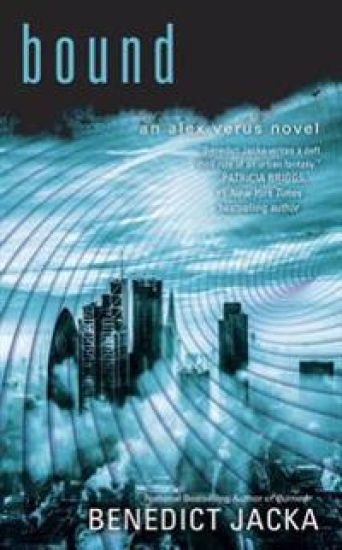
Bound

Bound

Benedict Jacka

Ace Books
2017
pokkari
Mage Alex Verus is caught between a rock and a hard place in the eighth urban fantasy novel from the national bestselling author of Burned.Right now I wasn't seeing Richard as the teacher out of my nightmares; he was just another Dark mage, and I looked into the future to see what would happen if I turned that knife on him instead... Alex Verus is still haunted by his time apprenticed to Richard Drakh. He's been free of him for many years, but now the only way to keep his friends from being harmed is to again work for Richard and his deadly ally. Even worse, Alex is forced to bring the life mage Anne into this servitude as well. After weeks of being hunted and finally cornered into what he thought was his last stand, Alex never imagined his life would be spared--and never anticipated at what price. This time, the diviner can see no way out...
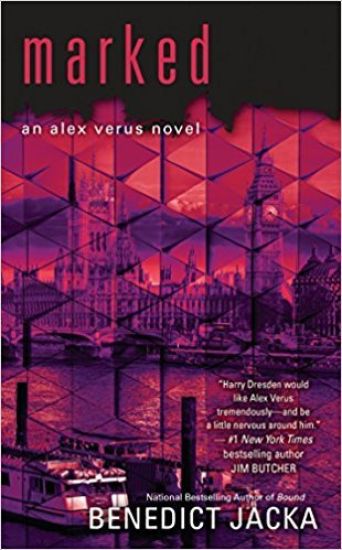
Marked

Marked

Benedict Jacka

Ace Books
2018
pokkari
Mage Alex Verus is hanging on by a thread in the ninth urban fantasy novel from the national bestselling author of Burned. When Mage Alex Verus ends up with a position on the Light Council, no one is happy, least of all him. But Alex is starting to realize that if he wants to protect his friends, he'll need to become a power player himself. His first order of business is to track down dangerous magical items unleashed into the world by Dark Mages. But when the Council decides they need his help in negotiating with the perpetrators, Alex will have to use all his cunning and magic to strike a deal--and stop the rising tension between the Council, the Dark Mages, and the adept community from turning into a bloodbath.