Kirjojen hintavertailu. Mukana 11 244 527 kirjaa ja 12 kauppaa.

Kirjahaku

Etsi kirjoja tekijän nimen, kirjan nimen tai ISBN:n perusteella.

1000 tulosta hakusanalla Benjamin Labatut

Benjamin's Quest

Benjamin's Quest

Maureen Atcheson

WestBow Press
2019
pokkari
Benjamin is a friendly frog who is sent on a quest by the Great King. When he hears what is required of him, he thinks, that he is not big or strong enough to complete the quest and meet the many challenges along the way, but he finds that the most important thing he can offer the Great King is a willing heart.
Benjamin Waterhouse and the Introduction of Vaccination

Benjamin Waterhouse and the Introduction of Vaccination

John B. Blake

University of Pennsylvania Press
1957
sidottu
This book is a volume in the Penn Press Anniversary Collection. To mark its 125th anniversary in 2015, the University of Pennsylvania Press rereleased more than 1,100 titles from Penn Press's distinguished backlist from 1899-1999 that had fallen out of print. Spanning an entire century, the Anniversary Collection offers peer-reviewed scholarship in a wide range of subject areas.
Benjamin Chew, 1722-1810

Benjamin Chew, 1722-1810

Burton Alva Konkle

University of Pennsylvania Press
1932
sidottu
This book is a volume in the Penn Press Anniversary Collection. To mark its 125th anniversary in 2015, the University of Pennsylvania Press rereleased more than 1,100 titles from Penn Press's distinguished backlist from 1899-1999 that had fallen out of print. Spanning an entire century, the Anniversary Collection offers peer-reviewed scholarship in a wide range of subject areas.
Benjamin Franklin in Scotland and Ireland

Benjamin Franklin in Scotland and Ireland

J. Bennett Nolan

University of Pennsylvania Press
1938
sidottu
This book is a volume in the Penn Press Anniversary Collection. To mark its 125th anniversary in 2015, the University of Pennsylvania Press rereleased more than 1,100 titles from Penn Press's distinguished backlist from 1899-1999 that had fallen out of print. Spanning an entire century, the Anniversary Collection offers peer-reviewed scholarship in a wide range of subject areas.
Benjamin Franklin and Chess in Early America

Benjamin Franklin and Chess in Early America

Ralph K. Hagedorn

University of Pennsylvania Press
1958
sidottu
"Playing at Chess is the most ancient and the most universal game among men, for its original is beyond the memory of history." Benjamin Franklin penned these words as an introduction to his famous essay "The Morals of Chess." Franklin's approach to the game was in distinct contrast to his predecessors, who seriously advocated all the subtle treacheries of the art of poor sportsmanship with the sole end of attaining victory. To Franklin, however, the game of chess was not mere idle amusement but a sport reflective of life itself-"for life is a kind of chess, in which we have often points to gain and competitors or adversaries to contend with"-which requires the utilization of all the finest mental and moral qualities of which man is capable. This volume reproduces Franklin's celebrated essay and includes an analysis of everything Franklin ever had to say about chess. The second part of the book contains an extensive bibliography of chess in America to the year 1859. The two sections of the volume combine to form an essential sourcebook for the historian of American chess.
The Autobiography of Benjamin Franklin

The Autobiography of Benjamin Franklin

Benjamin Franklin

Mint Editions
2021
sidottu
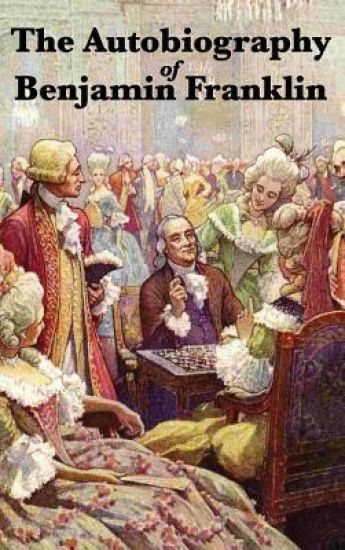
The Autobiography of Benjamin Franklin (1791) is an unfinished memoir by Benjamin Franklin. Addressing the work to his son William, Franklin intended to provide a private account of his life and accomplishments. Published after his death, however, The Autobiography of Benjamin Franklin has since been recognized as one of the most influential works of autobiography in history, as well as a foundational text for the American ideal of the self-made man. Born in Boston, Franklin joins his brother’s printing business at a young age, learning the ropes in an industry which will later bring him both wealth and fame. Secretly, however, he publishes a series of essays under the pseudonym “Silence Dogood,” satirical pieces written from the perspective of a middle-aged widow. When his authorship is revealed, a dispute ensues between Franklin and his brother that leads the young Benjamin to look for work elsewhere. Unable to find work in New York City, Franklin continues south toward Philadelphia, where he establishes himself as the printer and editor of the Pennsylvania Gazette. After describing his system of thirteen virtues aimed at moral perfection, Franklin returns to his work as a publisher of Poor Richard’s Almanack, a successful yearly pamphlet containing meteorological information, practical tips, and puzzles. Franklin also focuses on his diplomatic work, scientific research and inventions, and his appointment as an honorary member of the prestigious Royal Society. With a beautifully designed cover and professionally typeset manuscript, this edition of The Autobiography of Benjamin Franklin is a classic of American literature reimagined for modern readers.
The Autobiography of Benjamin Franklin

The Autobiography of Benjamin Franklin

Benjamin Franklin

Graphic Arts Books
2021
pokkari
The Autobiography of Benjamin Franklin (1791) is an unfinished memoir by Benjamin Franklin. Addressing the work to his son William, Franklin intended to provide a private account of his life and accomplishments. Published after his death, however, The Autobiography of Benjamin Franklin has since been recognized as one of the most influential works of autobiography in history, as well as a foundational text for the American ideal of the self-made man. Born in Boston, Franklin joins his brother’s printing business at a young age, learning the ropes in an industry which will later bring him both wealth and fame. Secretly, however, he publishes a series of essays under the pseudonym “Silence Dogood,” satirical pieces written from the perspective of a middle-aged widow. When his authorship is revealed, a dispute ensues between Franklin and his brother that leads the young Benjamin to look for work elsewhere. Unable to find work in New York City, Franklin continues south toward Philadelphia, where he establishes himself as the printer and editor of the Pennsylvania Gazette. After describing his system of thirteen virtues aimed at moral perfection, Franklin returns to his work as a publisher of Poor Richard’s Almanack, a successful yearly pamphlet containing meteorological information, practical tips, and puzzles. Franklin also focuses on his diplomatic work, scientific research and inventions, and his appointment as an honorary member of the prestigious Royal Society. With a beautifully designed cover and professionally typeset manuscript, this edition of The Autobiography of Benjamin Franklin is a classic of American literature reimagined for modern readers.
Autobiography of Benjamin Franklin

Autobiography of Benjamin Franklin

Benjamin Franklin

Createspace Independent Publishing Platform
2015
nidottu
Widely regarded as one of America's most accomplished statesmen, Benjamin Franklin began his career as an apprentice in his brother's printing business. A restless spirit took him to Philadelphia where he opened his own printing shop. Despite very little formal schooling, Franklin's love for learning and experimentation led him to world-wide fame as a printer, scientist, inventor, and statesman. In his autobiography, Benjamin Franklin shares his uniquely practical-and uniquely American-story and philosophy .
Benjamin at SEA

Benjamin at SEA

Kevin Aldrich

Createspace Independent Publishing Platform
2018
nidottu
"Benjamin at SEA" is book two of the young-adult science-fiction "Paradise Project" septology that began with "Benjamin and the Paradise Project." Book 2 is set on earth in the year 2121 as twelve-year-old Ben splashes down in his parents' spaceship off the coast of Southern California. SEA is short for Space Exploration Academy, a kind of 6th-12th grade West Point for future astronauts. Benjamin encounters in America a seeming utopia after the dystopia of K ld. Making the first real friends of his life, Ben struggles to get the government of the United States of North America to do something to rescue his parents and to prepare for the horiffic attack the Ebony are preparing.
Speeches of Benjamin Harrison

Speeches of Benjamin Harrison

Benjamin Harrison

Gray Rabbit Publishing
2018
sidottu
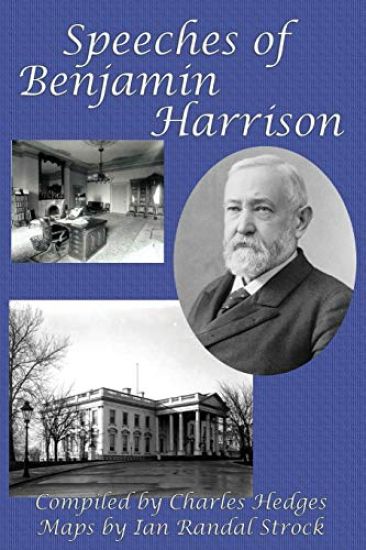
In 1888, Benjamin Harrison campaigned for the Presidency in the manner common for candidates of his era: he stayed at home in Indianapolis and spoke to visiting delegations. In 1889, he traveled to Washington to take up residency in the White House, and made a few brief trips out of town. In 1890, he undertook a train journey lasting more than a week and covering nearly 2,700 miles, making stops and speeches in seven states. But in 1891, he did something no other President had done to that point: a transcontinental train journey lasting a month and covering more than 9,200 miles. On this voyage, he visited and made speeches in nearly 200 municipalities in no fewer than 18 states and three territories which would soon join the union. Later that year, he followed it up with a two-week, 1,400-mile journey through New York and Vermont, with another 30 stops and speeches. This volume, originally compiled by Charles Hedges in 1892, is a complete collection of Harrison's addresses from February 1888 to February 1892, in chronological order, including all his campaign speeches, several important letter, and the numerous speeches delivered during his tours. It also includes extracts from his messages to Congress. Unknowingly contrasting his subject with the politicians of today, Hedges writes in his introduction: "it is not the purpose of this book to present a few selections of oratory, laboriously prepared and polished, or occasional flashes of brilliant thought. From such efforts, prepared, perhaps, after days of study and repeated revision, one can form but an imperfect idea of their author. Such a compilation might show the highest conceptions of the man, and evidence a wide range of thought and a surpassing grandeur of expression; but it would be but a poor mirror of the man himself in his daily life." Instead, he wrote, the people deserve "to observe the character of their public servants, to come into closest touch with their daily thoughts, and to know them as they are--not when prepared for special occasions, but day after day and all the time." The vast majority of the speeches presented here "were delivered during the presidential campaign of 1888, often four or five in a day, to visiting delegations of citizens, representing every occupation and interest, and during his tours of 1890 and 1891, when he often spoke eight or ten times a day from the platform of his train] car." He goes on to laud Harrison's efforts, noting that among other reasons, the speeches are notable "in the fact that, while delivered during the excitement of a political campaign and in the hurry of wayside pauses in a journey by railroad, they contain not one carelessly spoken word that can detract from their dignity, or, by any possible distortion of language, be turned against their author by his political opponents. With no opportunity for elaborately studied phrases, he did not utter a word that could be sneered at as weak or commonplace." And also that "no thought of sameness or repetition is ever suggested.... One marvels at his versatility in adapting himself to every occasion, whether he was addressing a delegation of miners, of comrades in war, or of children from public schools...." This modern edition is newly typeset, and accompanied by maps detailing Harrison's journeys prepared specifically for this volume.
Speeches of Benjamin Harrison

Speeches of Benjamin Harrison

Benjamin Harrison

Gray Rabbit Publishing
2018
pokkari
In 1888, Benjamin Harrison campaigned for the Presidency in the manner common for candidates of his era: he stayed at home in Indianapolis and spoke to visiting delegations. In 1889, he traveled to Washington to take up residency in the White House, and made a few brief trips out of town. In 1890, he undertook a train journey lasting more than a week and covering nearly 2,700 miles, making stops and speeches in seven states. But in 1891, he did something no other President had done to that point: a transcontinental train journey lasting a month and covering more than 9,200 miles. On this voyage, he visited and made speeches in nearly 200 municipalities in no fewer than 18 states and three territories which would soon join the union. Later that year, he followed it up with a two-week, 1,400-mile journey through New York and Vermont, with another 30 stops and speeches.This volume, originally compiled by Charles Hedges in 1892, is a complete collection of Harrison's addresses from February 1888 to February 1892, in chronological order, including all his campaign speeches, several important letter, and the numerous speeches delivered during his tours. It also includes extracts from his messages to Congress.Unknowingly contrasting his subject with the politicians of today, Hedges writes in his introduction: "it is not the purpose of this book to present a few selections of oratory, laboriously prepared and polished, or occasional flashes of brilliant thought. From such efforts, prepared, perhaps, after days of study and repeated revision, one can form but an imperfect idea of their author. Such a compilation might show the highest conceptions of the man, and evidence a wide range of thought and a surpassing grandeur of expression; but it would be but a poor mirror of the man himself in his daily life." Instead, he wrote, the people deserve "to observe the character of their public servants, to come into closest touch with their daily thoughts, and to know them as they are--not when prepared for special occasions, but day after day and all the time." The vast majority of the speeches presented here "were delivered during the presidential campaign of 1888, often four or five in a day, to visiting delegations of citizens, representing every occupation and interest, and during his tours of 1890 and 1891, when he often spoke eight or ten times a day from the platform of his train] car."He goes on to laud Harrison's efforts, noting that among other reasons, the speeches are notable "in the fact that, while delivered during the excitement of a political campaign and in the hurry of wayside pauses in a journey by railroad, they contain not one carelessly spoken word that can detract from their dignity, or, by any possible distortion of language, be turned against their author by his political opponents. With no opportunity for elaborately studied phrases, he did not utter a word that could be sneered at as weak or commonplace." And also that "no thought of sameness or repetition is ever suggested.... One marvels at his versatility in adapting himself to every occasion, whether he was addressing a delegation of miners, of comrades in war, or of children from public schools...."This modern edition is newly typeset, and accompanied by maps detailing Harrison's journeys prepared specifically for this volume.

The Autobiography of Benjamin Franklin

The Autobiography of Benjamin Franklin

Benjamin Franklin

Wilder Publications
2018
sidottu
Excerpt from The Autobiography of Benjamin Franklin: Now First Printed in England From the Full and Authentic d104 About the Publisher Forgotten Books publishes hundreds of thousands of rare and classic books. Find more at www.forgottenbooks.com This book is a reproduction of an important historical work. Forgotten Books uses state-of-the-art technology to digitally reconstruct the work, preserving the original format whilst repairing imperfections present in the aged copy. In rare cases, an imperfection in the original, such as a blemish or missing page, may be replicated in our edition. We do, however, repair the vast majority of imperfections successfully; any imperfections that remain are intentionally left to preserve the state of such historical works.