The Problems of Philosophy by Bertrand Russell.... The Problems of Philosophy (1912) is one of Bertrand Russell's attempts to create a brief and accessible guide to the problems of philosophy. Focusing on problems he believes will provoke positive and constructive discussion, Russell concentrates on knowledge rather than metaphysics: If it is uncertain that external objects exist, how can we then have knowledge of them but by probability. There is no reason to doubt the existence of external objects simply because of sense data. Russell guides the reader through his famous 1910 distinction between "knowledge by acquaintance and knowledge by description" and introduces important theories of Plato, Aristotle, Ren
The Analysis of MindBy Bertrand RussellThe aspects of Bertrand Russell views on philosophy cover the changing viewpoints of philosopher and mathematician Bertrand Russell, from his early writings in 1896 until his death.At various points in his life he considered himself a liberal, a socialist, and a pacifist, but he also admitted that he had "never been any of these things, in any profound sense." He was born in Monmouthshire into one of the most prominent aristocratic families in the United Kingdom.In the early 20th century, Russell led the British "revolt against idealism." He is considered one of the founders of analytic philosophy along with his predecessor Gottlob Frege, colleague G. E. Moore, and his prot g Ludwig Wittgenstein. He is widely held to be one of the 20th century's premier logicians. With A. N. Whitehead he wrote Principia Mathematica, an attempt to create a logical basis for mathematics. His philosophical essay "On Denoting" has been considered a "paradigm of philosophy." His work has had a considerable influence on logic, mathematics, set theory, linguistics, artificial intelligence, cognitive science, computer science (see type theory and type system), and philosophy, especially the philosophy of language, epistemology, and metaphysics. ContentsPREFACETHE ANALYSIS OF MINDLECTURE I. RECENT CRITICISMS OF "CONSCIOUSNESS"LECTURE II. INSTINCT AND HABITLECTURE III. DESIRE AND FEELINGLECTURE IV. INFLUENCE OF PAST HISTORY ON PRESENT OCCURRENCES IN LIVINGLECTURE V. PSYCHOLOGICAL AND PHYSICAL CAUSAL LAWSLECTURE VI. INTROSPECTIONLECTURE VII. THE DEFINITION OF PERCEPTIONLECTURE VIII. SENSATIONS AND IMAGESLECTURE IX. MEMORYLECTURE X. WORDS AND MEANINGLECTURE XI. GENERAL IDEAS AND THOUGHTLECTURE XII. BELIEFLECTURE XIII. TRUTH AND FALSEHOODLECTURE XIV. EMOTIONS AND WILLLECTURE XV. CHARACTERISTICS OF MENTAL PHENOMENA
Bertrand Arthur William Russell, 3rd Earl Russell, was a British philosopher, logician, mathematician, historian, writer, social critic, political activist and Nobel laureate. At various points in his life he considered himself a liberal, a socialist, and a pacifist, but he also admitted that he had "never been any of these things, in any profound sense".He was born in Monmouthshire into one of the most prominent aristocratic families in the United Kingdom.
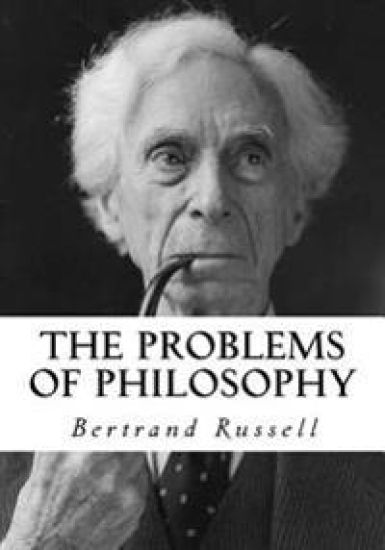
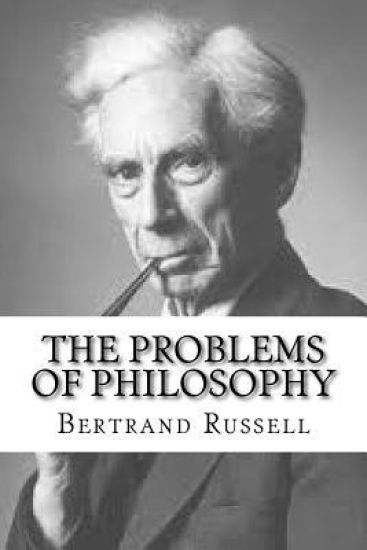
The Problems of Philosophy is a 1912 book by Bertrand Russell, in which Russell attempts to create a brief and accessible guide to the problems of philosophy. Focusing on problems he believes will provoke positive and constructive discussion, Russell concentrates on knowledge rather than metaphysics: If it is uncertain that external objects exist, how can we then have knowledge of them but by probability. There is no reason to doubt the existence of external objects simply because of sense data. Russell guides the reader through his famous 1910 distinction between "knowledge by acquaintance and knowledge by description" and introduces important theories of Plato, Aristotle, Ren Descartes, David Hume, John Locke, Immanuel Kant, Georg Wilhelm Friedrich Hegel and others to lay the foundation for philosophical inquiry by general readers and scholars alike.Each RADLEY CLASSIC is a meticulously restored, luxurious and faithful reproduction of a classic book; produced with elegant text layout, clarity of presentation, and stylistic features that make reading a true pleasure. Special attention is given to legible fonts and adequate letter sizing, correct line length for readability, generous margins and triple lead (lavish line separation); plus we do not allow any mistakes/changes/ additions to creep into the original author's words.Visit RADLEY BOOKS at www.radleybooks.com to see more classic book titles in this series.
Completed in April 1918, "in the last days before a period of imprisonment," 'The Proposed Roads to Freedom' contains Bertrand Russell's astute political commentary on anarchism, socialism, and syndicalism. Russell begins with a historical overview of socialism and anarchism, the teachings and organizations of Marx and Bakunin, and the syndicalist revolt against socialism. He then turns to more pressing problems of the future, and how these movements could contribute to reconstruction after the war. Although he has criticism for each movement, Russell respected what they attempted to achieve. "What is new in Socialism and Anarchism is that close relations of the ideal to the present sufferings of men, which has enabled powerful political movements to grow out of the hopes of solitary thinkers. It is this that makes Socialism and Anarchism important, and it is this that makes them dangerous to those who batten, consciously or unconsciously, upon the evils of our present order of society."Each RADLEY CLASSIC is a meticulously restored, luxurious and faithful reproduction of a classic book; produced with elegant text layout, clarity of presentation, and stylistic features that make reading a true pleasure. Special attention is given to legible fonts and adequate letter sizing, correct line length for readability, generous margins and triple lead (lavish line separation); plus we do not allow any mistakes/changes/ additions to creep into the original author's words.Visit RADLEY BOOKS at www.radleybooks.com to see more classic book titles in this series.
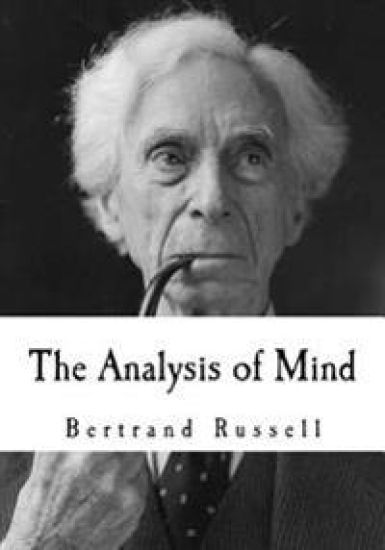
Philosopher, mathematician and social critic, Bertrand Russell was awarded the Nobel Prize for Literature in 1950. In The Analysis of Mind, one of his most in uential and exciting books, Russell presents an intriguing reconciliation of the materialism of psychology with the antimaterialism of physics. This book established a new conception of the mind and provided one of the most original and interesting externalist accounts of knowledge. Drawing upon the writings of psychologists such as William James and John Watson, Russell offers a comprehensive treatment of such considerations as belief, desire, habit, memory, meaning, and causal law. His reasoning formed the foundation for many subsequent theories of mind, as well as a framework for his own later philosophical writings. It remains one of the most important works on the philosophy of the mind."A most brilliant essay in psychology."-New Statesman "A delightful experience."-Joseph ConradEach RADLEY CLASSIC is a meticulously restored, luxurious and faithful reproduction of a classic book; produced with elegant text layout, clarity of presentation, and stylistic features that make reading a true pleasure. Special attention is given to legible fonts and adequate letter sizing, correct line length for readability, generous margins and triple lead (lavish line separation); plus we do not allow any mistakes/changes/ additions to creep into the author's words.Visit RADLEY BOOKS at www.radleybooks.com to see more classic book titles in this series.
IN DARK DAYS, men need a clear faith and a well- grounded hope; and as the outcome of these, the calm courage which takes no account of hardships by the way. The times through which we are passing have afforded to many of us a confirmation of our faith. We see that the things we had thought evil are really evil, and we know more definitely than we ever did before the directions in which men must move if a better world is to arise on the ruins of the one which is now hurling itself into destruction. We see that men's political dealings with one another are based on wholly wrong ideals, and can only be saved by quite different ideals from continuing to be a source of suffering, devastation, and sin.'Political Ideals' was written during the upheaval of World War One. It is, in many ways, a statement, of Russell's beliefs, a declaration of the ideas that in uenced his thinking on the major events of the 20th century. In this sense, it is essential reading for every student of this great philosopher.Each RADLEY CLASSIC is a meticulously restored, luxurious and faithful reproduction of a classic book; produced with elegant text layout, clarity of presentation, and stylistic features that make reading a true pleasure. Special attention is given to legible fonts and adequate letter sizing, correct line length for readability, generous margins and triple lead (lavish line separation); plus we do not allow any mistakes/changes/ additions to creep into the author's words.Visit RADLEY BOOKS at www.radleybooks.com to see more classic book titles in this series.
Pierre, jeune trentenaire parisien s'inscrit sur internet pour une randonn e destination du Mont-Saint-Michel. Il commence alors en compagnie de Clara, une singuli re jeune femme et d'Arthur leur guide, une marche qui les m nera franchir la porte myst rieuse du Mont-Saint-Michel, gard e secr te depuis la nuit des temps.Ce parcours initiatique, la crois e des chemins, entre science, chamanisme et alchimie permettra Pierre d'ouvrir son coeur la plus colossale des v rit s, celle d'une apocalypse visant l' veil de l'homme et de sa conscience. V ritable ode la beaut qui sommeille au fond de nous, ce roman est aussi le t moignage d'un homme la recherche de lui-m me, port par la gr ce d'un sentier mill naire foul par les rois: le chemin du Paradis.
In dark days, men need a clear faith and a well-grounded hope; and as the outcome of these, the calm courage which takes no account of hardships by the way. The times through which we are passing have afforded to many of us a confirmation of our faith. We see that the things we had thought evil are really evil, and we know more definitely than we ever did before the directions in which men must move if a better world is to arise on the ruins of the one which is now hurling itself into destruction. We see that men's political dealings with one another are based on wholly wrong ideals, and can only be saved by quite different ideals from continuing to be a source of suffering, devastation, and sin. Political ideals must be based upon ideals for the individual life. The aim of politics should be to make the lives of individuals as good as possible.