

Kirjahaku
Etsi kirjoja tekijän nimen, kirjan nimen tai ISBN:n perusteella.
1000 tulosta hakusanalla Boris Monsaroff

Tales of Terror: The world's most terrifying stories presented by a leading icon of fear
Boris Karloff
Booksurge Publishing
2007
nidottu
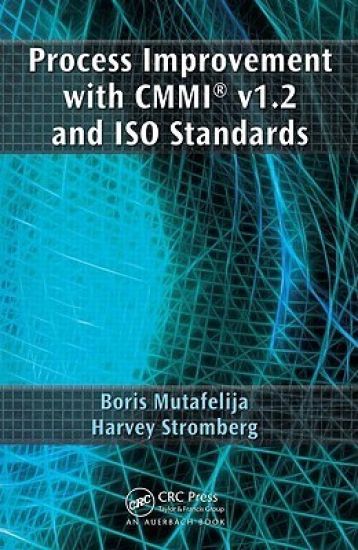
Process Improvement with CMMI v1.2 and ISO Standards
Boris Mutafelija; Harvey Stromberg
Auerbach Publishers Inc.
2008
sidottu
In this age of globalization, process improvement practitioners must be able to comprehend and work with the different standards and frameworks used around the world. While many systems and software engineering organizations rely on a single standard as the primary driver of process improvement efforts (CMMI®-based process improvement in the U.S. and ISO 9001 around the world), the most successful incorporate multiple frameworks. Process Improvement with CMMI® v1.2 and ISO Standards helps users become more versatile in using multiple process standards when creating organizational and project processes.Compares and Contrasts Different StandardsThe book begins by discussing the motivations for process improvement, the factors that make improvement difficult, and the conditions and activities that enable improvement. It examines the structure and content of Capability Maturity Model IntegrationSM, version 1.2, provides summaries of several ISO standards, and discusses the detailed relationships between four specific ISO standards (ISO 9001, ISO 15288, ISO 12207, and ISO 20000) and CMMI. The book concludes by addressing the synergy and use of multiple frameworks, discussing the process of conducting appraisals against multiple frameworks, and examining the collection of objective evidence required by each standard and appraisal method. The authors also discuss similarities and differences among the appraisal and certification approaches.Free DownloadsThis volume is highly supplemented with numerous appendices to clarify material and a website is provided where readers can download detailed maps and corresponding correlation matrices. This bonus material allows users to further experiment with the framework relationships and be more equipped to deal with the myriad of standards and frameworks they may encounter.

Whether you are an experienced Security or System Administrator or a Newbie to the industry, you will learn how to use native, "out-of-the-box," operating system capabilities to secure your UNIX environment. No need for third-party software or freeware tools to be and stay secure! This book will help you ensure that your system is protected from unauthorized users and conduct intrusion traces to identify the intruders if this does occur. It provides you with practical information to use of the native OS security capabilities without the need for a third party security software application. Also included are hundreds of security tips, tricks, ready-to-use scripts and configuration files that will be a valuable resource in your endeavor to secure your UNIX systems.

Conversation-powered leadership How can leaders make their big or growing companies feel small again? How can they recapture the "magic"--the tight strategic alignment, the high level of employee engagement--that drove and animated their organization when it was a start-up? As more and more executives have discovered in recent years, the answer to this conundrum lies in the power of conversation. In Talk, Inc., Boris Groysberg and Michael Slind show how trusted and effective leaders are adapting the principles of face-to-face conversation in order to pursue a new form of organizational conversation. They explore the promise of conversation-powered leadership--from the time-tested practice of talking straight (and listening well) to the thoughtful adoption of social media technology. And they offer guidance on how to balance the benefits of open-ended talk with the realities of strategic execution. Drawing on the experience of leaders at diverse companies from around the world, Talk, Inc., offers provocative insights and user-friendly tips on how to make organizational culture more intimate, more interactive, more inclusive, and more intentional--in short, more conversational.








This book examines Aristotle’s four causes (material, formal, efficient, and final), offering a systematic discussion of the relation between form and matter, causation, taxonomy, and teleology. The overall aim is to show that the four causes form a system, so that the form of a natural thing relates to its matter as the final cause of a natural process relates to its efficient cause. Aristotle’s Four Causes reaches two novel and distinctive conclusions. The first is that the formal cause or essence of a natural thing is not a property of this thing but a generic natural thing. The second is that the final cause of a process is not its purpose but the course that processes of its kind typically take.

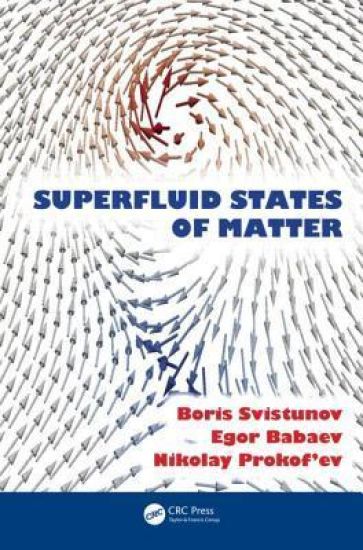
Superfluid States of Matter
Boris V. Svistunov; Egor S. Babaev; Nikolay V. Prokof'ev
CRC Press Inc
2015
sidottu
Covers the State of the Art in Superfluidity and SuperconductivitySuperfluid States of Matter addresses the phenomenon of superfluidity/superconductivity through an emergent, topologically protected constant of motion and covers topics developed over the past 20 years. The approach is based on the idea of separating universal classical-field superfluid properties of matter from the underlying system’s “quanta.” The text begins by deriving the general physical principles behind superfluidity/superconductivity within the classical-field framework and provides a deep understanding of all key aspects in terms of the dynamics and statistics of a classical-field system.It proceeds by explaining how this framework emerges in realistic quantum systems, with examples that include liquid helium, high-temperature superconductors, ultra-cold atomic bosons and fermions, and nuclear matter. The book also offers several powerful modern approaches to the subject, such as functional and path integrals.Comprised of 15 chapters, this text: Establishes the fundamental macroscopic properties of superfluids and superconductors within the paradigm of the classical matter fieldDeals with a single-component neutral matter fieldConsiders fundamentals and properties of superconductorsDescribes new physics of superfluidity and superconductivity that arises in multicomponent systemsPresents the quantum-field perspective on the conditions under which classical-field description is relevant in bosonic and fermionic systemsIntroduces the path integral formalismShows how Feynman path integrals can be efficiently simulated with the worm algorithmExplains why nonsuperfluid (insulating) ground states of regular and disordered bosons occur under appropriate conditionsExplores superfluid solids (supersolids)Discusses the rich dynamics of vortices and various aspects of superfluid turbulence at T ?0Provides account of BCS theory for the weakly interacting Fermi gasHighlights and analyzes the most crucial developments that has led to the current understanding of superfluidity and superconductivityReviews the variety of superfluid and superconducting systems available today in nature and the laboratory, as well as the states that experimental realization is currently actively pursuing

Often considered more of an art than a science, books on clustering have been dominated by learning through example with techniques chosen almost through trial and error. Even the two most popular, and most related, clustering methods—K-Means for partitioning and Ward's method for hierarchical clustering—have lacked the theoretical underpinning required to establish a firm relationship between the two methods and relevant interpretation aids. Other approaches, such as spectral clustering or consensus clustering, are considered absolutely unrelated to each other or to the two above mentioned methods. Clustering: A Data Recovery Approach, Second Edition presents a unified modeling approach for the most popular clustering methods: the K-Means and hierarchical techniques, especially for divisive clustering. It significantly expands coverage of the mathematics of data recovery, and includes a new chapter covering more recent popular network clustering approaches—spectral, modularity and uniform, additive, and consensus—treated within the same data recovery approach. Another added chapter covers cluster validation and interpretation, including recent developments for ontology-driven interpretation of clusters. Altogether, the insertions added a hundred pages to the book, even in spite of the fact that fragments unrelated to the main topics were removed. Illustrated using a set of small real-world datasets and more than a hundred examples, the book is oriented towards students, practitioners, and theoreticians of cluster analysis. Covering topics that are beyond the scope of most texts, the author’s explanations of data recovery methods, theory-based advice, pre- and post-processing issues and his clear, practical instructions for real-world data mining make this book ideally suited for teaching, self-study, and professional reference.

Handbook of Less-Common Nanostructures
Boris I. Kharisov; Oxana Vasilievna Kharissova; Ubaldo Ortiz-Mendez
CRC Press Inc
2012
sidottu
As nanotechnology has developed over the last two decades, some nanostructures, such as nanotubes, nanowires, and nanoparticles, have become very popular. However, recent research has led to the discovery of other, less-common nanoforms, which often serve as building blocks for more complex structures.In an effort to organize the field, the Handbook of Less-Common Nanostructures presents an informal classification based mainly on the less-common nanostructures. A small nanotechnological encyclopedia, this book: Describes a range of little-known nanostructuresOffers a unifying vision of the synthesis of nanostructures and the generalization of rare nanoforms Includes downloadable resources with color versions of more than 100 nanostructuresExplores the fabrication of rare nanostructures, including modern physical, chemical, and biological synthesis techniques The Handbook of Less-Common Nanostructures discusses a classification system not directly related to the dimensionality and chemical composition of nanostructure-forming compounds or composite. Instead, it is based mainly on the less-common nanostructures. Possessing unusual shapes and high surface areas, these structures are potentially very useful for catalytic, medical, electronic, and many other applications.