Do you know why the transit fare card in Boston is called the CharlieCard? Young readers will find out, and should bring an extra nickel along, when they hop aboard the T to follow Charlie through the streets of Boston in 1949. The full-page magical illustrations of Caitlin Marquis will take readers on a ride above and below the streets of Boston as they were in Charlie's time, zooming past familiar landmarks--many still standing, some long gone--wondering all the while, will Charlie ever return? Julia M. O'Brien-Merrill sets the story straight using original historical documents and the original M.T.A. song lyrics of the mayoral campaign song, written by Bess Lomax Hawes and Jackie Steiner, for her father Walter A. O'Brien, Jr. A timeline at the end of the book has juicy tidbits of Boston's history surrounding this time-honored folk song, made famous by the Kingston Trio, and will inform and enthrall readers young and old.
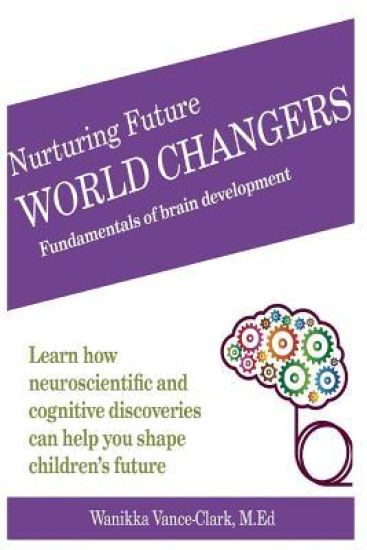
What if we could help children prepare for the future? What if we can impact them with our actions to be able to learn better and ultimately succeed in life? Many have thought about this possibility in the past but only recently have modern science been able to reveal that we can actually achieve this. 90% of all childhood brain development occurs before the age of five years and their experience during this period will have a lifelong impact. We can take advantage of this new information to help children to nurture their physiological and cognitive development. Lack of knowledge has hindered our understanding but now we know that foundational education is a priority. This book offers insights for parents and preschool teachers on: -Understanding child brain development -Harnessing the power of purposeful play -How different experience affect children's brain structure -Learning various proven strategies to teach children including storytelling, games, visualization and more -Tips on building retentive memory Children need our help to be able to cope with the future environment which will be very different from ours as technology continues to change the way we live and interact. We can use these powerful new discoveries about children's brain development to effectively shape the mind of future generations. Nurturing future world changers will help both early educators and parents to create an engaging learning experience to foster a child's positive brain development while sowing the seed for an enriching love of learning.
Lecons de philosophie de M. Laromiguiere / jugees par M. Victor Cousin et M. Maine de BiranDate de l'edition originale: 1829Ce livre est la reproduction fidele d'une oeuvre publiee avant 1920 et fait partie d'une collection de livres reimprimes a la demande editee par Hachette Livre, dans le cadre d'un partenariat avec la Bibliotheque nationale de France, offrant l'opportunite d'acceder a des ouvrages anciens et souvent rares issus des fonds patrimoniaux de la BnF.Les oeuvres faisant partie de cette collection ont ete numerisees par la BnF et sont presentes sur Gallica, sa bibliotheque numerique.En entreprenant de redonner vie a ces ouvrages au travers d'une collection de livres reimprimes a la demande, nous leur donnons la possibilite de rencontrer un public elargi et participons a la transmission de connaissances et de savoirs parfois difficilement accessibles.Nous avons cherche a concilier la reproduction fidele d'un livre ancien a partir de sa version numerisee avec le souci d'un confort de lecture optimal. Nous esperons que les ouvrages de cette nouvelle collection vous apporteront entiere satisfaction.Pour plus d'informations, rendez-vous sur www.hachettebnf.fr
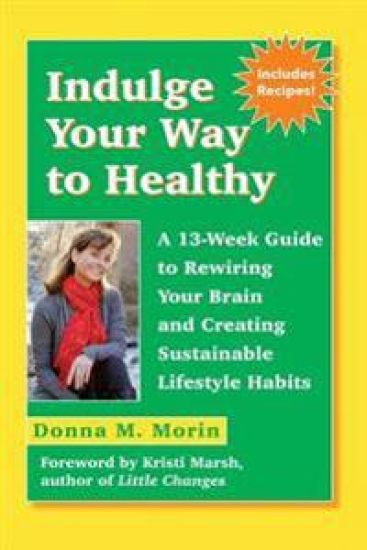
Are you stuck in a dieting cycle? Feeling down on yourself? You are not alone. In a world where the norm is processed, overscheduled, and fast, it's easy to fall into a pattern that doesn't serve our bodies and sets us up to fail. In this book, Donna Morin shares the elements of change that have most influenced her own health and those of the clients she has worked with. Rather than thinking in terms of "dieting", Donna shows how tweaking the brain to see change as a new adventure- an indulgence- can start you on a path to creating change that will last. By following the steps in this simple guide, you will begin a practice of changing how you think about yourself. Rather than focusing just on food, this book encourages you to dig a little more into the habits and thought patterns that influence the choices you make throughout your day. Stop dieting and start living. You deserve to get the most of this one precious life.
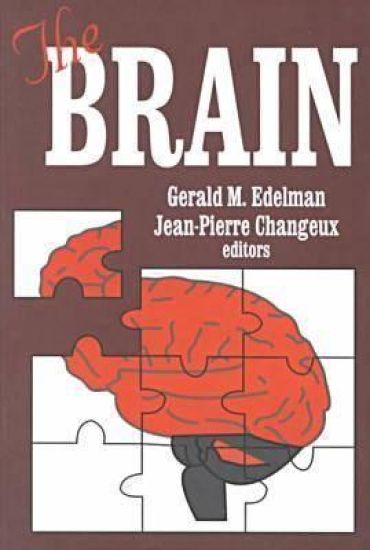
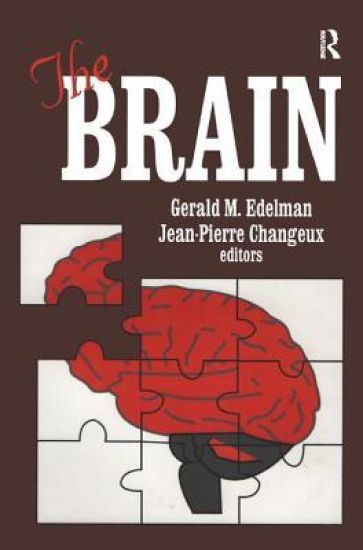
One of the vastly exciting areas in modern science involves the study of the brain. Recent research focuses not only on how the brain works but how it is related to what we normally call the mind, and throws new light on human behavior. Progress has been made in researching all that relates to interior man, why he thinks and feels as he does, what values he chooses to adopt, and what practices to scorn. All of these attributes make us human and help to explain art, philosophy, and religions. Motion, sight, and memory, as well as emotions and the sentiments common to humans, are all given new meaning by what we have learned about the brain. In an introductory essay, Vernon B. Mountcastle traces the progress made in brain science during this century. Gerald M. Edelman touches upon features of the brain that challenge the picture of the brain as a machine. Semir Zeki discusses artists and artistic expression as an extension of the function of the brain. Richard S. J. Frackowiak probes the functional architecture of the brain. Mark F. Bear and Leon N Cooper explore whether complex neural systems can be illuminated by theoretical structures. Jean-Pierre Changeux sheds light on the knowledge gained in recent years concerning the neurobiology and pharmacology of drug action and addiction. Alexander A. Borbuly and Giulio Tononi ponder the quest for the essence of sleep, illuminating its complex dynamic process. George L. Gabor Miklos examines variations in neuroanatomies and sensory systems between individuals of the same species as well as variations across the evolutionary spectrum. Emilio Bizzi and Ferdinando A. Mussa-Ivaldi explain how scientists have approached the study of movement, the problems encountered, and the solutions proposed. Marcel Kinsbourne explores the unity and diversity in the human brain. In the concluding essay, Andy Clark points to recent work in neuroscience, robotics, and psychology that stresses the unexpected intimacy of brain, body, and world, supporting his belief that the mind is best understood as a brain at home in its proper bodily cultural and environmental niche. The breadth and scope of subjects covered in this volume attest to the extraordinary progress taking place in the study of the brain. This brilliant collection of essays by those at the forefront of research in this area will be of interest to all those interested in human behavior. Gerald M. Edelman is director of the Neurosciences Institute and chairman of the Department of Neurobiology at the Scripps Research Institute. Jean-Pierre Changeux is professor at the Collbge de France and the Institute Pasteur.
One of the vastly exciting areas in modern science involves the study of the brain. Recent research focuses not only on how the brain works but how it is related to what we normally call the mind, and throws new light on human behavior. Progress has been made in researching all that relates to interior man, why he thinks and feels as he does, what values he chooses to adopt, and what practices to scorn. All of these attributes make us human and help to explain art, philosophy, and religions. Motion, sight, and memory, as well as emotions and the sentiments common to humans, are all given new meaning by what we have learned about the brain. In an introductory essay, Vernon B. Mountcastle traces the progress made in brain science during this century. Gerald M. Edelman touches upon features of the brain that challenge the picture of the brain as a machine. Semir Zeki discusses artists and artistic expression as an extension of the function of the brain. Richard S. J. Frackowiak probes the functional architecture of the brain. Mark F. Bear and Leon N Cooper explore whether complex neural systems can be illuminated by theoretical structures. Jean-Pierre Changeux sheds light on the knowledge gained in recent years concerning the neurobiology and pharmacology of drug action and addiction. Alexander A. Borbuly and Giulio Tononi ponder the quest for the essence of sleep, illuminating its complex dynamic process. George L. Gabor Miklos examines variations in neuroanatomies and sensory systems between individuals of the same species as well as variations across the evolutionary spectrum. Emilio Bizzi and Ferdinando A. Mussa-Ivaldi explain how scientists have approached the study of movement, the problems encountered, and the solutions proposed. Marcel Kinsbourne explores the unity and diversity in the human brain. In the concluding essay, Andy Clark points to recent work in neuroscience, robotics, and psychology that stresses the unexpected intimacy of brain, body, and world, supporting his belief that the mind is best understood as a brain at home in its proper bodily cultural and environmental niche. The breadth and scope of subjects covered in this volume attest to the extraordinary progress taking place in the study of the brain. This brilliant collection of essays by those at the forefront of research in this area will be of interest to all those interested in human behavior. Gerald M. Edelman is director of the Neurosciences Institute and chairman of the Department of Neurobiology at the Scripps Research Institute. Jean-Pierre Changeux is professor at the Collbge de France and the Institute Pasteur.
PERFECT GIFT FOR WORD PUZZLE LOVERS OF ALL AGES Success starts with a sharper mind The ultimate word puzzles book It is a must for anyone who enjoys problem-solving, word games, and brain teasers. Missing Vowels word puzzles are excellent for sharp brain maintenance and IQ improvement. Currently one of the ways to prevent/delay Alzheimer's & Parkinson's diseases. Puzzle-solving cuts Alzheimer's risk - according to the latest scientific research Complete the given words on each page missing the letters A, E, I, O, and U. Write the complete word in the grid on the right-hand side. Solutions are provided in reverse on the bottom of each page. The book has 10,000 numbered puzzles. "The impact of ordinary activities like listening to the radio, reading newspapers, playing puzzle games, and visiting museums...After 4 years, the risk of developing Alzheimer's disease was 47 percent lower, on average, for those who did the activities most often than for those who did them least frequently." - National Institute on Aging. Live Life Active, Agile, Brilliant, Healthy & Happy
We need to exercise our bodies to keep fit and the same is true for our brains. While running may be an excellent exercise for your heart and muscles, the best thing for your brain is learning something new and engaging. This definitive mental workout offers just that to help you build on a variety of key cognitive functions. Perfect for anyone wanting to get their grey matter moving, learn strategies to help improve their problem solving skills, and be able to recall information easier.The Brain Fitness Puzzle Book is an engaging training regime for anyone wanting to get to grips with their brain and have fun with their mental workout. Put your brain through its paces with over 80 varied puzzles that will help you with your memory, logic and reasoning abilities, creativity and lateral thinking, and much more. Learn how to stretch your brain muscles and get your grey matter moving by following the comprehensive workout – structured to imitate a physical exercise session, with a warm-up, ramping up phase, high-intensity 'cardio' challenge, and a cool-down. Get ready to be pushed to your limits as million-copy bestselling author Dr Gareth Moore and University of Cambridge’s Memory Laboratory expert, Helena M. Gellersen, show you how to put your brain to the test. Explaining the science behind the puzzles, and packed with tips and tricks throughout, this guided puzzle book is perfect for anyone wanting to get more out of their brain's cognitive abilities but isn't quite sure where to start.