Kirjojen hintavertailu. Mukana 11 536 133 kirjaa ja 12 kauppaa.

Kirjahaku

Etsi kirjoja tekijän nimen, kirjan nimen tai ISBN:n perusteella.

1000 tulosta hakusanalla Campbell Praed

Economics, Brief Edition

Economics, Brief Edition

Campbell Mcconnell; Stanley Brue; Sean Flynn

McGraw-Hill Professional
2012
sidottu
McConnell, Brue and Flynn’s Economics: Brief Edition, 2e comes from the same author team as the market-leading Principles of Economics textbook. Economics: Brief Edition tailors the core concepts from proven leader Economics, 19th edition to create a concise introduction to the course that is distinct in purpose, style, and coverage. Like the 19th edition, Economics: Brief Edition, 2e continues to be innovative while teaching students in a clear, unbiased way. Content and pedagogy have 3 main goals: help the beginning student master the principles essential for understanding the economizing problem, specific economic issues, and the policy alternatives; help the student understand and apply the economic perspective and reason accurately and objectively about economic matters; and promote a lasting student interest in economics and the economy.Connect is the only integrated learning system that empowers students by continuously adapting to deliver precisely what they need, when they need it, and how they need it, so that your class time is more engaging and effective.
Microeconomics

Microeconomics

Campbell McConnell; Stanley Brue; Sean Flynn

McGraw-Hill Professional
2014
nidottu
McConnell/Brue/Flynn has long set the standard for providing high-quality content to instructors and students all over the world. It has remained the most widely used principles of economics product as a result of persistent innovation. The 19th edition brought adaptive technology to the market for the first time with LearnSmart, a resource that ensures that every minute a student spends studying is the most efficient and productive time possible. Feedback from users in combination with the analysis of student performance data from the 19th edition's digital products significantly informed the revision of the 20th edition, resulting in a product expertly tailored to the needs of today's students. With the 20th edition, students and instructors will benefit from a new offering that expands upon the dynamic and superadaptive capabilities of LearnSmart: SmartBook, the first and only adaptive eBook. McConnell/Brue/Flynn's tradition of innovation continues with the 20th edition, providing market-leading content and digital mastery to benefit today's learners.Connect is the only integrated learning system that empowers students by continuously adapting to deliver precisely what they need, when they need it, and how they need it, so that your class time is more engaging and effective.
Economics, Brief Edition

Economics, Brief Edition

Campbell McConnell; Stanley Brue; Sean Flynn

McGraw-Hill Professional
2018
sidottu
McConnell, Brue and Flynn’s Economics: Brief Edition, 3e comes from the same author team as the market-leading Principles of Economics textbook. Economics: Brief Edition tailors the core concepts from proven leader Economics, 21st edition to create a concise introduction to the course that is distinct in purpose, style, and coverage. Like the 21st edition, Economics: Brief Edition, 3e continues to be innovative while teaching students in a clear, unbiased way. Content and pedagogy have 3 main goals: help the beginning student master the principles essential for understanding the economizing problem, specific economic issues, and the policy alternatives; help the student understand and apply the economic perspective and reason accurately and objectively about economic matters; and promote a lasting student interest in economics and the economy.Connect Economics- McConnell Brief 3e also brings a robust set of digital tools to engage today’s students. From SmartBook to videos and interactive graphs, students have the tools to learn economics principles and apply how it relates to their everyday lives.
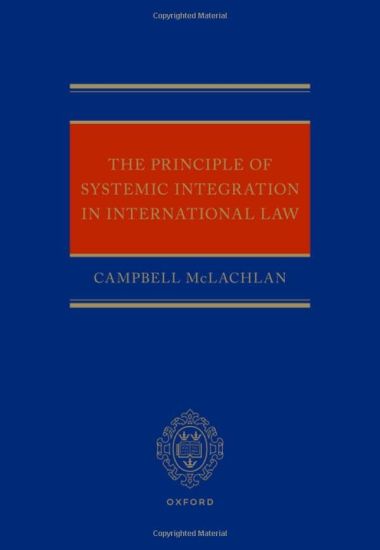
The Principle of Systemic Integration in International Law

The Principle of Systemic Integration in International Law

Campbell McLachlan KC

Oxford University Press
2024
sidottu
International law has greatly expanded in reach and density over the past few decades and its fragmented and decentralized nature is causing anxiety among those who need to resolve legal dilemmas in a system that lacks vertical hierarchy. Although the principle of systemic integration is embodied in Article 31(3)(c) of the Vienna Convention 1969, its operation and significance has not been fully assessed. The Principle of Systemic Integration in International Law fills this research gap by analysing the manner in which the principle has been applied in the judicial decisions of international courts and tribunals, together with the practice of states and international organizations in the framing of international instruments and their application. Building upon the framework he first pioneered in 2005 and the culmination of two decades of academic research and practical experience in international law, the author Campbell McLachlan KC closely examines legislative texts and cases to reflect on the principle's theoretical foundations and actual application in practice. The book argues that the principle of systemic integration contributes to an orderly framework within which conflicts between institutions and between legal norms may be addressed. It explores how disparate parts of international law are integrated in the development of bilateral and multilateral treaties and, finally, analyses the operation of the principle in international courts and tribunals. The reasoning and larger questions presented by the book will bring fresh insights to researchers and practitioners undertaking any international law project.
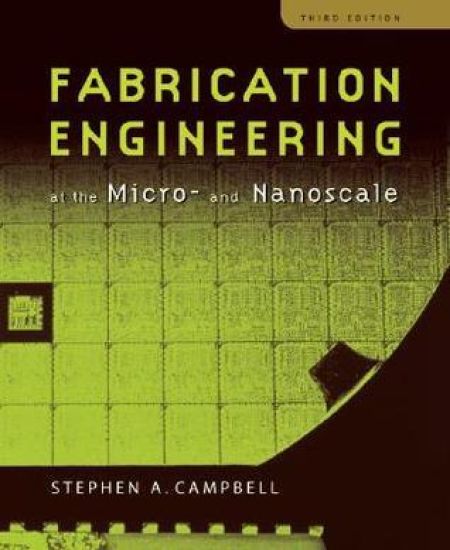
Fabrication Engineering at the Micro and Nanoscale

Fabrication Engineering at the Micro and Nanoscale

Campbell Stephen A.

Oxford University Press Inc
2008
nidottu
Designed for advanced undergraduate or first-year graduate courses in semiconductor or microelectronic fabrication, the third edition of Fabrication Engineering at the Micro and Nanoscale provides a thorough and accessible introduction to all fields of micro and nano fabrication. Completely revised and updated, the text covers the entire basic unit processes used to fabricate integrated circuits and other devices. It includes more worked examples, illustrations, and expands coverage of the frontiers of fabrication processes. The physics and chemistry of each process are introduced along with descriptions of the equipment used to carry out the processes. The text uses a popular commercial process simulation suite-the Silvaco Athena(R) set of codes-to provide meaningful examples of many of the basic processes including diffusion, oxidation, lithography, and deposition. The book goes on to discuss the integration of these basic unit processes into various technologies, concentrating on CMOS transistors. The text breaks down the material into treatments on the concepts of process modules, thermal budget, advanced architectures, and the use of channel strain for improved performance.
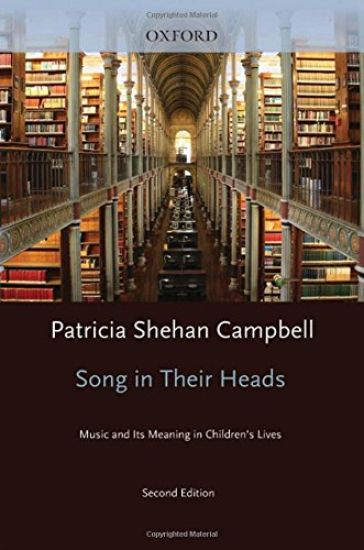
Songs in Their Heads

Songs in Their Heads

Campbell Patricia Shehan

Oxford University Press Inc
2011
sidottu
This book explores the meaning and value of music in children's lives, based upon their expressed thoughts and actual musicking behaviors in school and at play. Blending standard education field experiences with ethnomusicological techniques, Campbell demonstrates how music is personally and socially meaningful to children and what values they place on particular musical styles, songs, and functions. She explores musical behaviors in various contextual settings-in the outdoor garden of the Lakeshore Zebras' preschool, in Mr. Roberts' fifth grade classroom, on a school bus, at home with the Anderson family, in the Rundale School cafeteria, at the Toys and More Store. She documents in narrative forms some of the "songs in their heads", balancing music learned with music "made", and intentional, purposeful music with natural music behavior. From age three to tween-age, children are particularized by gender race, ethnicity, and class, and their soundscapes are described for the contexts, functions, and meanings they make of music in their lives. Treading through the individual cases and conversations is the image of the "universal child" children's culture that transcends localities, separates them from adults, and defines them as their own community of shared beliefs and practices. Songs in Their Heads is a vivid and engaging book that brides the disciplines of music education, ethnomusicology, and folklore. Designed as a text or supplemental text in a variety of music education methods courses, as well as a reference for music specialists and classroom teachers, this book will also appeal to parents interested in understand and enhancing music making in their own children.
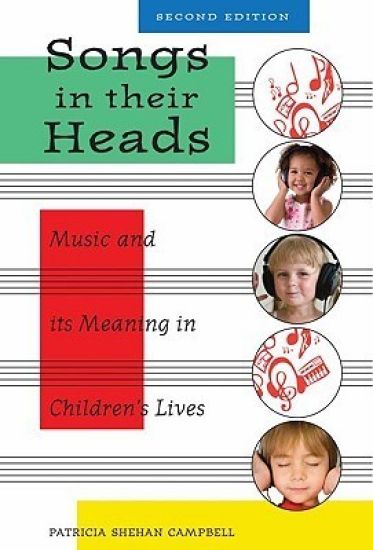
Songs in Their Heads

Songs in Their Heads

Campbell Patricia Shehan

Oxford University Press Inc
2011
nidottu
This book explores the meaning and value of music in children's lives, based upon their expressed thoughts and actual musicking behaviors in school and at play. Blending standard education field experiences with ethnomusicological techniques, Campbell demonstrates how music is personally and socially meaningful to children and what values they place on particular musical styles, songs, and functions. She explores musical behaviors in various contextual settings-in the outdoor garden of the Lakeshore Zebras' preschool, in Mr. Roberts' fifth grade classroom, on a school bus, at home with the Anderson family, in the Rundale School cafeteria, at the Toys and More Store. She documents in narrative forms some of the "songs in their heads", balancing music learned with music "made", and intentional, purposeful music with natural music behavior. From age three to tween-age, children are particularized by gender race, ethnicity, and class, and their soundscapes are described for the contexts, functions, and meanings they make of music in their lives. Treading through the individual cases and conversations is the image of the "universal child" children's culture that transcends localities, separates them from adults, and defines them as their own community of shared beliefs and practices. Songs in Their Heads is a vivid and engaging book that brides the disciplines of music education, ethnomusicology, and folklore. Designed as a text or supplemental text in a variety of music education methods courses, as well as a reference for music specialists and classroom teachers, this book will also appeal to parents interested in understand and enhancing music making in their own children.
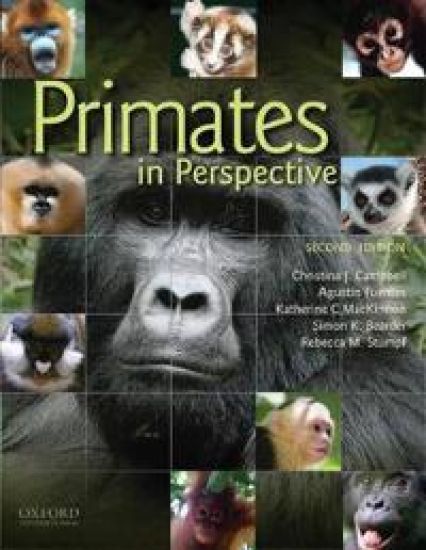
Primates In Perspective

Primates In Perspective

Campbell; Fuentes; MacKinnon; Bearder; Stumpf

Oxford University Press Inc
2010
nidottu
Featuring forty-seven original essays by seventy leading researchers, Primates in Perspective, Second Edition, offers a comprehensive and contemporary overview of all major areas of primatology. Thoroughly revised and updated throughout, the second edition offers a diversity of theoretical positions on such topics as reproduction, ecology, and social behavior and intelligence. Primates in Perspective, Second Edition, is ideal for introductory primatology courses and can also be used in upper-division behavior and conservation courses. Additionally, it is an essential reference for primate researchers.
Musical Instruments

Musical Instruments

Campbell Murray; Clive Greated; Myers Arnold

Oxford University Press
2004
sidottu
Musical Instruments presents the first comprehensive survey to explain how Western musical instruments work, how they developed historically, how they are manufactured, and how they are used to make music. After introducing the nature of sounds in music, and the sound production mechanisms of different families of instruments, the authors survey each family in turn, giving a description of the distinguishing acoustical features, the various forms of instruments adopted in different periods, the variety of sizes and shapes in current use, the manufacturing processes, and the playing techniques commonly used by performers. The full index and glossary also contain definitions of technical terms and notes on instruments not included in the text, making this the essential reference for everyone researching and working with musical instruments and performance.
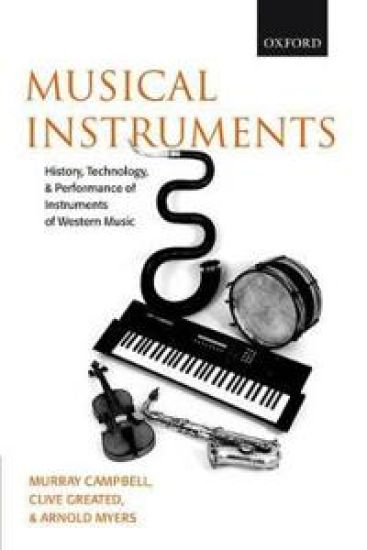
Musical Instruments

Musical Instruments

Campbell Donald Murray; Clive Alan Greated; Myers Arnold

Oxford University Press
2006
nidottu
Musical Instruments presents the first comprehensive survey to explain how Western musical instruments work, how they developed historically, how they are manufactured, and how they are used to make music. After introducing the nature of sounds in music, and the sound production mechanisms of different families of instruments, the authors survey each family in turn, giving a description of the distinguishing acoustical features, the various forms of instruments adopted in different periods, the variety of sizes and shapes in current use, the manufacturing processes, and the playing techniques commonly used by performers. The full index and glossary also contain definitions of technical terms and notes on instruments not included in the text, making this the essential reference for everyone researching and working with musical instruments and performance.
John Milton

John Milton

Campbell; Corns

Oxford University Press
2010
nidottu
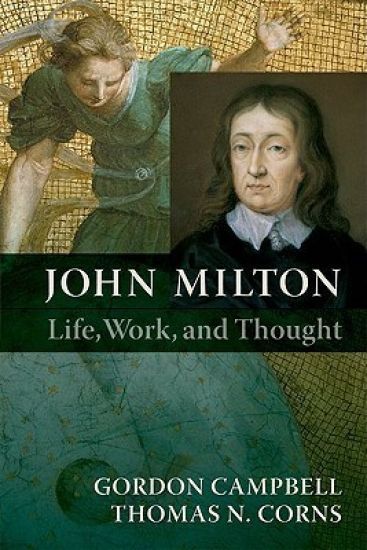
This book re-examines scrupulously the writings and the life records of John Milton, in the context of a proper understanding of the recent developments in seventeenth-century historiography. Milton's thought has often been too simply described. The approach here is to interrogate more sceptically notions like puritanism, republicanism, radicalism, and dissent. A more complex story emerges, of Milton's culturally rich but ideologically conformist early decades, and of his radicalisation during the later years of Laudianism. We track the internal dynamics of English puritanism in the 1640s and the impact that has on his own convictions. In the 1650s Milton's thought and beliefs were reconciled to the role as public servant. In the 1660s a renewed confidence carried him towards the completion of his greatest project, Paradise Lost, and his final years were ones of creative fulfilment and renewed political engagement. Amid the discontinuities occasioned by shifting political circumstance, by the exigencies of polemical context, and the diversity of genres in which he wrote, Milton emerged as a major political thinker and significant systematic theologian, as well as the most eloquent prose writer and most accomplished poet of the age. A more human Milton appears in these pages, flawed, self-contractory, self-serving, arrogant, passionate, ruthless, ambitious, and cunning, as well as the literary genius who achieved so much.
International Investment Arbitration

International Investment Arbitration

Campbell McLachlan; Laurence Shore; Matthew Weiniger

Oxford University Press
2017
sidottu
This is the long-awaited second edition of this widely-referenced work on the substantive law principles of investment treaty arbitration. It forms a detailed critical review of the substantive principles of international law applied by investment arbitration tribunals, and a clear and comprehensive description of the present state of the law. The first edition met with immediate success as a result of the authors' achievement in describing and analysing the volume of law created, applied and analysed by tribunals. The second edition is fully updated to take account of the arbitration awards rendered in the period since 2007. Written by an internationally recognised author team, it is now the most comprehensive and up to date work in its field and no practitioner or academic can afford to be without it. Key areas of coverage include: the instruments under which investment disputes arise; the legal basis of treaty arbitration; dispute resolution and parallel proceedings; who is a foreign investor, including nationality issues and foreign control; what is an investment; investors' substantive rights, including fair and equitable treatment; expropriation; compensation and remedies. Arbitration of overseas investment disputes is one of the fastest growing areas of international dispute resolution. The exponential growth of international investment in recent years has led to the signature of over two thousand Bilateral Investment Treaties (BITs) between foreign states, in addition to a wealth of multilateral treaties and other forms of concession agreements. The legal principles that have developed in this area are subject to intense debate, and are still in a state of flux. While tribunals routinely state that they are applying principles of public international law to determine disputes, many of the principles applied have only been developed recently in the context of investment treaty arbitrations, and tribunals are often guided more by the approaches taken by other tribunals, than by pre-existing doctrines of public international law. International Investment Arbitration:Substantive Principles is an important contribution to the collection and codification of the current state of practice in this field.
Spare the Rod

Spare the Rod

Campbell F. Scribner; Bryan R. Warnick

University of Chicago Press
2021
sidottu
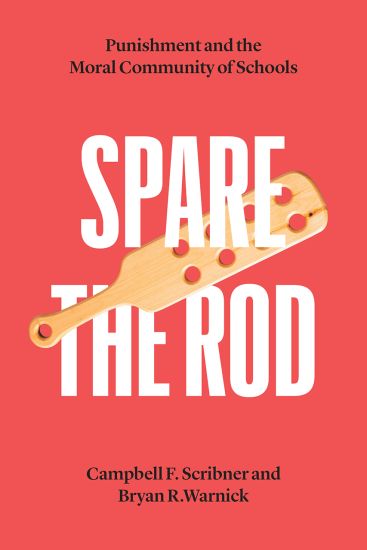
Spare the Rod traces the history of discipline in schools and its ever increasing integration with prison and policing, ultimately arguing for an approach to discipline that aligns with the moral community that schools could and should be. In Spare the Rod, historian Campbell F. Scribner and philosopher Bryan R. Warnick investigate the history and philosophy of America’s punishment and discipline practices in schools. To delve into this controversial subject, they first ask questions of meaning. How have concepts of discipline and punishment in schools changed over time? What purposes are they supposed to serve? And what can they tell us about our assumptions about education? They then explore the justifications. Are public school educators ever justified in punishing or disciplining students? Are discipline and punishment necessary for students’ moral education, or do they fundamentally have no place in education at all? If some form of punishment is justified in schools, what ethical guidelines should be followed? The authors argue that as schools have grown increasingly bureaucratic over the last century, formalizing disciplinary systems and shifting from physical punishments to forms of spatial or structural punishment such as in-school suspension, school discipline has not only come to resemble the operation of prisons or policing, but has grown increasingly integrated with those institutions. These changes and structures are responsible for the school-to-prison pipeline. They show that these shifts disregard the unique status of schools as spaces of moral growth and community oversight, and are incompatible with the developmental environment of education. What we need, they argue, is an approach to discipline and punishment that fits with the sort of moral community that schools could and should be.
Spare the Rod

Spare the Rod

Campbell F. Scribner; Bryan R. Warnick

University of Chicago Press
2021
nidottu
Spare the Rod traces the history of discipline in schools and its ever increasing integration with prison and policing, ultimately arguing for an approach to discipline that aligns with the moral community that schools could and should be. In Spare the Rod, historian Campbell F. Scribner and philosopher Bryan R. Warnick investigate the history and philosophy of America’s punishment and discipline practices in schools. To delve into this controversial subject, they first ask questions of meaning. How have concepts of discipline and punishment in schools changed over time? What purposes are they supposed to serve? And what can they tell us about our assumptions about education? They then explore the justifications. Are public school educators ever justified in punishing or disciplining students? Are discipline and punishment necessary for students’ moral education, or do they fundamentally have no place in education at all? If some form of punishment is justified in schools, what ethical guidelines should be followed? The authors argue that as schools have grown increasingly bureaucratic over the last century, formalizing disciplinary systems and shifting from physical punishments to forms of spatial or structural punishment such as in-school suspension, school discipline has not only come to resemble the operation of prisons or policing, but has grown increasingly integrated with those institutions. These changes and structures are responsible for the school-to-prison pipeline. They show that these shifts disregard the unique status of schools as spaces of moral growth and community oversight, and are incompatible with the developmental environment of education. What we need, they argue, is an approach to discipline and punishment that fits with the sort of moral community that schools could and should be.
The Chasm Between Us

The Chasm Between Us

Campbell Anderson

TellWell Press
2025
pokkari
Getting back out there could mean consequences, both good and ugly. I've seen ugly. But on this side of paradise, I've also seen good.Loss is no stranger to Sam Cardiff, having lost his grandpa and ex-girlfriend. Now, three years later as a med student, he's confident life is getting back on the right track-until his cat is the victim of a hit and run. Haunted by shame and memories of bad decisions, Sam finds himself in a numbing downward spiral of drinking.Amidst his grief, he meets optimistic, down-to-earth surfer Gracie Goldstone, and a spark ignites. As they grow closer, Sam learns her past isn't as bright as he imagined. Gracie's has seen beauty but is also raw - as is the shocking truth Sam discovers about them both, forcing him to the edge of faith. He's back in a bad place, but this time it's much darker. To overcome, he will have to embrace what it means to love and be loved.Set in Melbourne, this contemporary novel is Campbell Anderson's debut and deals with themes of grief, mental illness, the supernatural, Christian faith, family and relationships.
The Chasm Between Us

The Chasm Between Us

Campbell Anderson

TellWell Press
2025
sidottu
Getting back out there could mean consequences, both good and ugly. I've seen ugly. But on this side of paradise, I've also seen good.Loss is no stranger to Sam Cardiff, having lost his grandpa and ex-girlfriend. Now, three years later as a med student, he's confident life is getting back on the right track-until his cat is the victim of a hit and run. Haunted by shame and memories of bad decisions, Sam finds himself in a numbing downward spiral of drinking.Amidst his grief, he meets optimistic, down-to-earth surfer Gracie Goldstone, and a spark ignites. As they grow closer, Sam learns her past isn't as bright as he imagined. Gracie's has seen beauty but is also raw - as is the shocking truth Sam discovers about them both, forcing him to the edge of faith. He's back in a bad place, but this time it's much darker. To overcome, he will have to embrace what it means to love and be loved.Set in Melbourne, this contemporary novel is Campbell Anderson's debut and deals with themes of grief, mental illness, the supernatural, Christian faith, family and relationships.
The Trouble with Psychotherapy

The Trouble with Psychotherapy

Campbell Purton

Red Globe Press
2014
nidottu
Current therapeutic practice is grounded in traditional theories of psychotherapy, such as the theories that underlie cognitive-behavioural, psychodynamic and person-centred practice. But none of these approaches has been proven to be more effective than any other, leaving the therapist with an ethical and professional dilemma: how do you advocate and practise one theory with your clients, when a completely different theoretical approach is being successfully practised down the road?In this book Campbell Purton argues that psychotherapy and counselling theories fail to provide adequate justification for their practice. Part 1 highlights the weaknesses and dangers that underlie traditional counselling theories and their derivatives, including psychodynamic, cognitive behavioural, existential and neuroscience approaches. Having unpicked these theories, Part 2 goes on to develop an exciting new way of thinking about therapy that does not rely on theory - one that can be likened to a 'common sense' approach to therapeutic practice.This book poses important questions and offers unique insight for anyone studying or practising in the field of counselling and psychotherapy.