

Kirjahaku
Etsi kirjoja tekijän nimen, kirjan nimen tai ISBN:n perusteella.
1000 tulosta hakusanalla Cesar Weiss





This report documents the productivity trends in Sub-Saharan Africa at three different dimensions; namely, the aggregate level, the sectoral level, and the establishment level. It characterizes the evolution of productivity in the region vis-à-vis other countries and regions as well as country groups in Africa classified by their degree of natural resources abundance and condition of fragility. The core of this volume rests upon the assessment of the implications on aggregate productivity of production decisions across agricultural farms and manufacturing firms in Sub-Saharan Africa. It produces and gathers evidence on aggregate productivity from the perspective of production units, using recent household surveys for farmers and firm-level surveys for select African countries, and frontier estimation techniques. The empirical work presented in this volume can provide further guidance for productivity analysis and the design of a policy agenda for the region.
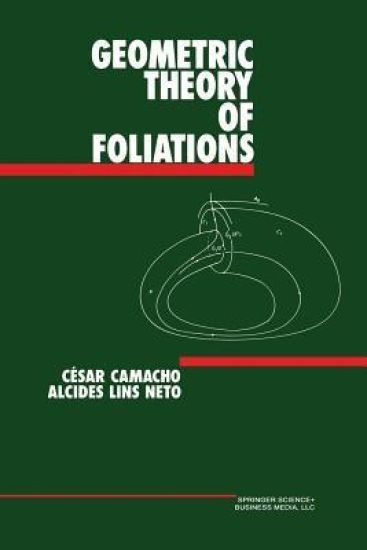
Intuitively, a foliation corresponds to a decomposition of a manifold into a union of connected, disjoint submanifolds of the same dimension, called leaves, which pile up locally like pages of a book. The theory of foliations, as it is known, began with the work of C. Ehresmann and G. Reeb, in the 1940's; however, as Reeb has himself observed, already in the last century P. Painleve saw the necessity of creating a geometric theory (of foliations) in order to better understand the problems in the study of solutions of holomorphic differential equations in the complex field. The development of the theory of foliations was however provoked by the following question about the topology of manifolds proposed by H. Hopf in the 3 1930's: "Does there exist on the Euclidean sphere S a completely integrable vector field, that is, a field X such that X· curl X • 0?" By Frobenius' theorem, this question is equivalent to the following: "Does there exist on the 3 sphere S a two-dimensional foliation?" This question was answered affirmatively by Reeb in his thesis, where he 3 presents an example of a foliation of S with the following characteristics: There exists one compact leaf homeomorphic to the two-dimensional torus, while the other leaves are homeomorphic to two-dimensional planes which accu mulate asymptotically on the compact leaf. Further, the foliation is C"".



Atenea XXI - Coleccion 2019
Cesar A Alvárez; Jordi Izquierdo Berbel; Ignasi Coscojuela
Lulu Press Inc
2022
pokkari
Todos estos ensayos y entrevistas son un recopilatorio de mi trabajo realizado hasta la fecha procedente de varias publicaciones de contenido cultural, soci logo y art stico. La principal de todas ellas es el ltimo proyecto en el que participo, donde estoy como redactor jefe de la revista cultural Atenea XXI. Espero que disfrut is y que sea de vuestro agrado.
In Health in Ruins CÉsar Ernesto AbadÍa-Barrero chronicles the story of El Materno-Colombia’s oldest maternity and neonatal health center and teaching hospital-over several decades as it faced constant threats of government shutdown. Using team-based and collaborative ethnography to analyze the social life of neoliberal health policy, AbadÍa-Barrero details the everyday dynamics around teaching, learning, and working in health care before, during, and after privatization. He argues that health care privatization is not only about defunding public hospitals; it also ruins rich traditions of medical care by denying or destroying ways of practicing medicine that challenge Western medicine. Despite radical cuts in funding and a corrupt and malfunctioning privatized system, El Materno’s professors, staff, and students continued to find ways to provide innovative, high-quality, and noncommodified health care. By tracking the violences, conflicts, hopes, and uncertainties that characterized the struggles to keep El Materno open, AbadÍa-Barrero demonstrates that any study of medical care needs to be embedded in larger political histories.
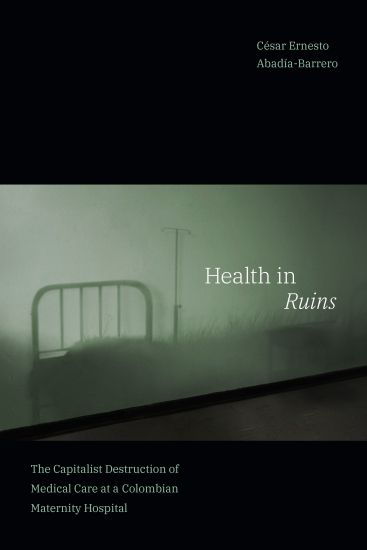
In Health in Ruins CÉsar Ernesto AbadÍa-Barrero chronicles the story of El Materno-Colombia’s oldest maternity and neonatal health center and teaching hospital-over several decades as it faced constant threats of government shutdown. Using team-based and collaborative ethnography to analyze the social life of neoliberal health policy, AbadÍa-Barrero details the everyday dynamics around teaching, learning, and working in health care before, during, and after privatization. He argues that health care privatization is not only about defunding public hospitals; it also ruins rich traditions of medical care by denying or destroying ways of practicing medicine that challenge Western medicine. Despite radical cuts in funding and a corrupt and malfunctioning privatized system, El Materno’s professors, staff, and students continued to find ways to provide innovative, high-quality, and noncommodified health care. By tracking the violences, conflicts, hopes, and uncertainties that characterized the struggles to keep El Materno open, AbadÍa-Barrero demonstrates that any study of medical care needs to be embedded in larger political histories.
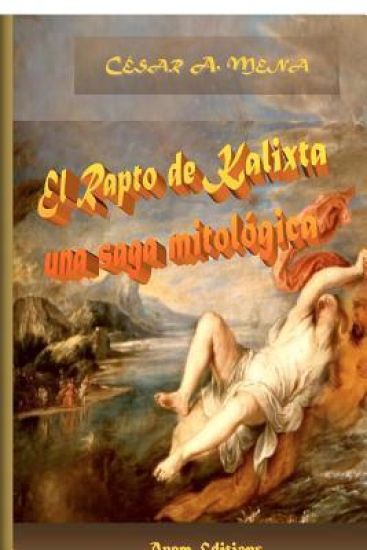
Los dioses desterrados de la H lade, representados en esta historia por Dionisos, conviven otra vez con los mortales, navegando por los mismos mares, recorriendo campos, cruzando r os y monta as, caminando por los senderos que anta o recorr an los dioses antes de ser destronados. Los protagonistas de esta historia, Prota y Kalixta, pudieron ser con Teocl meno, Euriloco y muchos otros, personajes de los tiempos mitol gicos, cuando los dioses fraternizaban con los hombres, y las mujeres conceb an de ellos h roes y semidioses que cortaban cabezas de Gorgonas, cegaban c clopes, peleaban contra monstruos y venc an ej rcitos enemigos. Quiz alg n lector esc ptico objetar que Prota y Kalixta no existieron en los tiempos mitol gicos ni en ninguna otra poca, o parte alguna de la Tierra. Y qu importa que no hayan existido? Si Prota y Kalixta no existieron nunca, hoy empiezan a vivir en el mundo de la fabulaci n. Dejo, pues, al lector en manos de Mart n Soto, el escritor simplista y responsable de esta historia, para que lo conduzca por los m gicos senderos de la fantas a a la legendaria e inmortal H lade de los dioses ol mpiicos.
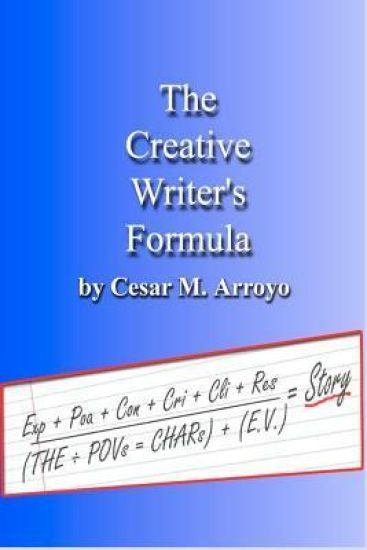
The Creative Writer's Formula
Cesar M. Arroyo
Createspace Independent Publishing Platform
2012
nidottu