Kirjahaku
Etsi kirjoja tekijän nimen, kirjan nimen tai ISBN:n perusteella.
1000 tulosta hakusanalla Christine Sinclair
This book sets out to explain how the reflexive inquiry model can be adapted to research so that consultants can continue to evaluate their work and learn from the process. It draws out some implications of the principles, arguments, models, and tools presented for undertaking research.
This book allows patients to speak for themselves about their psychoanalytic experiences. It challenges the preconceived perception that the analytic practitioner "knows best" when it comes to treatment, and responds to the growing sophistication of those seeking the treatment.
This book focuses on women’s human rights in India. Drawing on case studies, it provides a clear overview of the key sources on gender and rights in the country. Further, it contextualizes women’s rights at the critical intersection of caste, religion and class, and analyses barriers to the realization of women’s human rights in practice. It also develops strategies for moving forward towards greater recognition, protection, promotion and fulfilment of women’s human rights in India. Drawing on critical pedagogical tools to analyse groundbreaking court cases, this book will be a key text in human rights studies. It will be indispensable to students, scholars and researchers of gender studies, sociology, law and human rights.
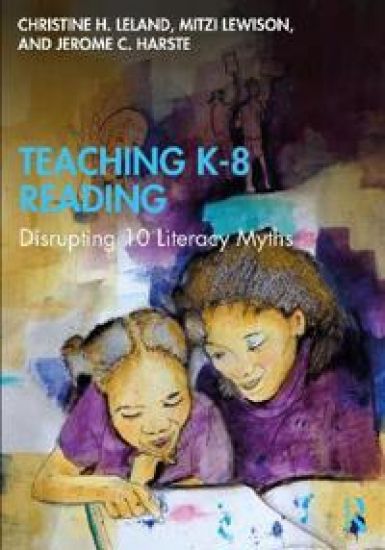
Accessible and engaging, this methods textbook provides a roadmap for improving reading instruction. Leland, Lewison, and Harste explain why certain ineffective or debunked literacy techniques prevail in the classroom, identify the problematic assumptions that underly these popular myths, and offer better alternatives for literacy teaching. Grounded in a mantra that promotes critical thinking and agency—Enjoy! Dig Deeply! Take Action!—this book presents a clear framework, methods, and easy applications for designing and implementing effective literacy instruction.Numerous teaching strategies, classroom examples, teacher vignettes, and recommendations for using children’s and adolescent literature found in this book make it an ideal text for preservice teachers in elementary and middle school reading, and English language arts methods courses as well as a practical resource for professional in-service workshops and teachers.Key features include: Instructional engagements for supporting students as they read picture books, chapter books, and news articles, and interact with social media and participate in the arts and everyday life;Voices from the field that challenge mythical thinking and offer realworld examples of what effective reading and language arts instruction looks like in practice;Owl statements that alert readers to key ideas for use when planning reading and language arts instruction.
Emphasizing that it's much easier and more cost effective to make changes in the planning phases of a project rather than later on, Project Management Tools and Techniques for Success provides an accessible introduction to project management fundamentals. Highlighting approaches for avoiding common pitfalls, it begins with an introduction to project management that compares and contrasts the stages of poor management with those of effective management. Because change is inherent in virtually all projects, the text outlines the human effects of change and suggests ways to mitigate these effects. It addresses team dynamics, sourcing alternatives, motivating the team, managing expectations, assessing risk, and defining and prioritizing project requirements. The book translates difficult concepts into practical applications with a case study that examines the merger of two companies, along with the subsequent development of a new corporate headquarters. By adding a layer of statistical methods and tools to the front-end of a project, Design for Six Sigma (DFSS) augments standard Six Sigma processes to help ensure project results meet customers' needs and that delays caused by new requirements or rework after implementation are eliminated or reduced. The book explains how to effectively incorporate DFSS tools to reduce the possibility of failure in your next project. Clearly illustrating effective project management practices, the book includes a listing of commonly used acronyms, suggestions for additional reading, along with instructions on how to create four of the most important tools discussed in the book.
On the Significance of Religion in Conflict and Conflict Resolution
Christine Schliesser; S. Ayse Kadayifci-Orellana; Pauline Kollontai
Routledge
2020
nidottu
In this ground-breaking volume, the authors analyze the role of religion in conflict and conflict resolution. They do so from the perspectives of Judaism, Christianity, and Islam, while bringing different disciplines into play, including peace and conflict studies, religious studies, theology, and ethics. With much of current academic, political, and public attention focusing on the conflictive dimensions of religion, this book also explores the constructive resources of religion for conflict resolution and reconciliation. Analyzing the specific contributions of religious actors in this field, their potentials and possible problems connected with them, this book sheds light on the concrete contours of the oftentimes vague “religious factor” in processes of social change. Case studies in current and former settings of violent conflict such as Israel, post-genocide Rwanda, and Pakistan provide “real-life” contexts for discussion. Combining cutting-edge research with case studies and concrete implications for academics, policy makers, and practitioners, this concise and easily accessible volume helps to build bridges between these oftentimes separated spheres of engagement.The Open Access version of this book, available at:http://doi.org/10.4324/9781003002888, has been made available under a Creative Commons Attribution-Non Commercial-No Derivatives 4.0 license.
Effective Online Searching
Christine L. Borgman; Dineh Moghdam; Patti K. Corbett
CRC Press
2020
nidottu
This book focuses on searching and hands-on experience, which makes the text suitable for those who wish to learn searching for their own use as well. It is intended for those who will act as search intermediaries, accepting questions from clients and performing the searches.
On the Significance of Religion in Conflict and Conflict Resolution
Christine Schliesser; S. Ayse Kadayifci-Orellana; Pauline Kollontai
Routledge
2020
sidottu
In this ground-breaking volume, the authors analyze the role of religion in conflict and conflict resolution. They do so from the perspectives of Judaism, Christianity, and Islam, while bringing different disciplines into play, including peace and conflict studies, religious studies, theology, and ethics. With much of current academic, political, and public attention focusing on the conflictive dimensions of religion, this book also explores the constructive resources of religion for conflict resolution and reconciliation. Analyzing the specific contributions of religious actors in this field, their potentials and possible problems connected with them, this book sheds light on the concrete contours of the oftentimes vague “religious factor” in processes of social change. Case studies in current and former settings of violent conflict such as Israel, post-genocide Rwanda, and Pakistan provide “real-life” contexts for discussion. Combining cutting-edge research with case studies and concrete implications for academics, policy makers, and practitioners, this concise and easily accessible volume helps to build bridges between these oftentimes separated spheres of engagement.The Open Access version of this book, available at:http://doi.org/10.4324/9781003002888, has been made available under a Creative Commons Attribution-Non Commercial-No Derivatives 4.0 license.
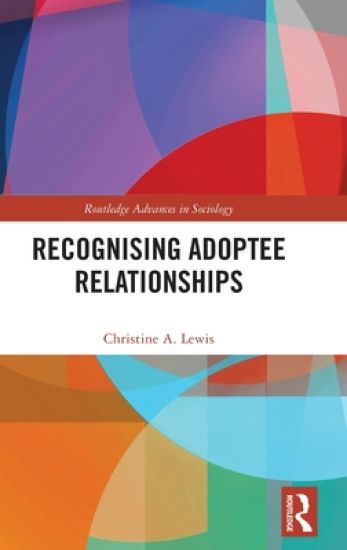
With a triadic perspective, this autoethnographic narrative explores the temporal, situated nature of interactions between the author as an adoptee with her adult adopted children as well as those between herself and her birth father and mother. The epiphanic adoptive family narratives that are foregrounded seek to deepen and challenge understanding of how kinship affinities are experienced. The autoethnographic narratives are written in a critical, evocative style which is valuable for two reasons. Firstly, the processes of reflexive self-introspection, self-observation and dialogue with relational others have established a critical connection between recognising and responding to kinship affinities and personal growth. Secondly, lying at the intersection of the self and other this narrative contributes to deepening insights around epistemic in/justice in adoptive kinship. This book will be of interest to educators and scholars of adoption in offering an insider perspective on unique family relationships as well as how the author undertakes critical evocative autoethnography. Adoptees, adoptive parents, and birth parents will also find the narratives in Part II of this book of particular interest in informing an understanding of kin relationships and how these may be subject to change over time.
This book explains and illustrates criminal justice research topics, including ethics in research, research design, causation, operationalization of variables, sampling, methods of data collection (including surveys), reliance on existing data, validity, and reliability. For each approach, the book addresses the procedures and issues involved, the method’s strengths and drawbacks, and examples of actual research using that method. Every section begins with a brief summary of the research method. Introductory essays set the stage for students regarding the who, what, when, where, and why of each research example, and relevant discussion questions and exercises direct students to focus on the important concepts.Research Methods for Criminal Justice and Criminology: A Text and Readerfeatures interesting and relevant articles from leading journals, which have been expertly edited to highlight research design issues. The text offers instructors a well-rounded and convenient collection that eliminates the need to sift through journals to find articles that illustrate important precepts. All articles are recent and address issues relevant to the field today, such as immigration and crime, security post-9/11, racial profiling, and selection bias in media coverage of crime. Ensuring a rich array, additional articles are downloadable at the Support Material tab at www.routledge.com/9780367508890. Instructors can access password-protected PowerPoint slides, test banks, and exercises at the link under Instructor & Student Resources.The book encourages classroom discussion and critical thinking and is an essential tool for undergraduate and graduate research methods courses in criminal justice, criminology, and related fields.
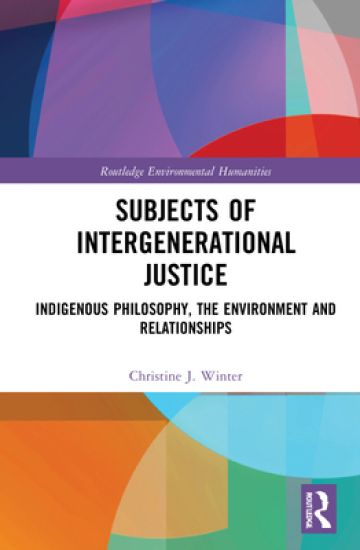
This book challenges mainstream Western IEJ (intergenerational environmental justice) in a manner that privileges indigenous philosophies and highlights the value these philosophies have for solving global environmental problems.Divided into three parts, the book begins by examining the framing of Western liberal environmental, intergenerational and indigenous justice theory and reviews decolonial theory. Using contemporary case studies drawn from the courts, film, biography and protests actions, the second part explores contemporary Maori and Aboriginal experiences of values-conflict in encounters with politics and law. It demonstrates the deep ontological rifts between the philosophies that inform Maori and Aboriginal intergenerational justice (IJ) and those of the West that underpin the politics and law of these two settler states. Existing Western IEJ theories, across distributional, communitarian, human rights based and the capabilities approach to IJ, are tested against obligations and duties of specific Maori and Aboriginal iwi and clans. Finally, in the third part, it explores the ways we relate to time and across generations to create regenerative IJ. Challenging the previous understanding of the conceptualization of time, it posits that it is in how we relate—human to human, human to nonhuman, nonhuman to human—that robust conceptualization of IEJ emerges. This volume presents an imagining of IEJ which accounts for indigenous norms on indigenous terms and explores how this might be applied in national and international responses to climate change and environmental degradation.Demonstrating how assumptions in mainstream justice theory continue to colonise indigenous people and render indigenous knowledge invisible, this book will be of great interest to students and scholars of environmental and intergenerational philosophy, political theory, indigenous studies and decolonial studies, and environmental humanities more broadly.
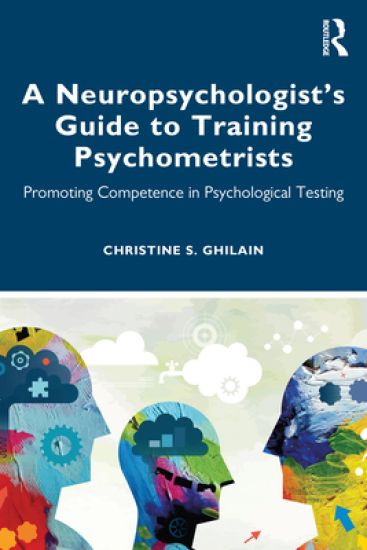
A Neuropsychologist's Guide to Training Psychometrists: Promoting Competence in Psychological Testing provides a framework for busy neuropsychologists faced with training their newly-hired psychometrist. It supplies concrete guidelines and provides a roadmap for training that can be customized to any practice, department, or clinic setting. In this essential resource, Dr. Christine S. Ghilain discusses the role of the psychometrist in various neuropsychological practice settings and provides suggested minimum standards of competence across training domains. She dives deeply into the core components of assessment—from optimizing testing conditions, to standardized test administration, to keen observations of behavior—and includes coverage of topics such as testing with unique populations, behavioral management strategies for challenging situations, as well as promoting ongoing competence over time. A compilation of several sources of data, the book includes excerpts from Dr. Ghilain’s practice-specific psychometry training manual along with advice and illustrative examples from many neuropsychologists and psychometrists who shared their experiences.This book is an indispensable guide for neuropsychologists looking to instill high standards of competence in their hired professionals and for those involved in training graduate students who are just learning to administer cognitive tests. It is also of interest to other assessment-focused professionals looking to enhance their skills and refine their psychological testing knowledge.
There is much current controversy over whether the rights to seeds or plant genetic resources should be owned by the private sector or be common property. This book addresses the legal and policy aspects of the multilateral seed management regime. First, it studies in detail the International Treaty on Plant Genetic Resources for Food and Agriculture (the Treaty) in order to understand and identify its dysfunctions. Second, it proposes solutions - using recent developments of the "theory of the commons" - to improve the collective seed management system of the Treaty, a necessary condition for its member states to reach the overall food security and sustainable agriculture goals. Redesigning the Global Seed Commons provides a significant contribution to the current political and academic debates on agrobiodiversity law and governance, and on food security and food sovereignty, by analyzing key issues under the Treaty that affect the design and implementation of regulatory instruments managing seeds as a commons. It also examines the practical, legal, political and economic problems encountered in the attempt to implement these obligations in contemporary settings. In particular, it considers how to improve the Treaty implementation by proposing ways for Contracting Parties to better reach the Treaty’s objectives taking a holistic view of the human-seed ecosystem. Following the tenth anniversary of the functioning the Treaty’s multilateral system of access and benefit-sharing, which is currently under review by its Contracting Parties, this book is well-timed to examine recent developments in the field and guide the current review process to design a truly Global Seed Commons.
In the wake of tragic terrorist attacks in Western Europe, so-called parallel communities have come under increased scrutiny and pressure to be engaged and integrated in the politics and society of the country of settlement. In this context, the tools of intercultural dialogue and citizenship have been proposed to bridge the ‘gap’ between majority and minority communities. Yet, how are these concepts understood on the ground? This book explores perceptions of citizenship and intercultural dialogue among minority youth in Berlin and London; chosen for their contrasting citizenship and immigration policies. Germany has a strong ethnic heritage and the presence of a large minority community from Turkey. The policies and relationship with the Turkish community have often served to perpetuate cultural and ethnic boundaries, their presence overshadowing the numerous other ethnicities living within Germany. In the UK, the large presence of immigrants of Afro-Caribbean and Asian descent often dominates centre stage in a much more territorially defined political context, while the needs and demands of smaller communities are not commonly known. Nonetheless, these smaller communities shape and even offer unique insights into the way that local contexts interact with international and transnational structures. It is argued that in both cities, minority youths communicated feelings and experiences of marginalization and contestation, generally feeling a sense of belonging to their local neighbourhoods but not to broader society. The book explores the process of ‘valuisation’, the idea that a value is put on an immigrant according to their desirability or undesirability, based on ethnicity or skills. Furthermore, it assesses the role of education as a mediator between state and society.By arguing that local engagement has international ramifications, and highlighting the importance of the role of youth in international politics, this book offers a new perspective on International Relations and Diaspora Studies.
Disabled women represent one of the most marginalised minority groups in the world, hence they are largely silent while their sexuality is ignored, suppressed, forbidden and buried underneath the carpet. Until recently, most of the Global Northern published literature on the subject of the sexuality of disabled women has predominantly been constructed from hearsay and second-hand narratives in studies which draw from the perspectives of parents, service providers and advocates, without much consultation of the relevant women. By facilitating the voice of disabled women in Zimbabwe and illuminating their experiences of sexuality, this book hopes to shift the experiences of sexuality of disabled women from the periphery of society to the fore.Disability and Sexuality in Zimbabwe presents original research on an issue that is thus far not found in local research data. Whilst addressing the paucity of literature on the subject, the book informs policy and practice and enhances the existing body of knowledge by making recommendations towards the development of a disability and sexuality framework that is rooted in the African context. This book is of interest to students and scholars of African studies, disability studies, sociology, psychology, social work, nursing, education studies, geography, women’s and gender studies and interdisciplinary studies. Additional audiences include a wide range of health, social care, and educational professionals and practitioners, as well donors, disabled people’s organisations, charities, government departments, NGOs, supranational organisations, and policy makers