Kirjojen hintavertailu. Mukana 11 342 296 kirjaa ja 12 kauppaa.

Kirjahaku

Etsi kirjoja tekijän nimen, kirjan nimen tai ISBN:n perusteella.

1000 tulosta hakusanalla Christopher Sander

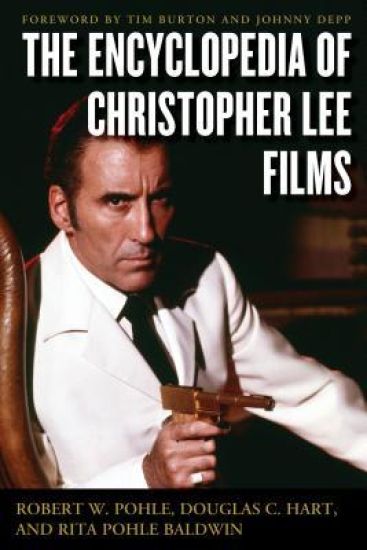
The Christopher Lee Film Encyclopedia

The Christopher Lee Film Encyclopedia

Robert W. Pohle; Douglas C. Hart; Rita Pohle Baldwin

Rowman Littlefield Publishers
2017
sidottu
In a career that spanned eight decades, Christopher Lee (1922–2015) appeared in more than 200 roles for film and television. Though he is best known for his portrayal of Dracula in films of the 1950s, ’60s, and ’70s—as well as his appearances in the Lord of the Rings trilogy—Lee also appeared in many other films, including The Three Musketeers, The Man with the Golden Gun, and Star Wars. The Christopher Lee Film Encyclopedia encompasses all of the films in the distinguished actor’s prolific career, from his early roles in the 1940s to his work in some of the most successful film franchises of all time. This reference highlights Lee’s iconic roles in horror cinema as well as his non-horror films over the years, including The Lord of the Rings and The Hobbit trilogies. The entries in this book feature: ·Cast and crew information ·Synopsis ·Critical evaluation ·Newspaper and magazine reviews ·DVD availability Many of the entries also feature Sir Christopher’s recollections about the production, as well as the actor’s insights about his directors and fellow costars. Appendices in this volume include discussions of Lee’s significant work on radio and television, as well as film shorts, screen tests, films in which he is mentioned, films from which he was cut, and unrealized projects. A film-by-film review of the actor’s cinematic output. The Christopher Lee Film Encyclopedia will appeal to this legend’s many devoted fans.
On Christopher Street

On Christopher Street

Janet Mock

Rizzoli International Publications
2016
sidottu
Best known for his portraits of celebrities, musicians, and artists, photographer Mark Seliger has lived adjacent to Christopher Street for nearly 20 years. His initial curiosity was to shoot a handful of portraits-documentary style-in hopes of capturing the colour, flamboyant characters, and theatre of a famous but vanishing neighbourhood. What he discovered was an Ellis Island of gender identity, a nightly carnival of personalities that open up a visual discourse about sexuality and the constant ebb and flow of the transgender world we all inhabit today. Each person brings a different personality and a sense of style and fashion, and Seliger captures that spirit in every photograph. The 70 portraits were taken with Seliger's Hasselblad camera, which produce a highly detailed, rich texture. All the photographs were made especially for this book and are published here for the first time. Mark Seliger was the chief photographer for Rolling Stone for more than ten years. He contributes to Vanity Fair, GQ, Time, and more. His work has been exhibited in museums and galleries around the world.
Child Christopher and Goldilind the Fair (Esprios Classics)
William Morris (24 March 1834 - 3 October 1896) was a British textile designer, poet, novelist, translator and socialist activist associated with the British Arts and Crafts Movement. He was a major contributor to the revival of traditional British textile arts and methods of production. His literary contributions helped to establish the modern fantasy genre, while he helped win acceptance of socialism in fin de si cle Great Britain.
From Christopher Columbus to the Robber Barons

From Christopher Columbus to the Robber Barons

Jerry W. Markham

TAYLOR FRANCIS LTD
2022
sidottu
Originally published in 2002, this is the first of three volumes in a history of finance in America. This volume covers the period from the 'discovery' of America to the end of the nineteenth century. It describes the status of finance in Europe at the time of Christopher Columbus' voyage to America. It then traces its transfer and development in America through the Revolution, into the Civil War and beyond to the speculative excesses occurring after that event.
From Christopher Columbus to the Robber Barons

From Christopher Columbus to the Robber Barons

Jerry W. Markham

TAYLOR FRANCIS LTD
2024
nidottu
Originally published in 2002, this is the first of three volumes in a history of finance in America. This volume covers the period from the 'discovery' of America to the end of the nineteenth century. It describes the status of finance in Europe at the time of Christopher Columbus' voyage to America. It then traces its transfer and development in America through the Revolution, into the Civil War and beyond to the speculative excesses occurring after that event.
Decoding Christopher Marlowe's Plays: A Critical Anthology: In-depth critical study of the five major plays by several eminent Indian scholars, Tambur
Marlowe's short but blazing dramatic career introduced the world to that shadowy area of the Elizabethan life, which till then, was hardly disclosed by any author. In fact, Marlowe's scathing attacks against the existing social order, took the Elizabethans by storm. Hence, many among the elites, found him rather difficult to digest. Added to it, his notorious personal life gave them material to stamp him as a person of dubious character. But with rising popularity of his plays on the English stage, they conceded his works and allowed him to thrive as a dramatist. It was only with the arrival of Shakespeare; Marlowe's works were slightly overshadowed. Nevertheless, the indelible mark that he left behind in all his seven plays, fueled the artistry of most of the future dramatists, including Shakespeare.The present collection of critical essays, intends to introduce the readers to the wide gamut of Marlovian art. It deals with five major plays of Marlowe, Tamburlaine the Great Part One, Tamburlaine the Great Part Two, The Jew of Malta, Doctor Faustus, and Edward the Second. Apart from the introduction the work includes a brief survey of Renaissance drama without which Marlowe's position in the history of English plays cannot really be ascertained. As we all know, English drama first found its expression in the religious preaching's of the churches. It then traversed a long way from the Middle Ages to reach its five-act structured form, in the Elizabethan age. Contribution of very many authors helped it to evolve in the fashion it did. The study centers round this evolution. The basic target of this volume is to provide students and scholars alike a comprehensive and over all view of Christopher Marlowe's artistic skill and also his contribution in developing English drama. As we all know, before the advent of the University Wits, structurally English drama was in a nebulous or rather experimental state. The five act structure, an acquired form from classical plays, was firmly rooted to the English stage by the seven stalwart playwrights of whom Marlowe was the brightest and most promising one. So our endeavour in the present volume has been to generate this regard and admiration for this blazing genius of the yester years. As with other writers of the period, little is known about Marlowe's personal life. Only a few legal records and official documents provide glimpses of the wildness of the man. Yet, this has not stopped writers of both fiction and non-fiction from speculating about his activities and character. The common attributes of the man has often been - a spy, a brawler, a heretic, a homosexual, as well as a "magician", "duellist", "tobacco-user", "counterfeiter" and "rakehell". J. A. Downie and Constance Kuriyama have argued against the more lurid speculation, but J.B. Steane maintains, "It seems absurd to dismiss all of these Elizabethan rumours and accusations as 'the Marlowe myth'". Marlowe's lineage however, as per documental evidences, seemed to have been above all speculation. Marlowe was the son of a prosperous shoemaker, who finally became the Mayor of Canterbury. Born in 1564 (the same year as Shakespeare) Marlowe took up scholarships first at King's School, Canterbury, and then at Corpus Christi College, Cambridge. He earned his Bachelor of Arts degree in 1584, but in 1587 the university hesitated in granting him his master's degree. Its doubts (perhaps arising from his frequent absences, or speculation that he had converted to Roman Catholicism and would soon attend college elsewhere) were set to rest, or at least dismissed, when the Privy Council sent a letter declaring that he was now working on matters dealing with the interests of his country. Consequently, he was awarded his master's degree on schedule. The nature of Marlowe's service to England however, was not specified by the council, but the letter when sent to Cambridge provoked abundant speculation.