Dive into the riveting life and pioneering work of Claude Shannon, the foundational genius behind Information Theory and digital communication. Explore Shannons childhood curiosity, university exploits, and groundbreaking achievements that revolutionized computer science, cryptography, and telecommunications during and post-World War II. This book meticulously delves into his personal life including his relationship with Betty Moore, family challenges, and psychological nuances. Honoring Shannons legacy, it illustrates the profound impact and continued relevance of his work in todays digital world while uncovering behind-the-scenes stories that shaped a legend.
Claude Cahun is the most important artist you've never heard of - until now. Writer, photographer, lesbian; revolutionary activist, surrealist, resistance fighter - Cahun witnessed the birth of the Paris avant-garde, lived through two World Wars and, as 'Der Soldat ohne Namen', risked death by inciting mutiny on Nazi-occupied Jersey. And yet, she's until recently been merely a peripheral figure in these world-shaping events, relegated by academics to the footnotes in the history of art, sexual politics and revolutionary movements of the last century. Now more so than ever, Cahun demands a significant presence in the history of surrealism and the avant-garde - even, in the literary canon of early twentieth-century literature. Indeed her one major book, Disavowals, is a masterpiece of anti-memoir writing. Much has been made of her as a photographer, but Claude Cahun 'the writer' was one of the most radical and prescient leftists of the century. At a time when her star is rising like never before Claude Cahun: The Soldier With No Name represents the first explicit attempt in English to posit Cahun as an important figure in her own right, and to popularise one of the most prescient and influential artists of her generation.
The 'Cloud', hailed as a new digital commons, a utopia of collaborative expression and constant connection, actually constitutes a strategy of vitalist post-hegemonic power, which moves to dominate immanently and intensively, organizing our affective political involvements, instituting new modes of enclosure, and, crucially, colonizing the future through a new temporality of control. The virtual is often claimed as a realm of invention through which capitalism might be cracked, but it is precisely here that power now thrives. Cloud time, in service of security and profit, assumes all is knowable. We bear witness to the collapse of both past and future virtuals into a present dedicated to the exploitation of the spectres of both.
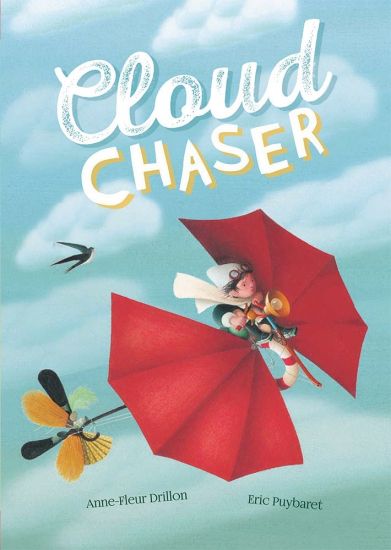
Dreamy Emery loves doodling wild inventions . . . but when a new friend moves in next door with piles of tools and ideas, can they build a real flying machine together? This charming celebration of intergenerational friendship, creativity and the thrill of scientific discovery will delight young inventors and STEM educators alike. AGES: 5 to 10 AUTHOR: Anne-Fleur Drillon is a children's book author and editor, and co-founder of the French publisher Editions Margot. She lives in France. SELLING POINTS: ? STEM LEARNING: Perfect for STEM classrooms and makerspaces, this celebration of scientific innovation and discovery will inspire young creators to make their dreams reality. ? INTERGENERATIONAL FRIENDSHIP: Told in first person from a child's point of view, Emery's tale depicts a realistic progression from shyness to friendship and shows the power of a common goal to unite people across generations. ? BEAUTIFUL ARTWORK: Stunning acrylic paintings by celebrated French artist Eric Puybaret imbue Emery's scientific journey with magic and wonder. ? ENGINEERING FOR EVERYONE: The story does not use gendered pronouns to refer to the main character, allowing children of any gender to identify with the story.
Dreamy Emery loves doodling wild inventions . . . but when a new friend moves in next door with piles of tools and ideas, can they build a real flying machine together? This charming celebration of intergenerational friendship, creativity and the thrill of scientific discovery will delight young inventors and STEM educators alike.
This is an easy-to-follow yet comprehensive guide that follows a step-by-step approach to leverage the CloudBees services. If you are a Java developer and want to explore the world of the cloud, this book is ideal for you. This book will guide you through the process of developing and deploying an application on the cloud. Prior knowledge of Java is essential.
Anthropologist Claude Lévi-Strauss was among the most influential thinkers of the twentieth century. In this rigorous study, Maurice Godelier traces the evolution of his thought. Focusing primarily on Lévi-Strauss's analysis of kinship and myth, Godelier provides an assessment of his intellectual achievements and legacy. Meticulously researched, Lévi-Strauss is written in a clear and accessible style. The culmination of decades of engagement with Lévi-Strauss's work, this book will prove indispensible to students of his thought and structural anthropology more generally.
Cloud computing is a key trend in computing and networking. Now diffused among end-users devices in mobile and wireline networks, the cloud is becoming the "fog". This book presents frameworks and schemes that use devices from end-users or near-users to carry out storage, communication, computation and control in the network. These novel approaches support the Internet of Things, the efficient provision of heterogeneous 5G mobile services, as well as emerging applications over future wireless network architectures. Elaborating on the emerging mobile networking paradigms for the 2020 5G timeframe, this book presents new connectivity services that are highly scalable and programmable in terms of speed, capacity, security, reliability, availability, latency and impact on battery life. Finally, the book discusses recent and new developments, prompting future directions on the theories, practices, standards and strategies related to 5G mobile systems. Topics covered include: network storage, Internet of Things (IoT); heterogeneous 5G mobile services; 5G green mobile networks; cloudlet-based architectures in mobile cloud computing environments; software-defined networking (SDN) and network functions virtualization (NFV); FOG-enabled navigation system; FIWARE and IoT technologies; real time video distribution; hybrid resource sharing; energy efficiency in cognitive radio networks; edge computing in future 5G mobile networks; and virtual network functions over cloud infrastructures.
Pause for a moment and look up at the skies. There is ever-changing beauty to behold in the cloudscape. Learn the difference between common cloud types (do you know your cirrostratus from your cumulonimbus?) and find out which is most likely to herald the arrival of the rains or approaching fair weather. - Includes 30 illustrated cards plus an altitude map poster and introduction to cloud spotting- Learn the difference between common cloud types and find out more about their formation and what they may mean for the day ahead- A mindful new challenge to break through the constant noise of our busy modern world- An inspirational gift for those who want to stay connected with nature and find some headspace in a busy world- The author, Gavin Pretor-Pinney, founded the Cloud Appreciation Society and is an established author on cloud spotting
Highly available microservice-based web apps for Cloud with Java About This Book • Take advantage of the simplicity of Spring to build a full-fledged application • Let your applications run faster while generating smaller cloud service bills • Integrate your application with various tools such as Docker and ElasticSearch and use specific tools in Azure and AWS Who This Book Is For Java developers who want to build secure, resilient, robust and scalable applications that are targeted for cloud based deployment, will find this book helpful. Some knowledge of Java, Spring, web programming and public cloud providers (AWS, Azure) should be sufficient to get you through the book. What You Will Learn • See the benefits of the cloud environment when it comes to variability, provisioning, and tooling support • Understand the architecture patterns and considerations when developing on the cloud • Find out how to perform cloud-native techniques/patterns for request routing, RESTful service creation, Event Sourcing, and more • Create Docker containers for microservices and set up continuous integration using Jenkins • Monitor and troubleshoot an application deployed in the cloud environment • Explore tools such as Docker and Kubernetes for containerization and the ELK stack for log aggregation and visualization • Use AWS and Azure specific tools to design, develop, deploy, and manage applications • Migrate from monolithic architectures to a cloud native deployment In Detail Businesses today are evolving so rapidly that they are resorting to the elasticity of the cloud to provide a platform to build and deploy their highly scalable applications. This means developers now are faced with the challenge of building build applications that are native to the cloud. For this, they need to be aware of the environment, tools, and resources they're coding against. If you're a Java developer who wants to build secure, resilient, robust, and scalable applications that are targeted for cloud-based deployment, this is the book for you. It will be your one stop guide to building cloud-native applications in Java Spring that are hosted in On-prem or cloud providers - AWS and Azure The book begins by explaining the driving factors for cloud adoption and shows you how cloud deployment is different from regular application deployment on a standard data centre. You will learn about design patterns specific to applications running in the cloud and find out how you can build a microservice in Java Spring using REST APIs You will then take a deep dive into the lifecycle of building, testing, and deploying applications with maximum automation to reduce the deployment cycle time. Gradually, you will move on to configuring the AWS and Azure platforms and working with their APIs to deploy your application. Finally, you'll take a look at API design concerns and their best practices. You'll also learn how to migrate an existing monolithic application into distributed cloud native applications. By the end, you will understand how to build and monitor a scalable, resilient, and robust cloud native application that is always available and fault tolerant. Style and approach Filled with examples, this book will build you an entire cloud-native application through its course and will stop at each point and explain in depth the functioning and design considerations that will make a robust, highly available application
Discover practical techniques to build cloud-native apps that are scalable, reliable, and always available. About This Book • Build well-designed and secure microservices. Enrich your microservices with continous integration and monitoring. • Containerize your application with Docker • Deploy your application to AWS. Learn how to utilize the powerful AWS services from within your application Who This Book Is For This book is for developers who want to begin building secure, resilient, robust, and scalable Go applications that are cloud native. Some knowledge of the Go programming language should be sufficient.To build the front-end application, you will also need some knowledge of JavaScript programming. What You Will Learn • Understand modern software applications architectures • Build secure microservices that can effectively communicate with other services • Get to know about event-driven architectures by diving into message queues such as Kafka, Rabbitmq, and AWS SQS. • Understand key modern database technologies such as MongoDB, and Amazon's DynamoDB • Leverage the power of containers • Explore Amazon cloud services fundamentals • Know how to utilize the power of the Go language to access key services in the Amazon cloud such as S3, SQS, DynamoDB and more. • Build front-end applications using ReactJS with Go • Implement CD for modern applications In Detail Awarded as one of the best books of all time by BookAuthority, Cloud Native Programming with Golang will take you on a journey into the world of microservices and cloud computing with the help of Go. Cloud computing and microservices are two very important concepts in modern software architecture. They represent key skills that ambitious software engineers need to acquire in order to design and build software applications capable of performing and scaling. Go is a modern cross-platform programming language that is very powerful yet simple; it is an excellent choice for microservices and cloud applications. Go is gaining more and more popularity, and becoming a very attractive skill. This book starts by covering the software architectural patterns of cloud applications, as well as practical concepts regarding how to scale, distribute, and deploy those applications. You will also learn how to build a JavaScript-based front-end for your application, using TypeScript and React. From there, we dive into commercial cloud offerings by covering AWS. Finally, we conclude our book by providing some overviews of other concepts and technologies that you can explore, to move from where the book leaves off. Style and approach This book provides practical techniques, code examples, and architectural patterns required to build cloud native microservices in the Go language. It progresses through the subjects in a step-by-step manner. In each step, we cover the technical concepts behind it, the design considerations, and the code needed to build it.
Build cloud native applications in Python About This Book • This is the only reliable resource that showcases the tools and techniques you need build robust and resilient cloud native applications in Python • Learn how to architect your application on both, the AWS and Azure clouds for high availability • Assess, monitor, and troubleshoot your applications in the cloud Who This Book Is For This book is ideal for developers with a basic knowledge of Python who want to learn to build, test, and scale their Python-based applications. No prior experience of writing microservices in Python is required. What You Will Learn • Get to know “the way of the cloud”, including why developing good cloud software is fundamentally about mindset and discipline • Know what microservices are and how to design them • Create reactive applications in the cloud with third-party messaging providers • Build massive-scale, user-friendly GUIs with React and Flux • Secure cloud-based web applications: the do's, don'ts, and options • Plan cloud apps that support continuous delivery and deployment In Detail Businesses today are evolving so rapidly that having their own infrastructure to support their expansion is not feasible. As a result, they have been resorting to the elasticity of the cloud to provide a platform to build and deploy their highly scalable applications. This book will be the one stop for you to learn all about building cloud-native architectures in Python. It will begin by introducing you to cloud-native architecture and will help break it down for you. Then you'll learn how to build microservices in Python using REST APIs in an event driven approach and you will build the web layer. Next, you'll learn about Interacting data services and building Web views with React, after which we will take a detailed look at application security and performance. Then, you'll also learn how to Dockerize your services. And finally, you'll learn how to deploy the application on the AWS and Azure platforms. We will end the book by discussing some concepts and techniques around troubleshooting problems that might occur with your applications after you've deployed them. This book will teach you how to craft applications that are built as small standard units, using all the proven best practices and avoiding the usual traps. It's a practical book: we're going to build everything using Python 3 and its amazing tooling ecosystem. The book will take you on a journey, the destination of which, is the creation of a complete Python application based on microservices over the cloud platform Style and approach Filled with examples, this book takes a step-by-step approach to teach you each and every configuration you need to make your application highly available and fault tolerant.
Learn and understand the need to architect cloud applications and migrate your business to cloud efficientlyKey FeaturesUnderstand the core design elements required to build scalable systemsPlan resources and technology stacks effectively for high security and fault toleranceExplore core architectural principles using real-world examplesBook DescriptionCloud computing has proven to be the most revolutionary IT development since virtualization. Cloud native architectures give you the benefit of more flexibility over legacy systems. To harness this, businesses need to refresh their development models and architectures when they find they don’t port to the cloud. Cloud Native Architectures demonstrates three essential components of deploying modern cloud native architectures: organizational transformation, deployment modernization, and cloud native architecture patterns.This book starts with a quick introduction to cloud native architectures that are used as a base to define and explain what cloud native architecture is and is not. You will learn what a cloud adoption framework looks like and develop cloud native architectures using microservices and serverless computing as design principles. You’ll then explore the major pillars of cloud native design including scalability, cost optimization, security, and ways to achieve operational excellence. In the concluding chapters, you will also learn about various public cloud architectures ranging from AWS and Azure to the Google Cloud Platform.By the end of this book, you will have learned the techniques to adopt cloud native architectures that meet your business requirements. You will also understand the future trends and expectations of cloud providers.What you will learnLearn the difference between cloud native and traditional architectureExplore the aspects of migration, when and why to use itIdentify the elements to consider when selecting a technology for your architectureAutomate security controls and configuration managementUse infrastructure as code and CICD pipelines to run environments in a sustainable mannerUnderstand the management and monitoring capabilities for AWS cloud native application architecturesWho this book is forCloud Native Architectures is for software architects who are keen on designing resilient, scalable, and highly available applications that are native to the cloud.
A FLAME TREE NOTEBOOK. Beautiful and luxurious the journals combine high-quality production with magnificent art. Perfect as a gift, and an essential personal choice for writers, notetakers, travellers, students, poets and diarists. Features a wide range of well-known and modern artists, with new artworks published throughout the year. BEAUTIFULLY DESIGNED. The highly crafted covers are printed on foil paper, embossed then foil stamped, complemented by the luxury binding and rose red end-papers. The covers are created by our artists and designers who spend many hours transforming original artwork into gorgeous 3d masterpieces that feel good in the hand and look wonderful on a desk or table. PRACTICAL, EASY TO USE. Flame Tree Notebooks come with practical features too: a pocket at the back for scraps and receipts; two ribbon markers to help keep track of more than just a to-do list; robust ivory text paper, printed with lines; and when you need to collect other notes or scraps of paper the magnetic side flap keeps everything neat and tidy. THE ARTIST. ‘All of a sudden,’ Monet would one day recall, ‘I had the revelation of the enchantment of my pond. I took up my palette…’ And the rest is art-history. Again and again – well over 200 times, and often working on an enormous scale – Claude Monet would return to water lilies as his subject. THE FINAL WORD. As William Morris said, "Have nothing in your houses that you do not know to be useful, or believe to be beautiful."
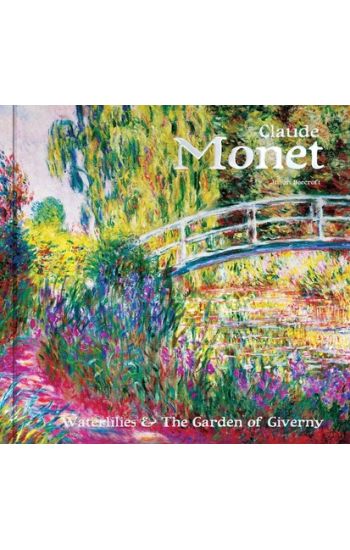
A gorgeous new edition with the cover printed on silver. Towards the end of his life and much inspired by Japanese water gardens, Monet spent a great deal of time in his beloved Giverny. Adorned with poppies, blue sage, dahlias and irises, the waters were disturbed only by bamboos and water lilies. His water garden was originally created to satisfy a need to be near water, and to provide a visual feast that could be enjoyed from his house. The pond was fed by the river Ru, and weeping willow and silver birch hung over its edges, caressing the fronds of the greenery and blossoms below. Its famous green wooden footbridge was built across the water and it became the central focus of many of his works. He said, ‘It took me some time to understand my water lilies. I planted them for pleasure.’ and so he began to work on what is probably the most famous series of paintings the world has ever seen.
A FLAME TREE POCKET NOTEBOOK. Beautiful and luxurious the journals combine high-quality production and FSC-certified paper with magnificent art. Perfect as a gift, and an essential personal choice for writers, notetakers, travellers, students, poets and diarists. Features a wide range of well-known and modern artists, with new artworks published throughout the year. BEAUTIFULLY DESIGNED. The highly crafted covers are printed on foil paper, embossed then foil stamped, complemented by the luxury binding and rose red endpapers, all FSC-certified. The covers are created by our artists and designers who spend many hours transforming original artwork into gorgeous 3d masterpieces that feel good in the hand, and look wonderful on a desk or table. PRACTICAL, EASY TO USE. Flame Tree Notebooks come with practical features too: a pocket at the back for scraps and receipts; two ribbon markers to help keep track of more than just a to-do list; robust ivory text paper, printed with lines; and when you need to collect other notes or scraps of paper the magnetic side flap keeps everything neat and tidy. THE ARTIST. ‘All of a sudden,’ Monet would one day recall, ‘I had the revelation of the enchantment of my pond. I took up my palette…’ And the rest is art-history. Again and again – well over 200 times, and often working on an enormous scale – Claude Monet would return to water lilies as his subject. THE FINAL WORD. As William Morris said, "Have nothing in your houses that you do not know to be useful, or believe to be beautiful."
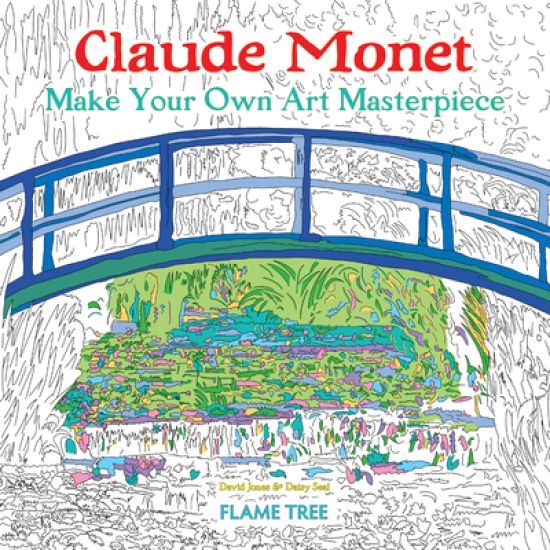
Dreaming and relaxing, with Claude Monet's Impressionist designs, this beautiful new book will give you many hours of pleasure, and calm. Printed on high quality paper, there are 45 classic illustrations for you to colour, with suggestions too on how to start the colouring. This book will give you many hours of pleasure and calm, taking you on an enjoyable journey where the satisfaction of creating stunning artworks is mixed with rediscovering the joy of colouring. You can use a wide variety of pens: from gel and pencil, to pigment and crayons, from ballpoint and rollerball to highlighters, although it’s best to avoid the heavy felt pens. Each page is perforated near the spine of the book, so you can tear out and frame or simply place your wonderful creation on the walls of your home, perhaps even send them as a gift to your loved ones. Bring the Ink to life!
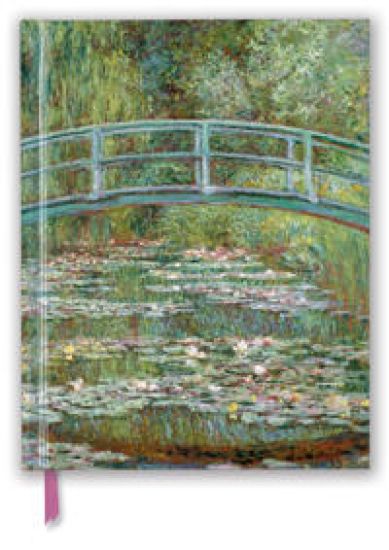
Part of a series of exciting and luxurious Flame Tree Sketch Books Combining high-quality production with magnificent fine art, the covers are printed on foil in five colours, embossed, then foil stamped. The thick paper stock makes them perfect for sketching and drawing. These are perfect for personal use and make a dazzling gift. This example features Claude Monet: Bridge over a Pond for Water Lilies. ‘All of a sudden,’ Monet would one day recall, ‘I had the revelation of the enchantment of my pond. I took up my palette…’ And the rest is art-history. Again and again – well over 200 times, and often working on an enormous scale – Claude Monet would return to water lilies as his subject.
Part of a series of exciting and luxurious Flame Tree Notebooks. Combining high-quality production with magnificent fine art, the covers are printed on foil in five colours, embossed then foil stamped. And they're powerfully practical: a pocket at the back for receipts and scraps and two bookmarks. These are perfect for personal use and make a dazzling gift. This example is based on Claude Monet's Bridge over a Pond of Water Lilies.‘All of a sudden,’ Monet would one day recall, ‘I had the revelation of the enchantment of my pond. I took up my palette…’ And the rest is art-history. Again and again – well over 200 times, and often working on an enormous scale – Claude Monet would return to water lilies as his subject.
Claude Monet Set of 3 Mini Notebooks features a collection of three mini, foiled notebooks with alternating lined and blank pages. Each notebook has a different beautiful design: Waterlillies, Bridge over a Pond of Water Lilies and The Poplars. With a sturdy cover and rounded corners, they are perfect to be carried everywhere! Claude Monet was an extremely insightful and experimental artist, from his first inklings as an Impressionist to his later flirtations with Abstract Expressionism. Towards the end of his life and much inspired by Japanese water gardens, Monet spent a great deal of time in his beloved Giverny. Adorned with poppies, blue sage, dahlias and irises, the waters were disturbed only by bamboos and water lilies. His water garden was originally created to satisfy a need to be near water, and to provide a visual feast that could be enjoyed from his house. Its famous green wooden footbridge was built across the water and it became the central focus of many of his works. He said, ‘It took me some time to understand my water lilies. I planted them for pleasure.’ and so he began to work on what is probably the most famous series of paintings the world has ever seen. Flame Tree: The Art of Fine Gifts.