Kirjojen hintavertailu. Mukana 12 354 581 kirjaa ja 12 kauppaa.

Kirjahaku

Etsi kirjoja tekijän nimen, kirjan nimen tai ISBN:n perusteella.

1000 tulosta hakusanalla Conrad Hermann

An Investigation of Eurocentric Aspects in Joseph Conrad's Hod
The colonizing powers had done injustice to the colonised. Moreover, they thought about themselves as mentors, which is wrong and insane. They did the worse, they were able to do. The colonised suffered badly and were helpless. Although, the colonization is over physically, the people are still under the effects. They are still colonized in their unconscious and this has travelled from generation to generation. There is need to stop it and let the people life freely. literature must do its work.
L'Anomie Et Son Chaos Conrad Et Lenz, Sand Et Sade

L'Anomie Et Son Chaos Conrad Et Lenz, Sand Et Sade

Jad Hatem

Amazon Digital Services LLC - Kdp Print Us
2021
pokkari
De l'anomie (par quoi l' criture d finit le p ch ) le salaire est folie de l' me, d mence de l'esprit, scission du coeur ou d sordre du corps. L'ordre y vacille et d couvre en soi le chaos sous-jacent. Bien que les quatre auteurs sollicit s en vue de la d monstration et de l'illustration se distinguent par des conceptions divergentes au sujet du mal, ils conjuguent leurs efforts pour la mise en place de la configuration de l'anomie dans sa situation limite.
Autobiography and the Modernist Consciousness in Conrad and Joyce

Autobiography and the Modernist Consciousness in Conrad and Joyce

Amungwa Veronica Nganshi

Justfiction Edition
2020
pokkari
The book shows how Conrad and Joyce project different shades of consciousness- socio-political, moral, religious, individual and artistic from an autobiographical perspective to enrich modernist values. It evaluates the achievement of the authors' use of this technique of parallel narratives to portray the nihilism of the early twentieth century. Joseph Conrad, in exposing the mode of existence in the early twentieth century, suggests that man lives in a civilization in which obsession with materialistic ambitions undermines genuine values. James Joyce in a similar vein reveals that social arrangement hinders progress and so the artist has to overthrow rather than embrace the nihilistic aspects of the society. A comparative analysis of the texts of Conrad and Joyce shows how these authors artistically integrate facts or history with fiction.
Some Intertextual Chords of Joseph Conrad’s Literary Art

Some Intertextual Chords of Joseph Conrad’s Literary Art

Maria Curie-Sklodowska University Press
2019
sidottu
This monograph brings together studies that deal with various aspects of Joseph Conrad’s literary art. The core concept organizing its structure is intertextuality. Intertextual relationships are seen in terms of either affinities/points of contact and the influence of earlier literary works upon his oeuvre or the influence of Conrad’s texts upon literary works by authors following him. Each such relationship is understood as a chord that is vibrant and resonates with new meanings that emerge from the juxtaposition of literary works by Conrad with those by other artists; these new meanings add additional value and significance to Conrad’s literary art.The papers create a truly international constellation of criticism, with their authors affiliated at universities in France, United Kingdom, Turkey, India, Japan, and Poland. The papers apply various types of comparative treatment of Joseph Conrad’s texts: to juxtapose them with literary works by other authors, with specimens of a literary genre, with texts of other fine arts, with aesthetic, philosophical, and ideological tendencies of the epoch. They apply a diverse range of perspectives to Conrad’s literary art, its intertexts, and contexts. The book is a tribute to the literary artistry of Conrad’s literary output, to its tremendous and inexhaustible semantic and artistic potential to be further explored.
Various Dimensions of the Other in Joseph Conrad’s Fiction
This collection of studies examines the various types and uses of ideas of ”the other” and othering in Joseph Conrad’s fiction. It offers examinations of different aspects of the colonial other both in Africa and Latin America, including a personal reminiscence of American imperialism by a descendant of a character mentioned in Conrad’s fiction.The first three papers offer insights into Conrad’s artistic presentation of both the historical and concrete side of capitalism and imperialism as well as the universal aspects of these social-political-economic formations. The next four studies theorize the colonial other, from European/Western perspectives and from Third World perspectives. The final four papers concern otherness in seamanship, in terms of the imperial other and alterity, and the female as other, othering by gender.The dimensions of the other in Conrad’s fiction that the collection examines are mainly colonial, imperial, and civilizational, set in the realities of geographical space of Africa, Latin America, and the Far East, the reality at sea, and the reality of gendered humanity. They are grounded in various contexts significant for Conrad’s epoch: both domestic and pertaining to English and European colonial-imperial overseas expansion, and illuminated from both English/Western and Third World perspectives.Various Dimensions of the Other in Joseph Conrad’s Fiction features both general theoretical arguments and distinctive methodological approaches to Conrad’s oeuvre, such as historical contextualization and source studies, postcolonial theory, imagology, Levinas’s theory of alterity, the Lacanian theory of jouissance, literary feminism, and personal narrative.The book is volume 29 of the series Conrad: Eastern and Western Perspectives: within this series it offers the first complex and direct treatment of multifarious incarnations of the other in Joseph Conrad’s fiction.The studies included create a truly international constellation of criticism, with authors at universities in the United States of America, France, Switzerland, Ukraine, Algeria, Iran, Japan, and Poland. Owing to their unique national and cultural-literary backgrounds and perspectives upon Joseph Conrad’s oeuvre, Various Dimensions of the Other in Joseph Conrad’s Fiction continues and strengthens the transnational profile of the series Conrad: Eastern and Western Perspectives.
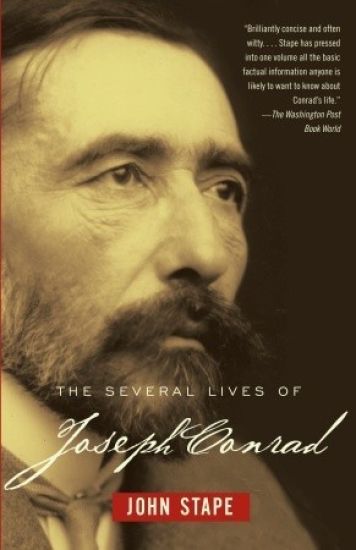
The Several Lives of Joseph Conrad
In this authoritative, insightful biography, we see the modernist master Joseph Conrad as a man who consistently reinvented himself. Born in 1857 in the Ukraine, he left home early and worked as a sailor, traveling to the Far East and Africa, and eventually settled in England, beginning a precarious existence as a novelist. John Stape describes a man with a deep sense of otherness, a writer who wrote in his third language and whose fiction became the cornerstone of modernism. With his exceptional understanding of Conrad, Stape succeeds in casting a new light on the life of a man who remains one of the greatest writers of his, and our, time.
Tragedy in the Fiction of Joseph Conrad

Tragedy in the Fiction of Joseph Conrad

Arthur Edward Sawyer

Sagwan Press
2018
pokkari
This work has been selected by scholars as being culturally important, and is part of the knowledge base of civilization as we know it. This work was reproduced from the original artifact, and remains as true to the original work as possible. Therefore, you will see the original copyright references, library stamps (as most of these works have been housed in our most important libraries around the world), and other notations in the work. This work is in the public domain in the United States of America, and possibly other nations. Within the United States, you may freely copy and distribute this work, as no entity (individual or corporate) has a copyright on the body of the work. As a reproduction of a historical artifact, this work may contain missing or blurred pages, poor pictures, errant marks, etc. Scholars believe, and we concur, that this work is important enough to be preserved, reproduced, and made generally available to the public. We appreciate your support of the preservation process, and thank you for being an important part of keeping this knowledge alive and relevant.
Space, Conrad, and Modernity

Space, Conrad, and Modernity

Con Coroneos

Oxford University Press
2002
sidottu
Recent literary and cultural criticism has taken a spatial turn. Nowadays, to speak is to speak from, to, or in; to know something is to have 'mapped' its discursive operation. This book locates this development within the opposition between a space of things and a space of words, tracing various aspects of its emergence from the geopolitical idea of 'closed space' which developed in the early twentieth century to the influence of Saussurean linguistics in contemporary criticism and theory. The focus of the study is the work of Joseph Conrad, in whom the opposition between a space of words and a space of things is strikingly figured. Part I deals with several versions of closed space, using an ancient spatial paradox of God (as the sphere of which the centre is everywhere and the circumference is nowhere) to raise questions about the relations between geography, language, and interpretation. Part II deals with the agitation around finitude and the limit, and the desperate attempt to discover in the resources of language a means of liberation. Through these ideas the book explores some of the more disreputable, marginal, or unglimpsed elements in modernism - including the rise of spy fiction, anarchist geography, the spiritualist movement, the invention of artificial languages, the history of laughter, and solar energy. Among the figures drawn into dialogue with Conrad are John Buchan, Woolf, Joyce, Peter Kropotkin, René de Saussure (brother of the famous Ferdinand), Henri Bergson, the filmmakers George Méliès and Carol Reed and, in particular, Michel Foucault -- this 'nouvelle cartographe' as Gilles Deleuze described him -- whose anxious negotiation with spatial ideas touches the book's deepest understanding.
Homosexuality in the Life and Work of Joseph Conrad
This book analyzes the representations of homosexuality in Conrad’s fiction, beginning with Conrad’s life and letters to show that Conrad himself was, at least imaginatively, bisexual. Conrad’s recurrent bouts of neurasthenia, his difficult courtships, late marriage, and frequent expressions of misogyny can all be attributed to the fact that Conrad was emotionally, temperamentally, and, perhaps, even erotically more comfortable with men than women. Subsequent chapters trace Conrad’s fictional representations of homosexuality. Through his analysis, Ruppel reveals that homoeroticism is endemic to the adventure genre and how Conrad’s bachelor-narrators interest in younger men is homoerotic. Conrad scholars and those interested in homosexuality and constructions of masculinity should all be interested in this work.
Homosexuality in the Life and Work of Joseph Conrad
This book analyzes the representations of homosexuality in Conrad’s fiction, beginning with Conrad’s life and letters to show that Conrad himself was, at least imaginatively, bisexual. Conrad’s recurrent bouts of neurasthenia, his difficult courtships, late marriage, and frequent expressions of misogyny can all be attributed to the fact that Conrad was emotionally, temperamentally, and, perhaps, even erotically more comfortable with men than women. Subsequent chapters trace Conrad’s fictional representations of homosexuality. Through his analysis, Ruppel reveals that homoeroticism is endemic to the adventure genre and how Conrad’s bachelor-narrators interest in younger men is homoerotic. Conrad scholars and those interested in homosexuality and constructions of masculinity should all be interested in this work.
The Sleeping God: From the Case Files of Conrad Blake
Blood-mottled walls mark a gory crime scene without a body, and a shocked witness tells an impossible story - that's what awaits Conrad Blake, a Boston private detective, when he answers a desperate midnight call. Amidst the evidence, he uncovers a peculiar object of antiquity and the passport of the victim, a promising anthropologist. But murder is only the tip of the iceberg. Nefarious intelligent minds are hard at work as Conrad walks the strands of a convoluted web that lead to an unimaginable truth - a truth that forever changes his perception of reality.
Solitude Versus Solidarity in the Novels of Joseph Conrad

Solitude Versus Solidarity in the Novels of Joseph Conrad

Ursula Lord

McGill-Queen's University Press
1998
sidottu
Ursula Lord explores the manifestations in narrative structure of epistemological relativism, textual reflexivity, and political inquiry, specifically Conrad's critique of colonialism and imperialism and his concern for the relationship between self and society. The tension between solitude and solidarity manifests itself as a soul divided against itself; an individual torn between engagement and detachment, idealism and cynicism; a dramatized narrator who himself embodies the contradictions between radical individualism and social cohesion; a society that professes the ideal of shared responsibility while isolating the individual guilty of betraying the illusion of cultural or professional solidarity. Conrad's complexity and ambiguity, his conflicting allegiances to the ideal of solidarity versus the terrible insight of unremitting solitude, his grappling with the dilemma of private versus shared meaning, are intrinsic to his political and philosophical thought. The metanarrative focus of Conrad's texts intensifies rather than diminishes their philosophical and political concerns. Formal experimentation and epistemological exploration inevitably entail ethical and social implications. Lord relates these issues with intellectual rigour to the dialectic of individual liberty and collective responsibility that lies at the core of the modern moral and political debate.
Sexuality and the Erotic in the Fiction of Joseph Conrad

Sexuality and the Erotic in the Fiction of Joseph Conrad

Jeremy Hawthorn

Continuum International Publishing Group Ltd.
2007
sidottu
Awarded third place for The Adam Gillon Book Award in Conrad Studies 2009 The book presents a sustained critique of the interlinked (and contradictory) views that the fiction of Joseph Conrad is largely innocent of any interest in or concern with sexuality and the erotic, and that when Conrad does attempt to depict sexual desire or erotic excitement then this results in bad writing. Jeremy Hawthorn argues for a revision of the view that Conrad lacks understanding of and interest in sexuality. He argues that the comprehensiveness of Conrad's vision does not exclude a concern with the sexual and the erotic, and that this concern is not with the sexual and the erotic as separate spheres of human life, but as elements dialectically related to those matters public and political that have always been recognized as central to Conrad's fictional achievement. The book will open Conrad's fiction to readings enriched by the insights of critics and theorists associated with Gender Studies and Post-colonialism.