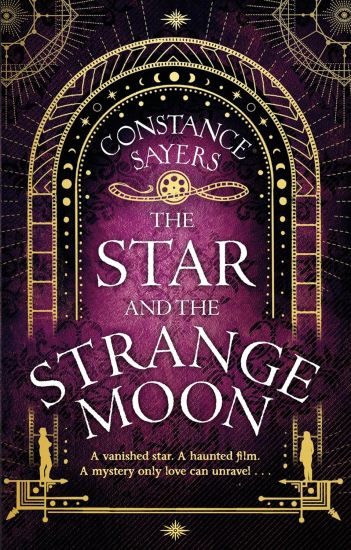
From the author of A Witch in Time comes a haunting tale of ambition, obsession, and the eternal mystery and magic of film. A vanished star. A haunted film. A mystery only love can unravel... 1968: Gemma Turner once dreamed of stardom. Now the actress is on the cusp of obscurity. When she's offered the lead in a radical new horror film, Gemma believes her luck has changed--but her dream is about to turn into a nightmare. One night, between the shadows of an alleyway, Gemma disappears on set and is never seen again. Yet, Gemma is alive. She's been pulled into the film. And the script--and the monsters within it--are coming to life. Gemma must play her role perfectly if she hopes to survive. 2007: Gemma Turner's disappearance is one of Hollywood's greatest mysteries--one that's captivated film student Christopher Kent ever since he saw L' trange Lune for the first time. The screenings only happen once a decade and each time there is new, impossible footage of Gemma that shouldn't exist. Curiosity drives Christopher to unravel the truth. But answers to the film's mystery may leave him trapped by it forever. "A sweeping tale of dark magic, artistic obsession, and a love unbound from the limits of time, The Star and the Strange Moon captivates with lush prose and moments of poignant, heartbreaking beauty." --Paulette Kennedy, author of The Witch of Tin Mountain For more from Constance Sayers, check out: A Witch in Time The Ladies of the Secret Circus
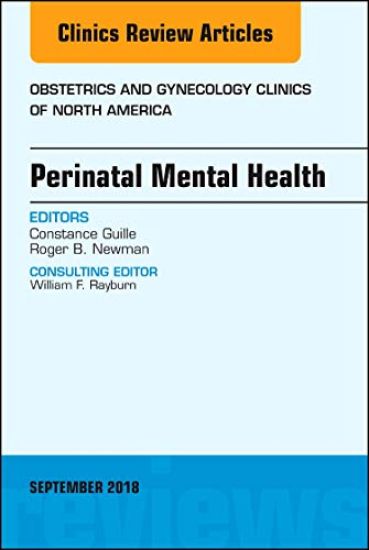
With collaboration of Dr. William Rayburn, Consulting Editor, Drs. Guille and Newman have created a state-of-the art issue that examines the mental health of pregnant women and those planning to become pregnant. Expert authors have contributed current clinical reviews on the following topics: Identification and treatment of peripartum anxiety disorders; Non-pharmacological treatments for peripartum depression; Management of opioid addiction in pregnancy (pro/cons of maintaining meds vs opioid withdrawal); Perinatal sleep problems: causes, complications and management; Impact of pregnancy loss on psychological functioning and grief outcomes; Eating disorders and body image disturbances among childbearing women; Postpartum psychosis: Identification, management and treatment; Working with childhood sexual abuse survivors in reproductive health care; Psychosocial aspects of fertility and assisted reproductive technology; Treatment of peripartum bipolar disorder; Treatment of peripartum depression; Perinatal domestic violence; and Management of ADHD during pregnancy. Readers will come away with the information they need to have better mental health outcomes in their obstetrical and gynecologic patients.
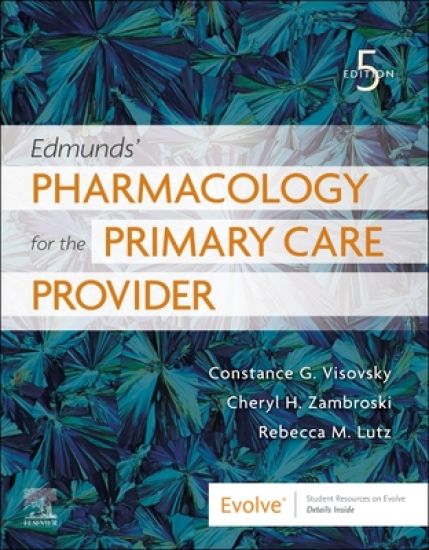
Master the pharmacologic principles and drug information you need to safely and effectively prescribe drugs for primary care! Edmunds' Pharmacology for the Primary Care Provider, 5th Edition is written for Nurse Practitioners, other Advanced Practice Nursing prescribers, and Physician Assistants. Unlike other pharmacotherapeutics textbooks, it focuses on the drugs most commonly used in primary care settings. A new chapter format and body-system approach make learning easier, and standardized clinical guidelines ensure best practices in pharmacotherapeutics. Updated and impeccably accurate drug content includes the latest drug classes, specific drugs, and therapeutic uses in primary care. Continuing to emphasize health promotion strategies, this new edition includes new chapters on pharmacogenetics, drugs for ADHD, nutritional supplements, and more. Comprehensive pharmacotherapeutics content is written specifically for Nurse Practitioners, other Advanced Practice Nurses, and Physician Assistants. Focus on key drugs highlights the most commonly prescribed and most representative drugs of each major drug class - with particular emphasis on the top 100 prescribed drugs. Emphasis on patient teaching helps you communicate with patients and family caregivers to promote adherence to the drug regimen. Emphasis on health promotion describes how to help patients stay well and improve their health, including coverage of vitamins, weight management, immunizations and biologicals, and smoking cessation. Complementary and Alternative Therapies tables highlight significant dietary and herbal interactions with FDA-approved drugs. NEW! Thoroughly updated content reflects the latest drug information and current thinking on pharmacologic management. NEW macro- and chapter-level organization is based on body systems rather than drug classes, for better coverage of the medications prescribed for the health problems affecting specific body systems. NEW and UNIQUE! Chapter format begins with an overview of anatomy, physiology, and disease processes - as opposed to drug classes or drug types - and then follows the World Health Organization's Process for Rational Prescribing, using a six-step approach to drug selection and discussing first-, second-, and third-line treatments for each specific problem. NEW! Practical learning aids include: Black Box Warning boxes that draw attention to critical drug safety precautions. Clinical Guidelines: Bookmark This features that identify websites where updated clinical guidelines can be found. Medication Dosages tables that include dose ranges, maintenance doses, and, where appropriate, plans for dose escalation and de-escalation (e.g., corticosteroids). Practice Pearls boxes that highlight good prescribing practices, safety measures, follow-up recommendations, serum blood level monitoring, referrals to specialty providers, and other key prescriber tips. NEW! Prescribing Considerations unit addresses issues of medication adherence, prescription writing, cost, and quality assurance. NEW! Updated coverage of pain management reflects the current realities of substance use and the opioid crisis.
Unveiling the latest research in neurophysiology, Cellular and Molecular Neurophysiology, Fifth Edition continues to stand as the only resource in the field. This book remains the standard for those who seek to explore the intricate molecular and cellular physiology of neurons and synapses. Notably, this new edition delves even deeper into the molecular properties and functions of excitable cells, offering unparalleled insights. In this edition, there are two groundbreaking chapters. The first reviews metabotropic receptors for olfactory transduction, while the second presents cutting-edge techniques for neuroscience research. Hypothesis-driven rather than a dry presentation of facts, the content firmly based on numerous experiments performed by top experts in the field, teaches students how to build and conduct intelligent research experiments. This book promotes a true understanding of nerve cell function and will be a useful resource for practicing neurophysiologists, neurobiologists, neurologists, and students in a graduate-level course on the topic alike.
'Prepare to be dazzled' Alma Katsu, author of The Hunger'Fresh and original' Louisa Morgan, author of A Secret History of Witches Four lives, one woman, a star-crossed love . . .In 1895, sixteen-year-old Juliet begins a passionate, doomed romance with a married artist.In 1932, aspiring actress Nora escapes New York for the bright lights of Hollywood and a new chance at love.In 1970, Californian musician Sandra's secret love affair threatens to tear her band apart.And in 2012, Helen is starting to remember the tragic details of lives that never belonged to her.Bound to her lover in 1895, and trapped by his side ever since, Helen has lived through multiple lifetimes, under different names, never escaping her tragic endings. Only this time, she might finally have the power to break the cycle . . .Absorbing, magical and hard to put down, A Witch in Time is a heartbreakingly beautiful story about a death-defying love, a time trapping curse and the power of destiny. Perfect for fans of The Invisible Life of Addie LaRue and A Secret History of Witches.'[I] loved A Witch in Time by Constance Sayers! Perfect combo of historic locales (Paris to Los Angeles), artists (painters to 1970s rockers), and cool witchery to tie them together' Jay Asher, No. 1 New York Times bestselling author'A captivating tapestry of a tale' Gwendolyn Womack, bestselling author of The Fortune Teller'Sayers weaves a spell of love, lust and magic to create a page-turner like no other' Steph Post, author of Miraculum'Fans of Deborah Harkness will devour this page-turning tale of love, reincarnation, and dark magic. A highly unique and enjoyable read!' Hester Fox, author of The Witch of Willow Hall
From the author of A Witch in Time comes a magical story of family secrets, sacrifice and lost love set against the backdrop of a mysterious circus - perfect for readers of Erin Morgenstern's The Night Circus, Erika Swyler's The Book of Speculation and Gwendolyn Womack's The Fortune Teller.
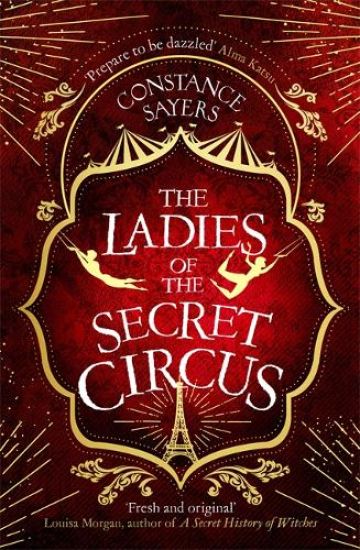
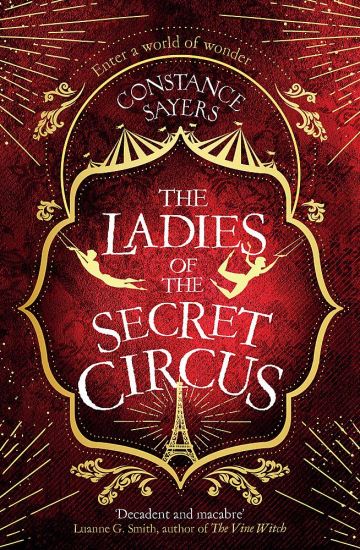
'Romance, mystery, and a family curse - The Ladies of the Secret Circus has it all' PopsugarFrom the author of A Witch in Time comes a magical story spanning from Jazz Age Paris to modern-day America of family secrets, sacrifice, and lost love set against the backdrop of a mysterious circus. Perfect for fans of The Night Circus and The Invisible Life of Addie LaRue.The surest way to get a ticket to Le Cirque Secret is to wish for it . . .Paris, 1925: To enter the Secret Circus is to enter a world of wonder - a world where women weave illusions, carousels take you back in time, and trapeze artists float across the sky. Bound to her family's circus, it's the only world Cecile Cabot knows until she meets a charismatic young painter and embarks on a passionate affair that could cost her everything.Virginia, 2004: Lara Barnes is on top of the world, but when her fiance disappears on their wedding day every plan she has for the future comes crashing down. Desperate, Lara's search for answers unexpectedly lead to her great-grandmother's journals.Swept into a story of a dark circus and ill-fated love, secrets about Lara's family history come to light and reveal a curse that has been claiming payment from the women in her family for generations. A curse that might be tied to her fiance's mysterious fate . . .Why readers love The Ladies of the Secret Circus . . .'A spellbinding historical fantasy . . . Fans of Erin Morgenstern's The Night Circus will love this page-turning story of dark magic, star-crossed love, and familial sacrifice' Publishers Weekly (starred review)'At times decadent and macabre, The Ladies of the Secret Circus is a mesmerizing tale of love, treachery, and depraved magic percolating through four generations of Cabot women' Luanne G. Smith, author of The Vine Witch'Ambitious and teeming with magic, Sayers creates a fascinating mix of art, The Belle Epoque, and more than a little murder' Erika Swyler, author of The Book of Speculation'The Ladies of the Secret Circus is a dazzling tale, laced with sinister magic, blood and beauty, love and loss. This is a book that will haunt you long after the last page is turned' Alyssa Palombo, author of The Spellbook of Katrina Van Tassel'Spellbinding. The Ladies Of The Secret Circus is a dazzling, high-wire feat of storytelling' Catherine Taylor, author of Beyond the Moon'Th
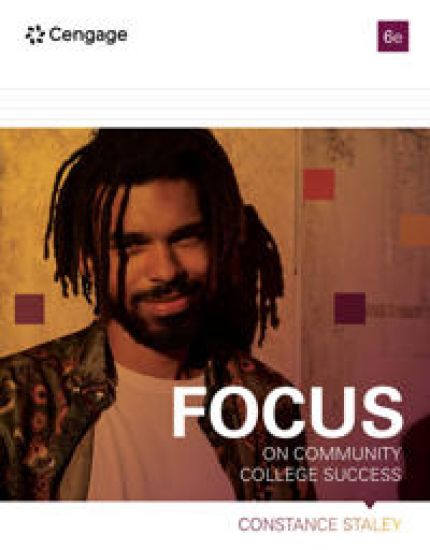
Staley's FOCUS ON COMMUNITY COLLEGE SUCCESS, 6th edition, equips you with the tools and confidence to succeed in college and beyond -- including strategies to overcome the special challenges of juggling school, family and work. Extremely practical activities help you build the focus you need to cut through distractions, transfer to four-year colleges if desired and achieve career goals. Updated with the latest research and best career practices, it emphasizes the skills today's employers seek. It also offers tips for practicing mindfulness, coping with isolation, managing money, conducting smart research, avoiding plagiarism, developing successful learning strategies for online classes, overcoming Zoom fatigue and more. Also available: MindTap digital learning solution.
This is a book of poetry that crosses many subjects such as; Grief & Loss, Relationships, Self Perceptions and Image, Sexuality and many more. There is something for everyone and anyone will be able to relate.
Originally published in 1928, this title attempts to give a short historical outline of the treatment which ‘temperament’ had received at the hands of psychological theory. From the time of Hippocrates ‘temperament’ had figured in philosophical and psychological writings as one of the constituents which determine behaviour. The language in which it had been treated had been vague and obscure, and this, combined with the equally indeterminate associations which were carried over from the speech of everyday life at the time, had contrived to surround the subject with an atmosphere of unreality which was in sharp contrast to the significance of the role assigned to it.
Originally published in 1928, this title attempts to give a short historical outline of the treatment which ‘temperament’ had received at the hands of psychological theory. From the time of Hippocrates ‘temperament’ had figured in philosophical and psychological writings as one of the constituents which determine behaviour. The language in which it had been treated had been vague and obscure, and this, combined with the equally indeterminate associations which were carried over from the speech of everyday life at the time, had contrived to surround the subject with an atmosphere of unreality which was in sharp contrast to the significance of the role assigned to it.
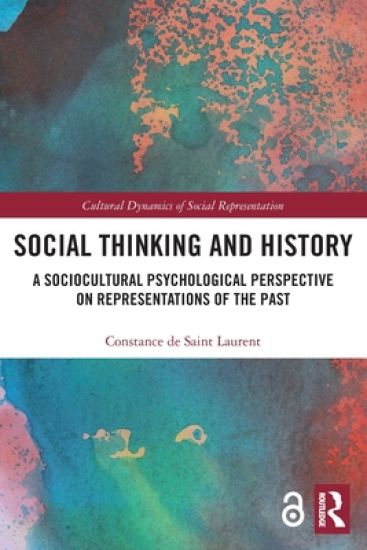
Social Thinking and History demonstrates that our representations of history are constructed through complex psychosocial processes in interaction with multiple others, and that they evolve throughout our lifetime, playing an important role in our relation to our social environment.Building on the literature on social thinking, collective memory, and sociocultural psychology, this book proposes a new perspective on how we understand and use our collective past. It focuses on how we actively think about history to construct representations of the world within which we live and how we learn to challenge or appropriate the stories we have heard about the past. Through the analysis of three studies of how history is understood and represented in different contexts – in political discourses in France, by intellectuals and artists in Belgium, and when discussing a current event in Poland – its aim is to offer a rich picture of our representations of the past and the role they play in everyday life. This book will be of great interest toacademics, researchers, and postgraduate students in the fields of psychology, memory studies, sociology, political science, and history. It will also make an interesting read for psychologists and human and social scientists working on collective memory.
George Eliot’s serious readers have been intrigued by the fact that she declared that she had lost her faith in God and had renounced her hope for a traditional Christian heaven and yet she continued to preach her own version of morality in everything she wrote, to hope for an immortality which allowed her to join an invisible choir which would influence generations to come, and to be concerned about the moral growth of her characters. This is only one of the many compelling contradictions in her life and in her artistry. This volume aims to investigate Eliot’s ethical and artistic principles by defining her moral aesthetic as it relates to her self-concept and exploring Eliot’s narrative decisions and the decisions made by her characters and the circumstances which prompt those choices. Dr. Fulmer includes chapters on her clerical figures and other types of individuals such as musicians, and politicians. Dr. Fulmer also illuminates the paradoxes and contradictions in George Eliot’s life and in her philosophy by focusing on Eliot's use of animals, mirrors, windows, jewelry, wills and other tangible images in her poetry as well as her novels. George Eliot’s Moral Aesthetic contends that everything about her moral philosophy is related to her writing and that everything about her writing is related to her moral philosophy.
A civil rights lawyer who became the first African American female federal judge, describes her career, including working with Thurgood Marshall's NAACP legal team
A fully revised and updated edition with challenges and writing prompts in every chapter Today's writers need more spunk than Strunk: whether it's the Great American e-mail, Madison Avenue advertising, or Grammy Award-winning rap lyrics, memorable writing must jump off the page. Copy veteran Constance Hale is on a mission to make creative communication, both the lyrical and the unlawful, an option for everyone. With its crisp, witty tone, Sin and Syntax covers grammar's ground rules while revealing countless unconventional syntax secrets (such as how to use--Gasp --interjections or when to pepper your prose with slang) that make for sinfully good writing. Discover how to: *Distinguish between words that are -pearls- and words that are -potatoes- * Avoid -couch potato thinking- and -commitment phobia- when choosing verbs * Use literary devices such as onomatopoeia, alliteration, and metaphor (and understand what you're doing) Everyone needs to know how to write stylish prose--students, professionals, and seasoned writers alike. Whether you're writing to sell, shock, or just sing, Sin and Syntax is the guide you need to improve your command of the English language.
This monograph is addressed to anyone interested in the subject of restrict- parameter-space estimation, and in particular to those who want to learn, or bring their knowledge up to date, about (in)admissibility and minimaxity problems for such parameter spaces. The coverage starts in the early 1950s when the subject of inference for - stricted parameter spaces began to be studied and ends around the middle of 2004. It presents known, and also some new, results on (in)admissibility and minimaxity for nonsequential point estimation problems in restricted ?ni- dimensional parameter spaces. Relationships between various results are d- cussed and open problems are pointed out. Few complete proofs are given, but outlines of proofs are often supplied. The reader is always referred to the published papers and often results are clari?ed by presenting examples of the kind of problems an author solves, or of problems that cannot be solved by a particular result. The monograph does not touch on the subject of testing hypotheses in - stricted parameter spaces. The latest books on that subject are by Robertson, Wright and Dykstra (1988) and Akkerboom (1990), but many new results in that area have been obtained since. The monograph does have a chapter in which questions about the existence of maximum likelihood estimators are discussed. Some of their properties are also given there as well as some algorithms for computing them. Most of these results cannot be found in the Robertson, Wright, Dykstra book.