Kirjojen hintavertailu. Mukana 11 699 587 kirjaa ja 12 kauppaa.

Kirjahaku

Etsi kirjoja tekijän nimen, kirjan nimen tai ISBN:n perusteella.

1000 tulosta hakusanalla David B. Chesebrough

No More Wacos

No More Wacos

David B. Kopel; Paul H. Blackman

Prometheus Books
1997
sidottu
Waco and Ruby Ridge were neither conspiracies nor flukes. They represent the worst-case scenario of problems that now plague federal law enforcement, including its militarisation, judicial rubberstamping of search and arrest applications, aggressive and violent arrest procedures, indifference to religious beliefs, the complicity of an overzealous media, and failed congressional investigations. In "No More Wacos", David B. Kopel and Paul H. Blackman use their expertise in law and criminology to outline the evidence in these cases and dozens of others to explain how and why such tragedies occur. Meticulously documented, this volume analyses all sides of this complex subject: flawed search warrants, authorities ignoring the difference between religious and criminal suspects, and intra-governmental deception, among other issues. Whenever problems are found, specific remedies are proposed - over one hundred solutions in all - both comprehensive and technical in nature. Each is offered in the hope of preventing future Wacos by properly placing federal law enforcement under the rule of law.

What Are They Saying About the Parables?

What Are They Saying About the Parables?

David B. Gowler

PAULIST PRESS INTERNATIONAL,U.S.
2021
nidottu
Much has changed in the more than two decades since the first edition of this book appeared. Parable scholarship continues to be a dynamic area of New Testament research, and a number of important studies were published and significant developments have occurred during those years. Jesus’s parables, these simple but profound stories, continue to challenge us, and, even after many readings, continue to reveal new insights. Not surprisingly, parable scholarship remains fascinating, and this book explores three distinct but interrelated components of parable interpretation, †
The Seattle Street Smart Naturalist

The Seattle Street Smart Naturalist

David B. Williams

West Winds Press
2005
pokkari
Naturalist and Seattle native David Williams offers his original perspectives on the wonder and resilience of nature in and around the Northwest's greatest population center. Illustrated by hand-drawn maps, Williams's writings are interesting, intelligent, and challenging at a personal level. He approaches the notion that his beloved city, as hip and urbane as it is, remains a wild place on the Northwest landscape-in the quarried rock of the historical buildings, in the branches of a pocket-sized city park, in the twists and turns of a stream that has been abused by polluters, hedged in by lawns, and buried under expressways. And yet it is a living thing, worthy of rescue. Williams looks beyond the skyline, beyond the postcard views of the Emerald City, and into its wild heart. Praise for The Seattle Street-Smart Naturalist: Like suddenly acquiring X-ray vision . . . Who knew that there was so much fascinating natural history crawling, flying, sprouting, flowing, drizzling, cawing, accreting, and sliding within the city limits of Seattle? Every page, every paragraph of Williams's book brought me revelations-not to mention the sheer pleasure of keeping company with such a sharp and enthusiastic writer. - David Laskin Author of The Children's Blizzard and Braving the Elements A passion for nature and the love of a chosen city combine seamlessly in David Williams's sharp-eyed ramble through Seattle. These beautifully told "field notes" of this inspired urban naturalist bring to life our streets and hills, our downtown edifices and suburban green pockets, on levels infinitely more profound than the everyday. - Ivan Doig Author of This House of Sky Raised in Seattle, David Williams is a general naturalist with a bachelor's degree in geology. As a Park Ranger and educator, he has taught natural history both in the field and in the classroom and has written widely on the topic for the last decade. He has written for Sunset, the Seattle Times, High Country News, National Parks, and Geotimes. Other books include A Naturalist's Guide to Canyon Country and Grand Views of Canyon Country, and he has contributed to Insight Guides: Seattle and Caves, Cliffs, and Canyons.
Money in the Late Roman Republic

Money in the Late Roman Republic

David B. Hollander

BRILL
2012
nidottu
Roman monetary history has tended to focus on the study of Roman coinage but other assets regularly functioned as, or in place of, money. This book places coinage in its broader monetary context by also examining the role of bullion, financial instruments, and commodities such as grain and wine in making payments, facilitating exchange, measuring value and storing wealth. The use of such assets reduced the demand for coinage in some sectors of the economy and is a crucial factor in determining the impact of the large increase in the coin supply during the last century of the Republic. Money demand theory suggests that increased coin production led to further monetization, not per capita economic growth.
Types of Kinship Terminological Systems and How to Analyze Them
This essay presents Gould’s distinctive system for analyzing kin terminologies showing the system’s power, importance, and usefulness—and showing its relationship to other approaches and the payoffs each aims at. In revealing significant new empirical regularities and simplifications, Gould’s analytic system implies important constraints on future analytic and interpretative approaches to kin terminologies. Some of these new insights involve the demonstration of the effect of distributed collective cognitive systems over and above the effects of repeated iterations of individual cognitive constraints or pressures. It is the peculiar nature of the kinterm domain that allows these findings to be so directly shown, but the implication is that these findings apply more generally to the collective cognitive systems that make up language and culture.
Jewish Thought and Scientific Discovery in Early Modern Europe

Jewish Thought and Scientific Discovery in Early Modern Europe

David B. Ruderman; Moshe Idel

Wayne State University Press
2001
nidottu
This book is a sally into the scientific dimension of Jewish intellectual history in the early modern world, dealing with many key personalities and topics in a novel way. Included are thumbnail sketches of stoicism, iatrochemistry and pantheism, in addition to reviews of the major issues in the Jewish historiography of the period. It offers comprehensive treatment of the impact of the scientific revolution on Jewish culture in early modern Europe and should be of value not only to students of Jewish intellectual history of this period, but also more generally to anyone interested in European cultural history or the history of medicine.
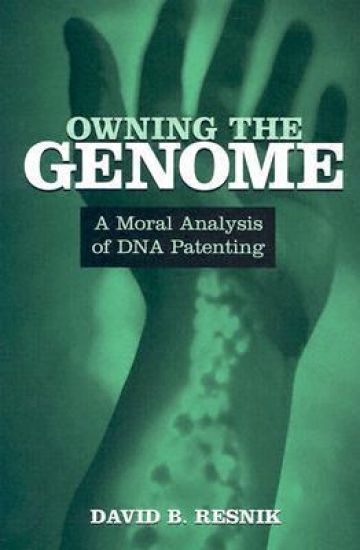
Owning the Genome

Owning the Genome

David B. Resnik

State University of New York Press
2004
pokkari
A clear, introductory overview of the issues surrounding gene patenting. DNA patenting has emerged as a hot topic in science policy and bioethics as private companies and government agencies spend billions of dollars on genetic research and development in a race to identify, sequence, and analyze DNA from human, animal, and plant species. David B. Resnik's Owning the Genome explores the ethical, social, philosophical, theological, and policy issues surrounding DNA patenting and develops a comprehensive approach to the topic. Resnik considers arguments for and against DNA patenting and concludes that only a patent on a whole human genome would be inherently immoral, while the morality of other DNA patents depends on their consequences for science, medicine, agriculture, industry, and society. He also stresses the importance of government regulations and policies in order to minimize the harmful effects of patenting while promoting the beneficial ones.
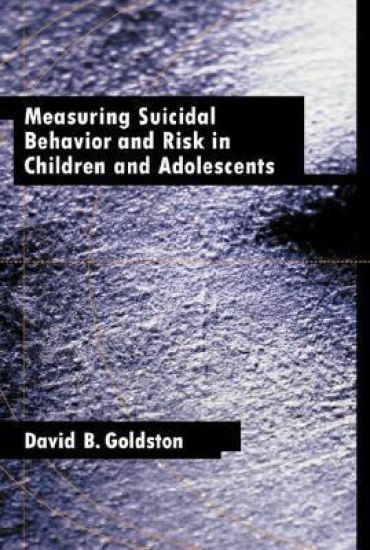
Measuring Suicidal Behavior and Risk in Children and Adolescents

Measuring Suicidal Behavior and Risk in Children and Adolescents

David B. Goldston

American Psychological Association
2003
sidottu
This work offers practitioners and researchers practical information on a wide range of instruments used to evaluate suicidal behaviours in children and adolescents. In this critical and comprehensive reference book, the author describes conceptual, definitional and psychometric issues important in evaluating and comparing various assessment instruments and then focuses on available instruments that can be used for screening purposes or as adjuncts in detecting, describing or estimating the risk of suicidal behaviour. Among the types of instruments reviewed are psychiatric diagnostic interviews, self-report inventories and survey screening items developed for several specific populations such as Native American youths, runaway and homeless youths and gay, lesbian and bisexual youths. The author also discusses clinical considerations in the choice of instruments and has included recommendations for future research in this area as well as a set of decision rules to help readers choose their instruments that meet their specific needs.
Probability And Schrodinger's Mechanics

Probability And Schrodinger's Mechanics

David B Cook

World Scientific Publishing Co Pte Ltd
2002
sidottu
This book addresses some of the problems of interpreting Schrödinger's mechanics — the most complete and explicit theory falling under the umbrella of “quantum theory”. The outlook is materialist (“realist”) and stresses the development of Schrödinger's mechanics from classical theories and its close connections with (particularly) the Hamilton-Jacobi theory. Emphasis is placed on the concepts and use of the modern objective (measure-theoretic) probability theory. The work is free from any mention of the bearing of Schrödinger's mechanics on God, his alleged mind or, indeed, minds at all. The author has taken the naïve view that this mechanics is about the structure and dynamics of atomic and sub-atomic systems since he has been unable to trace any references to minds, consciousness or measurements in the foundations of the theory.
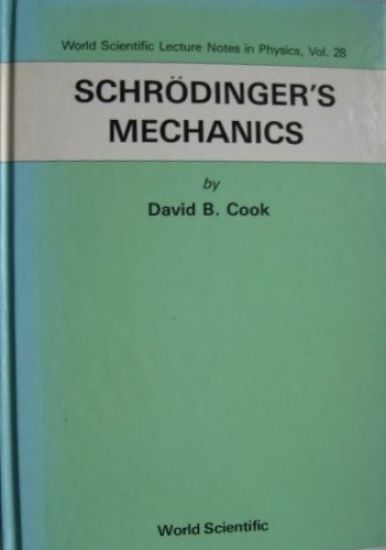
Schrodinger's Mechanics

Schrodinger's Mechanics

David B Cook

EPB Publishers Pte Ltd
1989
sidottu
This volume presents some new perspectives on the quantum theory which go a good deal of the way towards resolving the persistent interpretational "paradoxes" which are such a feature of the theory. It also reiterates the view that the aim of science is knowledge of the autonomous structures and processes in nature and not primarily the generation of axiomatic deductive systems. Taking the view that one must distinguish between development of mathematical models and mere sophisication, this volume develops the link of continuity between the methods of Classical Physics and those of the quantum theory, and gives a consistent interpretation of the results of quantum theory.
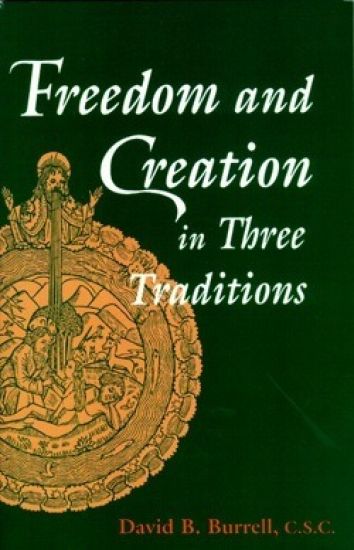
Freedom and Creation in Three Traditions

Freedom and Creation in Three Traditions

Burrell David B.

UNIVERSITY OF NOTRE DAME PRESS
1993
sidottu
With creation of the universe as its focus and a deeper understanding of human freedom as its goal, Freedom and Creation in Three Traditions is a work of philosophical theology that brings together Jewish, Christian, and Muslim perspectives on the complex questions surrounding divine and human freedom. Burrell shows how the three traditions (each avowing the free creation of the universe by God) have developed a view of free human actors in relation to their initial affirmations that the universe is freely created by God. The concept of a free creation of the universe forms a motif for all three traditions, and their respective encounters with divine relation—in the Torah, Jesus Christ, and the Qur’an—offer distinctive ways of articulating and assimilating the original faith in a free creator. Burrell emphasizes the common ground among the traditions, but does not limit his discourse to a search for a common denominator among them. Instead, he traces the interactions among the traditions, employing an explicitly interfaith perspective that offers new ways to probe the vexing question of the relations between a free creator and free creatures. The results of this comparative method of reflection produce fresh insights into perennial human questions about creation and freedom—questions that have constituted a major body of theological reflection over the centuries. Aimed at graduates and advanced undergraduates as well as laypersons interested in interfaith dialogue and reflection, Freedom and Creation in Three Traditions illustrates the value of tradition-directed inquiry and clearly demonstrates the fruitfulness of comparative inquiries in philosophical theology.
STOP Domestic Violence

STOP Domestic Violence

Wexler David B.

WW Norton Co
2007
nidottu
The manual teaches group leaders how to effectively and successfully administer Wexler’s internationally-recognized program by integrating cognitive behavioral skills and a client-centered, skill-building approach that emphasizes respect for the offender himself.Treatment providers will find the open-ended 26-week psychoeducational treatment model—packed with new and innovative specific skills-training exercises, handouts, and homework—easily adaptable to different settings. Its structured interventions, clear guidelines, and philosophical orientation are neatly presented in five sections: Foundations, Special Program Sessions, Group Sessions: Self-Management, Group Sessions: Relationship Skills, and Standard Forms. The accompanying workbook and the skills learned from the CD-ROM exercises are invaluable take-home resources for the group members, fully engaging the abusive male in his own education and healing process.
The STOP Domestic Violence Program

The STOP Domestic Violence Program

Wexler David B.

WW Norton Co
2013
nidottu
The third edition of the acclaimed Domestic Violence 2000, this comprehensive instruction manual teaches group leaders how to effectively and successfully administer David B. Wexler’s trusted program. The treatment integrates cognitive behavioral skills and a client-centered, skill-building approach that engages the abuser in his own healing process.
Caravan of Martyrs

Caravan of Martyrs

Edwards David B.

University of California Press
2017
sidottu
What compels a person to strap a vest loaded with explosives onto his body and blow himself up in a crowded street? Scholars have answered this question by focusing on the pathology of the "terrorist mind" or the "brainwashing" practices of terrorist organizations. In Caravan of Martyrs, David Edwards argues that we need to understand the rise of suicide bombing in relation to the cultural beliefs and ritual practices associated with sacrifice. Before the war in Afghanistan began, the sacrificial killing of a sheep demonstrated a tribe's desire for peace. After the Soviet invasion of 1979, as thousands of people were killed, sacrifice took on new meanings. The dead were venerated as martyrs, but this informal conferral of status on the casualties of war soon became the foundation for a cult of martyrs exploited by political leaders for their own advantage. This first repurposing of the machinery of sacrifice set in motion a process of mutation that would lead nineteen Arabs who had received their training in Afghanistan to hijack airplanes on September 11 and that would in time transform what began as a cult of martyrs created by a small group of Afghan jihadis into the transnational scattering of suicide bombers that haunts our world today. Drawing on years of research in the region, Edwards traces the transformation of sacrifice using a wide range of sources, including the early poetry of jihad, illustrated martyr magazines, school primers and legal handbooks, martyr hagiographies, videos produced by suicide bombers, the manual of ritual instructions used by the 9/11 hijackers, and Facebook posts through which contemporary "Talifans" promote the virtues of self-destruction.