Kirjojen hintavertailu. Mukana 11 244 527 kirjaa ja 12 kauppaa.

Kirjahaku

Etsi kirjoja tekijän nimen, kirjan nimen tai ISBN:n perusteella.

1000 tulosta hakusanalla David Cottrell

The Diary of David Brainerd

The Diary of David Brainerd

David Brainerd

Cambridge University Press
2010
pokkari
David Brainerd (1718–1747) was a colonial American missionary to Native Americans made famous when Jonathan Edwards (1703–1758) posthumously edited his journal and other writings into a popular biographical narrative. Having spent time at Yale University, Brainerd entered the ministry in 1742 and dedicated his life to work amongst native peoples in Massachusetts, Pennsylvania, and New Jersey before expiring at the age of 29. This 1902 edition of The Diary and Journal of David Brainerd provided readers with a broader picture of his life and the source material from which Edwards composed his narrative. Volume 1 focuses mostly upon the diary, which contains Brainerd's discussion of his brief life, including not insignificant reference to the illness that claimed him. Ultimately, the thoughts preserved in this two-volume set are an important resource for those interested in religion in America during the period known as the 'Great Awakening'.
The Journal of David Brainerd

The Journal of David Brainerd

David Brainerd

Cambridge University Press
2010
pokkari
David Brainerd (1718–1747) was a colonial American missionary to Native Americans made famous when Jonathan Edwards (1703–1758) posthumously edited his journal and other writings into a popular biographical narrative. Having spent time at Yale University, Brainerd entered the ministry in 1742 and dedicated his life to work amongst native peoples in Massachusetts, Pennsylvania, and New Jersey before expiring at the age of 29. This 1902 edition of The Diary and Journal of David Brainerd provided readers with a broader picture of his life and the source material from which Edwards composed his narrative. Volume 2 focuses mostly upon his work with Native Americans as well as correspondence and other religious writing. The thoughts preserved in this two-volume set are an important resource for those interested in religion in America during the period known as the 'Great Awakening'.
The Last Journals of David Livingstone in Central Africa, from 1865 to his Death
One of the most renowned nineteenth-century British explorers of Africa, David Livingstone (1813–73) was a medical missionary who received the Royal Geographical Society gold medal in 1855. His fame was established by his 1853–6 coast-to-coast exploration of the African interior, and by the best-selling Missionary Travels and Researches in South Africa, published upon his return to England in 1857 (also reissued in this series). Livingstone's last expedition in search of 'the true source of the Nile', undertaken in 1866, forms the core of this two-volume travel diary, published posthumously in 1874. Volume 1 describes his illness-plagued journey from Zanzibar to Ujiji, in Western Tanzania. It also records his 1871 encounter with the New York Herald correspondent and explorer Henry Morton Stanley, who had been dispatched to find him after Livingstone had been cut off from the outside world for so long that he was presumed dead.
The Last Journals of David Livingstone in Central Africa, from 1865 to his Death
One of the most renowned nineteenth-century British explorers of Africa, David Livingstone (1813–73) was a medical missionary who received the Royal Geographical Society gold medal in 1855. His fame was established by his 1853–6 coast-to-coast exploration of the African interior, and by the best-selling Missionary Travels and Researches in South Africa, published upon his return to England in 1857 (also reissued in this series). Livingstone's last expedition in search of 'the true source of the Nile', undertaken in 1866, forms the core of this two-volume travel diary, published posthumously in 1874. Volume 2 describes the last two years of his life, when, after his meeting with the journalist Henry Morton Stanley in 1871, Livingstone insisted on staying in Africa despite his poor health. It includes details about his death and the journey to bring his body back to the British authorities, reported by Livingstone's attendants Chuma and Susi.
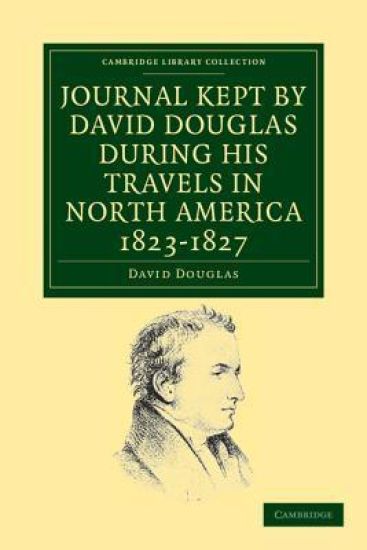
Journal Kept by David Douglas during his Travels in North America 1823–1827
David Douglas (1799–1834), the influential Scottish botanist and plant collector, trained as a gardener before attending Perth College and Glasgow University. His genius for botany flourished and his talents came to the attention of the Royal Horticultural Society. With the society's backing he went to North America in 1823, beginning his life-long fascination with the region's flora. He discovered thousands of new species and introduced 240 of them to Britain, including the Douglas fir. Douglas continued to explore and discover plant species until his death in the Sandwich Islands (present-day Hawaii) in 1834. This remarkable journal, which remained unpublished until 1914, describes his adventures in North America during 1823–7. It also includes extracts from his journal of his explorations of Hawaii during 1833–4. The appendices include a listing of the plants Douglas introduced to Britain, and contemporary accounts of investigations into the mysterious circumstances of his death.
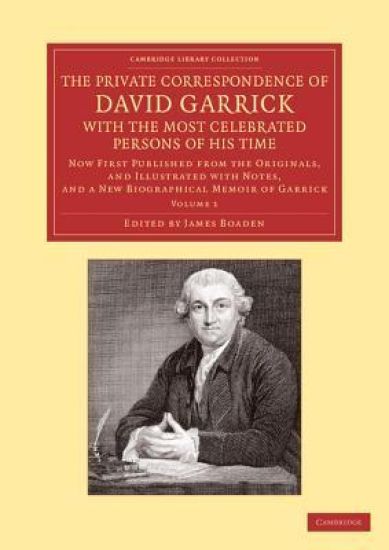
The Private Correspondence of David Garrick with the Most Celebrated Persons of his Time: Volume 1
David Garrick (1717–79) is synonymous with the golden age of English theatre. Widely acclaimed as an actor, he went on to become a shrewd theatre manager at Drury Lane. His years in charge of the Theatre Royal ensured its dramatic ascendancy and burnished his own considerable celebrity. These letters, first published in 1831, reveal Garrick's gregarious nature and shed light on his many friendships with leading ladies, fellow actors, contemporary playwrights, and members of high society. His love of Shakespeare's work is also evident, highlighting Garrick's pivotal role in ensuring the plays became established in the national consciousness. This two-volume collection was edited by James Boaden (1762–1839), who published several theatrical biographies (also reissued in this series). Containing correspondence for the period 1736–74, Volume 1 also includes a biographical account that traces the progress of Garrick's theatrical career.
The Private Correspondence of David Garrick with the Most Celebrated Persons of his Time: Volume 2
David Garrick (1717–79) is synonymous with the golden age of English theatre. Widely acclaimed as an actor, he went on to become a shrewd theatre manager at Drury Lane. His years in charge of the Theatre Royal ensured its dramatic ascendancy and burnished his own considerable celebrity. These letters, first published in 1831, reveal Garrick's gregarious nature and shed light on his many friendships with leading ladies, fellow actors, contemporary playwrights, and members of high society. His love of Shakespeare's work is also evident, highlighting Garrick's pivotal role in ensuring the plays became established in the national consciousness. This two-volume collection was edited by James Boaden (1762–1839), who published several theatrical biographies (also reissued in this series). Volume 2 contains letters from the final years of Garrick's life, notably his correspondence in French with influential figures in Parisian theatre.
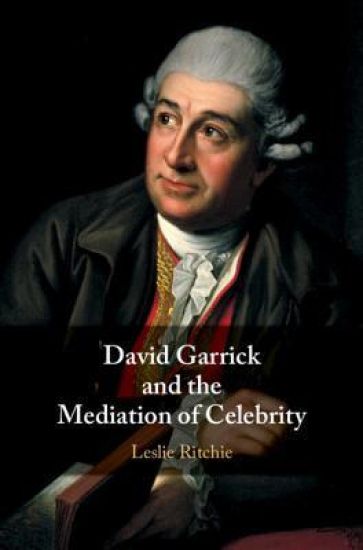
David Garrick and the Mediation of Celebrity

David Garrick and the Mediation of Celebrity

Leslie Ritchie

Cambridge University Press
2021
pokkari
What happens when an actor owns shares in the stage on which he performs and the newspapers that review his performances? Celebrity that lasts over 240 years. From 1741, David Garrick dominated the London theatre world as the progenitor of a new 'natural' style of acting. From 1747 to 1776, he was a part-owner and manager of Drury Lane, controlling most aspects of the theatre's life. In a spectacular foreshadowing of today's media convergences, he also owned shares in papers including the St James's Chronicle and the Public Advertiser, which advertised and reviewed Drury Lane's theatrical productions. This book explores the nearly inconceivable level of cultural power generated by Garrick's entrepreneurial manufacture and mediation of his own celebrity. Using new technologies and extensive archival research, this book uncovers fresh material concerning Garrick's ownership and manipulation of the media, offering timely reflections for theatre history and media studies.
David Garrick and the Mediation of Celebrity

David Garrick and the Mediation of Celebrity

Leslie Ritchie

Cambridge University Press
2019
sidottu
What happens when an actor owns shares in the stage on which he performs and the newspapers that review his performances? Celebrity that lasts over 240 years. From 1741, David Garrick dominated the London theatre world as the progenitor of a new 'natural' style of acting. From 1747 to 1776, he was a part-owner and manager of Drury Lane, controlling most aspects of the theatre's life. In a spectacular foreshadowing of today's media convergences, he also owned shares in papers including the St James's Chronicle and the Public Advertiser, which advertised and reviewed Drury Lane's theatrical productions. This book explores the nearly inconceivable level of cultural power generated by Garrick's entrepreneurial manufacture and mediation of his own celebrity. Using new technologies and extensive archival research, this book uncovers fresh material concerning Garrick's ownership and manipulation of the media, offering timely reflections for theatre history and media studies.
David Crystal's 50 Questions About English Usage Pocket Editions
David Crystal provides concise, accessible answers to fifty questions about English language usage. In this compact, user-friendly book, David Crystal draws on his extensive knowledge and experience to answer questions from English language teachers and learners from around the world. The book covers topics ranging from general enquiries about the language as a whole to specific points of grammar, pronunciation, orthography, vocabulary, idiom and style. The author's responses are illustrated by personal anecdotes, placed within historical and literary context and supported by research and corpus data to provide unique, authentic insights.