Kirjojen hintavertailu. Mukana 11 627 463 kirjaa ja 12 kauppaa.

Kirjahaku

Etsi kirjoja tekijän nimen, kirjan nimen tai ISBN:n perusteella.

1000 tulosta hakusanalla David E. McAdams

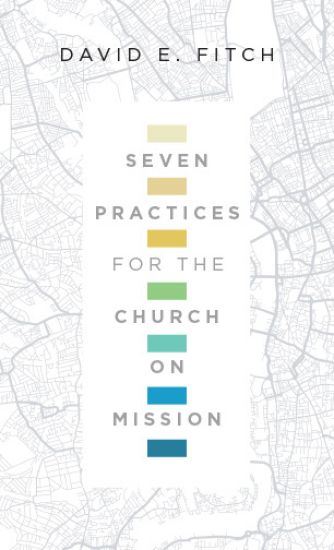
Seven Practices for the Church on Mission
Jesus gave his followers seven key practices: The Lord's SupperReconciliationProclaiming the gospelBeing with the "least of these" Being with childrenFivefold ministry giftingKingdom prayer When we practice these disciplines, God becomes faithfully present to us, and we in turn become God's faithful presence to the world. Pastor and professor David Fitch shows how these seven practices can revolutionize the church's presence in our neighborhoods, transform our way of life in the world, and advance the kingdom. Our communities can be changed when they see us practicing our faith. Go and do.
Demographic Dividend

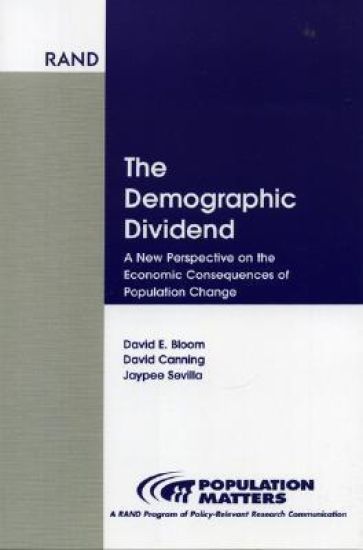
Demographic Dividend

David E. Bloom; David Canning; Jaypee Sevilla

RAND
2003
pokkari
This book examines the debate on how population growth affects national economies and synthesizes current research on the topic. The authors, led by Harvard economist David Bloom, conclude that population age structure, more than size or growth per se, affects economic development, and that reducing high fertility can create opportunities for economic growth if the right kinds of educational, health, and labor-market policies are in place. The report also examines specific regions of the world and how their differing policy environments have affected the relationship between population change and economic development.
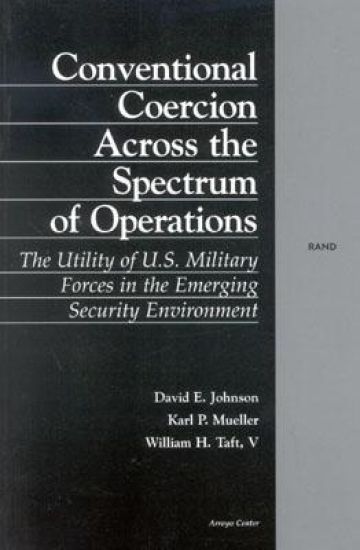
Conventional Coercion Across the Spectrum of Conventional Operations

Conventional Coercion Across the Spectrum of Conventional Operations

David E. Johnson; Karl P. Mueller; William Howard Taft; William H. Taft V

RAND
2003
pokkari
The raison d'etre for any military is to deter an adversary from acting inimically to a nation's interests or, if deterrence fails, to coerce him into ceasing the actions. After defining terms and reviewing the literature on coercion, this report looks at the utility of the military as a coercive instrument. The authors analyze cases that provide insights into conventional coercion. They conclude by stressing the unchanged nature of coercion and that only a thorough understanding of our adversaries, and of our own will and capabilities, will yield a successful coercive strategy. (DS)
Medical Risk in the Future Force Unit of Action

Medical Risk in the Future Force Unit of Action

David E Johnson; Gary Cecchine

RAND
2005
pokkari
This report documents the Army Medical Department's (AMEDD's) process of identifying and addressing medical issues related to the Army's transformation to the Future Force. It describes the AMEDD Transformation Workshop (ATW) IV, conducted at the RAND Corporation Washington office in February 2004, and it includes an analysis and discussion of the workshop results.
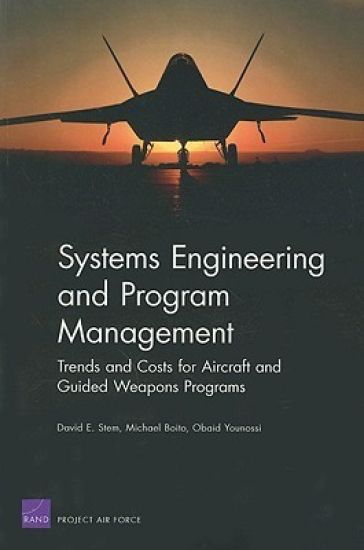
Systems Engineering and Program Management
Systems engineering and program management (SE/PM) constitute a large portion of the acquisition cost of military aircraft and guided weapons systems. The goal of this study was the development of a set of cost-estimating relationships that can be used to estimate the SE/PM cost element for development and production of aircraft and weapons programs. The authors investigate trends in SE/PM costs over time to generate methods that cost analysts can use early in the life cycle of a program when little cost information is available.
Medical Risk in the Future Force Unit of Employment

Medical Risk in the Future Force Unit of Employment

David E Johnson; Gary Cecchine

RAND
2006
pokkari
The Army Medical Department (AMEDD) Transformation Workshop (ATW) V is described in this report. The workshop continued the assessment, begun in ATWs I-IV, of the medical risks associated with emerging Army operational concepts and the capacity of the AMEDD to mitigate these risks. The results of the workshop will provide information valuable in designing the medical system at echelons above the unit of action.
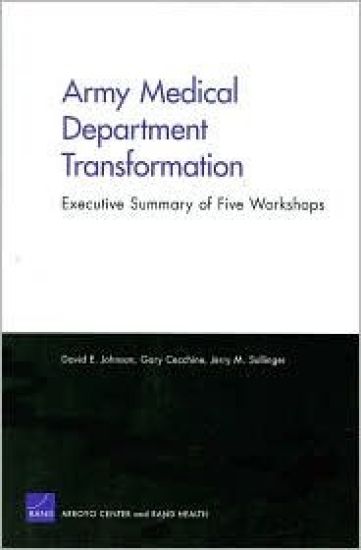
Army Medical Department Transformation
A series of Army Medical Command workshops assessed the effect of the Future Force doctrine on the Health Service Support system's ability to deliver medical care on the battlefield. The authors summarize these assessments and present conclusions based on the scenarios and the data gathered during the workshops.
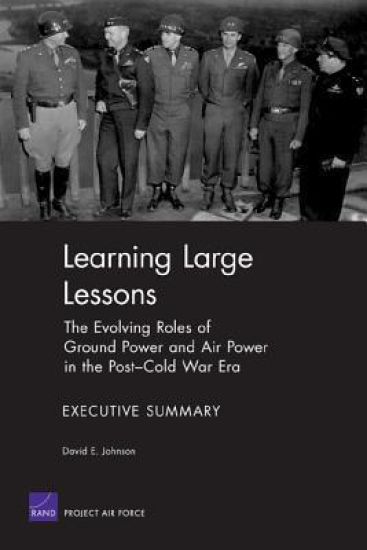
Learning Large Lessons

Learning Large Lessons

David E Johnson

RAND
2006
pokkari
The relative roles of U.S. ground and air power in major operations and campaigns have shifted since the end of the Cold War. To assess this shift (i.e., between the Army and Air Force, respectively), this executive summary discusses four of the five post-Cold War conflicts analyzed in the larger monograph: Iraq (1991), Kosovo (1999), Afghanistan (2001), and Iraq (2003).
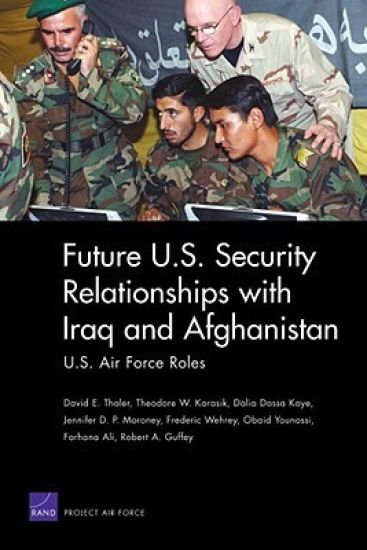
Future U.S. Security Relationship with Iraq and Afghanistan

Future U.S. Security Relationship with Iraq and Afghanistan

David E. Thaler; Theodore W. Karasik; Dalia Dassa Kaye; Jennifer D. P. Moroney; Frederic M. Wehrey; Obaid Younossi; Farhana Ali; Robert A. Guffey

RAND
2008
pokkari
The authors describe possible regional security structures and bilateral U.S. relationships with Iraq and Afghanistan. They recommend that the United States offer a wide range of security cooperation activities to compatible future governments in Kabul and Baghdad and should also plan to hedge against less-favorable contingencies. They emphasize that the U.S. Air Force should expect to remain heavily tasked for the foreseeable future.This book frames potential long-term U.S. security relationships with Iraq and Afghanistan in a regional context and posits roles of U.S. forces, especially the Air Force, in supporting these relationships under a variety of contingencies.
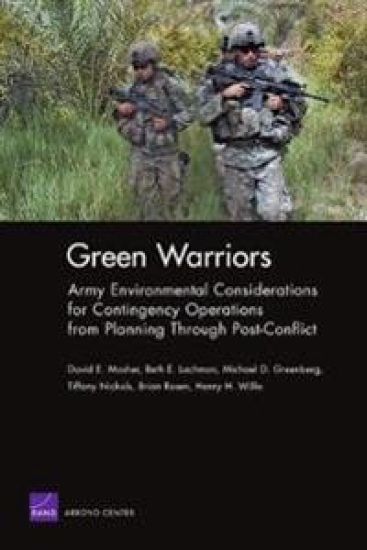
Green Warriors

Green Warriors

David E. Mosher; Beth E. Lachman; Michael D. Greenberg; Tiffany Nichols; Brian Rosen; Henry H. Willis

RAND
2008
pokkari
This study assesses whether Army policy, doctrine, and guidance adequately address environmental activities in post-conflict phases of contingencies. A review of policy, doctrine, operational experience, and documentation, as well as interviews with Army personnel, indicates that environmental concerns can have significant impacts.Recommendations are made for improving the Army's approach to environmental issues in contingency operations.It looks at the growing importance of environmental considerations for the Army in contingency operations, and recommendations for ways to better address environmental issues in Army planning, training, policy, guidance, and operations.
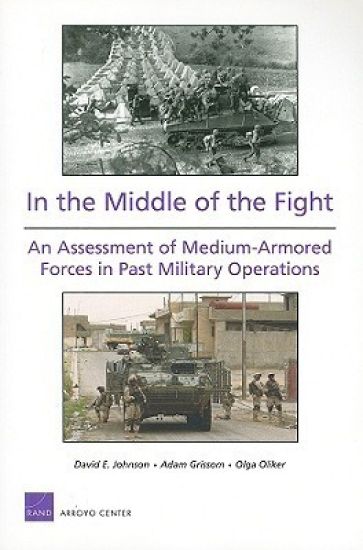
In the Middle of the Fight

In the Middle of the Fight

David E. Johnson; Adam Grissom; Olga Oliker

RAND
2008
pokkari
The authors find that medium-armored forces fare poorly against competent, heavily armored opponents, and that the Stryker and Future Combat Systems will not fill the void created by the retirement of the M551 Sheridan. An analysis of the performance of medium-armored forces across the range of military operations since World War I yields insights with significant implications for U.S. Army decisions about fielding these units in the Future Force.
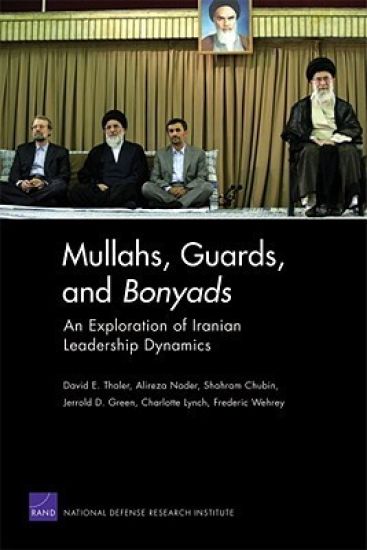
Mullahs, Guards, and Bonyads: an Exploration of Iranian Leadership Dynamics

Mullahs, Guards, and Bonyads: an Exploration of Iranian Leadership Dynamics

David E. Thaler; Alireza Nader; Shahram Chubin; Jerrold D. Green; Charlotte Lynch

RAND
2010
pokkari
The U.S. ability to "read" the Iranian regime and formulate appropriate policies has been weakened by lack of access to the country and by the opacity of decisionmaking in Tehran. To improve understanding of Iran's political system, the authors describe Iranian strategic culture; investigate Iran's informal networks, formal government institutions, and personalities; assess the impact of elite behavior on Iranian policy; and summarize key trends.
Preparing and Training for the Full Spectrum of Military Challenges

Preparing and Training for the Full Spectrum of Military Challenges

David E. Johnson; Jennifer D. P. Moroney; Roger Cliff; M. Wade Markel; Laurence Smallman; Michael Spirtas

RAND
2010
pokkari
What can the United States learn from other militaries about how better to prepare for full-spectrum operations - simultaneous offensive, defensive, and stability or civil support operations - and deployments? The authors examine the militaries of China, France, the UK, India, and Israel to identify different approaches to readiness, adaptability, and operational issues, including using subject-matter experts to improve training for specific deployments * using staff training to prepare forces for multiple contingencies; allowing combat training centers to focus on foundational skills; and, preparing units for a specific operational environment prior to deployment. The authors also examine how the United States, France, and the UK prepare for and conduct train, advise, and assist (TAA) missions, finding that the three countries employ significantly different approaches to staff selection, TAA deployments, staff training, and career progression.
2008 Battle of Sadr City

2008 Battle of Sadr City

David E. Johnson; M. Wade Markel; Brian Shannon

RAND
2014
pokkari
In 2008, U.S. and Iraqi forces defeated an uprising in Sadr City, a district of Baghdad with 2.4 million residents. Coalition forces' success in this battle helped consolidate the Government of Iraq's authority, contributing significantly to the attainment of contemporary U.S. operational objectives in Iraq. U.S. forces' conduct of the battle illustrates a new paradigm for urban combat and indicates capabilities the Army will need in the future.
Improving the U.S. Military's Understanding of Unstable Environments Vulnerable to Violent Extremist Groups

Improving the U.S. Military's Understanding of Unstable Environments Vulnerable to Violent Extremist Groups

David E. Thaler; Ryan Andrew Brown; Gabriella C. Gonzalez; Blake W. Mobley; Parisa Roshan

RAND
2014
pokkari
For over a decade, operations associated with irregular warfare have placed large demands on U.S. ground forces and have led to development of new Army and Joint doctrine. This report helps analysts identify and assess twelve key factors that create and perpetuate environments susceptible to insurgency, terrorism, and other extremist violence and instability to inform military decisions on allocation of analytic and security assistance resources.
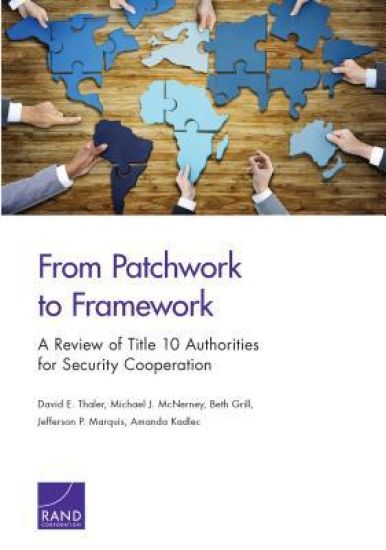
From Patchwork to Framework

From Patchwork to Framework

David E. Thaler; Michael J. McNerney; Beth Grill; Jefferson P. Marquis; Amanda Kadlec

RAND
2016
pokkari
The accelerated proliferation of legislative authorities for the Department of Defense (DoD) after September 11, 2001, has created an increasingly unwieldy catalog of security cooperation statutes, which have generated challenges in DoD planning and execution for engagement with foreign partners. This report develops a framework and options to streamline this patchwork of authorities that the DoD employs in security cooperation.
Genocide, Collective Violence, and Popular Memory

Genocide, Collective Violence, and Popular Memory

David E. Lorey; William H. Beezley

Rowman Littlefield
2001
sidottu
The twentieth century has been scarred by political violence and genocide, reaching its extreme in the Holocaust. Yet, at the same time, the century has been marked by a growing commitment to human rights. This volume highlights the importance of history-of socially processed memory-in resolving the wounds left by massive state-sponsored political violence and in preventing future episodes of violence. In Genocide, Collective Violence, and Popular Memory: The Politics of Remembrance in the Twentieth Century, the editors present and discuss the many different social responses to the challenge of coming to terms with past reigns of terror and collective violence. Designed for undergraduate courses in political violence and revolution, this volume treats a wide variety of incidents of collective violence-from decades-long genocide to short-lived massacres. The selection of essays provides a broad range of thought-provoking case studies from Latin America, Africa, Europe, and Asia. This provocative collection of readings from around the world will spur debate and discussion of this timely and important topic in the classroom and beyond.
Genocide, Collective Violence, and Popular Memory

Genocide, Collective Violence, and Popular Memory

David E. Lorey; William H. Beezley

Rowman Littlefield
2001
nidottu
The twentieth century has been scarred by political violence and genocide, reaching its extreme in the Holocaust. Yet, at the same time, the century has been marked by a growing commitment to human rights. This volume highlights the importance of history-of socially processed memory-in resolving the wounds left by massive state-sponsored political violence and in preventing future episodes of violence. In Genocide, Collective Violence, and Popular Memory: The Politics of Remembrance in the Twentieth Century, the editors present and discuss the many different social responses to the challenge of coming to terms with past reigns of terror and collective violence. Designed for undergraduate courses in political violence and revolution, this volume treats a wide variety of incidents of collective violence-from decades-long genocide to short-lived massacres. The selection of essays provides a broad range of thought-provoking case studies from Latin America, Africa, Europe, and Asia. This provocative collection of readings from around the world will spur debate and discussion of this timely and important topic in the classroom and beyond.