Kirjojen hintavertailu. Mukana 11 582 943 kirjaa ja 12 kauppaa.

Kirjahaku

Etsi kirjoja tekijän nimen, kirjan nimen tai ISBN:n perusteella.

1000 tulosta hakusanalla David M Pack

The Highest Calling: Conversations on the American Presidency

The Highest Calling: Conversations on the American Presidency

David M. Rubenstein

Thorndike Press Large Print
2025
sidottu
"From the New York Times bestselling author of The American Story and How to Lead and host of PBS's History with David Rubenstein--David Rubenstein interviews living American presidents and top historians and journalists who reflect on the US presidency, including Joe Biden, Barack Obama, George W. Bush, Maggie Haberman, Ron Chernow, and more. For years, bestselling author David M. Rubenstein has distilled the contours of American democracy through conversations with noted leaders and historians. In The Highest Calling, he offers an enlightening overview of arguably the single most important position in the world: the American presidency. Blending history and anecdote, Rubenstein chronicles the journeys of the presidents who have defined America as it exists now, what they envision for its future, and their legacy on the world stage. Drawing from his own experience in the Carter administration, he engages in dialogues with our nation's presidents and the historians who study them. Get exclusive access to fresh perspectives, including: -Original interviews with most of the living US presidents -Interviews with noted presidential historians like Annette Gordon-Reed, Ron Chernow, Candice Millard, and more Through insightful analysis, Rubenstein captures our country's most prominent leaders, the political genius and frays of the presidential role, and the wisdom that emerges from it."
The Muse of Gold

The Muse of Gold

David M Glixon

Authorhouse
2006
nidottu
In the development of artistic genius the part played by "inspiration" is enigmatic. To be sure, Terpsichore, Calliope, and their seven sisters remain potent muses indeed; however, no artist--no sculptor, painter, writer, composer, or choreographer--will deny the crucial importance of the impetus that can be provided by the tenth muse, the Muse of Gold. From "the glory that was Greece and the grandeur that was Rome" to the cathedrals of France and the skyscrapers of Kuala Lumpur, architects have shaped the structures and were paid for their creative labors. That has been the obvious and essential financial arrangement in every branch of the arts. In earlier times the creators were usually anonymous; later they acquired personal recognition and fame. Either way, they were generally comissioned by the ruler, the state, the church, or wealthy private citizens: Pericles, Maecenas, Louis XIV, the Medici, the popes, and individuals like the Earl of Southampton and Peggy Guggenheim. Of course the artist in any field in gratified by the appreciation of his work by an intelligent and perceptive audience. But when appreciation is augmented by actual patronage, the artist''s pleasure becomes considerably keener. For as the 18th-century English novelist Tobias Smollett observed, "empty praise will not supply the cravings of nature, and merit alone will not bring success." Today patronage is corporate rather than personal, generally taking the form of grants and fellowships. And certainly the broadened financial recognition of merit has helped foster the talents of many more individuals than could be aided by the individual sponsors of yesteryear. Yet there seems to be no proportionate increase in the number of artists of the caliber of Shakespeare, Mozart, Michelangelo, or Balanchine. It often takes personal contact to ignite the flame of genius--or to keep it glowing. Though both the artist and his patron lead their own private and separate lives, each of them can be
Three Prehistoric Inventions That Shaped Us

Three Prehistoric Inventions That Shaped Us

David M. Johnson

Peter Lang Publishing Inc
2011
sidottu
Both Darwin and neo-Darwinist theorists like Stephen Jay Gould were wrong to suppose that human nature and the human mind arose out of biological and historical sources alone. Three Prehistoric Inventions That Shaped Us argues that humans are very different from other animals in certain respects and, because of those respects, some of the most important sources of the particular sort of human nature we possess at the present moment, and of the special types of thinking in which we now are able to engage, were cultural ones. To be more specific, it shows that our present-day human nature was shaped in fundamental ways by at least three intellectual inventions that some of our prehistoric ancestors made – namely, the inventions of religious consciousness, of domestication of animals, and of syntactically organized language.
Curriculum as Spaces

Curriculum as Spaces

David M. Callejo Pérez; Donna Adair Breault

Peter Lang Publishing Inc
2014
nidottu
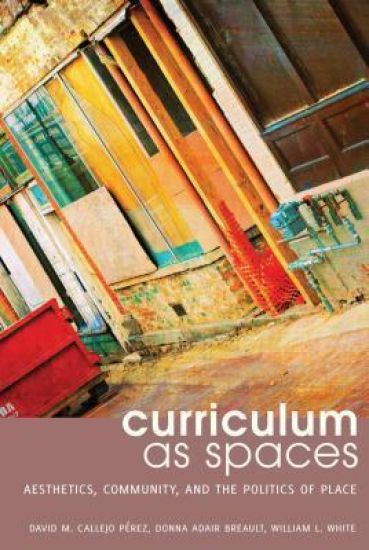
This book has won the «O.L. Davis, Jr. Outstanding Book Award» 2015 from the American Association for Teaching and Curriculum (AATC) Curriculum as Spaces: Aesthetics, Community, and the Politics of Place can be viewed as a holistic approach to education, conservation, and community development that uses place as an integrating context for learning. It argues that curriculum and place is a much deeper subject, with roots in aesthetics, community, and politics that go beyond the individual and profoundly address the formation of our current belief system. Despite the unique efforts described in this book to address the curriculum of space, major issues persist in our educational system. First, the rigor of curriculum studies is not usually applied to this complex field that encompasses philosophy, aesthetics, geography, social theory, and history. Second, the conflict caused by studying the place without contextualizing it within the larger social milieu ignores the nuances of our intimately global social network. Third, current responses ignore the uncritical assessment of underrepresented groups within the theoretical landscape. With these problems in mind, Curriculum as Spaces introduces foundational principles that ask us to imagine the full realization of curriculum spaces and show us how to examine the philosophical and cultural roots of these most essential principles.
Curriculum as Spaces

Curriculum as Spaces

David M. Callejo Pérez; Donna Adair Breault; William White

Peter Lang Publishing Inc
2014
sidottu
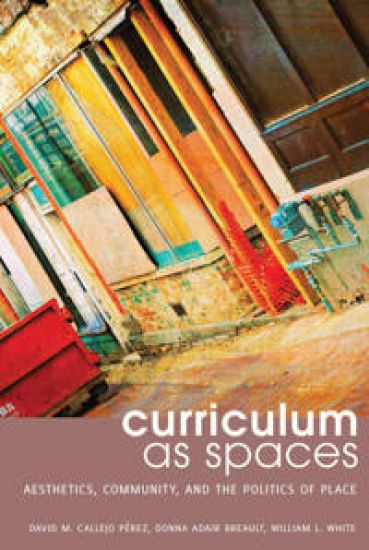
This book has won the «O.L. Davis, Jr. Outstanding Book Award» 2015 from the American Association for Teaching and Curriculum (AATC) Curriculum as Spaces: Aesthetics, Community, and the Politics of Place can be viewed as a holistic approach to education, conservation, and community development that uses place as an integrating context for learning. It argues that curriculum and place is a much deeper subject, with roots in aesthetics, community, and politics that go beyond the individual and profoundly address the formation of our current belief system. Despite the unique efforts described in this book to address the curriculum of space, major issues persist in our educational system. First, the rigor of curriculum studies is not usually applied to this complex field that encompasses philosophy, aesthetics, geography, social theory, and history. Second, the conflict caused by studying the place without contextualizing it within the larger social milieu ignores the nuances of our intimately global social network. Third, current responses ignore the uncritical assessment of underrepresented groups within the theoretical landscape. With these problems in mind, Curriculum as Spaces introduces foundational principles that ask us to imagine the full realization of curriculum spaces and show us how to examine the philosophical and cultural roots of these most essential principles.
Assessment Using the MMPI–2–RF

Assessment Using the MMPI–2–RF

David M. McCord

American Psychological Association
2018
pokkari
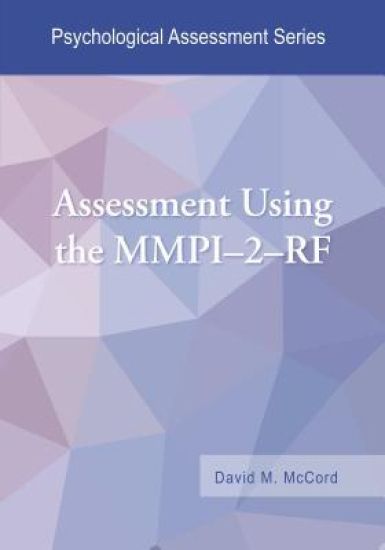
The MMPI-2-RF represents a paradigm shift in psychology. What was once a black-and-white approach to diagnosis—you either had a disorder or you didn’t -- has given way today to a more flexible and more realistic system that recognizes a continuum of functioning. This modern way of thinking is reflected in David McCord’s approach to interpreting the MMPI-2-RF, which he presents in this handy introductory guide. McCord offers a thorough overview of the MMPI-2-RF and each of its 51 scales, along with practical considerations for administration and scoring. Building on this foundational material, he then lays out a step-by-step framework for interpreting test results using a two-pass approach. In the first pass, the examiner quickly scans the results to get a broad sense of the client’s personality and psychopathology. The second pass entails a more methodical analysis that focuses on specific domains, such as somatic/cognitive dysfunction and interpersonal functioning. A rich case example brings this process to life by showing readers how to evaluate an actual score report and communicate their interpretations in narrative format.