
Kirjahaku
Etsi kirjoja tekijän nimen, kirjan nimen tai ISBN:n perusteella.
1000 tulosta hakusanalla David R Slavitt


Over the past forty years, congregations, businesses, other organizations, and communities across the United States have become increasingly divided along political and ideological lines.In When the Center Does Not Hold, David R. Brubaker, with contributions by colleagues Everett Brubaker, Carolyn Yoder, and Teresa J. Haase, offers relevant, practical mentorship on navigating polarized environments. Through easily accessible stories, they provide tools and processes that will equip leaders to both manage themselves and effectively lead others in highly polarized and anxious systems.Coaching includes guidance on key characteristics of effective leadership in times of polarization: refusing contempt, honoring dignity, broadening binaries, seeking first to understand, inviting disagreement, and staying connected.With years of combined experience in the fields of conflict transformation and organizational and leadership studies, Brubaker and his colleagues offer hope. Here, readers learn from leaders and communities that continue to renew the covenants that bind them, courageously address deeper needs that drive conflict, and hold on to a moral center while navigating the storms of polarization.

Witness to History: : A Paranormal Journey into the Past
David R. Pearse
Createspace Independent Publishing Platform
2015
nidottu

The Last Kingdom: Lessons from the Book of Daniel
David R. Edwards
Createspace Independent Publishing Platform
2015
nidottu

Six Cups of Persistence: A 30-year struggle for survival, love, and the American Dream
David R. Swift
Createspace Independent Publishing Platform
2015
nidottu

Conformity Colleges: The Destruction of Intellectual Creativity and Dissent in America's Universities
David R. Barnhizer
Skyhorse Publishing
2024
sidottu
The United States' education system, especially its universities, is under attack by the ideological Left, dominated by advocates of Wokeism and Critical Race Theory. Marshall McLuhan was a brilliant thinker best known for his insight that "the medium is the message." Universities, as well as our entire educational "medium" including the K-12 system that feeds its graduates into the university and societal systems, are powerful and overarching mechanisms that we use to shape our understanding. For Western nations, the ideal of the university and of education generally has been to provide us with analytical skills, knowledge, and the ability to create and nurture a healthy society that benefits as many people as possible. That ideal, and the university as educational and social "medium," is under severe attack. The power to use the university as an overarching "medium" that offers a strong sense of legitimacy to even flawed and overstated arguments and assertions is why the institution is a target of an ideological Left that is now dominated by advocates of Wokeism and Critical Race Theory. Once obtaining a strong power base in university disciplines and administrations, the revolutionaries of race, gender, and other radical interests metamorphosed from heroic moral beacons fighting and railing against injustice, and revealed themselves as ideological dictators. The truth is that what we now refer to as the Woke/Critical Race Theory activist movement--particularly that controlled by those who came to power in the past thirty years or so--were not simply seeking to expand the nature and content of the university curriculum, or even what is taught in the K-12 system. Their intent was and is to "destabilize," "transform," and supplant what is taught. They seek to create a culture that elevates their interests while aggressively repressing anything they see as an obstacle to power, including healthy discourse and debate. The activists of the Woke/Critical Race Theory Movement are not an honest intellectual movement. They are intense and aggressive political strategists, self-styled "revolutionaries" seeking to use our educational systems with the framed narrative of Diversity, Equity, and Inclusion (DEI) that is actually one of "Division, Enmity, and Intimidation/Indoctrination," all the while claiming their interests are benign and aimed at healing. In reality, they are fracturing our fundamental social order, sowing discord, and deliberately suppressing the freedom of speech and thought essential to the well-being of our democratic republic. Conformity Colleges: The Destruction of Intellectual Creativity and Dissent in America's Universities will help you understand what is happening and come to grips with the need to challenge, counter, and reverse this "revolution." Nothing of significance can be done to stop what is going on unless the DEI administrative bureaucracy that now controls universities is dismantled or substantially weakened.

A Few Words: Words are small things with great power, never underestimate the ones you use...or don't
David R. Blaski
Createspace Independent Publishing Platform
2015
nidottu

Priests, Prophets, Politicians, People and Protests
David R. Amies
Createspace Independent Publishing Platform
2015
nidottu

Old Testament Chronology
David R. Hollingsworth; James D. Quiggle
Createspace Independent Publishing Platform
2015
nidottu

Old and New Testament Chronology
David R. Hollingsworth; James D. Quiggle
Createspace Independent Publishing Platform
2015
nidottu

Life Confessions: The Power Of Your Words, Personal Prayers For Health, Wealth, Strength And Freedom!
David R. White
Createspace Independent Publishing Platform
2015
nidottu

While numerous books have been written on the great camps, hiking trails, and wildlife of the Adirondacks, noted anthropologist David R. Starbuck offers the only archeological guide to a region long overlooked by archeologists who thought that “all the best sites” were elsewhere. This beautifully illustrated volume focuses on the rich and varied material culture brought to the mountains by their original Native American inhabitants, along with subsequent settlements created by soldiers, farmers, industrialists, workers, and tourists. Starbuck examines Native American sites on Lake George and Long Lake; military and underwater sites throughout the Lake George, Fort Ticonderoga, and Crown Point regions; old industrial sites where forges, tanneries, and mines once thrived; farms and the rural landscape; and many other sites, including an abandoned theme park (Frontier Town in North Hudson), the ghost town of Adirondac, Civilian Conservation Corps camps, ski areas, and graveyards.


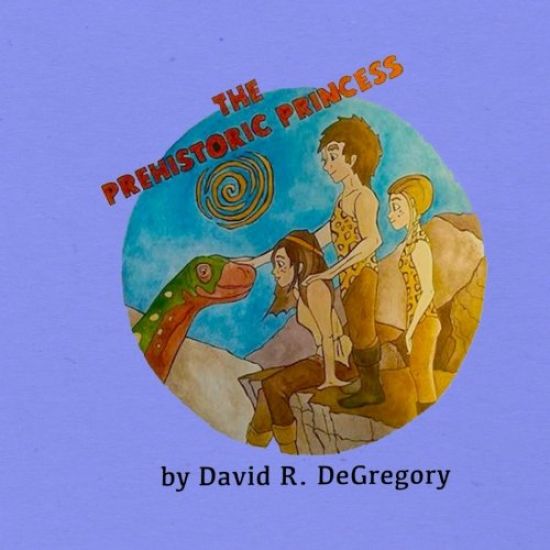
The Prehistoric Princess
David R. Degregory
Createspace Independent Publishing Platform
2015
nidottu

The Abolition of Cash: America's $660 Billion Burden
David R. Warwick
Createspace Independent Publishing Platform
2015
nidottu
"America needs to advance the timetable for the cashless society with a plan of action because cash is an economic drain that won't disappear naturally in the US for at least several more decades," says its author, David R. Warwick In The Abolition of Cash: America's $660 Billion Burden, he states that despite cashless trends in Scandinavia and elsewhere American progress toward cashlessness is at a standstill because of public angst over identity theft and sensitivity about data privacy. Warwick contends that abolition of cash shouldn't be feared; but welcomed. He demonstrates statistically that physical cash is far more costly. He points out that even cybercrooks rely on cash -for example, in bogus withdrawals from ATMs. In the bigger picture, he says cybercrime and ID theft are relatively minor and manageable. He compiles costs of cash in serious crimes, tax dodging, and inefficiency with administrative outlays to show that "...the overall cost of cash is four to five times the total cost of cybercrime." He arrives at a cash cost of $660 billion (before he stops counting) which, he points out, is roughly equal to outlays for old-age Social Security, and saddles the average American household by over $6,000 per year. Warwick addresses a range of questions about a cashless society including "What happens when the power fails." He anticipates how tax evaders, drug dealers and narcotraffickers would react to an absence of cash; and analyzes post-cash roles of gold, foreign currencies, and virtual currencies as possible substitutes for cash in crime. His book describes the unattended 24/7 ATM as a sort of microcosm of cash crime - a place where 7,500 Americans are robbed each year; where crooks use "skimmers" to siphon off patrons' bankcard and PINs; where "carders" use phony bankcards made from hacked card numbers to steal money; and where fifty times a day 'crash and grab' thieves ram stolen vehicles into buildings and cart away entire ATMs. Warwick evaluates the legitimate uses of cash privacy through real-life examples, and weighs their loss against the overall cost savings of abolishing cash, as well as against freedoms from being attacked in robberies, a more civil society, and benefits to the poor. His position of payment privacy and even anonymity in digital payment media is that they must be protected -- provided that a means of data access is provided for law enforcement and legally-entitled third parties. This would rule out fully anonymous payment media, of course. Yet, he says that even if postcash payments were fully anonymous, society would nevertheless gain major benefits from cashlessness, including the end of violent cash robberies, thefts and burglaries of cash, as well as savings from efficiency. Warwick rates Bitcoin and copycat currencies as clunky and ill-suited for mainstream payments. More menacingly, he sees their use in crime as a continuing obstacle for law enforcement. He anticipates that cybercrime will never be wiped out but says "this doesn't justify keeping cash in circulation any more than automobile crashes are a reason to keep horses around for transportation." This is an entertaining and thought-provoking book. It's well researched and makes a timely read in an increasingly cashless world.

Reaper 192: Rise of the Reaper: Born in war. Studied in secret. Released in chaos.
David R. McGuffin
Createspace Independent Publishing Platform
2017
nidottu
1944 As the Third Reich crumbles around them, two German scientists work tirelessly to create the perfect germ-warfare weapon at any cost. Germany must be saved A lapse in protocols at a facility in Montana causes a Senator, and a General to rethink how to research a new weapon. 1968 An island paradise becomes an ill-fated prequel of things to come and a soldier's second chance as an old friend ravages his command. Present Day A base in southern Nevada harbors a deadly secret, one that can destroy the world, and one that can save it. A programmer in Los Angeles becomes the greatest threat to humanity's survival. It's up to a chosen few to save what's left of the human race Follow the Reaper virus as it ravages the world through time, and a soldier, scientist, mechanic, an FBI agent who will stop at nothing to defeat it.


How Uncle Huey Got Religion
David R. Squyres
Createspace Independent Publishing Platform
2015
nidottu
DID YOU KNOW. . . In 1938 a country bumpkin named Huey House played a fast one on the IRS. When Huey learned that churches do not pay income taxes, he informed the IRS that he was a church. To his utter surprise, Huey got a letter from the IRS with the grim news that they would be making a visit to his church. Huey quickly got to work establishing the Little Rickety Church of Madison Creek. The scam would have far deeper implications than just a tax audit. Huey's church would pull races together, cause many to question what they really believed and challenge everyone to radically live their faith. However, the Little Rickety Church would also incite local rage as it broke both spiritual and cultural norms. When Huey House and the members of the Little Rickety Church finally face their foes in the great Battle of Madison Creek, their only hope is that deliverance might come from the heavens themselves.