
Kirjahaku
Etsi kirjoja tekijän nimen, kirjan nimen tai ISBN:n perusteella.
1000 tulosta hakusanalla Derek Landy
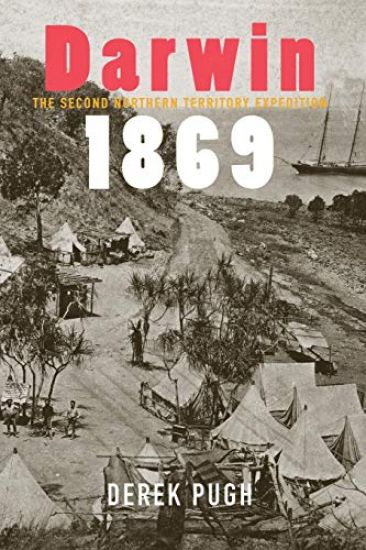
Darwin, the unique and vibrant city in Australia's tropical north, was almost stillborn.The Northern Territory had its beginnings under the governance of South Australia. Land was sold to investors, unseen and unsurveyed and in an unknown location. The sales raised the funds needed to found the new colony of Palmerston, the future capital of the Northern Territory of South Australia. The First Northern Territory Expedition was sent north to make it a reality. But it failed miserably and the government faced huge losses and insufficient reserves to refund its investors.To mitigate the loss, a new venture was envisaged - The Second Northern Territory Expedition - and there was only one man thought capable of ensuring a successful survey of the north: the Surveyor General, George Woodroffe Goyder.Goyder was an extraordinary man, full of frenetic energy and with a phenomenal work ethic. The survey took him and his expert teams of surveyors and bushmen only eight months. It resulted in the laying out of the city of Palmerston (now called Darwin), three rural towns and hundreds of rural blocks spreading over almost 270,000 hectares, all pegged out in the bush and mapped. The blocks were carved out of Larrakia and Wulna lands - without permission or compensation - and conflict with the Aborigines was an ever-present danger. Two men were speared - one fatally.Darwin grew from these somewhat humble but tumultuous beginnings. It was the only pre-Federation Australian capital established late enough to be photographed from its first settlement, and it is a survivor of challenges and privations unheard of in more temperate climes.Darwin's story is written on its maps. Street names such as Knuckey, McLachlan, Daly, Woods, Bennett, Harvey and Smith Streets, recall the surveyors and their teams. Suburbs such as Millner, Larrakeyah, Bellamack and Stuart Park remind us of the city's earliest days. It is the story of how the courage and diligence of a few led to the founding of the city we know today.
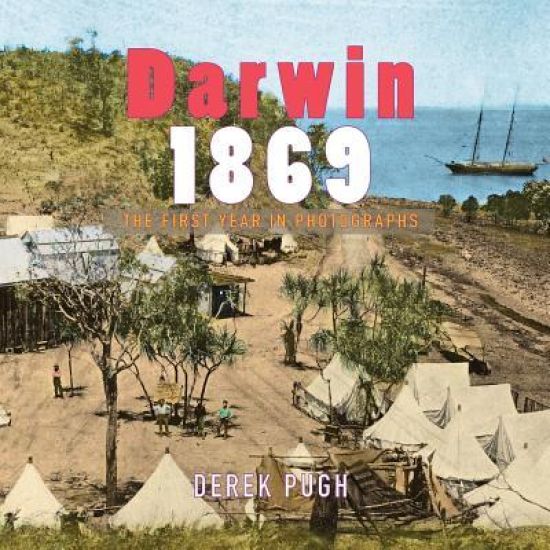
This is the story of the birth of the city of Darwin, the capital of the Northern Territory.At first called Palmertston, Darwin is the only pre-Federation capital city in Australia which is young enough to have been photographed since its earliest days. When George Goyder and his survey teams arrived in Port Darwin in February 5, 1869, one of the draftsmen, Joseph Brooks, doubled as the expedition's official photographer. He was later joined by Captain Samuel Sweet of the Gulnare, who helped Brooks and took his own collection of photographs.These precious images show the very first camp on the Darwin peninsula and the men of the Second Northern Territory Expedition working in the Northern Territory of South Australia in 1869.


It's Schoolies Week in Bali. Ras follows Jess to the party town of Kuta and finds that protecting his girl is easier said than done. He also has to learn how to handle his newfound freedom as an adult. What could possibly go wrong?

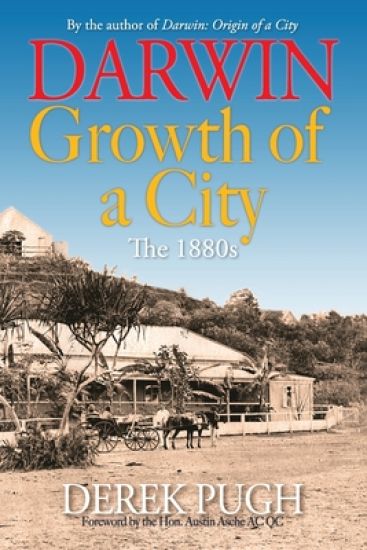
The 1880s started with a boom in Palmerston and the Top End. South Australian investors flocked to put their money into gold mines, sugar and coffee plantations, and the pastoral industry. Cattle stations bigger than a British county were carved out of the bush. The Overland Telegraph Line stretched across the continent, and the Top End was alive with Aborigines, explorers, agriculturalists, pastoralists, and reef miners. Then came the railway builders, pearl divers, Chinese 'Coolies', and 'misfits, missionaries and mercenaries'.The story of Palmerston (Darwin) and the Top End in the 1880s is a story of murder and mayhem, fortunes won and lost, challenges taken up, tragedies unfolded, and golden opportunities grasped by extraordinary men and women. It was they who began to turn this remote area of Australia into what it is today, and they who forged a new Australian identity - that of the 'Territorian'.With a foreword by His Honour the Honourable Austin Asche AC QC, the 13th Administrator of the Northern Territory.
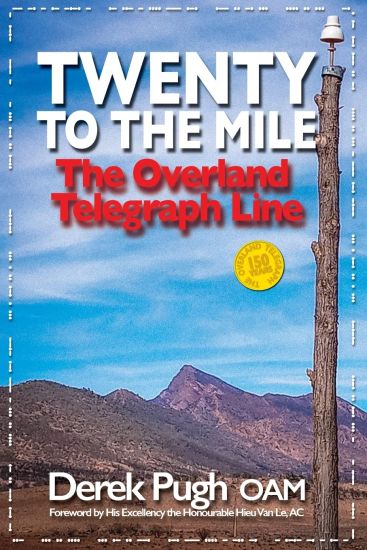
The greatest engineering problem facing Australia - the tyranny of distance - had a solution: the electric telegraph, and its champion was the sheep-farming colony of South Australia.In two years, Charles Heavitree Todd, leading hundreds of men, constructed a telegraph line across the centre of the continent from Port Augusta to Darwin. At nearly 3,000 kilometres long and using 36,000 poles at '20 to the mile', it was a mammoth undertaking but in October 1872, Adelaide was finally linked to London.The Overland Telegraph Line crossed Aboriginal lands first seen by John McDouall Stuart just 10 years before. Messages which previously took weeks to cross the country now took hours. Passing through eleven new repeater stations and the remotest parts of Australia, the line joined the vast global telegraph network, and a new era was ushered in.Each station held a staff of six. They became centres of white civilization and the cattle or sheep industry and, in many places, the Aborigines were displaced.The unique stories of how men and women lived and/or died on the line range from heroic through desperate to tragic, but they remain an indelible part of Australia's history.'...a book written with heart and determination ... a lasting tribute to the inventiveness and tenacity of the people behind the planning, building and execution of the Overland Telegraph - a true nation building endeavour.' - His Excellency, The Honourable Hieu Van Le, AC.


Are you looking for a special companion? Frustrated because you can't seem to communicate with the person you are with? Determined to meet someone whose vision matches yours? If so, Friends, Lovers, and Soul Mates is for you! Filled with self-assessments, dozens of case studies, and an appendix of organizations, Friends, Lovers, and Soul Mates is more than just a relationship book for Black men and women. It is a guide you can use at any stage in your life, whether you want to figure out why you don't currently have a relationship or want to enhance your existing relationship. There is no magic wand to create the nourishing bonds we so desperately need and deserve, but with hard work and the guidance that you can find in this book, a healthy, nurturing, and loving relationship can be yours.

In the past thirty years, Americans have lost faith in their government and the politicians who lead it. They have blamed Washington for a long list of problems, ranging from poor schools to costly medical care to high rates of violent crime. After investigating these complaints and determining that many are justified, Derek Bok seeks to determine the main reasons for the failings and frustrations associated with government.Discounting three common explanations--deteriorating leadership, the effect of the media on the political process, and the influence of interest groups--Bok identifies four weaknesses that particularly need explaining: a persistent tendency by Congress to design programs poorly; to impose expensive and often quixotic regulations that produce only modest results; to do less than other leading democracies to protect working people from illness, unemployment, and other basic hazards of life; and to leave large numbers of people, especially children, living in poverty.Bok goes on to explore the reasons for these fundamental weaknesses and to discuss popular remedies such as term limits, devolution, "reinventing" government, and campaign finance reform. While some of these proposals have merit, Bok finds a deeper, more troubling paradox: Americans want to gain more power over their government, but are devoting less time to exerting a constructive influence. Their dissatisfaction with government is growing as their participation in the political process is declining. These contradictory trends, Bok argues, contribute to the problems of our democracy. Fortunately, there are many concrete steps that Americans can take to be politically engaged and to help their government improve its performance."Democracy," Bok concludes, "is a collective venture which falters or flourishes depending on the efforts citizens invest in its behalf."

The Harvard–MIT Division of Health Sciences and Technology
Derek Bok
Harvard University Press
2004
sidottu
Since 1970 a medical sciences curriculum has been taught jointly by Harvard Medical School and the Massachusetts Institute of Technology. In 1978, a doctoral program was founded to prepare physical scientists and engineers to address research at the interface of technology and clinical medicine. This volume describes, analyzes, and evaluates those first 25 years of the largest lasting collaborative educational and research program between two neighboring research universities.Containing introductory comments by the presidents of both institutions at the time of the inauguration of the program, this volume presents historiographic and autobiographical chapters by senior officials and faculty of both universities who helped to guide it through its first quarter century. Evaluation of the program and follow-up data on the first graduates are included as well. Courses are listed in the appendices, as are curricula, faculty, theses topics, and major research projects.

The interest in the performance of ancient Greek poetry has grown dramatically in recent years. But the competitive dimension of Greek poetic performances, while usually assumed, has rarely been directly addressed. This study provides for the first time an in-depth examination of a central mode of Greek poetic competition—capping, which occurs when speakers or singers respond to one another in small numbers of verses, single verses, or between verse units themselves. With a wealth of descriptive and technical detail, Collins surveys the wide range of genres that incorporated capping, including tragic and comic stichomythia, lament, forms of Platonic dialectic and dialogue, the sympotic performance of elegy, skolia, and related verse games, Hellenistic bucolic, as well as the rhapsodic performance of epic. Further, he examines historical evidence for actual performances as well as literary representations of live performances to explore how the features of improvisation, riddling, and punning through verse were developed and refined in different competitive contexts. Anyone concerned with the performance of archaic and classical Greek poetry, or with the agonistic social, cultural, and poetic gamesmanship that prompted one performer to achieve "mastery" over another, will find this authoritative volume indispensable.
How do we ensure that waste and inefficiency do not undermine the mission of publicly funded schools? Derek Neal writes that economists must analyze education policy in the same way they analyze other procurement problems. Insights from research on incentives and contracts in the private sector point to new approaches that could induce publicly funded educators to provide excellent education, even though taxpayers and parents cannot monitor what happens in the classroom.Information, Incentives, and Education Policy introduces readers to what economists know—and do not know—about the logjams created by misinformation and disincentives in education. Examining a range of policy agendas, from assessment-based accountability and centralized school assignments to charter schools and voucher systems, Neal demonstrates where these programs have been successful, where they have failed, and why. The details clearly matter: there is no quick-and-easy fix for education policy. By combining elements from various approaches, economists can help policy makers design optimal reforms.Information, Incentives, and Education Policy is organized to show readers how standard tools from economics research on information and incentives speak directly to some of the most crucial issues in education today. In addition to providing an overview of the pluses and minuses of particular programs, each chapter includes a series of exercises that allow students of economics to work through the mathematics for themselves or with an instructor’s assistance. For those who wish to master the models and tools that economists of education should use in their work, there is no better resource available.

Derek Bok examines the complex ethical and social issues facing modern universities today, and suggests approaches that will allow the academic institution both to serve society and to continue its primary mission of teaching and research.

Never before have Americans been so anxious about the future of their society. But rarely has anyone offered a clear statement about why, in a nation so prosperous, free, and stable, we tend to assume that the country is in dire straits and that the government can do little to help. This book is just such a statement, an eloquent assessment of where America stands, how our society has changed in the past half-century, and who or what is responsible for our current frustrations.Derek Bok examines the nation's progress in five areas that Americans generally consider to be of paramount importance: economic prosperity, quality of life, opportunity, personal security, and societal values. He shows that although we are better off today in most areas than we were in 1960, we have performed poorly overall compared with other leading industrial nations. And when it comes to providing adequate health care at a reasonable cost, educating our young people for high-skilled jobs, alleviating poverty and urban blight, and reducing crime, our record has been dismal. Comparing the United States with other leading industrial nations on more than sixty key indicators, Bok shows that we rank below average in more than two-thirds of the cases and at the bottom in more than half.What has caused this decline, and what can be done about it? In virtually all important areas of American life, Bok concludes, government policies have played a significant, often decisive role in accounting for our successes as well as our failures. But whereas others call for downsizing the federal government, Bok argues that government is essential to achieving America's goals. In short, Ronald Reagan was only half right. Government is the problem. But it is also the most important part of the solution. By assessing the state of the nation and identifying the reasons for its current condition, this book helps set the agenda for improving America's performance in the future.
What is distinctive, Derek Bok asks, about the American system of higher education, and how well does it perform? In particular, just how good is the education our universities offer? Are they doing all they can to educate their students, or do teaching and learning get lost in the pressure for ever more prestigious research and publication? Bok concludes that the competition characteristic of American higher education—competition for the best students, the most advanced scholarship, the most successful scientific research, the best facilities—has helped to produce venturesome, adaptable, and varied universities. But because the process of learning itself is imperfectly understood, it is difficult to achieve sustained progress in the quality of education or even to determine which educational innovations actually enhance learning.Despite these problems, the last fifteen years have produced many promising developments, such as experimental curricula, computer-assisted learning, much-expanded offerings for nontraditional students, clinical legal education, schools of public policy to prepare students for public service careers, and many more. Such initiatives need a more secure and central place within the regular curriculum. In addition to the traditional focus on program and curriculum, Bok stresses the need to pay greater attention to improving the effectiveness of teaching and learning. He calls for a number of steps, including a sustained program of research directed toward evaluating educational programs and methods of teaching. Only through careful experimentation and evaluation of its own efforts, through many small improvements and occasional inspired advances, can each university move toward the goal of giving its students the best possible preparation for life in an increasingly complex world.
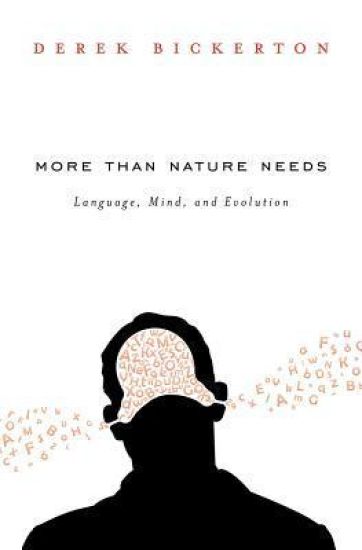
The human mind is an unlikely evolutionary adaptation. How did humans acquire cognitive capacities far more powerful than anything a hunting-and-gathering primate needed to survive? Alfred Russel Wallace, co-founder with Darwin of evolutionary theory, saw humans as "divine exceptions" to natural selection. Darwin thought use of language might have shaped our sophisticated brains, but his hypothesis remained an intriguing guess--until now. Combining state-of-the-art research with forty years of writing and thinking about language evolution, Derek Bickerton convincingly resolves a crucial problem that both biology and the cognitive sciences have hitherto ignored or evaded.What evolved first was neither language nor intelligence--merely normal animal communication plus displacement. That was enough to break restrictions on both thought and communication that bound all other animals. The brain self-organized to store and automatically process its new input, words. But words, which are inextricably linked to the concepts they represent, had to be accessible to consciousness. The inevitable consequence was a cognitive engine able to voluntarily merge both thoughts and words into meaningful combinations. Only in a third phase could language emerge, as humans began to tinker with a medium that, when used for communication, was adequate for speakers but suboptimal for hearers.Starting from humankind's remotest past, More than Nature Needs transcends nativist thesis and empiricist antithesis by presenting a revolutionary synthesis--one that instead of merely repeating "nature and nurture" clichés shows specifically and in a principled manner how and why the synthesis came about.

Image is a tool that guarantees success -- but only if you know how to use it. The Persona Principle will teach you the most powerful Image-Marketing secrets of the world's leading enterprises.Whether you goal is to jump-start an existing business, woo a new and valuable customer, or get your entrepreneurial venture off the ground, The Persona Principle will guide you to the best Persona for success.

At the zoo Gladys eats bananas for breakfast, bananas for lunch, and even bananas for dinner. But one day Gladys smells something even better than bananas. Could it be pizza? Ice cream? Or something altogether bette