

Kirjahaku
Etsi kirjoja tekijän nimen, kirjan nimen tai ISBN:n perusteella.
1000 tulosta hakusanalla Dmitri Mereschkowski


Novel Design and the Applications of Smart-M3 Platforms in the Internet of Things
Dmitry Korzun; Alexey Kashevnik; Sergey Balandin
IGI Global
2017
sidottu
The Internet of Things has become a major influence on the development of new technologies and innovations. When combined with smart services, the end-user experience can be significantly enhanced. Novel Design and the Applications of Smart-M3 Platforms in the Internet of Things: Emerging Research and Opportunities provides an innovative outlook on the development of open source technology for the creation of smart spaces and services. Including a range of relevant topics such as interoperability, system architecture, and information processing, this book is an ideal reference source for academics, researchers, graduate students, and practitioners interested in the latest advancements in the Internet of things.

Ambient Intelligence Services in IoT Environments
Dmitry Korzun; Ekaterina Balandina; Alexey Kashevnik; Sergey Balandin; Fabio Viola
IGI Global
2019
sidottu
The internet of things (IoT) is quickly growing into a large industry with a huge economic impact expected in the near future. However, the users' needs go beyond the existing web-like services, which do not provide satisfactory intelligence levels. Ambient intelligence services in IoT environments is an emerging research area that can change the way that technology and services are perceived by the users.Ambient Intelligence Services in IoT Environments: Emerging Research and Opportunities is a unique source that systemizes recent trends and advances for service development with such key technological enablers of modern ICT as ambient intelligence, IoT, web of things, and cyber-physical systems. The considered concepts and models are presented using a smart spaces approach with a particular focus on the Smart-M3 platform, which is now shaping into an open source technology for creating ontology-based smart spaces and is shifting towards the development of web of things applications and socio-cyber-physical systems. Containing coverage on a broad range of topics such as fog computing, smart environments, and virtual reality, multitudes of researchers, students, academicians, and professionals will benefit from this timely reference.

Ambient Intelligence Services in IoT Environments: Emerging Research and Opportunities
Dmitry Korzun; Ekaterina Balandina; Alexey Kashevnik; Sergey Balandin; Fabio Viola
IGI Global
2019
nidottu
The internet of things (IoT) is quickly growing into a large industry with a huge economic impact expected in the near future. However, the users' needs go beyond the existing web-like services, which do not provide satisfactory intelligence levels. Ambient intelligence services in IoT environments is an emerging research area that can change the way that technology and services are perceived by the users. Ambient Intelligence Services in IoT Environments: Emerging Research and Opportunities is a unique source that systemizes recent trends and advances for service development with such key technological enablers of modern ICT as ambient intelligence, IoT, web of things, and cyber-physical systems. The considered concepts and models are presented using a smart spaces approach with a particular focus on the Smart-M3 platform, which is now shaping into an open source technology for creating ontology-based smart spaces and is shifting towards the development of web of things applications and socio-cyber-physical systems. Containing coverage on a broad range of topics such as fog computing, smart environments, and virtual reality, multitudes of researchers, students, academicians, and professionals will benefit from this timely reference.
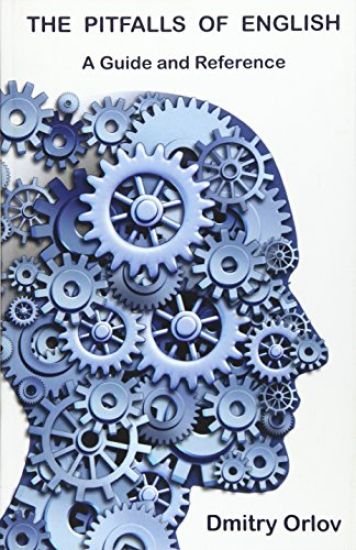
The Pitfalls of English: A Guide and Reference
Dmitry Orlov
Createspace Independent Publishing Platform
2015
nidottu
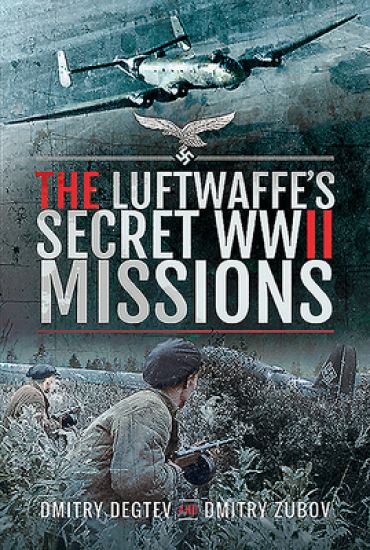
On the night of 14/15 August 1944, the roar of an unknown aircraft was heard over the dense forests to the south-east of Moscow. Flying past the Soviet capital, the aircraft turned towards a secret' landing site at Yegoryevsk on the outskirts of the city. But lying in wait were troops of Stalin's elite secret service, SMERSH. The troops turned on the landing lights and the aircraft, a German machine of some description, swept down to land. As the aircraft touched down, some of the SMERSH troops lost their nerve and opened fire prematurely. The German pilot responded quickly and managed to pull his aircraft up in time to brush over the top of the trees at the end of the clearing and disappear back into the dark Soviet sky. This was just one of many vivid episodes in the operational service of the Luftwaffe's special and secret units which engaged in the delivery of agents and saboteurs in the rear of the enemy throughout the Second World War - just on the Eastern Front but across Asia and Europe. The activities of the pilots and crews of these squadrons, even in the Luftwaffe itself, were closed and secret. Information on the operations and missions of these units was known only a limited number of people. It was common practice for the crew of one aircraft in these units to know nothing about the assignments of their fellow airmen. The area of activity of such units and aircraft covered the whole of Europe, North Africa, the Arctic circle, the Urals, the Caucasus, and Central Asia including Iran, Iraq, and Afghanistan. The Luftwaffe not only flew to these remote regions, but also created secret bases for their aircraft. Drawn from German and Russian sources, much of the latter only recently declassified, the authors expose for the very first time the Luftwaffe's secret operations and reveal the fate of many of the pilots, agents and saboteurs in a story as breathtakingly dramatic as any blockbuster novel.

Hitler's Strategic Bombing Offensive on the Eastern Front
Dmitry Degtev; Dmitry Zubov
Air World
2021
sidottu
Germany was never able to match the power of the Allied air forces with their great four-engine bombers, the Lancasters, Liberators and Flying Fortresses. Indeed, many have ascribed the defeat of Germany in the Second World to its lack of a strategic bombing force. There were, though, two occasions when the Luftwaffe's twin-engine bombers undertook strategic objectives on a large scale. The first of these was the 'Blitz' of 1940-1941, in which the Luftwaffe attempted to wreck Britain's industrial and military capacity. The second was on the eve of Operation _Zitadelle_, a major offensive against Soviet forces in the Kursk salient Hitler's objective was to replicate the successful Allied mass-bombing of German cities, the Luftwaffe being tasked with destroying the main tank and aircraft production facilities and fuel depots. Hitler saw this as the necessary prelude to weaken the Russians before the 'decisive' onslaught of _Zitadelle_. The aerial operation, _Carmen II_, lasted for a month and covered a huge target area from the Rybinsk reservoir to the Caspian Sea. For these complex and risky night missions, all the Ju-88 and ??-111 bombers available to Hitler in the East were employed.. The authors have collected a huge amount of factual material, reconstructing all the details of this little-known campaign, which was the largest operation Luftwaffe on the Eastern front. This book opens a completely new page in the history of the German air war and provides a comprehensive investigation into the nature of the targets attacked, the degree of damage suffered by the Soviet military machine, and how this affected Operation _Zitadelle_. The descriptions of the dangerous missions carried out by Luftwaffe as part of this operation are presented in great detail and all these exclusive facts are complemented by a large number of unique photos and documents.
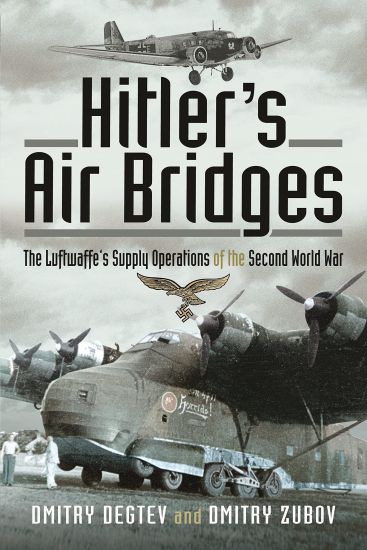
Much has been written about the famous fighters and bombers of the Luftwaffe which proved so successful in the invasion of Poland, the Battle of France, the Battle of Britain and in the early operations in Eastern Europe. Little attention, however, has been focused on the Luftwaffe's transport aircraft which played a vital role in supplying German forces in every theatre. In early May 1940, the battle of Norway was nearing its climax, but General Eduard Dietl's 3rd J ger division was blocked by the Allies in the Narvik area. Only the Luftwaffe could provide effective assistance to the encircled troops. The special purpose groups KGr.zbV107 and KGr.zbV108 were ordered to supply the division by air. Transports delivered ammunition, food, and even boots for German sailors who found themselves on land. This was the first of a number of occasions in which the Luftwaffe's transport Gruppen, often equipped with the slow, but reliable Junkers 52, created an air bridge' to supply troops cut off or surrounded by the enemy. The transport Gruppen had previously been involved in supporting the advance of German forces during the Polish campaign, this being followed by the capture of Denmark, The Netherlands, Belgium, and Greece. During Operation Barbarossa, German troops were dispersed over the vast expanses of Russia. It was a country without roads where the normal supply by trucks and trains to the troops was difficult and sometimes impossible. Often, it was only the Luftwaffe's transport aircraft that kept the Germans fighting. But with Hitler's insistence that there should be no retreat despite the overwhelming strength of the Soviet forces, his Germans armies found themselves surrounded and the Luftwaffe had to create air bridges to supply the beleaguered troops. Nowhere was this more evident than the Battle of Stalingrad, Goring having convinced Hitler that the Luftwaffe was capable of keeping the Sixth Army supplied. As the war increasingly turned against the Third Reich, air bridges were vital in supporting and maintaining its garrisons in places such as Demyansk, Holm, Korsun, Budapest, Breslau, and many others. Hitler's Air Bridges presents the story of the Luftwaffe's transport Gruppen more extensively and in greater detail than ever before.

On the night of 14/15 August 1944, the roar of an unknown aircraft was heard over the dense forests to the south-east of Moscow. Flying past the Soviet capital, the aircraft turned towards a secret' landing site at Yegoryevsk on the outskirts of the city. But lying in wait were troops of Stalin's elite secret service, SMERSH. The troops turned on the landing lights and the aircraft, a German machine of some description, swept down to land. As the aircraft touched down, some of the SMERSH troops lost their nerve and opened fire prematurely. The German pilot responded quickly and managed to pull his aircraft up in time to brush over the top of the trees at the end of the clearing and disappear back into the dark Soviet sky. This was just one of many vivid episodes in the operational service of the Luftwaffe's special and secret units which engaged in the delivery of agents and saboteurs in the rear of the enemy throughout the Second World War -not just on the Eastern Front but across Asia and Europe. The activities of the pilots and crews of these squadrons, even in the Luftwaffe itself, were closed and secret. Information on the operations and missions of these units was known only a limited number of people. It was common practice for the crew of one aircraft in these units to know nothing about the assignments of their fellow airmen. The area of activity of such units and aircraft covered the whole of Europe, North Africa, the Arctic circle, the Urals, the Caucasus, and Central Asia including Iran, Iraq, and Afghanistan. The Luftwaffe not only flew to these remote regions, but also created secret bases for their aircraft. Drawn from German and Russian sources, much of the latter only recently declassified, the authors expose for the very first time the Luftwaffe's secret operations and reveal the fate of many of the pilots, agents and saboteurs in a story as breathtakingly dramatic as any blockbuster novel.

From Attlee to the birth of New Labour, and the advent of Corbynism, this book gives a lively account of the ideological developments and dramas in the Labour Party in recent decades. Batrouni delves into the totemic battles between hard and soft left, examining the destructive and creative elements of key periods of Labour’s ideological exhaustion and ideational confusion. Providing powerful insights from interviews with some of the most influential thinkers, advisors and MPs in the party, he goes on to examine the phenomenal emergence of Corbynism, the impact of Brexit and what lies ahead for the party.

The Outpost: America: A Metro 2033 Universe graphic novel
Dmitry Glukhovskiy
Createspace Independent Publishing Platform
2016
nidottu




Yellowctone apocalypse is cancelled: About how to save the earth from Global Winter
Dmitriy Nicolaevith Fedorenko
Createspace Independent Publishing Platform
2016
nidottu
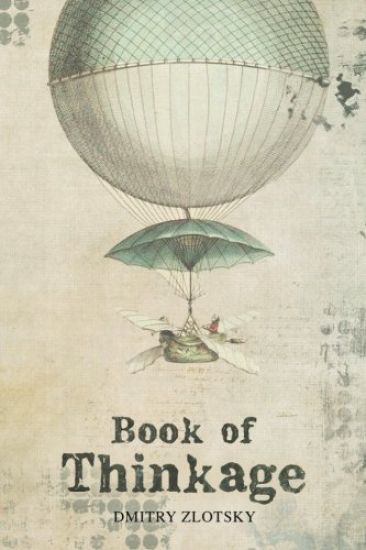
Thinkage (defined in the book as "the result of mental excretion") presents a bittersweet account of family life full of love and irony, compassion and whimsy. Nothing is off-limits here, as Pa shares with his son the benefits of underachievement, turns pooping into a game and helps Grampa to build a pyramid that attracts energy. Nothing comes from nowhere, Grampa believed, because something always originates somewhere. Whenever his son exhibited obstinacy, resilience, opinionated pigheadedness, Grampa said that these qualities Pa had inherited from his mother. But as soon as his son demonstrated wit, rational thinking and sophistication, Grampa only smiled and said nothing, because wasn't it obvious where that came from?

Money, Money, who got the Money
Dimitri Flynn
Createspace Independent Publishing Platform
2016
nidottu


How do people make sense of distant but disturbing international events? Why are some representations more appealing than others? What do they mean for the perceiver’s own sense of self? Going beyond conventional analysis of political perception and imagining at the level of accuracy, this book reveals how self-conceptions are unconsciously, but centrally present in our judgments and representations of international crises.Combining international relations and psychosocial studies, Dmitry Chernobrov shows how the imagining of international politics is shaped by the need for positive and continuous societal self-concepts. The book captures evidence of self-affirming political imagining in how the general public in the West and in Russia understood the Arab uprisings (also known as the Arab Spring) and makes an argument both about and beyond this particular case. The book will appeal to those interested in international crises, political psychology, media and audiences, perception and political imagining, ontological security, identity and emotion, and collective memory.