Kirjahaku
Etsi kirjoja tekijän nimen, kirjan nimen tai ISBN:n perusteella.
1000 tulosta hakusanalla Duncan Heaster
No book will ever come closer than this to providing an inside overview of Admiral Hyman G. Rickover's nuclear propulsion program. The author, an Atomic Energy Commission (AEC) historian assigned to the admiral's office, spent years observing the project and its controversial leader in action, and the insights he provides here reflect both his familiarity with the subject and his ability to remain an objective observer. From 1974 to the day Rickover retired in 1982, Francis Duncan had free access to files, documents, and personnel at every level of involvement--a rare, never-to-be-repeated opportunity that most historians dream of but few get. And, as this book clearly shows, he took full advantage of the situation to gain a unique understanding of exactly how the program operated. The result is a thorough, balanced record of what may well be the U.S. Navy's and the nation's most important and far-reaching project of the twentieth century.Knowing that facts and figures alone don't tell the entire story, Duncan talked to scores of people who dealt with day-to-day operations, watched men in prototype training and then accompanied them to sea, visited civilian and naval installations, and had close contact with Rickover himself. He also interviewed former U.S. presidents, secretaries of the navy, chiefs of naval operations, AEC chairmen, and legislative leaders who kept tabs on the projects but were removed from daily activities. Never once, the author says, did the admiral attempt to interfere with his research, nor did Rickover read the manuscript.While the focus here is on the nuclear program, not the man, this book does provide fascinating insights into Rickover's personality and his efforts to maintain standards of excellence that would assure the program's safety and its ultimate success. Using one of the admiral's favorite terms, ""the discipline of technology,"" to demonstrate the method of technological application advocated by Rickover, Duncan effectively balances technical detail with astute analysis and even drama. Filled with information not found elsewhere, his study is a valuable chronicle of the development of submarine propulsion reactors, the loss of the Thresher, the struggle over the application of nuclear propulsion to surface fleet, and the use of the Shippingport Atomic Power Plant to illustrate the feasibility of a light-water breeder reactor.
Expert Advice for Policy Choice
Duncan MacRae; Dale Whittington
Georgetown University Press
1997
pokkari
Economic reasoning has thus far dominated the field of public policy analysis. This new introduction to the field posits that policy analysis should have both a broader interdisciplinary base - including criteria from such fields as political science, sociology, law, and philosophy, as well as economics - and also a broader audience in order to foster democratic debate. To achieve these goals, MacRae and Whittington have organized their textbook around the construction of decision matrices using multiple criteria, exploring the uses of the decision matrix formulation more fully than other texts. They describe how to set up the matrix, fill in cells and combine criteria, and use it as an aid for decision making. They show how ethical assessment of the affects that alternatives have on various parties differs from political analysis, and then they extend the use of the decision matrix to consider alternatives by affected parties, periods of time, or combined factors. The authors also thoughtfully address the role of expert advice in the policy process, widening the scope of the field to describe a complex system for the creation and use of knowledge in a democracy. An extended case study of HIV/AIDS policy follows each chapter (in installments), immediately illustrating the application of the material. The book also contains a glossary. "Expert Advice for Policy Choice" provides a new basis for graduate education in public policy analysis and can also serve as a text in planning, evaluation research, or public administration. In addition, it will be of interest to students and professionals wishing to aid policy choice who work in such fields as sociology, political science, psychology, public health, and social work.
During the Middle Ages the act of reading was experienced intensively in the monastic exercise of lectio divina 'the prayerful scrutiny of passages of Scripture, savored in meditation, memorized, recited, and rediscovered in the reader's own religious life. The rich literary tradition that arose from this culture includes theoretical writings from the Conferences of John Cassian (fifth century) through the twelfth-century treatises of Hugh of St. Victor and the Carthusian Guigo II; it also includes compilations, literary meditations, and scriptural commentary, notably on the Song of Songs. This study brings medievalist research together with modern theoretical reflections on the act of reading in a consolidation of historical scholarship, spirituality, and literary criticism.
Riding the Third Rail
Duncan Sinclair; Mark Rochon; Peggy Leatt
The Institute for Research on Public Policy
2005
nidottu
The latest chapter in the struggle to create effective health care systems in Canada.
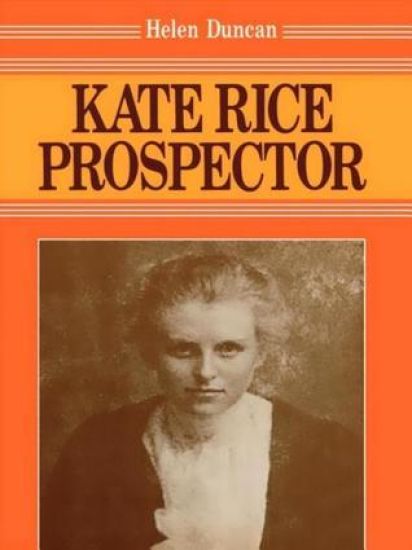
Kathleen Rice was an inspiring woman who lived ahead of her time. Born in St. Marys, Ontario, she graduated as a gold medallist in Mathematics at the University of Toronto in 1906. After a conventional beginning teaching school in Ontario and Saskatchewan, Kate broke free of the mold, searching for new frontiers as a prospector in Manitoba during the gold rush. She formed a partnership with Dick Woosey and began a life in the remote areas around Herb Lake, prospecting and trapping. After Woosey's death, Kate faced her final and most difficult challenge - living alone in the wildness of the north.
THIS book or some related work has occupied me spasmodically over rather a long period, in fact ever since I listened to the class lectures of Professor A. K. White on the possibility of forming a pure science of Politics. Mter an earlier version of Part I had failed to obtain publication in 1947, some chapters appeared as articles, and I am obliged to the editors of the journals mentioned below for permission to reprint this material, sometimes in a modified form. When I first attempted publication I was unacquainted with the earlier history of the theory, and, indeed, did not even know that it had a history; and the later additions to the book have largely been by way of writing the present Part II. This historical section does not include the important recent work, Social Ohoice and Individual Values (1951), of Professor Kenneth J. Arrow; but it does include all the mathematical work on committees and elections appearing before the middle of this century which has come to my notice, although the last item in it is dated 1907. No doubt there is much important material which I have failed to see. The theorizing of the book grew out of a reading of the English political philosophers and of the Italian writers on Public Finance. At a very early stage I was helped to find the general lines of development by discussion with my colleague Professor Ronald H.
It is quite possible that Raikes descended from a small family of yeoman farmers in the East Riding of Yorkshire. They became involved in the merchant venturing of the Elizabethan age and then enjoyed a prominent position in the civic and mercantile life of the city of Hull. In the early 18th century a move to the south was followed, within a generation, by branches of the family exploding into the world of national affairs and high society. Not least among them was Robert Raikes, promoter of the Sunday School Movement, who opened his first school in 1780.
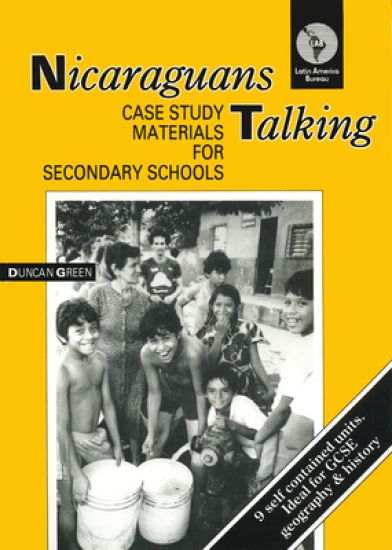
After the 1979 revolution, many Nicaraguans became involved in the search for a way out of underdevelopment and the Somoza dictatorship's legacy. Designed for GCSE and Standard Grade, this work explores these issues through the eyes of ordinary people of all ages.
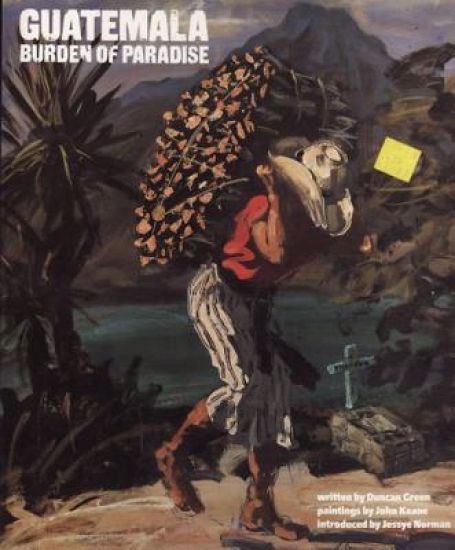
Interweaving reportage, interview and analysis, this work provides an overview of Guatemala, its resilience and its suffering. It explores poverty and inequality, the guerilla war and the role of the military, and human rights abuses, especially under the curent government. It also examines the impact of political violence on Guatemala's writers, artists and indigenous culture.
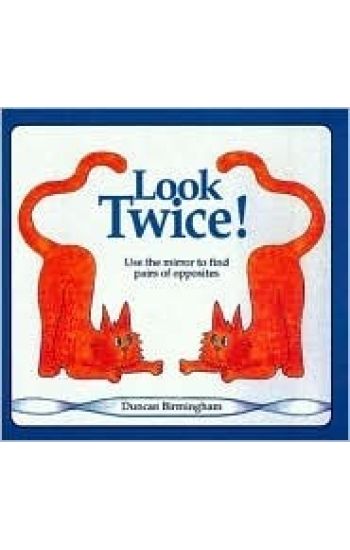
A card mirror is the key to this amazing exploration of visual and verbal connections. Each of the pictures can be transformed by means of the mirror into a pair of opposites. Concepts like "open and shut," "tidy and untidy," "ancient and modern" are each illustrated by placing the mirror in just the right places on what seem to be perfectly normal pictures. Much ingenuity has gone into creating these pictures and Duncan Birmingham's work will give great delight to children of 5 and well upwards. Probably many adults too.

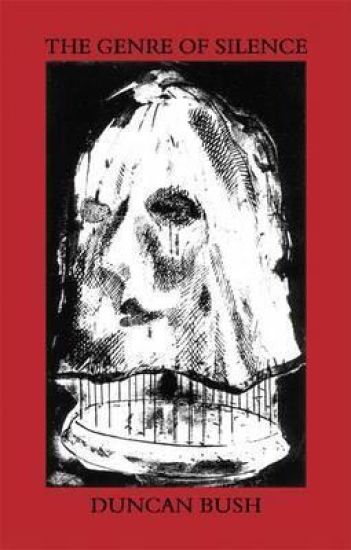
Duncan Bush's new work brings to life, at times painfully, the work of the Russian poet Victor Bal, who 'disappeared' under Stalinism. This surprising and original new book recalls the period by an intermingling of history and fiction which imaginative writers have always understood but that historians have rarely admitted.The Genre of Silence is illustrated by the artist John Selway from original etchings. Duncan Bush was born and brought up in Cardiff, Wales. He was educated at Warwick, Duke and Oxford Universities. His collection Masks (1994) was a PBS Recommendation and Arts Council of Wales Book of the Year. He has also published novels, Glass Shot (Secker) and The Genre of Silence as well as scripts for stage and screen. He currently divides his time between Wales and Europe.

Duncan Pryde, an 18-year-old orphan, ex-merchant-seaman, and disgruntled factory-worker left Glasgow for Canada to try his hand at fur-trading. He became so absorbed in this new life that his next ten years were spent living with Eskimos. He immersed himself in their society, even in its most intimate aspects: hunting, shamanism, wife-exchange and blood feuds. His record of these years is not only a great adventure-story, but an unrivalled record of a way-of-life which, along with the igloo, has now entirely disappeared.
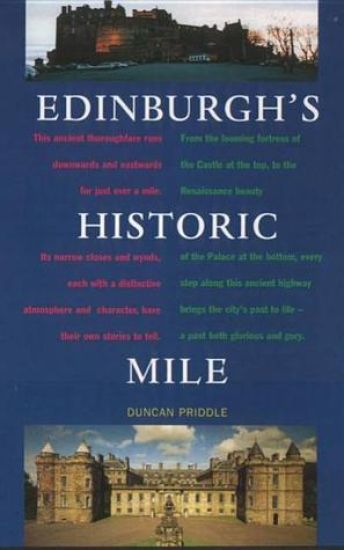
This work contains the stories of the many closes and wynds of the Royal Mile in Edinburgh, from the castle to the palace. It is written with all the knowledge and experience the Witchery Tours have gathered in 15 years of answering queries, and is full of quirky, fun and interesting stories.
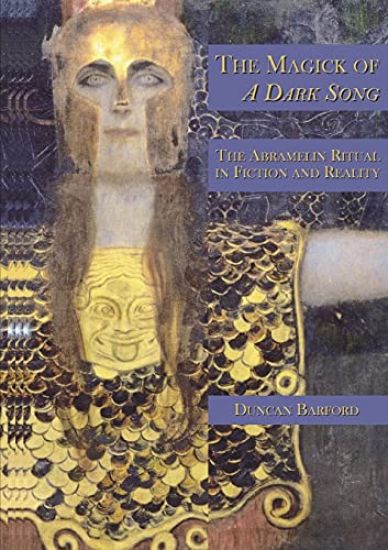
A Dark Song (2017) is a cult movie that presents maybe the most realistic depiction ever of ceremonial magick.Its heroine undertakes "the Abramelin ritual", an occult process for summoning her Guardian Angel, so that it might grant her stated wish to meet again with her murdered child.Yet the ritual depicted in the film is not entirely fictional. It takes its name from an actual magical working, once attempted by the notorious Aleister Crowley, and undertaken by real-life occultists to the present day.This book explores their experiences. It examines what the real-life Abramelin ritual is and the way it works. And it answers the question of how A Dark Song offers such a realistic representation of magick when angels and demons are not supposed to exist in reality at all.