Elizabeth Cleghorn Gaskell, 29 September 1810 - 12 November 1865), often referred to as Mrs Gaskell, was an English novelist and short story writer during the Victorian era. Her novels offer a detailed portrait of the lives of many strata of society, including the very poor, and are of interest to social historians as well as lovers of literature. Her first novel, Mary Barton, was published in 1848. Gaskell's The Life of Charlotte Bront , published in 1857, was the first biography about Bront . Some of Gaskell's best known novels are Cranford (1851-53), North and South (1854-55), and Wives and Daughters (1865).Gaskell was born Elizabeth Cleghorn Stevenson on 29 September 1810 at 93 Cheyne Walk, Chelsea. She was the youngest of eight children; only she and her brother John survived infancy. Her father, William Stevenson, was a Scottish Unitarian minister at Failsworth, Lancashire, but resigned his orders on conscientious grounds and moved to London in 1806 with the intention of going to India after he was appointed private secretary to the Earl of Lauderdale, who was to become Governor General of India. That position did not materialise, however, and instead Stevenson was nominated Keeper of the Treasury Records. His wife, Elizabeth Holland, came from a family from the English Midlands that was connected with other prominent Unitarian families, including the Wedgwoods, the Martineaus, the Turners and the Darwins. When she died 13 months after giving birth to her youngest daughter, 1] she left a bewildered husband who saw no alternative for Elizabeth but to be sent to live with her mother's sister, Hannah Lumb, in Knutsford, Cheshire
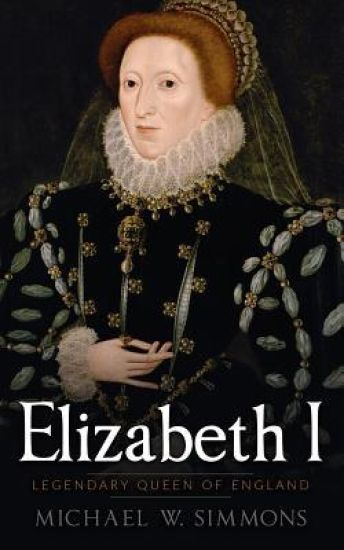
When Elizabeth I took the throne of England in 1559, hardly anyone knew what to make of her. Born the heir to the throne, she was declared a bastard when she was three years old, after her mother was executed for treason, witchcraft, and incest. During the reign of her sister, Mary I, she was a prisoner in the Tower of London, where she was expected to die. But when she became Queen, at the age of 25, she swiftly stunned the royal court by stepping into the seat of power with grace, intelligence, and an air of majesty that maddened and enchanted the men around her.For 44 years, Elizabeth I guided England through religious upheavals and plots to overthrow the government. Courted by all the most powerful princes in Europe, she baffled her advisors by refusing to marry any of them. And when England stood under threat of invasion by the most powerful nation in Europe, Elizabeth's navy destroyed the Spanish Armada so decisively that it was seen as an act of God. In this book, you will discover why no English monarch has ever been more famous, more successful-or more deeply loved by her people.
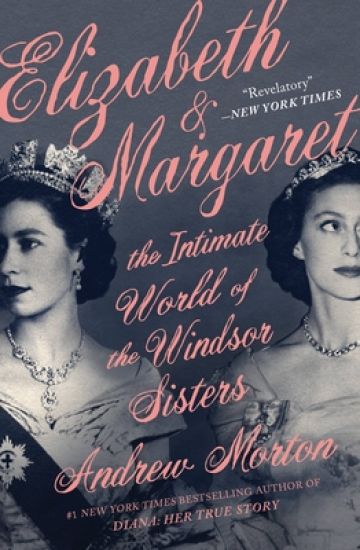
Perfect for fans of The Crown, this captivating biography from a New York Times bestselling author follows Queen Elizabeth II and her sister Margaret as they navigate life in the royal spotlight. They were the closest of sisters and the best of friends. But when, in a quixotic twist of fate, their uncle Edward Vlll decided to abdicate the throne, the dynamic between Elizabeth and Margaret was dramatically altered. Forever more Margaret would have to curtsey to the sister she called 'Lillibet.' And bow to her wishes. Elizabeth would always look upon her younger sister's antics with a kind of stoical amusement, but Margaret's struggle to find a place and position inside the royal system--and her fraught relationship with its expectations--was often a source of tension. Famously, the Queen had to inform Margaret that the Church and government would not countenance her marrying a divorcee, Group Captain Peter Townsend, forcing Margaret to choose between keeping her title and royal allowances or her divorcee lover. From the idyll of their cloistered early life, through their hidden war-time lives, into the divergent paths they took following their father's death and Elizabeth's ascension to the throne, this book explores their relationship over the years. Andrew Morton's latest biography offers unique insight into these two drastically different sisters--one resigned to duty and responsibility, the other resistant to it--and the lasting impact they have had on the Crown, the royal family, and the ways it adapted to the changing mores of the 20th century.
Perfect for fans of The Crown, this captivating biography from a New York Times bestselling author follows Queen Elizabeth II and her sister Margaret as they navigate life in the royal spotlight. They were the closest of sisters and the best of friends. But when, in a quixotic twist of fate, their uncle Edward Vlll decided to abdicate the throne, the dynamic between Elizabeth and Margaret was dramatically altered. Forever more Margaret would have to curtsey to the sister she called 'Lillibet.' And bow to her wishes. Elizabeth would always look upon her younger sister's antics with a kind of stoical amusement, but Margaret's struggle to find a place and position inside the royal system--and her fraught relationship with its expectations--was often a source of tension. Famously, the Queen had to inform Margaret that the Church and government would not countenance her marrying a divorcee, Group Captain Peter Townsend, forcing Margaret to choose between keeping her title and royal allowances or her divorcee lover. From the idyll of their cloistered early life, through their hidden war-time lives, into the divergent paths they took following their father's death and Elizabeth's ascension to the throne, this book explores their relationship over the years. Andrew Morton's latest biography offers unique insight into these two drastically different sisters--one resigned to duty and responsibility, the other resistant to it--and the lasting impact they have had on the Crown, the royal family, and the ways it adapted to the changing mores of the 20th century.
Located in Trenton, Michigan, Elizabeth Park was a gift from the descendants of the Slocum and Truax families to the people of Wayne County. Donated in 1919, the property was transformed into an oasis providing recreational opportunities previously unavailable to the area. Besides picnicking, the park provided merry-go-rounds, swings, and slides for children as well as tennis courts, shuffleboard, and horseshoes for the adults. As time and tastes changed, the park had to evolve. In its heyday, during the 1930s, the 162-acre park saw nearly a million visitors a year; however, that number dwindled to a low point during the 1970s and 1980s. Amid many complaints to Wayne County officials, a countywide park millage was passed. Today, the park still retains some of the old but is also a carefree center of activity with boat races, antique car shows, and music festivals.
Princess Priscilla's Fortnight is a 1905 comedy-drama novel by the British writer Elizabeth von Arnim, known at the time as Elizabeth Russell. It was turned into a play The Cottage in the Air in 1909.Film adaptation In 1929 the novel was turned into a film The Runaway Princess directed by Anthony Asquith and Fritz Wendhausen and starring Mady Christians, Norah Baring and Paul Cavanagh. It was a co-production between the Britain and Germany, and a separate German language version Priscillas Fahrt ins Gl ck was made........... Elizabeth von Arnim (31 August 1866 - 9 February 1941), born Mary Annette Beauchamp, was an Australian-born British novelist. By marriage she became Gr fin (Countess) von Arnim-Schlagenthin, and by a second marriage, Countess Russell. Although known in her early life as Mary, after the publication of her first book, she was known to her readers, eventually to her friends, and finally even to her family as Elizabeth and she is now invariably referred to as Elizabeth von Arnim. She also wrote under the pen name Alice Cholmondeley.She was born at her family's holiday home in Kirribilli Point, Australia. When she was three years old, the family returned to England where she was raised. Her parents were Henry Herron Beauchamp (1825-1907), merchant, and Elizabeth (Louey) Weiss Lassetter (1836-1919). Arnim had four brothers, a sister, and a cousin from New Zealand, Kathleen Beauchamp, who later married John Middleton Murry and wrote under the pen name, Katherine Mansfield. In 1891, Elizabeth married Count Henning August von Arnim-Schlagenthin, a Prussian aristocrat, whom she had met during an Italian tour with her father. They lived in Berlin and eventually moved to the countryside where, in Nassenheide, Pomerania, the Arnims had their family estate. The couple had five children, four daughters and a son. The children's tutors at Nassenheide included E. M. Forster and Hugh Walpole. In 1908, Arnim left Nassenheide to return to London.Count von Arnim died in 1910, and later that year she moved to Randogne, Switzerland, where she built the Chalet Soleil and entertained literary and society friends.From 1910 until 1913, she was a mistress of the novelist H.G. Wells. In 1916, she married John Francis Stanley Russell, 2nd Earl Russell, elder brother of Bertrand Russell. The marriage ended in acrimony, with Elizabeth fleeing to the United States and the couple separating in 1919, although they never divorced. In 1920, she embarked on an affair with Alexander Stuart Frere Reeves (1892-1984), a British publisher nearly 30 years her junior; he later married and named his only daughter Elizabeth in her honour. After leaving Germany, she lived, variously, in London, France and Switzerland. In 1939, on the outbreak of the Second World War, she returned to the United States, where she died of influenza at the Riverside Infirmary, Charleston, South Carolina, on 9 February 1941, aged 74. She was cremated at Fort Lincoln cemetery, Maryland and in 1947 her ashes were mingled with her brother Sydney's in the churchyard of St Margaret's, Tylers Green, Penn, Buckinghamshire.The Latin inscription on her tombstone reads, parva sed apta (small but apt), alluding to her short stature.
Elizabeth von Arnim (31 August 1866 - 9 February 1941), born Mary Annette Beauchamp, was an Australian-born British novelist. By marriage she became Gr fin (Countess) von Arnim-Schlagenthin, and by a second marriage, Countess Russell. Although known in her early life as Mary, after the publication of her first book, she was known to her readers, eventually to her friends, and finally even to her family as Elizabeth and she is now invariably referred to as Elizabeth von Arnim. She also wrote under the pen name Alice Cholmondeley.She was born at her family's holiday home in Kirribilli Point, Australia. When she was three years old, the family returned to England where she was raised. Her parents were Henry Herron Beauchamp (1825-1907), merchant, and Elizabeth (Louey) Weiss Lassetter (1836-1919). Arnim had four brothers, a sister, and a cousin from New Zealand, Kathleen Beauchamp, who later married John Middleton Murry and wrote under the pen name, Katherine Mansfield. In 1891, Elizabeth married Count Henning August von Arnim-Schlagenthin, a Prussian aristocrat, whom she had met during an Italian tour with her father. They lived in Berlin and eventually moved to the countryside where, in Nassenheide, Pomerania, the Arnims had their family estate. The couple had five children, four daughters and a son. The children's tutors at Nassenheide included E. M. Forster and Hugh Walpole. In 1908, Arnim left Nassenheide to return to London.Count von Arnim died in 1910, and later that year she moved to Randogne, Switzerland, where she built the Chalet Soleil and entertained literary and society friends.From 1910 until 1913, she was a mistress of the novelist H.G. Wells. In 1916, she married John Francis Stanley Russell, 2nd Earl Russell, elder brother of Bertrand Russell. The marriage ended in acrimony, with Elizabeth fleeing to the United States and the couple separating in 1919, although they never divorced. In 1920, she embarked on an affair with Alexander Stuart Frere Reeves (1892-1984), a British publisher nearly 30 years her junior; he later married and named his only daughter Elizabeth in her honour. After leaving Germany, she lived, variously, in London, France and Switzerland. In 1939, on the outbreak of the Second World War, she returned to the United States, where she died of influenza at the Riverside Infirmary, Charleston, South Carolina, on 9 February 1941, aged 74. She was cremated at Fort Lincoln cemetery, Maryland and in 1947 her ashes were mingled with her brother Sydney's in the churchyard of St Margaret's, Tylers Green, Penn, Buckinghamshire.The Latin inscription on her tombstone reads, parva sed apta (small but apt), alluding to her short stature.
Vera by Elizabeth von Arnim is a black comedy based on her disastrous second marriage to Earl Russell: a mordant analysis of the romantic delusions through which wives acquiesce in husbands' tyrannies. In outline the story of this utterly unromantic novel anticipates DuMaurier's Rebecca. Naive Lucy Entwhistle is swept into marriage by widower, Everard Wemyss. His mansion "The Willows" is pervaded by the spectre of his dead wife Vera, with whom Lucy becomes obsessed. ... Here the servants are partisan for both wives, and lose no opportunity to disrupt Everard's unctuous, oppressive household routines. An extraordinarily black vision of marriage, also continuously funny, the novel's power lies in the wit and economy of the usually prolix Von Arnim. Elizabeth von Arnim (31 August 1866 - 9 February 1941), born Mary Annette Beauchamp, was an Australian-born British novelist. By marriage she became Gr fin (Countess) von Arnim-Schlagenthin, and by a second marriage, Countess Russell. Although known in her early life as Mary, after the publication of her first book, she was known to her readers, eventually to her friends, and finally even to her family as Elizabeth and she is now invariably referred to as Elizabeth von Arnim. She also wrote under the pen name Alice Cholmondeley.She was born at her family's holiday home in Kirribilli Point, Australia. When she was three years old, the family returned to England where she was raised. Her parents were Henry Herron Beauchamp (1825-1907), merchant, and Elizabeth (Louey) Weiss Lassetter (1836-1919). Arnim had four brothers, a sister, and a cousin from New Zealand, Kathleen Beauchamp, who later married John Middleton Murry and wrote under the pen name, Katherine Mansfield. In 1891, Elizabeth married Count Henning August von Arnim-Schlagenthin, a Prussian aristocrat, whom she had met during an Italian tour with her father. They lived in Berlin and eventually moved to the countryside where, in Nassenheide, Pomerania, the Arnims had their family estate. The couple had five children, four daughters and a son. The children's tutors at Nassenheide included E. M. Forster and Hugh Walpole. In 1908, Arnim left Nassenheide to return to London.Count von Arnim died in 1910, and later that year she moved to Randogne, Switzerland, where she built the Chalet Soleil and entertained literary and society friends.From 1910 until 1913, she was a mistress of the novelist H.G. Wells. In 1916, she married John Francis Stanley Russell, 2nd Earl Russell, elder brother of Bertrand Russell. The marriage ended in acrimony, with Elizabeth fleeing to the United States and the couple separating in 1919, although they never divorced. In 1920, she embarked on an affair with Alexander Stuart Frere Reeves (1892-1984), a British publisher nearly 30 years her junior; he later married and named his only daughter Elizabeth in her honour. After leaving Germany, she lived, variously, in London, France and Switzerland. In 1939, on the outbreak of the Second World War, she returned to the United States, where she died of influenza at the Riverside Infirmary, Charleston, South Carolina, on 9 February 1941, aged 74. She was cremated at Fort Lincoln cemetery, Maryland and in 1947 her ashes were mingled with her brother Sydney's in the churchyard of St Margaret's, Tylers Green, Penn, Buckinghamshire.The Latin inscription on her tombstone reads, parva sed apta (small but apt), alluding to her short stature.
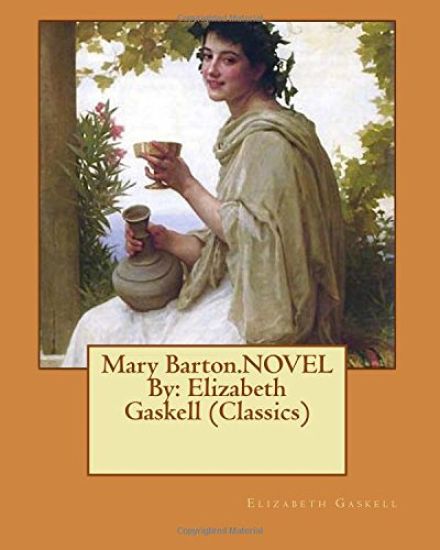
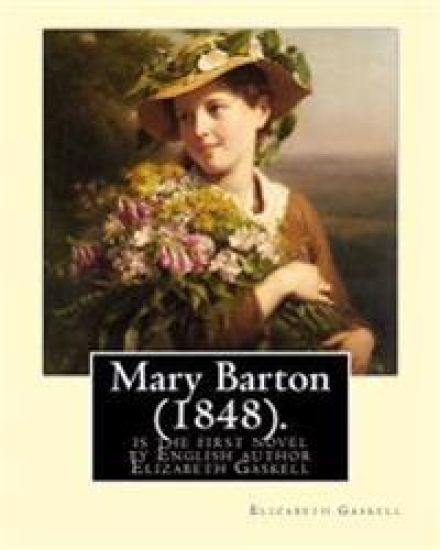
Mary Barton is the first novel by English author Elizabeth Gaskell, published in 1848. The story is set in the English city of Manchester between 1839 and 1842, and deals with the difficulties faced by the Victorian working class. It is subtitled "A Tale of Manchester Life". The novel begins in Manchester, where we are introduced to the Bartons and the Wilsons, two working-class families. John Barton is a questioner of the distribution of wealth and the relations between rich and poor. Soon his wife dies-he blames it on her grief over the disappearance of her sister Esther. Having already lost his son Tom at a young age, Barton is left to raise his daughter, Mary, alone and now falls into depression and begins to involve himself in the Chartist, trade-union movement. Chapter 1 takes place in countryside where Moss Side is now. Mary takes up work at a dressmaker's (her father having objected to her working in a factory) and becomes subject to the affections of hard-working Jem Wilson and Harry Carson, son of a wealthy mill owner. She fondly hopes, by marrying Carson, to secure a comfortable life for herself and her father, but immediately after refusing Jem's offer of marriage she realises that she truly loves him. She therefore decides to evade Carson, planning to show her feelings to Jem in the course of time. Jem believes her decision to be final, though this does not change his feelings for her. Meanwhile, Esther, a "street-walker," returns to warn John Barton that he must save Mary from becoming like her. He simply pushes her away, however, and she's sent to jail for a month on the charge of vagrancy. Upon her release she talks to Jem with the same purpose. He promises that he will protect Mary and confronts Carson, eventually entering into a fight with him, which is witnessed by a policeman passing by. Not long afterwards, Carson is shot dead, and Jem is arrested for the crime, his gun having been found at the scene. Esther decides to investigate the matter further and discovers that the wadding for the gun was a piece of paper on which is written Mary's name. She visits her niece to warn her to save the one she loves, and after she leaves Mary realises that the murderer is not Jem but her father. She is now faced with having to save her lover without giving away her father. With the help of Job Legh (the intelligent grandfather of her blind friend Margaret), Mary travels to Liverpool to find the only person who could provide an alibi for Jem - Will Wilson, Jem's cousin and a sailor, who was with him on the night of the murder. Unfortunately, Will's ship is already departing, so that, after Mary chases after the ship in a small boat, the only thing Will can do is promise to return in the pilot ship and testify the next day. During the trial, Jem learns of Mary's great love for him. Will arrives in court to testify, and Jem is found "not guilty". Mary has fallen ill during the trial and is nursed by Mr Sturgis, an old sailor, and his wife. When she finally returns to Manchester she has to face her father, who is crushed by his remorse. He summons John Carson, Harry's father, to confess to him that he is the murderer. Carson is still set on justice, but after turning to the Bible he forgives Barton, who dies soon afterwards in Carson's arms. Not long after this Esther comes back to Mary's home, where she, too, soon dies. Jem decides to leave England, where, his reputation damaged, it would be difficult for him to find a new job. The novel ends with the wedded Mary and Jem, their little child, and Mrs Wilson living happily in Canada. News comes that Margaret has regained her sight and that she and Will, soon to be married, will visit. Elizabeth Cleghorn Gaskell, (Stevenson, 29 September 1810 - 12 November 1865), often referred to as Mrs Gaskell, was an English novelist and short story writer. ...
This collection of literature attempts to compile many of the classic works that have stood the test of time and offer them at a reduced, affordable price, in an attractive volume so that everyone can enjoy them.
Cranford is one of the better-known novels of the 19th-century English writer Elizabeth Gaskell. It was first published, irregularly, in eight instalments, between December 1851 and May 1853, in the magazine Household Words, which was edited by Charles Dickens. It was then published, with minor revision, in book form in 1853.The first instalment (in Household Words), which became the novel's first two chapters, was originally published "as a self-contained sketch", and the "irregular way" the further seven instalments were published suggests that it took Mrs Gaskell time to think of making this into a book.She was during this period busy writing the three volume novel Ruth, which was published January 1853.Cranford has been described as "practically structurelesss", and given the irregular nature of how it was first published, it is not surprising that it lacks unity.A. W. Ward describes the novel, as a "brief series of sketches, strung together with easy grace".The small country town of Cranford corresponds to Knutsford, Cheshire, where Elizabeth Gaskell had spent much of her childhood and where she returned after she married. However, the story's narrator comes from the nearby industrial city of Drumble, which corresponds to Manchester, where the author lived when writing the novel.There is no real plot, but rather a collection of satirical sketches, which sympathetically portray changing small town customs and values in mid Victorian England. 9] Harkening back to memories of her childhood in the small Cheshire town of Knutsford, Cranford is Elizabeth Gaskell's affectionate portrait of people and customs that were already becoming anachronisms............... Elizabeth Cleghorn Gaskell, (n e Stevenson, 29 September 1810 - 12 November 1865), often referred to as Mrs Gaskell, was an English novelist and short story writer. Her novels offer a detailed portrait of the lives of many strata of Victorian society, including the very poor, and are of interest to social historians as well as lovers of literature. Her first novel, Mary Barton, was published in 1848. Gaskell's The Life of Charlotte Bront , published in 1857, was the first biography about Bront . Some of Gaskell's best known novels are Cranford (1851-53), North and South (1854-55), and Wives and Daughters (1865).Gaskell was born Elizabeth Cleghorn Stevenson on 29 September 1810 at 93 Cheyne Walk, Chelsea. She was the youngest of eight children; only she and her brother John survived infancy. Her father, William Stevenson, was a Scottish Unitarian minister at Failsworth, Lancashire, but resigned his orders on conscientious grounds and moved to London in 1806 with the intention of going to India after he was appointed private secretary to the Earl of Lauderdale, who was to become Governor General of India. That position did not materialise, however, and instead Stevenson was nominated Keeper of the Treasury Records. His wife, Elizabeth Holland, came from a family from the English Midlands that was connected with other prominent Unitarian families, including the Wedgwoods, the Martineaus, the Turners and the Darwins. When she died 13 months after giving birth to her youngest daughter, 1] she left a bewildered husband who saw no alternative for Elizabeth but to be sent to live with her mother's sister, Hannah Lumb, in Knutsford, Cheshire. While she was growing up Elizabeth's future was uncertain, as she had no personal wealth and no firm home, though she was a permanent guest at her aunt and grandparents' house. Her father married Catherine Thomson in 1814 and they had a son, William (born 1815), and a daughter, Catherine (born 1816). Although Elizabeth spent several years without seeing her father and his new family, her older brother John often visited her in Knutsford. John was destined for the Royal Navy from an early age, like his grandfathers and uncles, but he had no entry and had to join the Merchant Navy with the East India Company's fleet.....
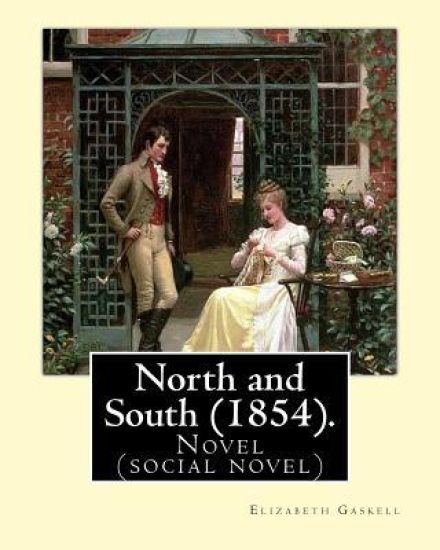
North and South is a social novel by English writer Elizabeth Gaskell. Along with Wives and Daughters (1865) and Cranford (1853), it is one of her best known novels and has been adapted for television twice, in 1975 and 2004. The latter version renewed interest in the novel and gained it a wider readership. While Gaskell's first novel Mary Barton (1848) focused on relations between employers and workers in Manchester from the perspective of the working poor, North and South uses a protagonist from southern England to present and comment on the perspectives of both mill owners and mill workers in an industrializing city. North and South is set in the fictional industrial town of Milton in the North of England. Forced to leave her home in the tranquil rural south, Margaret Hale settles with her parents in Milton where she witnesses the brutal world wrought by the industrial revolution and employers and workers clashing in the first organised strikes. Sympathetic to the poor, whose courage and tenacity she admires and among whom she makes friends, she clashes with John Thornton, a cotton mill manufacturer who belongs to the nouveaux riches class and whose contemptuous attitude to workers Margaret rejects. The novel traces both her growing understanding of the complexity of labor relations and her impact on well-meaning mill owners, and her conflicted relationship with John Thornton.Gaskell based her depiction of Milton on Manchester, where she lived as the wife of a Unitarian minister.Margaret Hale, 19, happily returns home from London to the idyllic southern village of Helstone after her cousin Edith marries Captain Lennox. She lived nearly 10 years in the city with Edith and wealthy Aunt Shaw to learn to be an accomplished young lady. Margaret, herself, has refused a marriage offer from the captain's brother, Henry, a rising barrister. But her life is turned upside down when her father, the local pastor, leaves the Church of England and the rectory of Helstone as a matter of conscience-his intellectual honesty having made him a dissenter. On the suggestion of his old friend from Oxford, Mr. Bell, he settles with his wife and daughter in Milton-Northern, where Mr. Bell was born and owns property. An industrial town in Darkshire, a textile-producing region, it is engaged in cotton-manufacturing and finds itself in the middle of the industrial revolution, where masters and workers clash in the first organised strikes. Margaret finds the bustling, smoky town of Milton harsh and strange and she is upset by the poverty all around. Mr. Hale, in reduced financial circumstances, works as a tutor and counts as his pupil the rich and influential manufacturer, Mr. John Thornton, master of Marlborough Mills. From the outset, Margaret and Thornton are at odds with each other: She sees him as coarse and unfeeling; he sees her as haughty. But he is attracted to her beauty and self-assurance and she begins to admire how he has lifted himself from poverty. During the 18 months she spends in Milton, Margaret gradually learns to appreciate the city and its hard-working people, especially Nicholas Higgins, a Workers' Union representative, and his daughter Bessy, whom she befriends. Bessy is consumptive from inhalation of cotton dust and she eventually dies from it. Meantime, Margaret's mother is growing more seriously ill and a workers' strike is brewing. Masters and hands (workers) do not reach a resolution on the strike and an incensed mob of workers threatens Thornton and his factory with violence after he brought Irish workers into his mill. Margaret implores Thornton to intervene and talk to the mob, but he manages merely to fuel their anger. Margaret intervenes too and is struck down by a stone.........Elizabeth Cleghorn Gaskell, (n e Stevenson, 29 September 1810 - 12 November 1865), often referred to as Mrs Gaskell, was an English novelist and short story writer.....