Kirjojen hintavertailu. Mukana 11 244 527 kirjaa ja 12 kauppaa.

Kirjahaku

Etsi kirjoja tekijän nimen, kirjan nimen tai ISBN:n perusteella.

1000 tulosta hakusanalla Elizabeth Ferrars

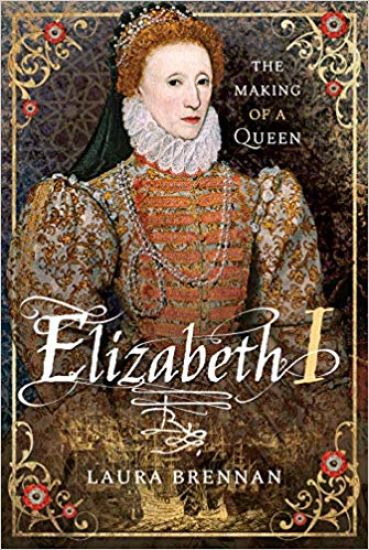
Elizabeth I

Elizabeth I

Laura Brennan

Pen Sword History
2020
sidottu
Elizabeth I is arguably one of the greatest monarchs and women of English history. Against an uncertain political and religious backdrop of post-reformation Europe she ruled at the conception of social modernisation, living in the shadow of the infamy of her parents reputations and striving to prove herself an equal to the monarchs who had gone before her. This book seeks to explore some of the key events of her life both before and after she ascended to the English throne in late 1558\. By looking at the history of these selected events, as well as investigating the influence of various people in her life, this book sets out to explain Elizabeth's decisions, both as a queen and as a woman. Amongst the events examined are the death of her mother, the role and fates of her subsequent step-mothers, the fate of Lady Jane Grey and the subsequent behaviour and reign of her half sister Mary Tudor, along with the death of Amy Dudley, the return of Mary Queen of Scots to Scotland, the Papal Bull and the Spanish Amanda.
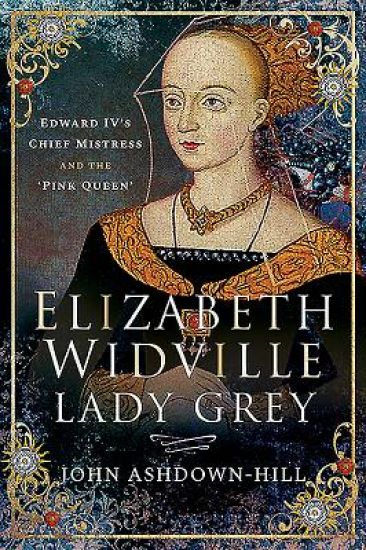
Elizabeth Widville, Lady Grey

Elizabeth Widville, Lady Grey

John Ashdown-Hill

Pen Sword History
2020
nidottu
Wife to Edward IV and mother to the Princes in the Tower and later Queen Elizabeth of York, Elizabeth Widville was a central figure during the War of the Roses. Much of her life is shrouded in speculation and myth - even her name, commonly spelled as Woodville', is a hotly contested issue. Born in the turbulent fifteenth century, she was famed for her beauty and controversial second marriage to Edward IV, who she married just three years after he had displaced the Lancastrian Henry VI and claimed the English throne. As Queen Consort, Elizabeth's rise from commoner to royalty continues to capture modern imagination. Undoubtedly, it enriched the position of her family. Her elevated position and influence invoked hostility from Richard Neville, the Kingmaker', which later led to open discord and rebellion. Throughout her life and even after the death of her husband, Elizabeth remained politically influential: briefly proclaiming her son King Edward V of England before he was diposed by her brother-in-law, the infamous Richard III, she would later play an important role in securing the succession of Henry Tudor in 1485 and his marriage to her daughter Elizabeth of York, thus and ending the War of the Roses. Elizabeth Widville was an endlessly enigmatic historical figure, who has been obscured by dramatizations and misconceptions. In this fascinating and insightful biography, Dr John Ashdown-Hill brings shines a light on the truth of her life.
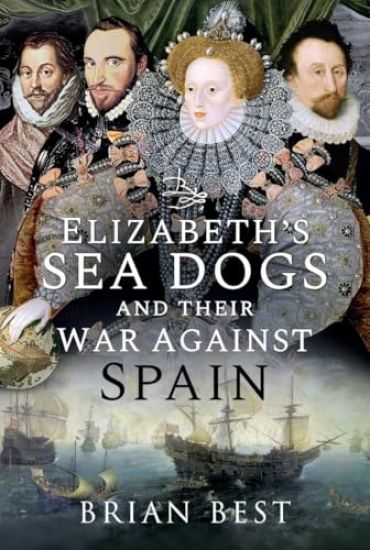
Elizabeth's Sea Dogs and their War Against Spain
The Sea Dogs were seafaring merchantmen who originally traded mainly with Holland and France. During Queen Elizabeth's reign, however, they began to spread their reach, sailing further and further afield exploring and plundering. The main source of wealth quickly became the Caribbean, which, until then, had been predominantly the domain of wealthy Catholic Spain. The first man to trade with the Spanish Main was John Hawkins, who travelled to West Africa, captured the natives and transported them to the Caribbean. There he sold them to plantation owners in exchange for goods such as pearls, hides and spices. He made three voyages and on the disastrous last he took his cousin, Francis Drake. The backers, including the Queen, were satisfied with the bounty but encouraged the Sea Dogs to seek greater riches. England at that time was a relatively impoverished country compared with Spain. Elizabeth had inherited a high cost of inflation, poor harvests and a legacy of poverty from Edward VI and Mary Tudor. This was a time of religious tension with King Philip of Spain, whose marriage to Mary Tudor gave him the right to rule England. The rift between the Catholics and Protestants was cooled somewhat by Elizabeth's keeping the peace between the two countries, despite the continuing campaigns of the privateers crewed by the Sea Dogs. The main thorn in the Spanish side was Francis Drake. Despite efforts to kill or capture him, he continued to plunder the high seas, bringing back Spanish riches to England. This allowed the Queen to flourish. It was thanks in main to the privateering exploits of the Sea Dogs that England became so wealthy, paving the way for the Renaissance that followed.
Elizabeth’s Sea Dogs and their War Against Spain
The Sea Dogs were seafaring merchantmen who originally traded mainly with Holland and France. During Queen Elizabeth’s reign, however, they began to spread their reach, sailing further and further afield exploring and plundering. The main source of wealth quickly became the Caribbean, which, until then, had been predominantly the domain of wealthy Catholic Spain. The first man to trade with the Spanish Main was John Hawkins, who travelled to West Africa, captured the natives and transported them to the Caribbean. There he sold them to plantation owners in exchange for goods such as pearls, hides and spices. He made three voyages and on the disastrous last he took his cousin, Francis Drake. The backers, including the Queen, were satisfied with the bounty but encouraged the Sea Dogs to seek greater riches. England at that time was a relatively impoverished country compared with Spain. Elizabeth had inherited a high cost of inflation, poor harvests and a legacy of poverty from Edward VI and Mary Tudor. This was a time of religious tension with King Philip of Spain, whose marriage to Mary Tudor gave him the right to rule England. The rift between the Catholics and Protestants was cooled somewhat by Elizabeth’s keeping the peace between the two countries, despite the continuing campaigns of the privateers crewed by the Sea Dogs. The main thorn in the Spanish side was Francis Drake. Despite efforts to kill or capture him, he continued to plunder the high seas, bringing back Spanish riches to England. This allowed the Queen to flourish. It was thanks in main to the privateering exploits of the Sea Dogs that England became so wealthy, paving the way for the Renaissance that followed.

Elizabeth Prentiss:  More Love

Elizabeth Prentiss: More Love

Claire Williams

Christian Focus 4Kids
2019
pokkari
Elizabeth was a bright young girl who knew what it was to have a heart sore with troubles. Born in Portland, Maine in the United States, Elizabeth was deeply impacted by the death of her father, who suffered from tuberculosis. However, in those early days she found that Jesus Christ and his love was her strength. Living life as a Christian wife and mother didn’t mean that suffering became part of her past. She also had health problems and two of her own children died. Elizabeth Prentiss continued to turn to her loving Heavenly Father for love and support, while also using her talent with the pen to bring glory to God and help to others in their time of need. Her hymn ‘More Love to Thee’ was a declaration of love to her Saviour: Once earthly joy I craved, Sought peace and rest; Now Thee alone I seek, Give what is best; This all my prayer shall be: More love, O Christ, to Thee, More love to Thee, More love to Thee! The Trailblazer series collects great stories from Christians of the past and delivers them to the young people of today. This gripping and astonishing story from Claire Williams will challenge young readers to love God as Elizabeth Prentiss did. A well–known and long–standing series: Over 50 titles Great for ages 9 to 14Published in 14 languages Half a million books soldAlso available in box sets when one book is not enough! 7 themed box sets, each with 5 books Each biography follows the trailblazer’s journey to faith, and on to the work that God had planned for them. With lots of dialogue, these engaging stories show how God uses normal individuals to bring about his purpose. Each book features: Thinking Further Topics for each chapter to help readers think about how what they’ve read applies to their life todayTimeline of important events in the lifetime of each book’s subject
Elizabeth Finch

Elizabeth Finch

Julian Barnes

Vintage Publishing
2023
pokkari
The Sunday Times Bestseller from the Winner of the Booker PrizeShe will change the way you see the world . . . 'I'll remember Elizabeth Finch when most other characters I've met this year have faded' The TimesElizabeth Finch was a teacher, a thinker, an inspiration. Neil is just one of many who fell under her spell during his time in her class. Tasked with unpacking her notebooks after her death, Neil encounters once again Elizabeth's astonishing ideas on the past and on how to make sense of the present.But Elizabeth was much more than a scholar. Her secrets are waiting to be revealed . . . and will change Neil's view of the world forever.'Enthralling . . . A connoisseur and master of irony himself, [Barnes] fills this book with instances of its exhilarating power' Sunday Times'A lyrical, thoughtful and intriguing exploration of love, grief and the collective myths of history' Booklist
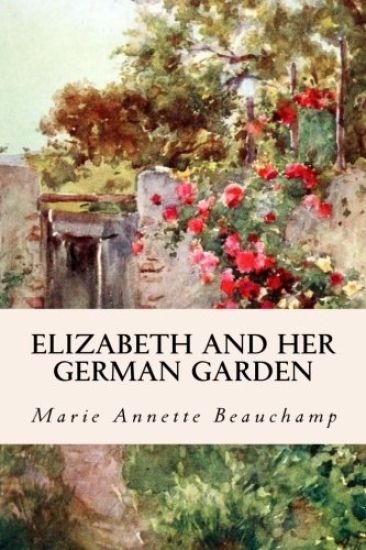
Elizabeth and Her German Garden

Elizabeth and Her German Garden

Marie Annette Beauchamp

Createspace Independent Publishing Platform
2016
nidottu
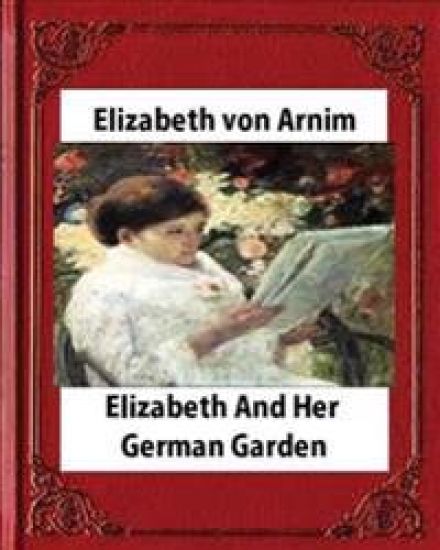
Elizabeth and Her German Garden is a novel by Elizabeth von Arnim, first published in 1898; it was very popular and frequently reprinted during the early years of the 20th century. The story is a year's diary written by the protagonist Elizabeth about her experiences learning gardening and interacting with her friends. It includes commentary on the beauty of nature and on society, but is primarily humorous due to Elizabeth's frequent mistakes and her idiosyncratic outlook on life. She looked down upon the frivolous fashions of her time writing "I believe all needlework and dressmaking is of the devil, designed to keep women from study." The book is the first in a series about the same character. It is noteworthy for being published without a named author. Molesley lends a copy of this book to Anna on the 2nd episode of the 2nd season of Downton Abbey. In the novel The Shellseekers (1988) by Rosamunde Pilcher, Sophie reads Elizabeth von Arnim's "Elizabeth and her German Garden". In chapter 9 ("Sophie"), Sophie says to Penelope: " ...] I always go back to it. It comforts me. Soothes me. It reminds me of a world that once existed and will exist again when the war has finished." In the novel The Gurnsey Potato Peel Pie and Literary Society, it is referred to by Elizabeth as having been the topic of discussion at the society meeting that she pretended had taken place on the night of the roast pork dinner. May 7th.--I love my garden. I am writing in it now in the late afternoon loveliness, much interrupted by the mosquitoes and the temptation to look at all the glories of the new green leaves washed half an hour ago in a cold shower. Two owls are perched near me, and are carrying on a long conversation that I enjoy as much as any warbling of nightingales.
Fraulein Schmidt and Mr. Anstruther, NOVEL by Elizabeth von Arnim

Fraulein Schmidt and Mr. Anstruther, NOVEL by Elizabeth von Arnim

Elizabeth Von Arnim

Createspace Independent Publishing Platform
2016
nidottu
Elizabeth von Arnim (31 August 1866 - 9 February 1941), born Mary Annette Beauchamp, was an Australian-born British novelist. By marriage she became Gr fin (Countess) von Arnim-Schlagenthin, and by a second marriage, Countess Russell. Although known in her early life as Mary, after the publication of her first book, she was known to her readers, eventually to her friends, and finally even to her family as Elizabeth 1] and she is now invariably referred to as Elizabeth von Arnim. She also wrote under the pen name Alice Cholmondeley.She was born at her family's holiday home in Kirribilli Point, Australia. When she was three years old, the family returned to England where she was raised. Her parents were Henry Herron Beauchamp (1825-1907), merchant, and her mother Elizabeth (Louey) Weiss Lassetter (1836-1919). Arnim had four brothers, a sister, and a cousin from New Zealand, Kathleen Beauchamp, who later married John Middleton Murry and wrote under the pen name Katherine Mansfield
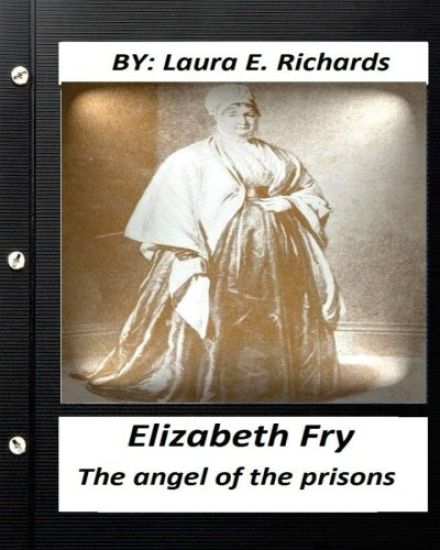
Elizabeth Fry: the angel of the prisons.By Laura E. Richards (Original Version

Elizabeth Fry: the angel of the prisons.By Laura E. Richards (Original Version

Laura E. Richards

Createspace Independent Publishing Platform
2016
nidottu
Elizabeth (Betsy) Fry (21 May 1780 - 12 October 1845), n e Gurney, was an English prison reformer, social reformer and, as a Quaker, a Christian philanthropist. She has sometimes been referred to as the "angel of prisons". Fry was a major driving force behind new legislation to make the treatment of prisoners more humane, and she was supported in her efforts by the reigning monarch. Since 2001, she has been depicted on the Bank of England 5 note Elizabeth (Betsy) Gurney was born in Gurney Court, off Magdalen Street, Norwich, Norfolk, England into a prominent Quaker family, the Gurneys. Her childhood family home was Earlham Hall which is now part of the University of East Anglia. 1] Her father, John Gurney (1749-1809), was a partner in Gurney's Bank. Her mother, Catherine, was a member of the Barclay family who were among the founders of Barclays Bank. Her mother died when Elizabeth was twelve years old. As one of the oldest girls in the family, Elizabeth was partly responsible for the care and education of the younger children, including her brother Joseph John Gurney, a philanthropist. One of her sisters was Louisa Gurney Hoare (1784-1836), a writer on education.
A study of child-nature from the kindergarten standpoint.By Elizabeth Harrison

A study of child-nature from the kindergarten standpoint.By Elizabeth Harrison

Elizabeth Harrison

Createspace Independent Publishing Platform
2016
nidottu
Elizabeth Harrison (September 1, 1849 - October 31, 1927) was an American educator. She was the founder and first president of what is today National Louis University. Harrison was a pioneer in creating professional standards for early childhood teachers and in promoting early childhood education After encountering the early kindergarten movement in Chicago in the 1870s, Harrison sought training in St. Louis and New York. She then taught kindergarten in Iowa and Chicago. In 1886, she founded a training school for kindergarten teachers in Chicago. Intrigued by the ideas used by a German woman working at her school, Harrison decided to find out more. She tracked these ideas back to the Pestalozzi-Fr bel-Haus in Berlin and in 1889 she traveled there to study. On her return she renamed her institution the Chicago Kindergarten Training College.Harrison's school became an innovative college of education. She was president of the college until her retirement in 1920. It is now part of National Louis University.